

Showing posts with label U.S. Economy. Show all posts
Showing posts with label U.S. Economy. Show all posts
Wednesday, October 1, 2008
Dave Lindorff: The Revolution That Failed
Submitted by BuzzFlash on Fri, 10/03/2008 - 4:21pm. Dave Lindorff
The grassroots rebellion that led to the House's rejection of the Bush Administration's Wall Street bailout bill on Monday flamed out on Friday, overwhelmed by a massive lobbying campaign by Wall Street and by a propaganda push in the corporate media in favor of passage.
The House, which had voted 228-205 against a bailout at the beginning of the week, voted 283-171 in favor of an even more expensive plan only four days later, after the Senate passed a bill containing over $100 billion in tax breaks (mostly for the wealthy), and after House leaders added a bunch of those infamous "earmarks" to buy the votes of reluctant House members.
Interestingly, one of the things that was used to frighten members of Congress into passing this unprecedented bill was a plunging stock market, which plunged into record low territory for the year on Monday and Thursday. Yet after rising modestly during the morning, reportedly on "anticipation" that Congress would pass a bailout, once the vote was in, the equities markets all started heading south. Clearly investors weren't particularly optimistic that throwing almost $1 trillion in borrowed money from taxpayers at banks and investment houses would do much for the nation's struggling "real" economy.
One reason for investor pessimism is no doubt news that car sales and housing prices in September slumped to record lows, and that the September jump in unemployment was the highest since the 9/11 crisis in 2001. Another was probably the inclusion of a provision in the bill as passed by both House and Senate that allows the Treasury to buy bad debt not just from U.S. banks, but from foreign banks as well. As several critics of the plan have observed (but as the corporate media have failed to report to their undying shame), this means American tax dollars will be flowing out of the country to shore up the balance sheets of foreign institutions, in the name of keeping overseas investors in the market for U.S. treasury securities.
There may have been no other option for a country that is having its economy run into the ground by a voracious war machine that absorbs close to $1 trillion a year in revenues, and by economic policies that have, particularly over the last eight years, encouraged the wholesale flight abroad of the nation's manufacturing base.
Numerous critics of this record giveaway to Wall Street note that the whole scheme is unlikely to do anything to shore up the economy, which seems headed into a long and deep recession. It is not even likely to do anything much to ease the frozen credit markets, since there are no constraints to prevent the banks that collect all the money from investing it in more speculative areas that offer the lure of higher returns than simply lending to corporate America or to homeowners. There's nothing either in the measure to prevent the recipients of the money from investing or lending the money abroad. And given that lack of constraints, why wouldn't they? If the U.S. economy is going into the dumps, why lend money here at relatively low rates of return, when it can be lent more profitably and at higher rates in growing economies such as China, Brazil, or Russia?
Democrats in the House, and Barack Obama, the Democratic candidate for president, were rolled by Wall Street, Treasury Secretary Hank Paulson, and Federal Reserve Chairman Ben Bernanke, who, along with President Bush, sketched out scare stories of a 1930s-like Depression if taxpayers' money wasn't handed over in short order. "No time for hearings," they cried. "This has to be done immediately or America is doomed."
Where had we heard that kind of nonsense before? Oh yeah, in October 2001, when Congress was similarly rolled into passing first a bill launching an unending and borderless "War" on Terror and into passing a Constitution-wrecking USA PATRIOT Act. And then again in 2002 when Congress was again rolled, this time into authorizing a war against Iraq, which was presented as not a war authorization, but just a "diplomatic hand-strengthening" measure designed to get Iraq to stop developing alleged weapons of mass destruction (which, it should have been obvious at the time, he wasn't actually developing).
No matter. So weakened, leaderless, and ideologically rudderless is the Democratic Party under House Speaker Nancy Pelosi and Senate Majority Leader Harry Reid that it let itself be rolled again. So anxious is candidate Obama to appear in step with the imagined centrist zeitgeist that he actually joined Republican opponent John McCain in helping to pass this ripoff legislative boondoggle, thus assuring that if he manages to win the White House, he will inherit a bankrupt government incapable of doing anything significant of a progressive nature.
Americans who were scared by the media and the Administration into fearing that their retirement savings were going into the toilet unless the bailout passed can watch their already deflated portfolios languish there, now that it has passed.
The lesson is clear. No grassroots rebellion that focuses on Congress as its battleground, or that counts Republican or Democratic elected officials as its troops, will go anywhere. The government party will hew to the people with the money.
A wiser course of action would be the wholesale rejection this Election Day of all incumbents who voted for the bailout bill in both House and Senate. Do that once, and watch how much better Congress responds to citizen pressure the next time around.
DAVE LINDORFF is a Philadelphia-based journalist and columnist. His latest book is "The Case for Impeachment" (St. Martin's Press, 2008 and now available in paperback edition). His work is available at www.thiscantbehappening.net.
(In accordance with Title 17 U.S.C. Section 107, this material is distributed without profit to those who have expressed a prior interest in receiving the included information for research and educational purposes. I.U. has no affiliation whatsoever with the originator of this article nor is I.U endorsed or sponsored by the originator.)
The Nazis, Fascists and Communists were political parties before they became enemies of liberty and mass murderers.


Tuesday, September 23, 2008
From BuCheney's Amurka to McCrazyville
I hate to constantly be the bearer of bad news, but it should not come as a surprise to I.U.ers.
The fact is, the worst is yet to come in just about every way imaginable.
Economically, morally, respect and standing in the global community and the trust of a large % of the people of the world......
In just over 7 years we have lost just about everything that's worth having, as citizens of a nation that bills itself as a Democratic Republic; a people under the law; not under the rule of any man/woman or group of men/women.
If for some reason, McCain/Palin win in November, I would strongly suggest that, those who can, seriously consider leaving. This election is our last chance to pull back from the abyss, to be able to say, with all honesty, that we did all in our power under the law.
To stay in this country if McCain is elected (given his record on the war in Iraq and extremely cozy relationships with top lobbyists ) leaving Sarah Palin dangerously close to becoming the American Taliban president, is tantamount to complicity in the heinous crimes that have been committed by the Bush/Cheney gangsters.
A wise man once said, that if you are being persecuted and/or oppressed, it is best to leave. If one cannot leave, one must be prepared to fight.
The fact is, the worst is yet to come in just about every way imaginable.
Economically, morally, respect and standing in the global community and the trust of a large % of the people of the world......
In just over 7 years we have lost just about everything that's worth having, as citizens of a nation that bills itself as a Democratic Republic; a people under the law; not under the rule of any man/woman or group of men/women.
If for some reason, McCain/Palin win in November, I would strongly suggest that, those who can, seriously consider leaving. This election is our last chance to pull back from the abyss, to be able to say, with all honesty, that we did all in our power under the law.
To stay in this country if McCain is elected (given his record on the war in Iraq and extremely cozy relationships with top lobbyists ) leaving Sarah Palin dangerously close to becoming the American Taliban president, is tantamount to complicity in the heinous crimes that have been committed by the Bush/Cheney gangsters.
A wise man once said, that if you are being persecuted and/or oppressed, it is best to leave. If one cannot leave, one must be prepared to fight.
Bob Woodward's Not-so-Secret Weapon in Iraq
Tuesday 16 September 2008
by: Steve Weissman, t r u t h o u t | Perspective
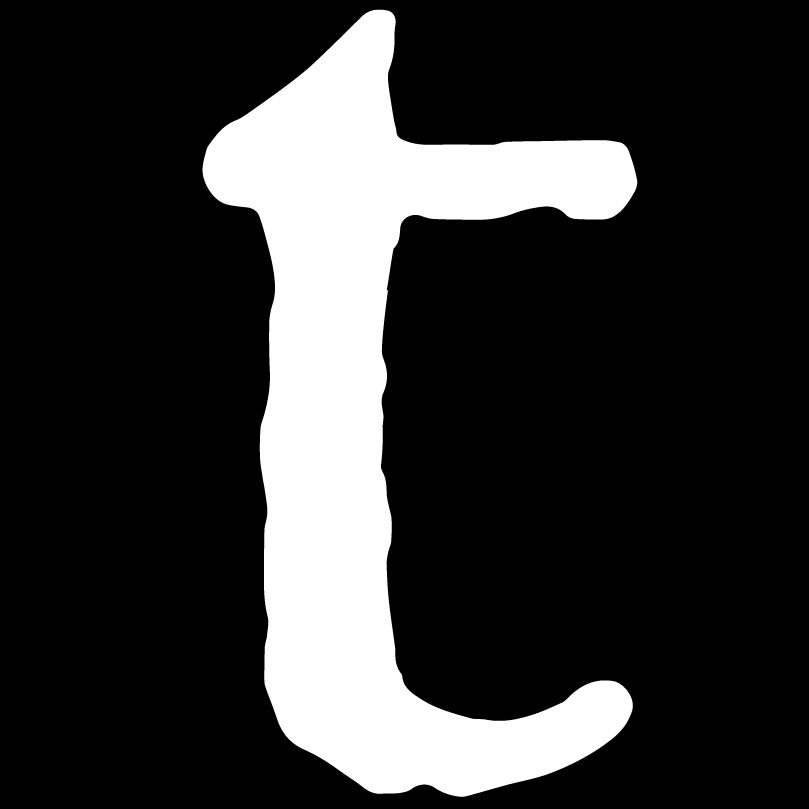
Predator drone aircraft. (Photo: Chad Slattery / Check6.com)
In November 2001, during the Bush administration's foreshortened war against al-Qaeda in Afghanistan, a US missile slammed into the broadcasting headquarters of Al Jazeera in Kabul. In March 2004, Israeli helicopters flew over a mosque in northern Gaza shortly after morning prayers and fired three missiles to kill Hamas founder Sheikh Ahmed Yassin. And just last week in Pakistan's unruly frontier area, a US drone fired into a guest-house, reportedly killing 12 people, while a helicopter gunship flew several miles into the area on a "snatch and grab" operation against suspected Taliban and al-Qaeda terrorists.
Hold these diverse military operations in mind as you listen to journalist Bob Woodward's revelation that the American military has developed "secret operational capabilities ... to locate, target and kill leaders of al-Qaeda in Iraq, insurgent leaders, renegade militia leaders."
Also see:
Steve Weissman | But What About Al Jazeera? •
Steve Weissman | The Killing of Sheik Yassin •
"This is very sensitive and very top secret," Woodward declared on CBS's "60 Minutes" in an interview promoting his new book, "The War Within: Secret White House History 2006-2008." He said, "This is one of the true breakthroughs."
On CNN's "Larry King Live," he enthused, "It is a wonderful example of American ingenuity solving a problem in war, as we often have."
Woodward compared the development of these new capabilities to the multibillion-dollar Manhattan Project, the top-secret effort to create the first atomic bomb during World War II. He also gave the secret killings major credit for reducing the violence in Iraq, seeing them as more of a game-changer than the surge of 30,000 US troops, on which Senator John McCain has built so much of his campaign for president.
Refusing to reveal details, Woodward insisted that too much talk could compromise the program and "get people killed," a bizarre turn of phrase about a program whose purpose was to get people killed. In any case, Woodward would tell only enough to hype his book, and not a single word more. Such is the discretion required of a Pulitzer Prize-winning author permanently embedded in the Washington power structure.
Were he less enthralled, Woodward might have admitted that at least some of his sources wanted to publicize their project. As evidence, take National Security Adviser Stephen Hadley's response to the revelations. Even as he rushed to insist on the primary importance of the surge, he took pains to acknowledge the existence of the "newly developed techniques and operations."
Even more to the point, the Pentagon has for years talked openly about the black arts that Woodward would describe only in a stage whisper. As early as the summer of 2004, the Defense Science Board called for a "Manhattan Project" to give the military 21st century technologies for identifying, locating, and tracking terrorists - both abroad and at home. More recently, the Pentagon's Special Operations Command posted online a September 2007 slide show on "Continuous Clandestine Tagging, Tracking, and Locating (CTTL)."
Earlier targeted operations, such as the attack on Al Jazeera in Kabul, depended on electronic monitoring of cell phones and satellite up-links, while the Israelis have found their targets with the help of both electronic intercepts and spies on the ground. The Pentagon's latest plans for CTTL go far beyond, and include everything from covertly tagging suspects with microscopic radio chips to tracking them by the way they walk and even they way they smell.
The whole business has all the whiz-bang of science fiction, and even a hint of its possibilities could be expected to terrorize the terrorists, which might be the reason that someone in high places wanted Woodward to spread the word. But beyond CTTL's wizardry, both real and imagined, Woodward's gung-ho enthusiasm blinded him to the obvious question. No matter how brilliantly done, does targeted killing work in the long run against a popularly supported resistance to colonial rule?
The Israelis have spent years developing many of the same technologies as the Pentagon, but so far the dramatic killings of Sheik Yassin and others have only built Palestinian support for Hamas.
SURPRISE! SURPRISE! This is typical human behavior, under the circumstances.
The United States tried targeted killing in Vietnam with the decidedly low-tech Phoenix Program: identifying, torturing and killing thousands of the National Liberation Front's political cadre. For all the electric shocks and bullets to the brain, the program failed, as the world saw in April 1975 when American helicopters beat a hasty retreat from the rooftop of the embassy in Saigon.
And, now on the Pakistani frontier, the White House wants Osama's head before the end of George W. Bush's presidency. So, American drones and commandos are waging an undeclared war that could well topple the country's democratically elected government.
These are the horrors that happen when journalists give up their role as watchdogs and become running dogs for Shock and Awe, surgical strikes, enhanced interrogation techniques, the latest counter-insurgency tactics, or whatever else the National Security State wants to sell. But the horror will be far worse if we forget that the Pentagon has explicitly committed itself to make its new tagging, targeting and locating technology available for use within the United States.
A veteran of the Berkeley Free Speech Movement and the New Left monthly Ramparts, Steve Weissman lived for many years in London, working as a magazine writer and television producer. He now lives and works in France.
(In accordance with Title 17 U.S.C. Section 107, this material is distributed without profit to those who have expressed a prior interest in receiving the included information for research and educational purposes. I.U. has no affiliation whatsoever with the originator of this article nor is I.U endorsed or sponsored by the originator.)
The Nazis, Fascists and Communists were political parties before they became enemies of liberty and mass murderers.
Saturday, September 13, 2008
US Bailout of Mortgage Giants Sets Stage for Wider Financial Crisis
We Are All So Screwed!!!!
By Barry Grey
12/09/08 WSW" -- - -Since the Bush administration announced on Sunday the US government takeover of mortgage finance giants Fannie Mae and Freddie Mac, in the largest corporate bailout in American history, developments have underscored the profound and systemic nature of the crisis that precipitated the action.
A week of wild gyrations on US stock markets, fueled by fears of an impending collapse of the Wall Street investment bank Lehman Brothers and the country’s largest savings and loan bank, Washington Mutual, demonstrates that the rescue of the government-sponsored mortgage companies is a stop-gap measure that does not begin to resolve the underlying crisis of American capitalism.
On the contrary, the bailout of Fannie Mae and Freddie Mac sets the stage for an intensification of the crisis in the coming months. At heart, the demise of the mortgage firms, which account for 80 percent of new home mortgages in the US and have a combined liability of $5.3 trillion in mortgage-backed securities which they own or guarantee, is a result of the collapse of the colossal credit bubble which sustained the super-profits of US banks and investment firms and the seven- and eight-figure salaries of their top executives.
It is the product of an economic system that has increasingly based itself on speculation and various forms of economic parasitism, while gutting the productive base of the country—at the cost of millions of jobs and the living standards of the American working class.
The decay of American capitalism has produced an economy that is drowning in debt and is dependent on massive inflows of capital from abroad for its survival. Now, the assumption by the government of the debt of the mortgage companies, carried out to protect the financial interests of banks and big investors, has placed a question mark over the solvency of the US government itself.
This threatens a curtailment of the inflow of international capital, a further erosion in the status of the US dollar and a drastic increase in the interest paid by the government to borrow money from its creditors. The US is already by far the world’s biggest debtor nation, with a balance of payments deficit of $800 billion and an economy that is sustained by a yearly inflow of $1 trillion in overseas capital.
The quantum leap in the national debt and government budget deficits resulting from the bailout of Fannie Mae and Freddie Mac—and the further corporate bailouts that are all but certain to follow—must inevitably lead to a realignment of social conditions within the US in accordance with the actual, deeply eroded, position of the United States in the world economy. This means an even more drastic lowering of the living standards of the American people.
On Tuesday, the Congressional Budget Office (CBO) declared that as a result of the government bailout, the finances of Fannie Mae and Freddie Mac had to be “directly incorporated into the federal budget,” and its liabilities added to the US national debt. This means, in effect, a near doubling of the US sovereign debt to a figure equivalent to the country’s gross domestic product (GDP).
The Financial Times reported Wednesday that the bailout had already resulted in a sharp rise in the price of credit default swaps on five-year US government debt. Credit default swaps are private contracts to buy insurance against the default of various forms of debt.
As the Financial Times wrote, “... the price suggests the market believes the US government is more likely to default on its obligations than some other industrialised countries.” It went on to cite a credit research strategist as saying, “The USA is now ‘riskier’ than Norway, Germany, Netherlands, Sweden, Finland, Austria, France, Denmark, Quebec and Japan.”
The CBO statement on Fannie Mae and Freddie Mac accompanied its report on the US government budget deficit for the current fiscal year, which ends September 31, and its projections for fiscal 2009 and beyond. The CBO put the current deficit at $407 billion, more than double the $161 billion deficit for fiscal 2007.
It projected, on the basis of current tax laws, that the budget gap would rise to a record $438 billion in the 2009 fiscal year that begins October 1. However, as CBO Director Peter Orszag noted, that figure could easily climb to $540 billion if Congress acts in the coming months, as expected, to curtail the growth in the alternative minimum tax and extend a variety of expiring business tax breaks.
Orszag further noted that these figures did not take into account the full scale of government expenditures related to the bailout of Fannie Mae and Freddie Mac. Treasury Secretary Henry Paulson said on Sunday the government would commit up to $200 billion to prop up the companies. Given the continuing decline in home prices and rise in foreclosures, that figure is virtually certain to rise by tens, if not hundreds, of billions.
Orszag said that the deficit would remain at between 3 and 4 percent of the GDP for the next decade, resulting in a $7 trillion rise in the national debt. Even these dire projections assume that Bush’s massive tax cuts for the rich will not be extended beyond their scheduled expiration in 2010.
Significantly, Orszag pointed to government health care spending—not the cost of corporate bailouts or the wars in Iraq and Afghanistan (which have to date consumed a combined sum of $850 billion)—as the main source of exploding deficits going forward. The CBO warned that Medicare and Medicaid spending, which currently account for an estimated 4.6 percent of GDP, could account for up to 12 percent of GDP by 2050.
The mounting financial crisis of American capitalism was further underscored by the Commerce Department’s report Thursday on the US trade deficit, which surged in July by 5.2 percent to $62.2 billion, the highest level in 16 months.
The headlong rush of Lehman Brothers and Washington Mutual toward collapse—or new federal bailouts—within days of the government takeover of Fannie Mae and Freddie Mac has underscored the depth of the financial crisis.
The stock of the 158-year-old Wall Street investment bank collapsed this week after it was reported that Lehman’s efforts to secure a capital infusion from the state-owned Korea Development Bank had collapsed. At the close of the financial markets on Thursday, the value of Lehman’s stock—down by more than 90 percent since its peak last February—was about $2.9 billion. It stood at $37.2 billion at the start of 2008.
Once the biggest underwriter of mortgage-backed securities, the firm has seen its speculative investments collapse and would have already gone bankrupt were it not for the Federal Reserve’s decision, taken at the time of the government-subsidized sale of Bear Stearns to JP Morgan Chase last March, to extend low-cost loans to investment banks and accept virtually worthless mortgage-related securities in return for highly rated Treasury securities.
It was reported Thursday that the firm was in talks with potential buyers, including Bank of America, for a buyout that would avoid bankruptcy or a government bailout—at the cost of billions in losses to shareholders and the jobs of thousands of Lehman employees. On Wednesday, when it announced a third quarter loss of $3.9 billion and a plan to spin off much of its business and shrink its operations, the company said it was slashing 1,000 to 1,500 jobs, its fourth round of layoffs this year.
Over the past year, US banks and brokerages have cut more than 110,000 jobs.
The collapse of both Lehman and the two government-sponsored mortgage giants starkly illustrates the immense dependence of American capitalism on overseas capital. Lehman went to ground after its bid for funds from a South Korean bank failed, and the government bailout of Fannie Mae and Freddie Mac was precipitated by the dumping of the firms’ securities by central banks and major investors in Asia and Russia.
The stock of the giant savings and loan bank Washington Mutual, which has some $180 billion in mortgage-related loans, has fallen by 34 percent since Monday and 92 percent over the past year. This week it reported a $3.33 billion second quarter net loss and has said its mortgage losses could reach $19 billion through 2011.
Raising the possibility of another government bailout, Christopher Whalen, a managing partner at Institutional Risk Analytics, said of Washington Mutual, “If this goes on until the end of the year, the bank is either going to have to be sold or recapitalized by the government. Those are the only choices.”
The Financial Times on Wednesday worried that the massive US budget deficits were limiting the ability of the government to continue propping up Wall Street with injections of hundreds of billions in capital. It wrote:
“Yesterday’s new deficit projections by the Congressional Budget Office highlight the troubled state of US government finances as it embarks on a new stage of interventions to contain the chronic impact of the credit crisis....
“Some economists worry that as the Federal Reserve has spent much of its ammunition, and as fighting the credit crisis falls more to the government, weak public finances mean the government does not have unlimited ammunition either.”
Noting that the Federal Reserve was seeking to conserve its capital for further corporate bailouts, the newspaper wrote, “Many Fed officials share this view, which is why the Fed is lukewarm on further fiscal stimulus, preferring to see the limited government funds spent on shoring up the financial system.”
The response to mushrooming budget deficits and soaring national indebtedness, as well as the spreading crisis on Wall Street, by the next administration, whether headed by Republican John McCain or Democrat Barack Obama, will be a policy of brutal austerity directed against the working class.
One can safely predict that not long after the November election, the incoming president will announce that his transition advisers have shown him the country’s financial books, that the dire state of the nation’s economy makes inoperative any and all promises of health care reform or relief to distressed homeowners, and that a regime of discipline and “sacrifice” will have to be imposed in the “national interest.”
Senator Kent Conrad, the Democratic chairman of the Senate Budget Committee, sounded just such a note when he said, in response to the CBO report, that “the next president will be inheriting a budget and economic outlook that is far worse than most people realize.”
As the CBO report indicates, the next administration will be tasked with dismantling basic entitlement programs such as Medicare and Medicaid.
Copyright 1998-2008 - World Socialist Web Site - All rights reserved
(In accordance with Title 17 U.S.C. Section 107, this material is distributed without profit to those who have expressed a prior interest in receiving the included information for research and educational purposes. I.U. has no affiliation whatsoever with the originator of this article nor is I.U endorsed or sponsored by the originator.)
The Nazis, Fascists and Communists were political parties before they became enemies of liberty and mass murderers.
Saturday, August 30, 2008
Super Imperialism
Michael Hudson: "Greenspan saw his job as a cheerleader for people who were able to get rich fast; sort of like a pilot fish for sharks"
Mike Whitney Interviews Michael Hudson
29/08/08 "ICH" -- -- 1 Mike Whitney: The United States current account deficit is roughly $700 billion. That is enough "borrowed" capital to pay the yearly $120 billion cost of the war in Iraq, the entire $450 billion Pentagon budget, and Bush's tax cuts for the rich. Why does the rest of the world keep financing America's militarism via the current account deficit or is it just the unavoidable consequence of currency deregulation, "dollar hegemony" and globalization?
Michael Hudson: As I explained in Super Imperialism, central banks in other countries buy dollars not because they think dollar assets are a “good buy,” but because if they did NOT recycle their trade surpluses and U.S. buyout spending and military spending by buying U.S. Treasury, Fannie Mae and other bonds, their currencies would rise against the dollar. This would price their exporters out of dollarized world markets. So the United States can spend money and get a free ride.
The solution is (1) capital controls to block further dollar receipts, (2) floating tariffs against imports from dollarized economies, (3) buyouts of U.S. investments in dollar-recipient countries (so that Europe and Asia would use their central bank dollars to buy out U.S. private investments at book value), (4) subsidized exports to dollarized economies with depreciating currency, and similar responses that the United States would adopt if it were in the position of a payments-surplus country. In other words, Europe and Asia would treat the United States as its Washington Consensus boys treat Third World debtors: buy out their raw materials and other industries, their export plantations, and their governments.
2 MW---Economist Henry Liu said in his article "Dollar hegemony enables the US to own indirectly but essentially the entire global economy by requiring its wealth to be denominated in fiat dollars that the US can print at will with little in the way of monetary penalties.....World trade is now a game in which the US produces fiat dollars of uncertain exchange value and zero intrinsic value, and the rest of the world produces goods and services that fiat dollars can buy at "market prices" quoted in dollars." Is Liu overstating the case or have the Federal Reserve and western banking elites really figured out how to maintain imperial control over the global economy simply by ensuring that most energy, commodities, and manufactured goods are denominated in dollars? If that's the case, then it would seem that the actual "face-value" of the dollar does not matter as much as long as it continues to be used in the purchase of commodities. Is this right?
Michael Hudson: Henry Liu and I have been discussing this for many years now. We are in full agreement. The paragraph you quote is quite right. His Asia Times articles provide a running analysis of dollar hegemony.
3 MW---What is the relationship between stagnant wages for workers and the current credit crisis? If workers wages had kept up with the rate of production, isn't it less likely that we would be in the jam we are today? And, if that is true, then shouldn't we be more focused on re-unionizing the labor force instead looking for solutions from the pathetic Democratic Party?
Michael Hudson: The credit crisis derives from “the magic of compound interest,” that is, the tendency of debts to keep on doubling and redoubling. Every rate of interest is a doubling time. No “real” economy’s production and economic surplus can keep up with this tendency of debt to grow faster. So the financial crisis would have occurred regardless of wage levels.
Quite simply, the price of home ownership tends to absorb all the disposable personal income of the homebuyer. So if wages would have risen more rapidly, the price of housing would simply have risen faster as employees pledged more take-home pay to carry larger mortgages. Stagnant wages merely helped keep down the price of houses to merely stratospheric levels, not ionospheric ones.
As for labor unions, they haven’t been any help at all in solving the housing crisis. In Germany where I am right now, unions have sponsored co-ops, as they used to do in New York City, at low membership costs. So housing costs only absorb about 20% of German family budgets, compared to twice that for the United States. Imagine what could be done if pension funds had put their money into housing for their contributors, instead of into the stock market to buy and bid up prices for the stocks that CEOs and other insiders were selling.
4 MW---When politicians or members of the foreign policy establishment talk about "integrating" Russia or China into the "international system"; what exactly do they mean? Do they mean the dollar-dominated system which is governed by the Fed, the World Bank, the IMF, and the WTO? Do countries compromise their national sovereignty when they participate in the US-led economic system?
Michael Hudson: By “integrating” they mean absorbing, something like a parasite integrating a host into its own control system. They mean that other countries will be prohibited under WTO and IMF rules from getting rich in the way that the United States got wealthy in the 19th and early 20th centuries. Only the United States will be permitted to subsidize its agriculture, thanks to its unique right to grandfather in its price supports. Only the United States will be free from having to raise interest rates to stabilize its balance of payments, and only it can devote its monetary policy to promoting easy credit and asset-price inflation. And only the United States can run a military deficit, obliging foreign central banks in dollar-recipient countries to give it a free ride. In other words, there is no free lunch for other countries, only for the United States.
Other countries do indeed give up their national sovereignty. The United States never has adjusted its economy to create equilibrium with other countries. But to be fair, in this respect only the United States is acting fully in its own self-interest. The problem is largely that other countries are not “playing the game.” They are not acting as real governments. It takes two to tango when one party gets a free ride. Their governments have become “enablers” of U.S. economic aggression.
5 MW---What do you think the Bush administration's reaction would be if a smaller country, like Switzerland, had sold hundreds of billions of dollars of worthless mortgage-backed securities to investment banks, insurance companies and investors in the United States? Wouldn't there be litigation and a demand that the responsible parties be held accountable? So, how do you explain the fact that China and the EU nations, that were the victims of this gigantic swindle, haven't boycotted US financial products or called for reparations?
Michael Hudson: International law is not clear on financial fraud. Caveat emptor is the rule. Foreign investors took a risk. They trusted a deregulated U.S. financial market that made it easiest to make money via financial fraud. Ultimately, they put their faith in neoliberal deregulation – at home as well as in the United States. England is now in the same mess. The “accountability” was supposed to lie with U.S. accounting firms and credit rating agencies. Foreign investors were so ideologically blinded by free market rhetoric that they actually believed the fantasies about “self-regulation” and self-regulating markets tending toward equilibrium rather than the real-world tendency toward financial and economic polarization.
In other words, most foreign investors lack a realistic body of economic theory. The United States could simply argue that they should take responsibility for their bad investments, just as U.S. pension funds and other investors are told to do.
6 MW---The Congress recently passed a bill that gives Treasury Secretary Henry Paulson the unprecedented authority to use as much money as he needs to keep Fannie Mae and Freddie Mac solvent. Paulson assured the Congress that he wouldn't need more than $25 billion but, the 400 page bill allows him to increase the national debt by $800 billion. How will the Fannie/Freddie bailout affect the dollar and the budget deficit? Are interest rates likely to skyrocket because of this action?
Michael Hudson: The Fed can flood the economy with money, Alan Greenspan-style, to prevent interest rates from skyrocketing. Nobody really knows what will happen to FNMA and Freddie Mac, but it looks like the mortgage and financial crisis will get much, much worse over the coming year. We are just heading into the storm where adjustable-rate mortgages (ARMs) are scheduled to reset at higher rates, and where U.S. banks have to roll over their existing debts in a market where foreign investors fear that these banks already have no net worth left.
So the principle here is “Big fish eat little fish.” Wall Street will be bailed out, and banks will be allowed to “earn their way out of debt” as they did after 1980, by exploiting retail customers, above all credit-card customers and individual borrowers. There will be a lot of bankruptcies, and people will suffer more than ever before because of the harsh pro-creditor bankruptcy law that Congress passed at the behest of the bank lobbyists.
7 MW---A few months ago, the Wall Street Journal ran an editorial which said that they could imagine two nightmare scenarios if the current credit crisis was not handled properly; either there would be a run on the dollar causing a sudden plunge in its value, or the unexpected failure of a major financial institution could send the stock market crashing. Last week, the former head of the IMF Kenneth Rogoff triggered a sell-off on Wall Street when he said, "We’re not just going to see mid-sized banks go under in the next few months, we’re going to see a whopper; we’re going to see a big one — one of the big investment banks or big banks." What happens if Rogoff is right and Merrill, Citi or Lehman go belly up? Is that enough to send the stock market freefalling?
Michael Hudson: Not necessarily. Citibank would be nationalized, then sold off. The principle should be that if a bank is “too big to fail,” it should be broken up.
This should start with a repeal of the Clinton Administration’s repeal of Glass-Steagall.
As for Lehman, that would be given the Bear Stearns treatment, and also sold off – probably to a hedge fund. Merrill is much larger, but it also could be parceled out, I suppose. The stock market’s financial index would plunge, but not necessarily industrial stock prices.
8 MW---According to MarketWatch: "In the three months from April to June, banks posted their second worst earnings performance since 1991.... Earnings for the quarter totaled just $5 billion, compared with $36.8 billion a year ago, a decline of 86.5%." Also, according to a front page article in the Wall Street Journal: "financial institutions will have to pay off at least $787 billion in floating rate notes and other medium term obligations before the end of 2009."
How are the banks going to pay off nearly $800 billion ($200 billion by December!) when they only earned a measly $5 billion in the quarter!?! And how in the world is the Federal Reserve going to keep the banking system functioning when earnings can't even cover current liabilities? Do the banks have some secret source of revenue we don't know about or is the system headed for disaster?
Michael Hudson: The traditional way to pay debt is with yet MORE debt. The interest due is simply added on to the principal, so that the debt grows exponentially. This is the real meaning of “the magic of compound interest.” It means not only that savings left to accumulate interest keep on doubling and redoubling, debts do to, because the savings that are lent out on the “asset” side of the creditor’s balance sheet (today, that of America’s wealthiest 10%) become debts on the “liabilities” side of the balance sheet (the “bottom 90%”).
The banks don’t have a secret source of revenue. It’s right out in the open. They will take their junk mortgages to the Federal Reserve and borrow the money at full face value. The government will be left with the junk.
It then can either take over the bank, as the Bank of England did with Northern Rock when it went bankrupt early this year, or it can let the bank “earn” money by stiffing its customers some more.
9 MW---From 2000 to 2006, the total retail value of housing in the United States doubled, going from roughly $11 trillion to $22 trillion in just 6 years. For the last 200 years, housing has barely kept pace with the rate of inflation, usually increasing 2 to 3% per year. The Federal Reserve's low interest rates were the main cause of this unprecedented housing bubble and, yet, ex-Fed chief Alan Greenspan still denies any responsibility for what "The Economist" calls "the largest bubble in history". Did Greenspan understand the problems he was creating with his "loose" monetary policies or was there some ulterior motive to his actions?
Michael Hudson: He simply didn’t care about the problem. He saw his job as a cheerleader for people who were able to get rich fast. These always had been his major clients in his years on Wall Street, and he saw himself as their servant – sort of like a pilot fish for sharks.
Mr. Greenspan’s idea of “wealth creation” was to take the line of least resistance and inflate asset prices. He thought that the way to enable the economy to carry its debt overhead was to inflate asset prices so that debtors could borrow the interest falling due by pledging collateral (real estate, stocks and bonds) that were rising in market price. To his Ayn-Rand view of the world, one way of making money was as economically and socially productive as any other way of doing so. Buying a property and waiting for its price to inflate was deemed as productive as investing in new means of production.
Ever since his days as co-founder of NABE (the National Association of Business Economists), Greenspan has long looked only at GNP and the national balance sheet as an economic indicator, being “value-free.” This is his intellectual and conceptual limitation. He wanted to provide a way for savvy investors to get rich, and the easiest way to get rich is to be passive and get a free lunch. His ideology led him to believe the “free market” ideology that the financial sector would be self-regulating and hence would act honestly. But he opened the floodgates to financial crooks. His set of measures did not distinguish between Countrywide Financial getting rich, Enron getting rich, or General Motors or industrial companies expanding their means of production. So the economy was being hollowed out, but this didn’t appear in any of the measures he looked at from his perch at the Federal Reserve.
So just as journalists and the mass media proclaim every market downturn as “surprising” and “unexpected,” he was as clueless as a lemming running headlong over the cliff. It’s an inherent instinct for free-market boys.
10 MW---The housing market is free falling, setting new records every day for foreclosures, inventory, and declining prices. The banking system is in even worse shape; under-capitalized and buried under a mountain of downgraded assets. There seems to be growing consensus that these problems are not just part of a normal economic downturn, but the direct result of the Fed's monetary policies. Are we seeing the collapse of the Central banking model as a way of regulating the markets? Do you think the present crisis will strengthen the existing system or make it easier for the American people to assert greater control over monetary policy?
Michael Hudson: What do you mean “failure”? Your perspective is from the bottom looking up. But the financial model has been a great success from the vantage point of the top of the economic pyramid looking down? The economy has polarized to the point where the wealthiest 10% now own 85% of the nation’s wealth. Never before have the bottom 90% been so highly indebted, so dependent on the wealthy. From their point of view, their power has exceeded that of any time in which economic statistics have been kept.
You have to realize that what they’re trying to do is to roll back the Enlightenment, roll back the moral philosophy and social values of classical political economy and its culmination in Progressive Era legislation, as well as the New Deal institutions. They’re not trying to make the economy more equal, and they’re not trying to share power. Their greed is (as Aristotle noted) infinite. So what you find to be a violation of traditional values is a re-assertion of pre-industrial, feudal values. The economy is being set back on the road to debt peonage. The Road to Serfdom is not government sponsorship of economic progress and rising living standards; it’s the dismantling of government, the dissolution of regulatory agencies, to create a new feudal-type elite.
The former Soviet Union provides a model of what the neoliberals would like to create. Not only in Russia but also in the Baltic States and other former Soviet republics, they created local kleptocracies, Pinochet-style. In Russia, the kleptocrats founded an explicitly Pinochetista party, the Party of Right Forces (“Right” as in right-wing).
In order for the American people or any other people to assert greater control over monetary policy, they need to have a doctrine of just what a good monetary policy would be. Early in the 19th century the followers of St. Simon in France began to develop such a policy. By the end of that century, Central Europe implemented this policy, mobilizing the banking and financial system to promote industrialization, in consultation with the government (and catalyzed by military and naval spending, to be sure). But all this has disappeared from the history of economic thought, which no longer is even taught to economics students. The Chicago Boys have succeeded in censoring any alternative to their free-market rationalization of asset stripping and economic polarization.
My own model would be to make central banks part of the Treasury, not simply the board of directors of the rapacious commercial banking system. You mentioned Henry Liu’s writings earlier, and I think he has come to the same conclusion in his Asia Times articles.
11 MW---Do you see the Federal Reserve as an economic organization designed primarily to maintain order in the markets via interest rates and regulation or a political institution whose objectives are to impose an American-dominated model of capitalism on the rest of the world?
Michael Hudson: Surely, you jest! The Fed has turned “maintaining order” into a euphemism for consolidating power by the financial sector and the FIRE sector generally (Finance, Insurance and Real Estate) over the “real” economy of production and consumption. Its leaders see their job as being to act on behalf of the commercial banking system to enable it to make money off the rest of the economy. It acts as the Board of Directors to fight regulation, to support Wall Street, to block any revival of anti-usury laws, to promote “free markets” almost indistinguishable from outright financial fraud, to decriminalize bad behavior – and most of all to inflate the price of property relative to the wages of labor and even relative to the profits of industry.
The Fed’s job is not really to impose the Washington Consensus on the rest of the world. That’s the job of the World Bank and IMF, coordinated via the Treasury (viz. Robert Rubin under Clinton most notoriously) and AID, along with the covert actions of the CIA and the National Endowment for Democracy. You don’t need monetary policy to do this – only massive bribery. Only call it “lobbying” and the promotion of democratic values – values to fight government power to regulate or control finance across the world. Financial power is inherently cosmopolitan and, as such, antagonistic to the power of national governments.
The Fed and other government agencies, Wall Street and the rest of the economy form part of an overall system. Each agency must be viewed in the context of this system and its dynamics – and these dynamics are polarizing, above all from financial causes. So we are back to the “magic of compound interest,” now expanded to include “free” credit creation and arbitraging.
The problem is that none of this appears in the academic curriculum. And the silence of the major media to address it or even to acknowledge it means that it is invisible except to the beneficiaries who are running the system.
Michael Hudson is a former Wall Street economist specializing in the balance of payments and real estate at the Chase Manhattan Bank (now JP Morgan Chase & Co.), Arthur Anderson, and later at the Hudson Institute (no relation). In 1990 he helped established the world’s first sovereign debt fund for Scudder Stevens & Clark. Dr. Hudson was Dennis Kucinich’s Chief Economic Advisor in the recent Democratic primary presidential campaign, and has advised the U.S., Canadian, Mexican and Latvian governments, as well as the United Nations Institute for Training and Research (UNITAR). A Distinguished Research Professor at University of Missouri, Kansas City (UMKC), he is the author of many books, including Super Imperialism: The Economic Strategy of American Empire (new ed., Pluto Press, 2002
(In accordance with Title 17 U.S.C. Section 107, this material is distributed without profit to those who have expressed a prior interest in receiving the included information for research and educational purposes. I.U. has no affiliation whatsoever with the originator of this article nor is I.U endorsed or sponsored by the originator.)
The Nazis, Fascists and Communists were political parties before they became enemies of liberty and mass murderers.
Friday, August 15, 2008
How To Conceal Massive Economic Collapse
www.opednews.com/articles/WAG-THE-DOG-HOW-TO-CONCEA-by-Ellen...
What to do? War and threats of war have been used historically to distract the population and deflect public scrutiny from economic calamity. As the scheme was summed up in the trailer to the 1997 movie “Wag the Dog” -- “There’s a crisis in the White House, and to save the election, they’d have to fake a war.”
Perhaps that explains the sudden breakout of war in the Eurasian country of Georgia on August 8, just 3 months before the November elections. August 8 was the day the Olympic Games began in Beijing, a distraction that may have been timed to keep China from intervening on Russia’s behalf. The mainstream media version of events is that Russia, the bully on the block, invaded its tiny neighbor Georgia; but not all commentators agree.
Mikhail Gorbachev, writing in The Washington Post on August 12, observed: “What happened on the night of Aug. 7 is beyond comprehension. The Georgian military attacked the South Ossetian capital of Tskhinvali with multiple rocket launchers designed to devastate large areas. Russia had to respond. To accuse it of aggression against 'small, defenseless Georgia' is not just hypocritical but shows a lack of humanity. . . . The Georgian leadership could do this only with the perceived support and encouragement of a much more powerful force.”4 Note: Brzezinski! Not a nice fellow when it comes to what he thinks about Russia...
Perhaps that explains the sudden breakout of war in the Eurasian country of Georgia on August 8, just 3 months before the November elections. August 8 was the day the Olympic Games began in Beijing, a distraction that may have been timed to keep China from intervening on Russia’s behalf. The mainstream media version of events is that Russia, the bully on the block, invaded its tiny neighbor Georgia; but not all commentators agree.
Mikhail Gorbachev, writing in The Washington Post on August 12, observed: “What happened on the night of Aug. 7 is beyond comprehension. The Georgian military attacked the South Ossetian capital of Tskhinvali with multiple rocket launchers designed to devastate large areas. Russia had to respond. To accuse it of aggression against 'small, defenseless Georgia' is not just hypocritical but shows a lack of humanity. . . . The Georgian leadership could do this only with the perceived support and encouragement of a much more powerful force.”4 Note: Brzezinski! Not a nice fellow when it comes to what he thinks about Russia...
(In accordance with Title 17 U.S.C. Section 107, this material is distributed without profit to those who have expressed a prior interest in receiving the included information for research and educational purposes. I.U. has no affiliation whatsoever with the originator of this article nor is I.U endorsed or sponsored by the originator.)
The Nazis, Fascists and Communists were political parties before they became enemies of liberty and mass murderers.
Thursday, July 17, 2008
Economy In Turmoil
U.S. Financial Crisis Increasingly Infecting The Rest of the World
(In accordance with Title 17 U.S.C. Section 107, this material is distributed without profit to those who have expressed a prior interest in receiving the included information for research and educational purposes. I.U. has no affiliation whatsoever with the originator of this article nor is I.U endorsed or sponsored by the originator.)
The Nazis, Fascists and Communists were political parties before they became enemies of liberty and mass murderers.
By Anthony Faiola and Neil Irwin
Washington Post Staff Writers
Wednesday, July 16, 2008; A01
Fresh worries spread through world markets yesterday as a crisis of confidence battered more U.S. financial institutions and the chairman of the Federal Reserve issued a sober assessment of the country's economic woes. It appeared to mark a new phase in the U.S. financial crisis, with fears of a contagion effect that could yet weigh more heavily on the global economy.
With world capital markets interconnected as never before -- financial problems at U.S. banks are affecting pension funds in Japan as well as depositors in California -- a mounting sense that America's financial crisis is still far from touching bottom is adding to global troubles, including rising overall inflation and soaring energy prices.
In Paris and London, stock markets fell yesterday to their lowest levels since 2005, partly as investors doubted plans unveiled by U.S. regulators this weekend to prop up the ailing government-sponsored mortgage giants Fannie Mae and Freddie Mac. In Tokyo, the benchmark stock index fell 2 percent, slipping to levels not seen in 3 1/2 months as the Nikkei newspaper reported that Japan's three largest banks were holding at least $44.2 billion in debt issued by Fannie Mae and Freddie Mac.
The dollar fell to a new low against the euro, though in one piece of good news, oil prices fell sharply, a key reason that the U.S. stock market was down only 1.1 percent, as measured by the Standard & Poor's 500-stock index.
The gloomy environment reflects a financial crisis that began last summer and now has spread to regional banks as well as Fannie Mae and Freddie Mac. U.S. Bancorp missed earnings projections, and a leading analyst issued a dire warning on a mountain of potentially bad debt held by banking giant Wachovia. International news agencies beamed images of panicked Californians jostling to get their savings out of the failed IndyMac Bancorp -- images once associated with developing nations and not the world's economic powerhouse.
President Bush yesterday sought to reassure shaky markets and frightened consumers, asserting that the U.S. economy is fundamentally sound and urging Congress to quickly pass legislation to shore up the government-sponsored lenders. He downplayed predictions that a large number of banks may be on the verge of failure and explained at length about the federal insurance system that guarantees deposits up to $100,000.
"I understand there is a lot of nervousness," Bush said. "But the economy is growing, productivity is high, trade is up, people are working. It's not as good as we'd like, but to the extent that we find weakness, we'll move."
Yet the tipping points of economic crises, analysts said, are almost always more about psychology than fundamentals, with panic over a bank's insolvency, for instance, potentially becoming a self-fulfilling prophecy.
"I think the problem now is a general confidence crisis that is complicated by some global contagion that's now spreading," said Brian Bethune, a chief economist with Global Insight of Lexington, Mass.
U.S regulators "need to act promptly and forcefully to break the psychology," he said. "I think the Treasury needs to be a bit more clear about what they're planning to do to shore up Fannie Mae and Freddie Mac. The details are still vague, and there is no room for that now."
Federal Reserve Chairman Ben S. Bernanke, testifying before Congress, painted a picture of a U.S. economy being squeezed from all directions. He cited the "numerous difficulties" that the central bank -- and all Americans -- are grappling with: "ongoing strains in financial markets; declining house prices; a softening labor market; and rising prices of oil, food and some other commodities."
Less than a month ago, the Fed had indicated that rising inflation was starting to become a bigger concern than the slumping economy. Since then, the stock market has fallen sharply and broader problems have emerged in financial markets, and there have been new signs of slowing global growth. That led Bernanke, in his semi-annual report to Congress on the economy, to emphasize the risks of high inflation and a weak economy in equal measure.
"The possibility of higher energy prices, tighter credit conditions and a still-deeper contraction in housing markets all represent significant downside risks to the outlook for growth," Bernanke told the Senate Banking Committee. "At the same time, upside risks to the inflation outlook have intensified lately as the rising prices of energy and some other commodities have led to a sharp pickup in inflation and some measures of inflation expectations have moved higher."
That language suggests that the Fed is still in a wait-and-see posture on monetary policy. If oil prices were to skyrocket anew or there were signs that Americans' expectations for inflation were becoming unhinged, the Fed could increase short-term interest rates to combat inflation. If there were new signs that the economy is getting far worse than expected, it could lower interest rates again, resuming a rate-cutting campaign that ran from September to April.
But more likely than either of those is that the Fed will leave the federal funds rate unchanged in the foreseeable future.
Despite the dour outlook, Bernanke offered no support for calls from some Democrats to enact a second economic stimulus package to try to bolster American consumers as the impact of the stimulus plan enacted early in the year wears off. "My own sense is that we are still trying to assess the effects of the first round," he said. "It might be yet a bit more time before we fully understand the extent to which additional stimulus may or may not be needed."
The Fed chairman saw some bright spots, noting that Americans' spending has held up better than might be expected given all the headwinds they face. Projections released yesterday showed that the 17 top leaders of the Federal Reserve were slightly more optimistic about the outlook for growth this year than they had been in April -- but significantly more pessimistic about inflation.
Bernanke, too, expressed continued deep worries about rising prices, saying that higher gasoline prices mean that inflation "seems likely to move temporarily higher in the near term" and that businesses may to try to pass along higher energy costs to consumers "more aggressively than they have so far."
Global concern is mounting for several reasons. First, foreign financial institutions are heavily exposed to U.S. lending giants, and an estimated 50 percent of U.S. mortgage-backed securities are held by foreign investors.
While Citibank and Merrill Lynch have been forced to take massive write-downs on bad U.S. loans, so, too, have the Swiss banking giant UBS and Germany's IKB Deutsche Industriebank. In Norway, eight towns have reported losing at least $125 million on their investments in U.S. mortgages. In Japan, several pension funds have significant portions of their investments in debt issued by Fannie Mae and Freddie Mac. American woes have fostered a global credit crunch, claiming overseas victims such as Britain's Northern Rock, where a lack of liquidity led to its nationalization by the British government in February.
Of equal concern is that U.S. consumers, who gobble up more foreign goods than the citizens of any other land, will be forced to downscale their lifestyles significantly in the face of falling housing values, rising unemployment and a possible recession.
One camp of economists has argued that the rest of the world has to some measure "decoupled" from the U.S. economy -- with consumers in Europe, Asian powerhouses such as China and India, and fast-growing Latin America potentially blunting the drag on the global economy from a U.S. recession. But others have argued that soaring energy prices, rising inflation and a weakening dollar are already zapping the strength out of the world economy, with a full blown U.S. recession likely to take the wind out of the sails of global growth.
"The rest of the world has accumulated U.S. assets, and if these prices go down, the rest of the world suffers," said Alex Patelis, head of international economics for Merrill Lynch in London. "That said, many foreign banks are still doing very well. In Japan, for example, you have one of the healthiest banking sectors around. So there is a global impact, but the biggest impact is still going to be in the United States."
(In accordance with Title 17 U.S.C. Section 107, this material is distributed without profit to those who have expressed a prior interest in receiving the included information for research and educational purposes. I.U. has no affiliation whatsoever with the originator of this article nor is I.U endorsed or sponsored by the originator.)
The Nazis, Fascists and Communists were political parties before they became enemies of liberty and mass murderers.
Americans Losing Faith In Free Markets
Could it be that Americans have realized, finally, that the markets aren't free, but a fixed game that favors wealthy investors in private investor clubs like the Carlyle Group and others, as well as hedge funds?
(In accordance with Title 17 U.S.C. Section 107, this material is distributed without profit to those who have expressed a prior interest in receiving the included information for research and educational purposes. I.U. has no affiliation whatsoever with the originator of this article nor is I.U endorsed or sponsored by the originator.)
The Nazis, Fascists and Communists were political parties before they became enemies of liberty and mass murderers.
http://www.latimes.com/news/nationworld/nation/la-na-losingfaith16-2008jul16,0,1516735.story
By Peter G. Gosselin
Los Angeles Times Staff Writer
July 16, 2008
WASHINGTON — For a generation, most people accepted the idea that the core of what makes America tick was an economy governed by free markets. And whatever combination of goods, services and jobs the market cooked up was presumed to be fine for the nation and for its citizens -- certainly better than government meddling.
No longer.
Spurred by the continued housing crisis, turmoil in financial markets, spiking oil prices, disappearing jobs and shrinking retirement savings, the nation and its political leaders have begun to sour on the notion that the current market system is the key to a fair, stable and efficient society.
"We're at a hinge point," said William A. Galston, a senior fellow at the Brookings Institution in Washington who helped craft President Clinton's market-friendly agenda during the 1990s. "The strong presumption in favor of markets, which has dominated public policy since the late 1970s, has been thrown very much into question."
Now, to a degree not seen in years, politicians and outside experts are looking with favor at more, not less, government involvement in the economy.
Of course, Americans always grouse during troubled times. And as market advocates are quick to point out, the current run of bad economic breaks has yet to result in the throwing over of free-market principles in favor of some drastically different approach -- such as a government-directed economy.
"There may be a backlash against markets at the moment," acknowledged Kevin A. Hassett, economic studies director at the American Enterprise Institute in Washington and an advisor to presumed Republican presidential nominee John McCain. "But the backlash doesn't seem to be informed by any alternative view of how the world works."
Yet the sheer volume of setbacks that people have been dealt has sent consumer confidence to some of its lowest levels in half a century, according to Reuters/University of Michigan surveys. A remarkable 84% of Americans are convinced that the nation is on the "wrong track," according to a recent Gallup poll.
In just the last week, the financial markets have provided ample new evidence that markets are not working smoothly.
Washington had to ride to the rescue of two government-chartered mortgage giants -- Fannie Mae and Freddie Mac, which hold or guarantee nearly half of the nation's $12 trillion in mortgage debt -- after investors all but extinguished the pair's market value amid fears that falling home prices would push them into insolvency.
Meanwhile, federal regulators seized IndyMac Bancorp, a $32-billion mortgage lender based in Pasadena, in what regulators called the second-largest bank failure in U.S. history. And the already battered stock market took another sharp dip.
The fact that experts keep pushing back the date when conditions may improve and the failure thus far of any national leader -- including either of the major-party presidential candidates -- to offer a convincing vision of how America will make its way back to sustained prosperity suggest that the current crisis will probably be very different from other recent economic bad patches.
So may Americans' reaction to it.
Even the Bush administration, which took office arguing that the Social Security crisis could be solved, in part, by tying some of retirees' future benefits to Wall Street, has begun advocating more government regulation of financial markets. When Fannie Mae and Freddie Mac, which are government-chartered but investor-owned, began to teeter last week, the administration quietly went to work on possible government action.
"If the pendulum swung away from government toward much greater confidence in markets during the last generation, the pendulum is clearly swinging back again now," said Daniel Yergin, whose 1998 book with coauthor Joseph Stanislaw, "The Commanding Heights," chronicled the worldwide spread of the free-market credo.
"Everything is weighing in at the same time, and that affects how people view markets and government," Yergin said.
"Nobody in this country really believes in unfettered free markets, and nobody really believes in socialism," said UC Davis historian Eric Rauchway, but economic crises of the past have produced constituencies favoring the reining in of markets and regulation of the economy -- constituencies that ultimately grew large enough to produce change.
Consider just a few of the things that are pushing people in that direction now:
The price for a gallon of regular unleaded gasoline has nearly doubled in the last year, while that for a barrel of crude oil has more than doubled, cutting short Americans' love affair with gas-guzzlers and driving the nation's trucking, auto and airline industries into deep trouble.
Most mainstream economists assert that these increases are simply the logical outcome of booming global demand meeting limited global supply.
But the price run-ups seem out of whack with demand, which has increased only about 1% worldwide. The mismatch has fueled suspicion among many Americans and their political leaders that the third financial bubble of the decade -- after tech stocks and housing -- is underway, this time in energy.
Both presidential candidates have fingered market speculators, rather than the forces of supply and demand, for helping drive up prices.
At a recent hearing, Rep. John D. Dingell (D-Mich.) cornered the federal official whose agency regulates the market where oil futures are traded. "How is it that the market isn't working to the benefit of the consuming public?" the lawmaker demanded.
The agency has launched a number of studies to discover whether speculators are behind the price increases, the official answered.
"Don't tell me you're doing studies!" Dingell shot back. "You've spent more than a year sitting idly by" while oil prices jumped.
At least half a dozen measures have been introduced in Congress to limit speculation or to tax oil company profits.
Similar anger -- and similar legislative efforts to intervene in the marketplace -- can be seen in housing.
While Americans have been accustomed to some fluctuation in the value of their homes, most expected their houses to rise in value over time. And for much of the last several decades, that's what happened.
But starting in mid-2004, the upward arc of house prices began to flatten, and by 2007 it was falling -- sharply. Prices, especially along the West and East coasts, have skidded as much as 16% during the last year alone, their steepest decline in two decades. Many analysts predict further slippage.
In large part, the rise in house prices and the recent plunge grew out of an almost unregulated corner of the mortgage market -- the one for riskier loans.
As with fuel, "the message that Americans are getting is that something went wrong with the markets and you got hurt," said economist Robert E. Litan of the Brookings Institution and the Kauffman Foundation of Kansas City, Mo.
"With energy, it's the speculators. With housing, it's predatory lenders or crummy credit-rating agencies or stupid banks. We're not ready to throw out markets altogether," he said, "but we want government to do something about the excess."
A similar pattern of hopes raised and hopes dashed shows up in global trade and retirement investing.
Americans entered the new century convinced that "we had a new economy built on services and information technology that would let us win globally," said Harvard economist Robert Z. Lawrence.
"The whole premise of globalization in the year 2000 was that it worked well for us and the other developed countries but that the developing countries would need help," Lawrence said.
Today, virtually all those optimistic assumptions have been turned on their heads.
"We've seen unprecedented growth in the developing countries, while the developed countries are being led into a slowdown by the United States," Lawrence said.
"We've found out that instead of services and information technology, it's all about oil and other commodities" that are not the nation's strong suit.
Finally, when it comes to investment, especially for retirement, recent years have brought unsettling disappointments as the stock market has failed to regain and maintain the peaks that it reached in 2000.
An investor who put a dollar in a broad market index fund early in this decade not only would have made no money by today but would have lost a little of his initial amount.
That's a far cry from the 1990s, when people told pollsters that they expected to make 15% annual gains indefinitely.
Historians watching the nation's current economic and financial troubles say that just because Americans don't throw up their hands about markets and rush to an opposite pole, such as socialism, it doesn't mean that change isn't underway.
As UC Davis' Rauchway pointed out, the devastating panics and depressions of the late 19th century eventually resulted in the progressive reforms of the early 20th century and, later, the New Deal of the 1930s.
Today, Americans are not ready to throw out markets altogether, said economist Litan, but "what people may be demanding is New Deal lite."
peter.gosselin@latimes.com
From the Los Angeles Times
Things are hard all over the financial landscape, and politicians and experts are now looking with favor at more, not less, government involvement in the economy.
By Peter G. Gosselin
Los Angeles Times Staff Writer
July 16, 2008
WASHINGTON — For a generation, most people accepted the idea that the core of what makes America tick was an economy governed by free markets. And whatever combination of goods, services and jobs the market cooked up was presumed to be fine for the nation and for its citizens -- certainly better than government meddling.
No longer.
Spurred by the continued housing crisis, turmoil in financial markets, spiking oil prices, disappearing jobs and shrinking retirement savings, the nation and its political leaders have begun to sour on the notion that the current market system is the key to a fair, stable and efficient society.
"We're at a hinge point," said William A. Galston, a senior fellow at the Brookings Institution in Washington who helped craft President Clinton's market-friendly agenda during the 1990s. "The strong presumption in favor of markets, which has dominated public policy since the late 1970s, has been thrown very much into question."
Now, to a degree not seen in years, politicians and outside experts are looking with favor at more, not less, government involvement in the economy.
Of course, Americans always grouse during troubled times. And as market advocates are quick to point out, the current run of bad economic breaks has yet to result in the throwing over of free-market principles in favor of some drastically different approach -- such as a government-directed economy.
"There may be a backlash against markets at the moment," acknowledged Kevin A. Hassett, economic studies director at the American Enterprise Institute in Washington and an advisor to presumed Republican presidential nominee John McCain. "But the backlash doesn't seem to be informed by any alternative view of how the world works."
Yet the sheer volume of setbacks that people have been dealt has sent consumer confidence to some of its lowest levels in half a century, according to Reuters/University of Michigan surveys. A remarkable 84% of Americans are convinced that the nation is on the "wrong track," according to a recent Gallup poll.
In just the last week, the financial markets have provided ample new evidence that markets are not working smoothly.
Washington had to ride to the rescue of two government-chartered mortgage giants -- Fannie Mae and Freddie Mac, which hold or guarantee nearly half of the nation's $12 trillion in mortgage debt -- after investors all but extinguished the pair's market value amid fears that falling home prices would push them into insolvency.
Meanwhile, federal regulators seized IndyMac Bancorp, a $32-billion mortgage lender based in Pasadena, in what regulators called the second-largest bank failure in U.S. history. And the already battered stock market took another sharp dip.
The fact that experts keep pushing back the date when conditions may improve and the failure thus far of any national leader -- including either of the major-party presidential candidates -- to offer a convincing vision of how America will make its way back to sustained prosperity suggest that the current crisis will probably be very different from other recent economic bad patches.
So may Americans' reaction to it.
Even the Bush administration, which took office arguing that the Social Security crisis could be solved, in part, by tying some of retirees' future benefits to Wall Street, has begun advocating more government regulation of financial markets. When Fannie Mae and Freddie Mac, which are government-chartered but investor-owned, began to teeter last week, the administration quietly went to work on possible government action.
"If the pendulum swung away from government toward much greater confidence in markets during the last generation, the pendulum is clearly swinging back again now," said Daniel Yergin, whose 1998 book with coauthor Joseph Stanislaw, "The Commanding Heights," chronicled the worldwide spread of the free-market credo.
"Everything is weighing in at the same time, and that affects how people view markets and government," Yergin said.
"Nobody in this country really believes in unfettered free markets, and nobody really believes in socialism," said UC Davis historian Eric Rauchway, but economic crises of the past have produced constituencies favoring the reining in of markets and regulation of the economy -- constituencies that ultimately grew large enough to produce change.
Consider just a few of the things that are pushing people in that direction now:
The price for a gallon of regular unleaded gasoline has nearly doubled in the last year, while that for a barrel of crude oil has more than doubled, cutting short Americans' love affair with gas-guzzlers and driving the nation's trucking, auto and airline industries into deep trouble.
Most mainstream economists assert that these increases are simply the logical outcome of booming global demand meeting limited global supply.
But the price run-ups seem out of whack with demand, which has increased only about 1% worldwide. The mismatch has fueled suspicion among many Americans and their political leaders that the third financial bubble of the decade -- after tech stocks and housing -- is underway, this time in energy.
Both presidential candidates have fingered market speculators, rather than the forces of supply and demand, for helping drive up prices.
At a recent hearing, Rep. John D. Dingell (D-Mich.) cornered the federal official whose agency regulates the market where oil futures are traded. "How is it that the market isn't working to the benefit of the consuming public?" the lawmaker demanded.
The agency has launched a number of studies to discover whether speculators are behind the price increases, the official answered.
"Don't tell me you're doing studies!" Dingell shot back. "You've spent more than a year sitting idly by" while oil prices jumped.
At least half a dozen measures have been introduced in Congress to limit speculation or to tax oil company profits.
Similar anger -- and similar legislative efforts to intervene in the marketplace -- can be seen in housing.
While Americans have been accustomed to some fluctuation in the value of their homes, most expected their houses to rise in value over time. And for much of the last several decades, that's what happened.
But starting in mid-2004, the upward arc of house prices began to flatten, and by 2007 it was falling -- sharply. Prices, especially along the West and East coasts, have skidded as much as 16% during the last year alone, their steepest decline in two decades. Many analysts predict further slippage.
In large part, the rise in house prices and the recent plunge grew out of an almost unregulated corner of the mortgage market -- the one for riskier loans.
As with fuel, "the message that Americans are getting is that something went wrong with the markets and you got hurt," said economist Robert E. Litan of the Brookings Institution and the Kauffman Foundation of Kansas City, Mo.
"With energy, it's the speculators. With housing, it's predatory lenders or crummy credit-rating agencies or stupid banks. We're not ready to throw out markets altogether," he said, "but we want government to do something about the excess."
A similar pattern of hopes raised and hopes dashed shows up in global trade and retirement investing.
Americans entered the new century convinced that "we had a new economy built on services and information technology that would let us win globally," said Harvard economist Robert Z. Lawrence.
"The whole premise of globalization in the year 2000 was that it worked well for us and the other developed countries but that the developing countries would need help," Lawrence said.
Today, virtually all those optimistic assumptions have been turned on their heads.
"We've seen unprecedented growth in the developing countries, while the developed countries are being led into a slowdown by the United States," Lawrence said.
"We've found out that instead of services and information technology, it's all about oil and other commodities" that are not the nation's strong suit.
Finally, when it comes to investment, especially for retirement, recent years have brought unsettling disappointments as the stock market has failed to regain and maintain the peaks that it reached in 2000.
An investor who put a dollar in a broad market index fund early in this decade not only would have made no money by today but would have lost a little of his initial amount.
That's a far cry from the 1990s, when people told pollsters that they expected to make 15% annual gains indefinitely.
Historians watching the nation's current economic and financial troubles say that just because Americans don't throw up their hands about markets and rush to an opposite pole, such as socialism, it doesn't mean that change isn't underway.
As UC Davis' Rauchway pointed out, the devastating panics and depressions of the late 19th century eventually resulted in the progressive reforms of the early 20th century and, later, the New Deal of the 1930s.
Today, Americans are not ready to throw out markets altogether, said economist Litan, but "what people may be demanding is New Deal lite."
peter.gosselin@latimes.com
(In accordance with Title 17 U.S.C. Section 107, this material is distributed without profit to those who have expressed a prior interest in receiving the included information for research and educational purposes. I.U. has no affiliation whatsoever with the originator of this article nor is I.U endorsed or sponsored by the originator.)
The Nazis, Fascists and Communists were political parties before they became enemies of liberty and mass murderers.
Sunday, July 6, 2008
The Real Cause For Alarm
Beaches, barbecues and flags as big as baseball fields. Fireworks as loud as thunder, lighting the nighttime sky. Hot fun, as Sly & the Family Stone would say, in the summertime.
Friday was the 232nd anniversary of the adoption of the Declaration of Independence. Celebrations were ubiquitous. HBO offered a marathon telecast of its John Adams series. Bands of wildly varying quality, from one coast to the other, let loose with “The Star-Spangled Banner,” “America the Beautiful” and “The Stars and Stripes Forever.”
It was a July Fourth like many others. There was nothing overt to signal anything was wrong. The Red Sox had traveled from Boston to play a weekend series against the Yankees in the Bronx. In Washington, the National Independence Day Parade made its way along Constitution Avenue.
And yet, there was an undercurrent of anxiety in the land. Vacations have been curtailed because of the price of fuel. Since the holiday fell on a Friday, the monthly unemployment numbers from the Bureau of Labor Statistics were released a day early, on Thursday. They weren’t good. The Times summed things up with a Page 1 headline:
“Outlook Darker as Jobs Are Lost and Wages Stall.”
The high and the low were being buffeted. The bad news bears were loose on Wall Street, and the prospects for the summer employment of teenagers were abysmal. The national employment rate for teens in June was the lowest in 60 years.
But the anxiety seems more intense than the usual concern for a cyclical economic downturn. Something fundamental seems to have gone haywire. David Boren, a former U.S. senator who is now president of the University of Oklahoma, has written a short book that he called, “A Letter to America.”
His sense of alarm in the opening paragraph could not have been clearer. “The country we love is in trouble,” he said. “In truth, we are in grave danger of declining as a nation. If we do not act quickly, that decline will become dramatic.”
I couldn’t agree more. The symbols of patriotism — bumper stickers and those flags the size of baseball fields — have taken the place of the hard work and sacrifice required to keep a great nation great.
You know that matters have gotten out of hand when, as we learned this week, American instructors at Guantánamo Bay, Cuba, gave classes on torture techniques used by the Communists to extract false testimony from American prisoners during the Korean War.
Talk about defining deviancy down! As Al Gore reminds us, this is the first time in American history that “the executive branch of the government has not only condoned but actively promoted the treatment of captives in wartime that clearly involves torture, thus overturning a prohibition established by Gen. George Washington during the Revolutionary War.”
There are signs galore of the nation’s turn for the worse. We are fighting a debilitating war in Iraq without any idea of how to pay for it — or how to end it. No one has any real idea about how to cope with the devastating energy crisis, or how to turn the economy around.
The airline industry is a first-class mess and the knees of the General Motors colossus have buckled. Locks are being changed on foreclosed homes across the country and working families lucky enough to meet their mortgages are watching the value of their homes decline.
We can build spectacular new stadiums for football and baseball teams (the Yanks, the Mets, the Giants and the Jets are all getting ready to move into staggeringly expensive new homes) but we can’t rebuild New Orleans or reconstruct the World Trade Center site destroyed almost seven years ago.
This year’s presidential election is the perfect opportunity to place the truth before the American public in the form of a realistic examination of the state of the nation, and an honest consideration of creative ideas for moving forward. Instead, we’re getting hour after hour and day after day of trivia: Who’s up? Who’s down? Who’s patriotic? Who’s not?
Mr. Boren believes that the combination of unrestrained partisanship and the corrosive influence of big money have all but paralyzed the political process. He worries about the neglect of the nation’s infrastructure, about the growing divide between the very wealthy and everyone else, and about “the catastrophic drop in the way the rest of the world views us.”
Sounds like a recipe for a major revolution in this country. The only question remaining is whether we can make the changes which need to be made without resorting to violence. If the coming revolution (already underway, but not yet in an organized way) turns violent, it may well bring about change, but we will again be stuck with our violent nature as we see that non-violence no longer works and that the people no longer have access to non-violent methods for change. The change brought about by violent revolution will probably bear little resemblance to the needed changes as we view them, now. Nevertheless, something has to give in this country. We are headed for disaster on every front.
The U.S., with its enormous economic and military power, is still better-positioned than any other country to set the standards for the 21st century. But that power and leadership potential were not granted by divine right and cannot be wasted indefinitely.
Enormous economic power? What economic power? We can't or won't take care of our own people. Where is the money for universal health-care? Where is the money for a good education, cradle to grave, for everone? Where is the money for re-building the infrastructure. Where is the money for research and development of alternative energy and I'm not talking about corn, for God's sake, or any other fuel for machines that is food for bodies. That is an incredibly stupid idea that will, in the long run, keep us dependent on oil, as the process of converting corn to ethanol is more expensive and, some say, more polluting than converting oil to gasoline.
Patriotism has its place. But waving a flag is never a good substitute for serious thought and rolling up one’s sleeves.
We couldn't agree more!
(In accordance with Title 17 U.S.C. Section 107, this material is distributed without profit to those who have expressed a prior interest in receiving the included information for research and educational purposes. I.U. has no affiliation whatsoever with the originator of this article nor is I.U endorsed or sponsored by the originator.)
The Nazis, Fascists and Communists were political parties before they became enemies of liberty and mass murderers.
Sunday, April 27, 2008
American Collapse: Accelerating
The collapse of the United States is accelerating: Oil in Euros vs. US
chycho

In the last eight years implementing the plans for the Project for the New American Century (PNAC) designed "to promote American global leadership" has backfired.
To accomplish PNAC's goals, all threats needed to be eliminated. From the onset, the United Sates earmarked two countries as mortal enemies: Venezuela and Iran. With Venezuela, it is well documented that the CIA attempted to overthrow the democratically elected government of Chavez. And with Iran, the United States continues to use it as a scapegoat for its failures in Iraq. These cold war tactics however are proving to be US's undoing.
The United States is hemorrhaging from every orifice, and oil prices can be used to measure the rapidity of its demise.
In April 2006, Venezuelan president Hugo Chávez launched "a bid to transform the global politics of oil by seeking a deal with consumer countries which would lock in a price of $50 a barrel." At the time, this proposed price was $15 a barrel below global market levels, and what must surely seems to be a steal at the current $118 a barrel.
How critical was the decision not to take Chavez's proposal seriously? Just two short years later, in April 2008, President Mahmoud Ahmadinejad of Iran is stating that oil at current levels is too cheap. That's calling a 136% increase in price not enough, and most analysis and the market seem to agree. So what has changed in that time? The perceived value of the US dollar of course.
US dollar versus euro


In 1999 the euro was introduced as an accounting currency (travelers' checks, electronic transfers, banking, etc.) and then launched as physical coins and banknotes on 1 January 2002. The euro replaced the former European Currency Unit (ECU) at a ratio of 1:1. However its value quickly began to drop, reaching a low of 0.8252 relative to the US dollar on 26 October 2000. This proved to be a solid support level for the next two years, and in 2002 the euro began its appreciation reaching a high of 1.60 as of 23 April 2008.
Aside from consolidating power for the new European Union, the euro added liquidity and flexibility to the financial markets which in time has made the euro a very attractive and safe investment as a major global reserve currency.
As of the beginning of 2007, within five short years, euro notes in circulation have exceeded the value of circulating US dollar notes. Considering that the dollar has been devalued by approximately 50% since reaching its high relative to the euro in 2000 (the euro has gained approximately 100%), we can only assume that according to global markets, the US dollar is losing its perceived value.
Price of oil in US dollars and euros
Oil prices had a recent low point in January 1999 at $8 per barrel, after "increased oil production from Iraq coincided with the Asian financial crisis, which reduced demand. The prices then rapidly increased, more than tripling by September 2000 (35 dollars per barrel), then fell until the end of 2001 before steadily increasing."
1999 is the same year that the euro was introduced as an accounting currency. By the time that the euro was launched as physical coins and banknotes in January 2002, oil was trading at approximately $20 a barrel, and at present, on 23 April 2008, oil is trading at $118 a barrel.
Let's compare the rise in the price of oil relative to the two currencies.
If we take Autumn of 2000 as our base point when the euro was trading at its low of 0.8252 relative to the US dollar and oil was trading at $35 dollars per barrel, we get the following results: The increase in price of oil in euros has been 74% since 2000, while it has been a 237% increase in US dollars.
Now let's take a look at what the increase in price of oil in euros and US dollars has been since April 2006 when Hugo Chávez wanted to lock the price at $50 per barrel. (Note: in April 2006 the euro was trading at approximately 1.22 relative to the US dollar).
Taking into account that the euro had a dramatic increase in value from 2002 to 2005, and then began a retraction period through to 2006, the above numbers confirm what Ahmadinejad has been stating, that "the dollar is not money any longer but a handful of paper distributed in the world without commodity support," and that oil is undervalued at present levels when priced in US petrodollars.
-###-
April 27, 2008 By chycho, visit; The collapse of the United States is accelerating: Oil in Euros vs. US, for related Posts
(In accordance with Title 17 U.S.C. Section 107, this material is distributed without profit to those who have expressed a prior interest in receiving the included information for research and educational purposes. I.U. has no affiliation whatsoever with the originator of this article nor is I.U endorsed or sponsored by the originator.)
The Nazis, Fascists and Communists were political parties before they became enemies of liberty and mass murderers.
Subscribe to:
Posts (Atom)