Showing posts with label Global Economy. Show all posts

Saturday, May 16, 2009

The Only Way Out Of The Economic Crisis


(In accordance with Title 17 U.S.C. Section 107, this material is distributed without profit to those who have expressed a prior interest in receiving the included information for research and educational purposes. I.U. has no affiliation whatsoever with the originator of this article nor is I.U endorsed or sponsored by the originator.)


The Nazis, Fascists and Communists were political parties before they became enemies of liberty and mass murderers.

Wednesday, September 24, 2008

Meltdown Perpetrators Position Themselves


The Money Party (6):


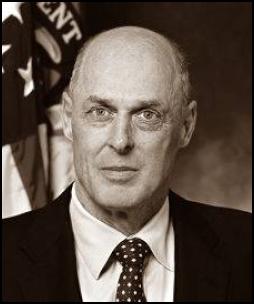
Meet the new boss - Robin Hood in Reverse U.S. Secretary of the Treasury Henry Paulson WikiCommons

"A Cascade of Ruin"

Michael Collins
"Scoop" Independent News


(Wash. DC) Well, they finally did it. The Money Party exposed the nauseating underbelly of first world finance. It's a cross between a Ponzi scheme and a complex math puzzle, all geared to let those in charge rake off as much money as they can, whenever they can, while they leave us out in the cold. Unfortunately, this time their greed and lack of control has the world poised for a systemic economic meltdown.


The collapse and subsequent government rescue of home mortgage giants Freddie Mac and Fannie Mae, stock brokerage Merrill Lynch, investment bank Bear Stearns, and, an insurance company, AIG, are designed to show we're moving away from the brink of disaster to a safer place. "The system is working" to manage what Alan Greenspan is calling a once in a century event.


One thing the system might do while it's working so hard is explain why we're bailing out a stock brokerage and an insurance company? Isn't this about banks? Don't hold your breath. The corporate elite and political misanthropes who caused this are getting ready to put the final nail in the coffin of the United States economy and the livelihood of the vast majority of citizens.


If this happens, they will have achieved their goal: overshadowing nearly all of the domestic resistance to their schemes of perpetual empire and plunder with a financial meltdown that places survival and subsistence as the highest value.


The stock market rallied last Thursday indicating that some felt better. But who were those buying stocks? The same people who bought into the ridiculous schemes perpetrated by the fallen financial giants: Wall Street and the institutional investors who have the biggest stake in the market "recovery." The soon to fail financial institutions are reassuring each other that those in the tank were somehow different, deviant maybe, rather than the first in a long line of failures to come.


How did it start?


The dot.com stock frenzy was clearly over by 2001. Since Wall Street needs constant growth as a fix for its financial Jones, something had to replace tech stocks. That wasn't easy since good companies with solid products don't offer the type of immediate gratification required for those promising high returns to investors.


In a stroke of warped vision, "subprime securities" were created in 1990. Risky home mortgages called subprime loans were bundled together then sold as a premium investment representing an audacity of hype.


Adjustable rate mortgages (ARMs) became easily available to hard working people struggling to buy a home, people who hadn't qualified for loans in the past. Nobody mentioned that the way the loan was structured they'd be unable to make payments in a year or two.


The funds of other hard working people who hoped to retire someday were used to purchase stocks based on these risky loans. Nobody bothered to tell them that their funds would go down the drain when those subprime loans started defaulting.


Then guru Greenspan made one of the few decipherable public statements of his career. He told home owners about that great opportunity, adjustable rate mortgages. "American consumers might benefit if lenders provided greater mortgage product alternatives to the traditional fixed-rate mortgage," he said. He went on, "traditional fixed-rate mortgage may be an expensive method of financing a home." Alan Greenspan, Feb. 23, 2004


Greenspan endorsed what was already being done and gave it the patina of a smart financial move. Lower those payments. Get that equity line and catch the Wall Street wave by purchasing stocks. We were "rocking in the free world!" Millions got rich on increased home values.


Real estate prices soared and then they did what they always do. They collapsed, in this case, with a giant thud. All that "wealth" acquired through the housing bubble vanished. Just as the economy slowed, many of those hard working people who just wanted a home were greeted with the full cost of their mortgage. Loan defaults soared and then it happened.


Those premium stocks collapsed. Record bankruptcy and default rates will do that to real estate stocks. Premium subprime real estate stocks became plain old subprime real estate stocks, which is what they were to begin with. Subprime loans vanished. The housing market stalled, then crashed, and there was no new scheme to feed the greed of the geniuses who thought up this scam.


Home value and retirement funds are taking a massive beating. It's survival of the fittest for the vast majority.


But the planners and perpetrators of the scheme are doing just fine. The current rulers decided it's time to expand socialism for the rich. In full public view, they're bailing out the people who created and pushed this crazy scheme. How many in the management chain are getting fired? Not many, it seems.


Is this just another example, outrageous as it is, of the super wealthy taking care of each other or is there something even worse lurking in the wings?


What are they hiding?


Each financial entity bailed out so far had major holdings in the very risky financial product called derivatives. Merrill Lynch even bragged about getting the "Risk Magazine" award as "Derivatives House of the Year 2007.


Warren Buffet sees derivatives as a major threat: "The derivatives genie is now well out of the bottle, and these instruments will almost certainly multiply in variety and number until some event makes their toxicity clear." He went on to describe derivatives as "weapons of mass financial destruction." These financial products were valued at $516 trillion dollars in 2007. The value of world economy was $65 trillion that same year.


Overly complex and insider oriented, derivatives are designed to "reduce risk." They are, in fact, the looming mega risk that apparently can't be discussed. If the derivatives market collapses, interlinked major financial institutions around the world are finished. The financial system will have failed.


Analyst and author Michael J. Panzer describes derivatives as clearly as possible:


"-- it is not hard to grasp the basic economics of a garden-variety derivative such as a futures contract. If the market price of wheat goes up between the time a deal is struck and the expiration of the agreement, the buyer wins and the seller loses. That is what is known as a zero-sum game. Nonetheless, whatever a farmer, to use the earlier example, might give up as a result of hedging his output is offset by the reduced uncertainty.
"But it is an altogether different story when it comes to analyzing options, or a portfolio of derivatives, especially those with lots of complicated bells and whistles. In most cases, valuation and risk assessment depend on mathematical formulas and computerized models, with many inputs derived from estimates and past data. That is all well and good if the tools are perfect and the history is complete."


Panzer goes on to point out that the history, data, and assumptions used to analyze value and risk are often sorely wanting. Hence, this pervasive financial product is a risk, in and of itself, due to questionable assumptions.


These products are sold by very aggressive financial services groups based on serene assumptions. For example, the products often don't factor in the impact of recession derivatives. David Amerman made the point in simple terms. If sellers will target home buyers who can't pay loans, we can count on bigger sellers going full tilt to get major commissions on this widely held financial product.


So the financial geniuses have created a market that has no relationship to reality, other than the reality conferred arbitrarily by banks and brokerage houses. Michael J. Panzer explains how something this detached from oversight takes hold:


"In the modern global financial system, where many participants are either unregulated or are monitored by a patchwork of country or sector-specific regulatory overseers, chances are that a derivatives-related catastrophe will see a similar lack of coordination that will produce a far more devastating outcome than if it was a purely domestic affair."


What is the real value of the derivative market? It would be helpful to know that given the reliance of our banking and financial services industry on these financial phantoms. More importantly, for our current circumstance, what happens when enough people realize that there cannot be a value commensurate to the amount claimed?


This teetering derivative market can't be bailed out. There simply isn't enough money. But our rulers think that the banks, insurance companies and stock brokerages heavily indebted and riddled with derivatives can be saved. As Ellen Brown pointed out last Thursday, save them and you stop the full exposure of the derivatives market. You avoid the risk of people finding out that their money and investments are being held by institutions willing to invest in financial products that are, at the least, highly speculative and, at the worst, pure vaporware.


The current risk has triggered the forgotten assumptions in the home mortgage derivatives market like recessions. Here's what's next. "The $62 trillion dollar credit derivatives market is 50 times the size of the subprime mortgage derivatives market, and is indeed larger than the entire global economy." David Amerman


Is it any wonder that we're faced with an economic crisis, one that encompasses the entire economic system?


The Paulson Secretariat


The White House has selected Secretary of the Treasury Henry Paulson to lead an economic "Charge of the Lite Brigade" to prevent a total economic meltdown. A version of the administration's rescue package is available online. What's missing? There is no requirement for "the bosses" to restrain their behavior, take a pay cut, or suffer any consequences. It might tarnish their self esteem.


But the real treat is the unfettered authority of the U.S. Secretary of the Treasury, Henry Paulson, to obligate citizen debt in order to rescue incompetent banks, brokerages, and other failed institutions. Citizens will pay the bill but have no influence on Paulsen's decisions. Here are two revealing provisions from Bush-Cheney White House proposed legislation:


"Sec. 2 (a) Authority to Purchase.--The Secretary is authorized to purchase, and to make and fund commitments to purchase, on such terms and conditions as determined by the Secretary, mortgage-related assets from any financial institution having its headquarters in the United States.
"Sec. 8 Decisions by the Secretary pursuant to the authority of this Act are non-reviewable and committed to agency discretion, and may not be reviewed by any court of law or any administrative agency." (Emphasis mine) White House bill,


So here's the plan in summary. You bail out those companies that caused the current crisis based on what one guy wants to do. You don't allow any review of the process of spending $700 billion. And, you let the management and key staff of these companies stay in place to do it all over again.


Tinkering with the bill to provide oversight, input, monitoring misses the point. The bailout is the wrong approach. To begin with, oversight has failed again and again in the financial markets. More importantly, it ignores the next crisis, credit default swaps, and rewards the meltdown perpetrators. Nobody tells the truth about this being the tip of the iceberg. Nobody faces any negative consequences. Most everybody stays in place.


How about somebody in authority coming clean?


When is someone in authority going to tell the truth, lay out the facts, and take responsibility for this mess? Never, unless we make that happen. The mechanisms readied for approval will be sold much like the Patriot Act; steam-rolled due to times of crisis. Those who speak out against another element of tyranny put in place will be ridiculed. Protestors will face the newly outfitted local law enforcement anti terrorism units who are more than willing to arrest anyone who disagrees with the administration, even in heavily Democratic cities like Denver, Minneapolis, and St. Paul.


The perpetrators can position all day long, taking advantage of the citizens through a quiescent White House, Congress, and judiciary.


But the truth will emerge - the country is broke and not because we don't work hard enough, make good products, and provide quality services. We're broke because the greediest people in the world couldn't contain their greed and there was nobody watching them who wasn't benefiting. Now the watchers are desperately trying to make it all go away.


There needs to be an accounting and a correction - and not by the usual suspects.


Here's one way to start with derivatives crisis in major institutions:


"If all the top 25 financial institutions were put into receivership, and (big if) if they all could be liquidated under an agreed legal framework, many of these risky contracts could be allowed to offset each other, and much of the risk eliminated."
Private correspondence, Numerian, The Agonist, Sept. 21, 2008

Permission granted to reproduce this article in whole or in part with attribution of authorship, a link to this article, and acknowledgment of any images.

For more information see:

It's the Derivatives, Stupid! Why Fannie, Freddie and AIG Had to Be Bailed Out by Ellen Brown, Sept. 18, 2008

Letter to my Senator by Numerian, The Agonist, Sept. 21, 2008

The Coming Disaster in the Derivatives Market by Michael Panzer, Nov. 9, 2005

AIG’s Dangerous Collapse & A Credit Derivatives Risk Primer by Daniel R. Ammerman, CFA, Sept. 17, 2008

LEAP/E2020 Summer 2008 Alert – July-December 2008: The world plunges into the heart of the global systemic crisis. Global Europe Anticipation Bulletin, Summer, 2008

Previously in The Money Party Series


(In accordance with Title 17 U.S.C. Section 107, this material is distributed without profit to those who have expressed a prior interest in receiving the included information for research and educational purposes. I.U. has no affiliation whatsoever with the originator of this article nor is I.U endorsed or sponsored by the originator.)


The Nazis, Fascists and Communists were political parties before they became enemies of liberty and mass murderers.


Tuesday, September 23, 2008

U.S. Orgy of Debt


Americans borrowed to hilt, then housing bubble burst

By ERIC MARGOLIS


21/09/08 "
Toronto Sun" -- - NEW YORK -- The financial panic sweeping the globe is maddeningly complex, but the cause of the worst financial crisis since the 1930s Great Depression is clear.


America has reveled for two decades in an orgy of debt. The U.S. national debt is now twice its net worth. From Wall Street's "masters of the universe" financial powerhouses such as Goldman Sachs, Merrill Lynch, Lehman, and Morgan Stanley, to the humblest homeowners, America's national motto became "borrow to the hilt and bet."


The traditional regulated banking system was pushed aside by Wall Street's financial titans who created their own money in the form of complex securities and furiously traded these exotic instruments and borrowed recklessly against them with little government regulation or oversight.


As Kevin Phillips points out in his prophetic book, Bad Money, America's primary business became non-productive finance. Manufacturing fell to only 12% of GDP. Wall Street titans grew obscenely rich by simply passing around paper. Inflated or semi-worthless securities increased in bogus value at each stage of the trading process.


Wall Street was allowed to virtually print money and peddle toxic securities around the globe because the big financial houses and heads of hedge funds bought the politicians of both parties.


Equally important, the mammoth financial and housing bubble thus created was hailed by the Bush administration as proof positive of Republican free market philosophy and the true road to prosperity.


More cautious European and Canadian bankers were dismissed by Republican chest thumpers as financial sissies.


This Ponzi scheme worked so long as markets kept rising. When the music stopped - disaster.


It's uncertain how far damage from America's financial equivalent of Hurricane Katrina will spread. Hedge funds, money market funds and automakers could be next. Real estate losses may reach $636 billion by 2012.


All stock market gains of the past 10 years have been wiped out in the most dangerous crash since the 1930s.


The "free market" Republican administration has ended up nationalizing nearly $1 trillion worth of businesses, including the federal mortgage agencies Fannie Mae and Freddie Mac, Bear Stearns, and global insurer AIG. Welcome to Wall Street socialism.


One thing is now clear. When great empires run onto the financial rocks, their power quickly ebbs. France's Sun King, Louis XIV, ended his once glorious rein in near bankruptcy caused by his long, ruinous wars with the British and Dutch. Louis XVI's runaway borrowing to finance the American Revolution helped ignite the French Revolution. The Soviet Union's collapse was caused by spending half its national income on arms, and failure to modernize industry.


Over the past decade, the U.S. foreign debt doubled. Japan and China now hold 47% of the U.S. foreign debt and finance Washington's wars. The addition in recent days of at least $1 trillion in new debt will cause interest rates to rise and the dollar to weaken. Even the U.S. government's AAA credit rating now is in question.


Washington may no longer be able to spend half the globe's defence budgets.


The $12-13 billion a month wars in Iraq and Afghanistan will end up costing $750 billion by December 2008. There will be less cash in Washington's kitty to buy foreign dictators and prop up their regimes, as in the Mideast and Central Asia. Less cash to pay for little wars in Africa.


Less for exotic anti-missile systems and death rays.


America's enormous global power is based as much on its financial might as military muscle. Wall Street has been the vehicle and policeman of America's hegemony. It shaped the destiny of the globe and made many nations subservient to the demands of New York's titan bankers. Wall Street is essential to raising capital for business expansion, but often it resembled New York's ruthless loan sharks: Once you borrowed from them, you never got off the hook.


Americans will have to relearn the hard truth that you can't borrow your way to prosperity.


(In accordance with Title 17 U.S.C. Section 107, this material is distributed without profit to those who have expressed a prior interest in receiving the included information for research and educational purposes. I.U. has no affiliation whatsoever with the originator of this article nor is I.U endorsed or sponsored by the originator.)


The Nazis, Fascists and Communists were political parties before they became enemies of liberty and mass murderers.


Tuesday, September 16, 2008

American Capitalism In Free-fall

AIG at Risk; $700 Billion In Shareholder Value Vanishes

By Glenn Kessler and David S. Hilzenrath
Washington Post Staff Writers
Tuesday, September 16, 2008; A01


The Federal Reserve and Treasury Department struggled yesterday to contain the fallout from an upheaval among the country's largest investment banks as they moved on to their next challenge -- engineering a $75 billion private rescue of the nation's largest insurance company.


The insurer, American International Group, faces a cash crunch that grew more severe last night when the major credit-rating agencies warned investors that the company could have greater difficulty in meeting its obligations. It was unclear whether the downgrades by the agencies would force AIG to post additional collateral at a time when it is having difficulty raising money.


Investors sent the Dow Jones industrial average plunging more than 500 points, or 4.4 percent, for the biggest point loss since the Sept. 11 terrorist attacks seven years ago. About $700 billion in shareholder value disappeared in a single day of trading.


The wrenching reshaping of Wall Street -- which over the weekend included the demise of one big firm and the sale of another -- also pushed the value of the dollar lower. It sent the price of crude oil below $100 a barrel for the first time since Feb. 15 as traders bet a global downturn would reduce the demand for energy.


Wall Street's biggest shakeout since the Great Depression stems from a collapse in housing prices, which spread losses among firms that bet on securities linked to mortgages. Twice in the past year, regulators intervened to save financial firms and prevent further erosion in the housing markets. But over the weekend, officials drew the line at rescuing the storied investment bank Lehman Brothers, which yesterday filed for bankruptcy protection.


"We had a very, very tough day on the market," said Art Hogan, chief market analyst at Jefferies & Co. "Investors are anxious about the spillover effect of Lehman and what is the next shoe to drop."


As investors digested the news, some economists worried whether Wall Street's troubles were spilling over into other parts of the economy, renewing pressure on the Federal Reserve to cut interest rates when it meets today.


Fed leaders, however, believe it is too early to tell what the impact might be, and they are unlikely to cut rates for now.


In the meantime, Treasury Secretary Henry M. Paulson Jr. signaled yesterday that taxpayer funds could still be used broadly to "maintain the stability and orderliness of our financial system" but that he was pressing healthier Wall Street firms and commercial banks to join together to assist in rescuing individual firms -- much like the purchase of Merrill Lynch on Sunday by Bank of America.


Goldman Sachs, for instance, was asked by the Federal Reserve Bank of New York to help AIG, a $1 trillion-asset insurance company that serves 74 million consumers in 130 countries. AIG had been heavily involved in the business of issuing complex insurance contracts to investors in securities backed by mortgages, and the collapse of subprime and other home loans threatened to hobble the company and trigger a chain reaction in the financial system.


J.P. Morgan Chase, which is serving as AIG's financial adviser, was seeking support for a credit line of $70 billion to $75 billion that would involve multiple lenders, spreading the risk, according to two sources familiar with the discussions. They spoke on condition of anonymity because the talks were private.


New York's governor, meanwhile, said his state would allow AIG to use $20 billion from its own insurance subsidiaries to ease a financial crunch. By posting the assets as collateral, AIG can borrow money to run its day-to-day operations, Gov. David A. Paterson (D) said. The move required special dispensation from state insurance superintendent Eric R. Dinallo, who is responsible for protecting the stability of AIG insurance companies in New York and their policyholders.


"It's no secret that the company has been talking to the Feds and talking to us," Paterson said. "They asked us what assistance we could provide, and this is our idea."


A deal to rescue AIG may have to come quickly now that Standard & Poor's and Moody's Investors Service have lowered their credit ratings for the firm, should the decision force AIG to boost its collateral to meet its obligations.


The Fed has maintained that it will not offer AIG a bridge loan or other direct injection from the government, according to sources familiar with the conversations. AIG executives huddled at their Manhattan headquarters over the weekend with potential private investors including J.C. Flowers, Kohlberg Kravis Roberts, and TPG as well as Paterson's representatives, including Dinallo; AIG was also talking to Warren E. Buffett's Berkshire Hathaway.


"I don't think anybody is going to lend that amount of money at terms that are anywhere near economically feasible without a backstop, without some form of guarantee, say by the Fed or another party," said Donn Vickrey of Gradient Analytics, who has been warning of trouble at AIG for months.


Vickrey said it appeared the Fed was playing a game of chicken with Wall Street, trying to pressure firms with a big stake in AIG's continued viability to step up to the plate.


AIG's stock fell 61 percent, to close at $4.76, yesterday.


At the same time, the Fed over the weekend made it easier for investment banking firms to borrow money by agreeing to accept a wider range of assets as collateral, including mortgage-backed securities that banks may not be able to sell. The increased availability of cash could be crucial to the investment banks, the rough equivalent of a home-equity line for a house-rich, cash-poor family.


"The actions of the Federal Reserve, it was the most overlooked but the most important thing that happened this weekend," said Steve Bartlett, president of the Financial Services Roundtable, which represents the largest financial companies.


The Fed's willingness to take those assets off banks' balance sheets could also help the institutions avoid further write-downs if those assets continue to lose value.


The Fed, for its part, is betting that the assets could eventually be sold for more than the market is willing to pay right now. If not, taxpayers could lose money.


Patricia McCoy, who served on the Fed's Consumer Advisory Council from 2002 to 2004, cautioned that "it's a big, big risk . . . Right now it's really hard to value that collateral. And in the meantime, even though the Fed financing is temporary, it sends a huge message to the investment banking industry to continue to arrange your balance sheets to be dependent on short-term financing, because when you get into a liquidity crunch, you can turn to us and we'll help you out."


Stocks' plunge yesterday showed that investors remained nervous. Shares opened lower but generally traded in the same range until the last hour of trading -- when a 300-point drop in the Dow became a 504.48-point rout, bringing it to 10,917.51, moving below the 11,000 mark for the first time since mid-July. The technology-heavy Nasdaq was down more than 3.5 percent, and the Standard & Poor's 500-stock index was down 4.7 percent.


The financial sector was among the hardest hit. Bank of America closed down 21 percent, while Wachovia fell 25 percent. Goldman Sachs and Morgan Stanley, the two remaining survivors of what were once Wall Street's Big Five, report quarterly earnings this week -- and closed down 12 and 14 percent respectively.


Although it was a horrible day for the market, it was no worse than Treasury and Fed officials had expected when they declined to intervene to save Lehman. Indeed, officials said they were pleased that the credit markets seemed to generally to function alright.


Another bit of good news for consumers: Oil prices fell about $5 a barrel, to close at $95.71, the first time prices have closed below $100 in months. Hurricane Ike did not do as much damage as some had feared and overall demand for fuel continues to decline, analysts said.


"One of the reasons that oil is weak is that [there is an acknowledgment that] the slowdown in the economy could affect everything, and that includes demand for oil," said Phil Flynn, oil analyst at Alaron Trading in Chicago.


Risk-adverse investors are likely to move away from U.S. assets, dragging down the value of the dollar compared with a range of foreign currencies, said Joseph Brusuelas, chief U.S. economist at California-based Merk Investments. Already, Treasury bond prices surged yesterday, meaning that yields fell. "There is a concern about the basic stability of the market going forward," he said.


Global stocks also plunged on the weekend news, and central bankers tried to calm the situation during deepening uncertainty about the resilience of the global financial system and the strength of the world economy. China's central bank announced it was cutting a key interest rate to uphold growth, and U.S. industrial production fell faster than expected in August.


Meanwhile, the sidewalk outside Lehman's headquarters in midtown Manhattan took on a carnivalesque atmosphere yesterday, as dozens of reporters clamored outside the doors, a half-dozen television trucks parked on the street, tourists grouped on the sidewalk taking photos, a few political partisans preached their platforms -- and occasionally an employee came out dragging a suitcase on wheels.


One man waved a red flag, calling for a workers' revolution and yelling, "The capitalist order is in free-fall collapse!"


Staff writers Binyamin Appelbaum, David Cho, Zachary A. Goldfarb, Neil Irwin, Heather Landy, Renae Merle, and Robin Shulman contributed to this report.


(In accordance with Title 17 U.S.C. Section 107, this material is distributed without profit to those who have expressed a prior interest in receiving the included information for research and educational purposes. I.U. has no affiliation whatsoever with the originator of this article nor is I.U endorsed or sponsored by the originator.)


The Nazis, Fascists and Communists were political parties before they became enemies of liberty and mass murderers.


Monday, September 15, 2008

The Crash of Western Capitalist Civilization?


By Richard_C_Cook


15/09/08 "
ICH" -- - “Train-wreck” doesn't even begin to describe what is starting to happen to the U.S. today with the financial crisis, an onrushing depression, and the failure of George W. Bush's war policy as he is faced down by Iran and the Russian bear.

But in an even broader sense, the West, as a civilization, after a century of world war and the utter failure of global finance capitalism, may have reached its limits.

Those with a vested interest in the status quo dismiss any suggestion that something is wrong. This includes Donald Luskin, author of an article in the Washington Post on Sunday, September 14, titled: “A Nation of Exaggerators: Quit Doling Out That Bad Economy Line.”

Luskin writes, “The relentless drumbeat of pessimism in the media and on the campaign trail” is “a virus.”

He continues: “Sure, there are trouble spots in the economy, as the government takeover of mortgage giants Fannie Mae and Freddie Mac, and jitters about Wall Street firm Lehman Brothers, amply demonstrate. And unemployment figures are up a bit, too. None of this, however, is cause for depression -- or exaggerated Depression comparisons.”

Continue reading, and you find out who Luskin is: a campaign adviser to John McCain.

We know that “where you stand depends on where you sit”—and who pays you for advice. So is a catastrophic meltdown coming?

If so, probably a majority of the people in the world are thinking: “Serves them right.” For the last 500 years, the West has been striding across the globe, armed to the teeth with firearms, warships, bombers, and—more recently—depleted uranium, enforcing the “white man's burden” by enslaving nations and peoples and confiscating everything of value—ranging from art objects to gold to oil—that can be carried away.

The financiers behind it all have also used the diabolically clever practice of creating money “out of thin air” to put the natives everywhere into debt, and, when that has proven insufficient, of doing the same to their own populations.

All this is rationalized by various brands of racism, cultural superiority, social Darwinism, historical determinism, “dominion of the Elect,” “God's chosen people,” etc. Or, simply, “might makes right.”

Some call it “The New World Order.”


So today, we Americans, denizens of the “land of the free and the home of the brave,” victors in two world wars, bearers of “democracy” to Afghanistan and Iraq, allies of the brave Israelis who hold high the banner of Judeo-Christian values among the ungrateful Palestinians—well, we Americans owe our own bankers almost $70 trillion at most recent count. With the government takeover of Fannie Mae and Freddie Mac, we owe holders of bad housing loans, including the governments of China, Korea, and Japan, another few trillion.

The bluster of Kissinger, Brzezinski, the Kristols, the Christian fundamentalists, and their paid-off politicians and media millionaires notwithstanding, America—indeed, the entire West—has been found out, perhaps even checkmated on the world stage.

The Bush/Cheney wars in Afghanistan and Iraq have blackened America's name forever. Iran has called our bluff. In Israel the gap between rich and poor is increasing as much as in the U.S. According to an article by Ian S. Lustick, the Palestinians have stood up to the Israelis to the point where more Jews are emigrating from that country than are moving in, and where those who remain are increasingly huddling around Tel Aviv as a safe haven. (Ian S. Lustick, “Abandoning the Iron Wall: ‘Israel and the Middle Eastern Muck',” Middle East Policy , Vo. XV, No. 3, Fall 2008.)

In the 1990s, the European bankers used U.S. and NATO forces to dismember Yugoslavia so George Soros and the Rothschilds could gobble up Balkan resources. But that strategy is failing in the Caucasus, where the Russians fought back against the genocidal attack by Dick Cheney's poodle, Mikheil Saakashvili, the New York-trained attorney the CIA got elected as the president of Georgia.

And now the people of Ukraine, the “Little Russians,” realizing what the West has in store for them, are rushing back into the Slavic fold and may be only a year or so away from reuniting with their “Great Russian” cousins across the border.

What is telling is to watch the Western financier press, chiefly the Washington Post and the New York Times , fume about Russian prime minister Vladimir Putin and his “authoritarian” manner. An example is the article by Times correspondent Ellen Barry on Putin's September 11 press conference in Moscow. She wrote, “In three-and-a-half hours, in tones that were alternatively pugilistic and needy, Vladimir V. Putin tried to explain himself.”

I'm sorry, Ms. Barry. You and your editors may think your writing is cute, but Vladimir Putin is the foremost figure on the world stage today. He will remain so after George W. Bush leaves the White House disgraced.


Putin is heir to an epochal movement of patriots who began in the 1970s to take back Russia from within. It started with a base of operations within the KGB and the Orthodox Church, led to Gorbachev's glasnost in the 1980s, and culminated in the Second Russian Revolution of 1991. At that point, the Western financiers gleefully rushed in to support an assault from the Russian “oligarchs” who were looting Russia of everything it owned.

The oligarchs were the shock troops of a financier assault that had already begun to overlap in the West with the Russian Mafia. Cheered on by the Washington Post and aided by academic advisors from places like Harvard, this international syndicate nearly destroyed Russia during the 1990s. But when Putin was appointed interim president by Boris Yelstin in 1999, and after winning the presidential election of 2000 in his own right, he began to fight back.

From the mid-1970s to today, thousands of Russian gangsters, along with many hard-line Bolsheviks/Stalinists, were allowed to emigrate. Many settled in the U.S. and are here today, and many more settled in Israel. In fact, one reason the price of condos in New York, Miami, Tel Aviv, and elsewhere has inflated so much reportedly is the flood of cash from racketeering.

The crooks have allied themselves with the Colombian drug cartels and have heavily infiltrated the world's financial systems, even setting up their own banks for laundering money and speculating in the commodities markets.

Today, Putin is cleaning out the remaining gangster class. His efforts reached a milestone in January with the arrest in Moscow of Semion Mogilevich, called “the world's most dangerous man.”

Putin has declared that the world will not be governed in a “unipolar” manner; i.e. by the U.S. military as the police force for the global financiers. This does not mean Russia has to be our enemy. In fact the world would be much better off, and much safer, if we joined with Russia as allies in keeping the peace.

But to do that our system would have to change, because finance capitalism is far too unstable to coexist with other nations as equals. It must either grow or die, because it always needs new victims to pay the interest on its usury practices and to finance its speculative balloons. As a last resort, it needs the kind of financial institution bailouts being engineered by Secretary of the Treasury Henry Paulson, where the only remaining stopgap is borrowing from public funds and adding to the national debt.

Once economic growth stops, as has now happened, and all the bubbles to restart it have blown up, as has also happened, the end really is nigh. Especially if the host—the U.S.—is bankrupt.

What is coming at us today isn't just another downturn. If people like McCain adviser Donald Luskin doubt it, maybe, instead of writing campaign propaganda, they should ask the fired CEOs of Fannie Mae and Freddie Mac, the stockholders of Lehman Brothers, whose shares have dropped ninety percent in less than a year, and the millions who are losing their homes.

Presidential candidates Barack Obama and John McCain are calling for “change.” Well, if I were standing on a beach with a 100-foot tsunami roaring in my direction, I would call for change too. Except I would not be standing around arguing about the meaning of the words “lipstick on a pig.”

By Richard C. Cook
http:// www.richardccook.com

Copyright 2008 by Richard C. Cook

Richard C. Cook is a former U.S. federal government analyst, whose career included service with the U.S. Civil Service Commission, the Food and Drug Administration, the Carter White House, NASA, and the U.S. Treasury Department. His articles on economics, politics, and space policy have appeared on numerous websites. His book on monetary reform entitled We Hold These Truths: The Hope of Monetary Reform will be published soon by Tendril Press. He is also the author of Challenger Revealed: An Insider's Account of How the Reagan Administration Caused the Greatest Tragedy of the Space Age , called by one reviewer, “the most important spaceflight book of the last twenty years . ” His Challenger website is at www.richardccook.com . A new economics website at www.RealSustainableLiving.com is upcoming with partner/author Susan Boskey. To get on his mailing list, for questions and comments, or to pre-purchase copies of his new book, please write EconomicSanity@gmail.com .


(In accordance with Title 17 U.S.C. Section 107, this material is distributed without profit to those who have expressed a prior interest in receiving the included information for research and educational purposes. I.U. has no affiliation whatsoever with the originator of this article nor is I.U endorsed or sponsored by the originator.)


The Nazis, Fascists and Communists were political parties before they became enemies of liberty and mass murderers.

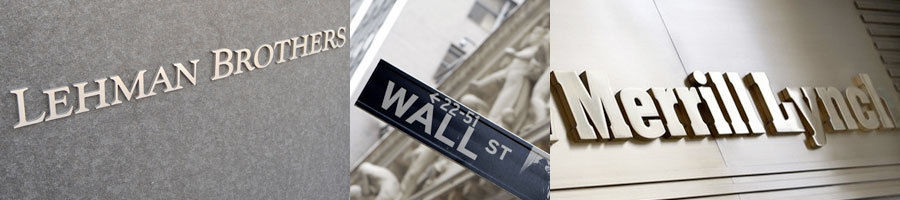
Major Meltdown!!!!!

ECONOMY MELTDOWN
"Once In A Century Event"

NY Times: Lehman Brothers Will File For Bankruptcy... Would Be Largest Failure Of An Investment Bank In 18 Years... Bank Of America, Merrill Lynch In Acquisition Talks... US, Foreign Banks Prepare For Fallout... Greenspan: America Can't Afford McCain's Tax Plan... "I'm Not In Favor Of Financing Tax Cuts With Borrowed Money"


(In accordance with Title 17 U.S.C. Section 107, this material is distributed without profit to those who have expressed a prior interest in receiving the included information for research and educational purposes. I.U. has no affiliation whatsoever with the originator of this article nor is I.U endorsed or sponsored by the originator.)


The Nazis, Fascists and Communists were political parties before they became enemies of liberty and mass murderers.

Saturday, September 13, 2008

US Bailout of Mortgage Giants Sets Stage for Wider Financial Crisis


We Are All So Screwed!!!!


By Barry Grey


12/09/08
WSW" -- - -Since the Bush administration announced on Sunday the US government takeover of mortgage finance giants Fannie Mae and Freddie Mac, in the largest corporate bailout in American history, developments have underscored the profound and systemic nature of the crisis that precipitated the action.


A week of wild gyrations on US stock markets, fueled by fears of an impending collapse of the Wall Street investment bank Lehman Brothers and the country’s largest savings and loan bank, Washington Mutual, demonstrates that the rescue of the government-sponsored mortgage companies is a stop-gap measure that does not begin to resolve the underlying crisis of American capitalism.

On the contrary, the bailout of Fannie Mae and Freddie Mac sets the stage for an intensification of the crisis in the coming months. At heart, the demise of the mortgage firms, which account for 80 percent of new home mortgages in the US and have a combined liability of $5.3 trillion in mortgage-backed securities which they own or guarantee, is a result of the collapse of the colossal credit bubble which sustained the super-profits of US banks and investment firms and the seven- and eight-figure salaries of their top executives.

It is the product of an economic system that has increasingly based itself on speculation and various forms of economic parasitism, while gutting the productive base of the country—at the cost of millions of jobs and the living standards of the American working class.

The decay of American capitalism has produced an economy that is drowning in debt and is dependent on massive inflows of capital from abroad for its survival. Now, the assumption by the government of the debt of the mortgage companies, carried out to protect the financial interests of banks and big investors, has placed a question mark over the solvency of the US government itself.

This threatens a curtailment of the inflow of international capital, a further erosion in the status of the US dollar and a drastic increase in the interest paid by the government to borrow money from its creditors. The US is already by far the world’s biggest debtor nation, with a balance of payments deficit of $800 billion and an economy that is sustained by a yearly inflow of $1 trillion in overseas capital.

The quantum leap in the national debt and government budget deficits resulting from the bailout of Fannie Mae and Freddie Mac—and the further corporate bailouts that are all but certain to follow—must inevitably lead to a realignment of social conditions within the US in accordance with the actual, deeply eroded, position of the United States in the world economy. This means an even more drastic lowering of the living standards of the American people.

On Tuesday, the Congressional Budget Office (CBO) declared that as a result of the government bailout, the finances of Fannie Mae and Freddie Mac had to be “directly incorporated into the federal budget,” and its liabilities added to the US national debt. This means, in effect, a near doubling of the US sovereign debt to a figure equivalent to the country’s gross domestic product (GDP).

The Financial Times reported Wednesday that the bailout had already resulted in a sharp rise in the price of credit default swaps on five-year US government debt. Credit default swaps are private contracts to buy insurance against the default of various forms of debt.

As the Financial Times wrote, “... the price suggests the market believes the US government is more likely to default on its obligations than some other industrialised countries.” It went on to cite a credit research strategist as saying, “The USA is now ‘riskier’ than Norway, Germany, Netherlands, Sweden, Finland, Austria, France, Denmark, Quebec and Japan.”

The CBO statement on Fannie Mae and Freddie Mac accompanied its report on the US government budget deficit for the current fiscal year, which ends September 31, and its projections for fiscal 2009 and beyond. The CBO put the current deficit at $407 billion, more than double the $161 billion deficit for fiscal 2007.

It projected, on the basis of current tax laws, that the budget gap would rise to a record $438 billion in the 2009 fiscal year that begins October 1. However, as CBO Director Peter Orszag noted, that figure could easily climb to $540 billion if Congress acts in the coming months, as expected, to curtail the growth in the alternative minimum tax and extend a variety of expiring business tax breaks.

Orszag further noted that these figures did not take into account the full scale of government expenditures related to the bailout of Fannie Mae and Freddie Mac. Treasury Secretary Henry Paulson said on Sunday the government would commit up to $200 billion to prop up the companies. Given the continuing decline in home prices and rise in foreclosures, that figure is virtually certain to rise by tens, if not hundreds, of billions.

Orszag said that the deficit would remain at between 3 and 4 percent of the GDP for the next decade, resulting in a $7 trillion rise in the national debt. Even these dire projections assume that Bush’s massive tax cuts for the rich will not be extended beyond their scheduled expiration in 2010.

Significantly, Orszag pointed to government health care spending—not the cost of corporate bailouts or the wars in Iraq and Afghanistan (which have to date consumed a combined sum of $850 billion)—as the main source of exploding deficits going forward. The CBO warned that Medicare and Medicaid spending, which currently account for an estimated 4.6 percent of GDP, could account for up to 12 percent of GDP by 2050.

The mounting financial crisis of American capitalism was further underscored by the Commerce Department’s report Thursday on the US trade deficit, which surged in July by 5.2 percent to $62.2 billion, the highest level in 16 months.

The headlong rush of Lehman Brothers and Washington Mutual toward collapse—or new federal bailouts—within days of the government takeover of Fannie Mae and Freddie Mac has underscored the depth of the financial crisis.

The stock of the 158-year-old Wall Street investment bank collapsed this week after it was reported that Lehman’s efforts to secure a capital infusion from the state-owned Korea Development Bank had collapsed. At the close of the financial markets on Thursday, the value of Lehman’s stock—down by more than 90 percent since its peak last February—was about $2.9 billion. It stood at $37.2 billion at the start of 2008.

Once the biggest underwriter of mortgage-backed securities, the firm has seen its speculative investments collapse and would have already gone bankrupt were it not for the Federal Reserve’s decision, taken at the time of the government-subsidized sale of Bear Stearns to JP Morgan Chase last March, to extend low-cost loans to investment banks and accept virtually worthless mortgage-related securities in return for highly rated Treasury securities.

It was reported Thursday that the firm was in talks with potential buyers, including Bank of America, for a buyout that would avoid bankruptcy or a government bailout—at the cost of billions in losses to shareholders and the jobs of thousands of Lehman employees. On Wednesday, when it announced a third quarter loss of $3.9 billion and a plan to spin off much of its business and shrink its operations, the company said it was slashing 1,000 to 1,500 jobs, its fourth round of layoffs this year.

Over the past year, US banks and brokerages have cut more than 110,000 jobs.

The collapse of both Lehman and the two government-sponsored mortgage giants starkly illustrates the immense dependence of American capitalism on overseas capital. Lehman went to ground after its bid for funds from a South Korean bank failed, and the government bailout of Fannie Mae and Freddie Mac was precipitated by the dumping of the firms’ securities by central banks and major investors in Asia and Russia.

The stock of the giant savings and loan bank Washington Mutual, which has some $180 billion in mortgage-related loans, has fallen by 34 percent since Monday and 92 percent over the past year. This week it reported a $3.33 billion second quarter net loss and has said its mortgage losses could reach $19 billion through 2011.

Raising the possibility of another government bailout, Christopher Whalen, a managing partner at Institutional Risk Analytics, said of Washington Mutual, “If this goes on until the end of the year, the bank is either going to have to be sold or recapitalized by the government. Those are the only choices.”

The Financial Times on Wednesday worried that the massive US budget deficits were limiting the ability of the government to continue propping up Wall Street with injections of hundreds of billions in capital. It wrote:

“Yesterday’s new deficit projections by the Congressional Budget Office highlight the troubled state of US government finances as it embarks on a new stage of interventions to contain the chronic impact of the credit crisis....

“Some economists worry that as the Federal Reserve has spent much of its ammunition, and as fighting the credit crisis falls more to the government, weak public finances mean the government does not have unlimited ammunition either.”

Noting that the Federal Reserve was seeking to conserve its capital for further corporate bailouts, the newspaper wrote, “Many Fed officials share this view, which is why the Fed is lukewarm on further fiscal stimulus, preferring to see the limited government funds spent on shoring up the financial system.”

The response to mushrooming budget deficits and soaring national indebtedness, as well as the spreading crisis on Wall Street, by the next administration, whether headed by Republican John McCain or Democrat Barack Obama, will be a policy of brutal austerity directed against the working class.

One can safely predict that not long after the November election, the incoming president will announce that his transition advisers have shown him the country’s financial books, that the dire state of the nation’s economy makes inoperative any and all promises of health care reform or relief to distressed homeowners, and that a regime of discipline and “sacrifice” will have to be imposed in the “national interest.”

Senator Kent Conrad, the Democratic chairman of the Senate Budget Committee, sounded just such a note when he said, in response to the CBO report, that “the next president will be inheriting a budget and economic outlook that is far worse than most people realize.”

As the CBO report indicates, the next administration will be tasked with dismantling basic entitlement programs such as Medicare and Medicaid.

Copyright 1998-2008 - World Socialist Web Site - All rights reserved


(In accordance with Title 17 U.S.C. Section 107, this material is distributed without profit to those who have expressed a prior interest in receiving the included information for research and educational purposes. I.U. has no affiliation whatsoever with the originator of this article nor is I.U endorsed or sponsored by the originator.)


The Nazis, Fascists and Communists were political parties before they became enemies of liberty and mass murderers.


Saturday, August 30, 2008

Super Imperialism


Michael Hudson: "Greenspan saw his job as a cheerleader for people who were able to get rich fast; sort of like a pilot fish for sharks"

Mike Whitney Interviews Michael Hudson

29/08/08 "ICH" -- -- 1 Mike Whitney: The United States current account deficit is roughly $700 billion. That is enough "borrowed" capital to pay the yearly $120 billion cost of the war in Iraq, the entire $450 billion Pentagon budget, and Bush's tax cuts for the rich. Why does the rest of the world keep financing America's militarism via the current account deficit or is it just the unavoidable consequence of currency deregulation, "dollar hegemony" and globalization?

Michael Hudson: As I explained in Super Imperialism, central banks in other countries buy dollars not because they think dollar assets are a “good buy,” but because if they did NOT recycle their trade surpluses and U.S. buyout spending and military spending by buying U.S. Treasury, Fannie Mae and other bonds, their currencies would rise against the dollar. This would price their exporters out of dollarized world markets. So the United States can spend money and get a free ride.

The solution is (1) capital controls to block further dollar receipts, (2) floating tariffs against imports from dollarized economies, (3) buyouts of U.S. investments in dollar-recipient countries (so that Europe and Asia would use their central bank dollars to buy out U.S. private investments at book value), (4) subsidized exports to dollarized economies with depreciating currency, and similar responses that the United States would adopt if it were in the position of a payments-surplus country. In other words, Europe and Asia would treat the United States as its Washington Consensus boys treat Third World debtors: buy out their raw materials and other industries, their export plantations, and their governments.

2 MW---Economist Henry Liu said in his article "Dollar hegemony enables the US to own indirectly but essentially the entire global economy by requiring its wealth to be denominated in fiat dollars that the US can print at will with little in the way of monetary penalties.....World trade is now a game in which the US produces fiat dollars of uncertain exchange value and zero intrinsic value, and the rest of the world produces goods and services that fiat dollars can buy at "market prices" quoted in dollars." Is Liu overstating the case or have the Federal Reserve and western banking elites really figured out how to maintain imperial control over the global economy simply by ensuring that most energy, commodities, and manufactured goods are denominated in dollars? If that's the case, then it would seem that the actual "face-value" of the dollar does not matter as much as long as it continues to be used in the purchase of commodities. Is this right?

Michael Hudson: Henry Liu and I have been discussing this for many years now. We are in full agreement. The paragraph you quote is quite right. His Asia Times articles provide a running analysis of dollar hegemony.

3 MW---What is the relationship between stagnant wages for workers and the current credit crisis? If workers wages had kept up with the rate of production, isn't it less likely that we would be in the jam we are today? And, if that is true, then shouldn't we be more focused on re-unionizing the labor force instead looking for solutions from the pathetic Democratic Party?

Michael Hudson: The credit crisis derives from “the magic of compound interest,” that is, the tendency of debts to keep on doubling and redoubling. Every rate of interest is a doubling time. No “real” economy’s production and economic surplus can keep up with this tendency of debt to grow faster. So the financial crisis would have occurred regardless of wage levels.

Quite simply, the price of home ownership tends to absorb all the disposable personal income of the homebuyer. So if wages would have risen more rapidly, the price of housing would simply have risen faster as employees pledged more take-home pay to carry larger mortgages. Stagnant wages merely helped keep down the price of houses to merely stratospheric levels, not ionospheric ones.

As for labor unions, they haven’t been any help at all in solving the housing crisis. In Germany where I am right now, unions have sponsored co-ops, as they used to do in New York City, at low membership costs. So housing costs only absorb about 20% of German family budgets, compared to twice that for the United States. Imagine what could be done if pension funds had put their money into housing for their contributors, instead of into the stock market to buy and bid up prices for the stocks that CEOs and other insiders were selling.

4 MW---When politicians or members of the foreign policy establishment talk about "integrating" Russia or China into the "international system"; what exactly do they mean? Do they mean the dollar-dominated system which is governed by the Fed, the World Bank, the IMF, and the WTO? Do countries compromise their national sovereignty when they participate in the US-led economic system?

Michael Hudson: By “integrating” they mean absorbing, something like a parasite integrating a host into its own control system. They mean that other countries will be prohibited under WTO and IMF rules from getting rich in the way that the United States got wealthy in the 19th and early 20th centuries. Only the United States will be permitted to subsidize its agriculture, thanks to its unique right to grandfather in its price supports. Only the United States will be free from having to raise interest rates to stabilize its balance of payments, and only it can devote its monetary policy to promoting easy credit and asset-price inflation. And only the United States can run a military deficit, obliging foreign central banks in dollar-recipient countries to give it a free ride. In other words, there is no free lunch for other countries, only for the United States.

Other countries do indeed give up their national sovereignty. The United States never has adjusted its economy to create equilibrium with other countries. But to be fair, in this respect only the United States is acting fully in its own self-interest. The problem is largely that other countries are not “playing the game.” They are not acting as real governments. It takes two to tango when one party gets a free ride. Their governments have become “enablers” of U.S. economic aggression.

5 MW---What do you think the Bush administration's reaction would be if a smaller country, like Switzerland, had sold hundreds of billions of dollars of worthless mortgage-backed securities to investment banks, insurance companies and investors in the United States? Wouldn't there be litigation and a demand that the responsible parties be held accountable? So, how do you explain the fact that China and the EU nations, that were the victims of this gigantic swindle, haven't boycotted US financial products or called for reparations?

Michael Hudson: International law is not clear on financial fraud. Caveat emptor is the rule. Foreign investors took a risk. They trusted a deregulated U.S. financial market that made it easiest to make money via financial fraud. Ultimately, they put their faith in neoliberal deregulation – at home as well as in the United States. England is now in the same mess. The “accountability” was supposed to lie with U.S. accounting firms and credit rating agencies. Foreign investors were so ideologically blinded by free market rhetoric that they actually believed the fantasies about “self-regulation” and self-regulating markets tending toward equilibrium rather than the real-world tendency toward financial and economic polarization.

In other words, most foreign investors lack a realistic body of economic theory. The United States could simply argue that they should take responsibility for their bad investments, just as U.S. pension funds and other investors are told to do.

6 MW---The Congress recently passed a bill that gives Treasury Secretary Henry Paulson the unprecedented authority to use as much money as he needs to keep Fannie Mae and Freddie Mac solvent. Paulson assured the Congress that he wouldn't need more than $25 billion but, the 400 page bill allows him to increase the national debt by $800 billion. How will the Fannie/Freddie bailout affect the dollar and the budget deficit? Are interest rates likely to skyrocket because of this action?

Michael Hudson: The Fed can flood the economy with money, Alan Greenspan-style, to prevent interest rates from skyrocketing. Nobody really knows what will happen to FNMA and Freddie Mac, but it looks like the mortgage and financial crisis will get much, much worse over the coming year. We are just heading into the storm where adjustable-rate mortgages (ARMs) are scheduled to reset at higher rates, and where U.S. banks have to roll over their existing debts in a market where foreign investors fear that these banks already have no net worth left.

So the principle here is “Big fish eat little fish.” Wall Street will be bailed out, and banks will be allowed to “earn their way out of debt” as they did after 1980, by exploiting retail customers, above all credit-card customers and individual borrowers. There will be a lot of bankruptcies, and people will suffer more than ever before because of the harsh pro-creditor bankruptcy law that Congress passed at the behest of the bank lobbyists.

7 MW---A few months ago, the Wall Street Journal ran an editorial which said that they could imagine two nightmare scenarios if the current credit crisis was not handled properly; either there would be a run on the dollar causing a sudden plunge in its value, or the unexpected failure of a major financial institution could send the stock market crashing. Last week, the former head of the IMF Kenneth Rogoff triggered a sell-off on Wall Street when he said, "We’re not just going to see mid-sized banks go under in the next few months, we’re going to see a whopper; we’re going to see a big one — one of the big investment banks or big banks." What happens if Rogoff is right and Merrill, Citi or Lehman go belly up? Is that enough to send the stock market freefalling?

Michael Hudson: Not necessarily. Citibank would be nationalized, then sold off. The principle should be that if a bank is “too big to fail,” it should be broken up.

This should start with a repeal of the Clinton Administration’s repeal of Glass-Steagall.

As for Lehman, that would be given the Bear Stearns treatment, and also sold off – probably to a hedge fund. Merrill is much larger, but it also could be parceled out, I suppose. The stock market’s financial index would plunge, but not necessarily industrial stock prices.

8 MW---According to MarketWatch: "In the three months from April to June, banks posted their second worst earnings performance since 1991.... Earnings for the quarter totaled just $5 billion, compared with $36.8 billion a year ago, a decline of 86.5%." Also, according to a front page article in the Wall Street Journal: "financial institutions will have to pay off at least $787 billion in floating rate notes and other medium term obligations before the end of 2009." 
 How are the banks going to pay off nearly $800 billion ($200 billion by December!) when they only earned a measly $5 billion in the quarter!?! And how in the world is the Federal Reserve going to keep the banking system functioning when earnings can't even cover current liabilities? Do the banks have some secret source of revenue we don't know about or is the system headed for disaster?

Michael Hudson: The traditional way to pay debt is with yet MORE debt. The interest due is simply added on to the principal, so that the debt grows exponentially. This is the real meaning of “the magic of compound interest.” It means not only that savings left to accumulate interest keep on doubling and redoubling, debts do to, because the savings that are lent out on the “asset” side of the creditor’s balance sheet (today, that of America’s wealthiest 10%) become debts on the “liabilities” side of the balance sheet (the “bottom 90%”).

The banks don’t have a secret source of revenue. It’s right out in the open. They will take their junk mortgages to the Federal Reserve and borrow the money at full face value. The government will be left with the junk.

It then can either take over the bank, as the Bank of England did with Northern Rock when it went bankrupt early this year, or it can let the bank “earn” money by stiffing its customers some more.

9 MW---From 2000 to 2006, the total retail value of housing in the United States doubled, going from roughly $11 trillion to $22 trillion in just 6 years. For the last 200 years, housing has barely kept pace with the rate of inflation, usually increasing 2 to 3% per year. The Federal Reserve's low interest rates were the main cause of this unprecedented housing bubble and, yet, ex-Fed chief Alan Greenspan still denies any responsibility for what "The Economist" calls "the largest bubble in history". Did Greenspan understand the problems he was creating with his "loose" monetary policies or was there some ulterior motive to his actions?

Michael Hudson: He simply didn’t care about the problem. He saw his job as a cheerleader for people who were able to get rich fast. These always had been his major clients in his years on Wall Street, and he saw himself as their servant – sort of like a pilot fish for sharks.

Mr. Greenspan’s idea of “wealth creation” was to take the line of least resistance and inflate asset prices. He thought that the way to enable the economy to carry its debt overhead was to inflate asset prices so that debtors could borrow the interest falling due by pledging collateral (real estate, stocks and bonds) that were rising in market price. To his Ayn-Rand view of the world, one way of making money was as economically and socially productive as any other way of doing so. Buying a property and waiting for its price to inflate was deemed as productive as investing in new means of production.

Ever since his days as co-founder of NABE (the National Association of Business Economists), Greenspan has long looked only at GNP and the national balance sheet as an economic indicator, being “value-free.” This is his intellectual and conceptual limitation. He wanted to provide a way for savvy investors to get rich, and the easiest way to get rich is to be passive and get a free lunch. His ideology led him to believe the “free market” ideology that the financial sector would be self-regulating and hence would act honestly. But he opened the floodgates to financial crooks. His set of measures did not distinguish between Countrywide Financial getting rich, Enron getting rich, or General Motors or industrial companies expanding their means of production. So the economy was being hollowed out, but this didn’t appear in any of the measures he looked at from his perch at the Federal Reserve.

So just as journalists and the mass media proclaim every market downturn as “surprising” and “unexpected,” he was as clueless as a lemming running headlong over the cliff. It’s an inherent instinct for free-market boys.

10 MW---The housing market is free falling, setting new records every day for foreclosures, inventory, and declining prices. The banking system is in even worse shape; under-capitalized and buried under a mountain of downgraded assets. There seems to be growing consensus that these problems are not just part of a normal economic downturn, but the direct result of the Fed's monetary policies. Are we seeing the collapse of the Central banking model as a way of regulating the markets? Do you think the present crisis will strengthen the existing system or make it easier for the American people to assert greater control over monetary policy?

Michael Hudson: What do you mean “failure”? Your perspective is from the bottom looking up. But the financial model has been a great success from the vantage point of the top of the economic pyramid looking down? The economy has polarized to the point where the wealthiest 10% now own 85% of the nation’s wealth. Never before have the bottom 90% been so highly indebted, so dependent on the wealthy. From their point of view, their power has exceeded that of any time in which economic statistics have been kept.

You have to realize that what they’re trying to do is to roll back the Enlightenment, roll back the moral philosophy and social values of classical political economy and its culmination in Progressive Era legislation, as well as the New Deal institutions. They’re not trying to make the economy more equal, and they’re not trying to share power. Their greed is (as Aristotle noted) infinite. So what you find to be a violation of traditional values is a re-assertion of pre-industrial, feudal values. The economy is being set back on the road to debt peonage. The Road to Serfdom is not government sponsorship of economic progress and rising living standards; it’s the dismantling of government, the dissolution of regulatory agencies, to create a new feudal-type elite.

The former Soviet Union provides a model of what the neoliberals would like to create. Not only in Russia but also in the Baltic States and other former Soviet republics, they created local kleptocracies, Pinochet-style. In Russia, the kleptocrats founded an explicitly Pinochetista party, the Party of Right Forces (“Right” as in right-wing).

In order for the American people or any other people to assert greater control over monetary policy, they need to have a doctrine of just what a good monetary policy would be. Early in the 19th century the followers of St. Simon in France began to develop such a policy. By the end of that century, Central Europe implemented this policy, mobilizing the banking and financial system to promote industrialization, in consultation with the government (and catalyzed by military and naval spending, to be sure). But all this has disappeared from the history of economic thought, which no longer is even taught to economics students. The Chicago Boys have succeeded in censoring any alternative to their free-market rationalization of asset stripping and economic polarization.

My own model would be to make central banks part of the Treasury, not simply the board of directors of the rapacious commercial banking system. You mentioned Henry Liu’s writings earlier, and I think he has come to the same conclusion in his Asia Times articles.

11 MW---Do you see the Federal Reserve as an economic organization designed primarily to maintain order in the markets via interest rates and regulation or a political institution whose objectives are to impose an American-dominated model of capitalism on the rest of the world?

Michael Hudson: Surely, you jest! The Fed has turned “maintaining order” into a euphemism for consolidating power by the financial sector and the FIRE sector generally (Finance, Insurance and Real Estate) over the “real” economy of production and consumption. Its leaders see their job as being to act on behalf of the commercial banking system to enable it to make money off the rest of the economy. It acts as the Board of Directors to fight regulation, to support Wall Street, to block any revival of anti-usury laws, to promote “free markets” almost indistinguishable from outright financial fraud, to decriminalize bad behavior – and most of all to inflate the price of property relative to the wages of labor and even relative to the profits of industry.

The Fed’s job is not really to impose the Washington Consensus on the rest of the world. That’s the job of the World Bank and IMF, coordinated via the Treasury (viz. Robert Rubin under Clinton most notoriously) and AID, along with the covert actions of the CIA and the National Endowment for Democracy. You don’t need monetary policy to do this – only massive bribery. Only call it “lobbying” and the promotion of democratic values – values to fight government power to regulate or control finance across the world. Financial power is inherently cosmopolitan and, as such, antagonistic to the power of national governments.

The Fed and other government agencies, Wall Street and the rest of the economy form part of an overall system. Each agency must be viewed in the context of this system and its dynamics – and these dynamics are polarizing, above all from financial causes. So we are back to the “magic of compound interest,” now expanded to include “free” credit creation and arbitraging.

The problem is that none of this appears in the academic curriculum. And the silence of the major media to address it or even to acknowledge it means that it is invisible except to the beneficiaries who are running the system.

Michael Hudson is a former Wall Street economist specializing in the balance of payments and real estate at the Chase Manhattan Bank (now JP Morgan Chase & Co.), Arthur Anderson, and later at the Hudson Institute (no relation). In 1990 he helped established the world’s first sovereign debt fund for Scudder Stevens & Clark. Dr. Hudson was Dennis Kucinich’s Chief Economic Advisor in the recent Democratic primary presidential campaign, and has advised the U.S., Canadian, Mexican and Latvian governments, as well as the United Nations Institute for Training and Research (UNITAR). A Distinguished Research Professor at University of Missouri, Kansas City (UMKC), he is the author of many books, including Super Imperialism: The Economic Strategy of American Empire (new ed., Pluto Press, 2002


(In accordance with Title 17 U.S.C. Section 107, this material is distributed without profit to those who have expressed a prior interest in receiving the included information for research and educational purposes. I.U. has no affiliation whatsoever with the originator of this article nor is I.U endorsed or sponsored by the originator.)


The Nazis, Fascists and Communists were political parties before they became enemies of liberty and mass murderers.