Showing posts with label Capitalism. Show all posts

Friday, September 19, 2008

A Bad Week For Market Capitalism

Does AIG Spell the end for strict Capitalisism; or as it was know in biblical times: Worship of the Golden Calf.


by Edmund Ross


With a single act the concept of "conservatism" as espoused by centuries of free market capitalists is washed away. The heart and soul of the ideology; small government, low taxes, and free markets; has been exposed as nothing but a fair weather ideology, something that works when things go well and fails when circumstances do not. The U.S. government bailout of Insurance Giant AIG demonstrates the failure of the conservative ideology and exposes its proponents as frauds.


"We're in trouble, save us" was the call that came out from insurance giant AIG after its high risk gamble produced a downside it could not cope with. That AIG asked for the government nationalization of itself is only a little surprising since the alternative was bankruptcy. That the rest of the "free market" proponents are sighing with relief is the truly amazing story.


First; the only institution with the ability to save the insurance giant is big government, the same big government the proponents hate.


Second; AIG's failure is not related to tax policy, government regulation, trade tariffs, or any of the other principles the proponents hold up as the reasons business struggle to prosper. AIG's failure is because it played in markets it thought it understood, but didn't. AIG's failure is failure of businessmen doing business poorly.


Third; the calls for nationalization of the insurance giant demonstrates the hypocrisy of those same people who want government to get out of the way of business and economics. All of a sudden they need this government to save them. They need all that tax revenue they hate collecting to bail out a major player whose collapse could endanger the entire financial system. If there wasn't a big government ready to play an active role there might not be much of a financial system left.


When a conservative think tank such as the Heritage Foundation or CATO Institute calls for free trade and less government, AIG is the three letter response that destroys the myth they are perpetuating. When the small government ideologues such as Steve Forbes make their case for the evils of government, AIG is the three letter response. When an individual asks for government assistance because he is either unfortunate, reckless, lazy, or simply unlucky, AIG is the response. When "push came to shove" the free market conservatives blinked and with that blink an entire ideology came crumbling down. The age of the welfare state is back and the welfare the state is protecting belongs to the very people that hate the concept.


(In accordance with Title 17 U.S.C. Section 107, this material is distributed without profit to those who have expressed a prior interest in receiving the included information for research and educational purposes. I.U. has no affiliation whatsoever with the originator of this article nor is I.U endorsed or sponsored by the originator.)


The Nazis, Fascists and Communists were political parties before they became enemies of liberty and mass murderers.

Sunday, June 8, 2008

On Days Like These....It's Hard To Find Hope

The only really good news is that this corrupt, evil, oppressive corporate empire is about to fall to pieces. Now, that is very good news.

The bad news? An awful lot of ordinary folks here and over seas will be hurt very badly before this is all over and the people who ought to be, won't be, unless the people decide to make them hurt, and I don't see that happening.


The Empire -- A Status Report

By William Blum


07/06/08 "ICH" -- - There are a number of expressions and slogans associated with the Nazi regime in Germany which have become commonly known in English.


"Sieg Heil!" -- Victory Hail!

"Arbeit macht frei" -- Work will make you free.

"Denn heute gehört uns Deutschland und morgen die ganze Welt" -- Today
Germany, tomorrow the world

But none perhaps is better known than "Deutschland über alles" -- Germany above all.


Thus I was taken aback when I happened to come across the website of the United States Air Force -- www.airforce.com/ -- and saw on its first page a heading "Above all". Lest you think that this refers simply and innocently to planes high up in the air, this page links to another -- www.airforce.com/achangingworld/ -- where "Above all" is repeated even more prominently, with links to sites for "Air Dominance", "Space Dominance", and "Cyber Dominance", each of which in turn repeats "Above all". These guys don't kid around. They're not your father's imperialist war mongers. If they're planning on a new "thousand-year Reich", let's hope that their fate is no better than the original, which lasted 12 years.


The events of recent years indicate that the world is wising up to and becoming less intimidated by Washington's overarching ambition for world dominance. Latin America is increasingly attempting to escape the empire's clutches. Leaders keenly aware of how US imperialism works and determined to keep it out of their own country are in power in Venezuela, Uruguay, Ecuador, Bolivia, Argentina, Brazil, Cuba, Guatemala, Nicaragua, Panama, and perhaps the latest addition, Paraguay.


And now Africa has turned down Washington's offer to be part of the imperial family. African governments have refused to host Africom, the US Africa Command. The Washington Post reported that "worry swept the continent that the United States planned major new military installations in Africa", and despite the promise of new development and security partnerships, many Africans concluded that Africom was primarily an extension of US counterterrorism policy, intended to keep an eye on Africa's large Muslim population. The United States "equates terrorism with Islam," said a senior Kenyan diplomat, and few African governments wanted to be seen as inviting US surveillance on their own people. [note from your editor: It would be more instructive to equate anti-American terrorism with American foreign policy, including building military bases in other people's countries.]


When Bush visited Africa in February, he was told by the Ghanian president: "You're not going to build any bases in Ghana." US-funded aid groups protested plans to expand the American military's role in economic development in Africa, sharply objecting to working alongside US troops. Said an Africom officer: "[Africom] was seen as a massive infusion of military might onto a continent that was quite proud of having removed foreign powers from its soil."[1]


There's also the oil factor. The US imports more oil from African nations than from Saudi Arabia, and the continent has huge unexplored areas. This undoubtedly is a major motivation behind Washington's desire for an expanded military presence in the region. The United States is not about to take Africa's rejection of Africom as the last word; indeed, some of the tough rhetoric by African officials may be for public consumption, for the US already has somewhat of a military presence on the continent. It will be interesting to observe the ongoing tug of war between Washington and African nationalists/anti-imperialists over expansion of the American presence.


Democracy American Style. You gotta problem wit dat?


Here's White House spokeswoman Dana Perino at a recent press briefing:

Reporter: The American people are being asked to die and pay for this, and you're saying that they have no say in this war?

Perino: I didn't say that ... this President was elected --

Reporter: Well, what it amounts to is you saying we have no input at all.

Perino: You had input. The American people have input every four years, and that's the way our system is set up.[2]


In 1941, Edward Dowling, editor and priest, commented: "The two greatest obstacles to democracy in the United States are, first, the widespread delusion among the poor that we have a democracy, and second, the chronic terror among the rich, lest we get it."


Can we look forward to Perino's memoir after she leaves the White House in which, like her predecessor Scott McClellan recently, she confesses that she was part of a "permanent campaign" mode to deceive the American public? I'm prepared to welcome her into the fold as I have McClellan. I have a soft spot in my heart for political late bloomers. I used to work for the State Department when I was a good, loyal anti-communist.


Washington's grand and noble new ally in the Free World


Scott McClellan has been criticized for not expressing his reservations about Bush administration policies while still at the White House. This would have indeed taken a measure of courage few people have, and likely meant his job and career committing suicide. I'm reminded of Carla Del Ponte, the Swiss diplomat who in 1999 became Chief Prosecutor for the International Criminal Tribunal for the former Yugoslavia, located in The Hague, Netherlands. In accordance with her official duties, she looked into possible war crimes of all the participants in the conflicts of the 1990s surrounding the breakup of Yugoslavia and the NATO (read the United States) 78-day bombing of Serbia and its province of Kosovo, where ethnic Albanians were trying to secede. In late December 1999, in an interview with The Observer of London, Del Ponte was asked if she was prepared to press criminal charges against NATO personnel (and not just against the former Yugoslav republics). She replied: "If I am not willing to do that, I am not in the right place. I must give up my mission."


The Tribunal then announced that it had completed a study of possible NATO crimes, declaring: "It is very important for this tribunal to assert its authority over any and all authorities to the armed conflict within the former Yugoslavia."


Was this a sign from heaven that the new millennium (2000 was but a week away) was going to be one of more equal international justice? Could this really be?


No, it couldn't. From official quarters, military and civilian, of the United States and Canada, came disbelief, shock, anger, denials ... "appalling" ... "unjustified". Del Ponte got the message. Her office quickly issued a statement: "NATO is not under investigation by the Office of the Prosecutor of the International Criminal Tribunal for the former Yugoslavia. There is no formal inquiry into the actions of NATO during the conflict in Kosovo."[3]


Del Ponte remained in her position until the end of 2007, leaving to become the Swiss ambassador to Argentina; at the same time writing a book about her time with the Tribunal -- "The Hunt: Me and War Criminals", published two months ago but available at the moment only in Italian. It hasn't been much reported yet what del Ponte has said about NATO, but the book has already created a scandal in Europe, for in it she reveals how the Kosovo Liberation Army (KLA) abducted hundreds of Serbs in 1999, and took them to Kosovo's fellow Muslims in Albania where they were killed, their kidneys and other body parts then removed and sold for transplant in other countries.


The KLA for years has been engaging in other equally charming activities, such as heavy trafficking in drugs, trafficking in women, various acts of terrorism, and carrying out ethnic cleansing of Serbs who have had the bad fortune to be in Kosovo because it's long been their home. Between 1998 and 2002, the KLA appeared at times on the State Department terrorism list; at first because of its tactic of targeting innocent Serb civilians in order to provoke retaliation from Serbian troops; later because Mujahadeen mercenaries from various Islamic countries, including some tied to al Qaeda, were fighting alongside the KLA, as they were in Bosnia with the Bosnian Muslims during the 1990s Yugoslav civil wars.[4] The KLA remained on the terrorist list until the US decided to make them an ally, in some measure due to the existence of a major American military base in Kosovo, Camp Bondsteel. (It's remarkable, is it not, how these bases pop up all around the world?) In November 2005, following a visit there, Alvaro Gil-Robles, the human rights envoy of the Council of Europe, described the camp as a "smaller version of Guantanamo", referring to the detainees there at the time from Washington's various wars, including the so-called War on Terror.[5]


On February 17 of this year, in a move of highly questionable international legality, the KLA declared the independence of Kosovo from Serbia. The next day the United States recognized this new "nation", thus affirming the unilateral declaration of independence of a part of another country's territory. The new country has as its prime minister a gentleman named Hashim Thaci, described in Del Ponte's book as the brain behind the abductions of Serbs and the sale of their organs. The new gangster state of Kosovo is supported by Washington and other Western powers who can't forgive Serbia-Yugoslavia-Milosevic -- "the last communists of Europe" -- for not wanting to wholeheartedly embrace the NATO/US/European Union triumvirate, which recognizes no higher power, United Nations or other. The independent state of Kosovo is regarded as reliably pro-west, a state that will serve as a militarized outpost for the triumvirate, which is intent on further encircling Russia and pushing it out of Europe.


In her book, Del Ponte asserts that there was sufficient evidence for prosecution of Kosovo Albanians involved in war crimes, but the investigation "was nipped in the bud", focusing instead on "the crimes committed by Serbia." She claims that she could do nothing because it was next to impossible to collect evidence in Kosovo, which was swarming with criminals, in and out of the government. Witnesses were intimidated, and even judges in The Hague were afraid of the Kosovo Albanians.


In April, the Swiss Foreign Department issued a statement that Del Ponte's book "contains statements which are impermissible for a representative of the government of Switzerland", ordered her to return to her ambassadorial post in Argentina, and prohibited any further appearances promoting her book. The Swiss have officially recognized the independence of Kosovo and established an embassy in the country. Kosovo appears likely to remain a highly controversial issue in Europe and Washington for some time to come.[6]


Reason number 3,468 to yearn for the lifting of the capitalist weight from our souls


My phone company, Verizon, recently raised the monthly charge for my international call plan by 30 percent. I phoned them to find out the reason for this and was told that their competitors had raised their charge for the international plan and so Verizon was doing the same. "To stay competitive", the earnest young man told me. I thought I must be misunderstanding him. We've all been raised to believe that one of the beauties of capitalism is that it provides a competitive environment which induces businesses to lower their rates so as to lure away customers from their competitors. In the end, the consumer benefits from lower prices. And this makes sense, at least within the capitalist framework. (Although there have of course been numerous cases of large companies lowering prices to force a small company -- which initiated the price cuts -- out of business, after which the large companies raise their prices back up.) But now? Now we're told that competition leads to price increases. What, pray tell, is there left of the system for us to believe in?


Supply and demand? Like in Burma, following the recent devastating cyclone? Prices for food and other essentials have risen significantly since the disaster. As they should, according to the revered and beloved law of supply and demand, inasmuch as things are obviously in short supply in Burma and people's needs are plainly much greater than usual. What could make more sense under circumstances of human desperation than to raise prices?


Yet, though questioning the law of supply and demand is normally regarded in the same light as being skeptical of the law of gravity, I have to do so, and refer to things I've expressed before: The price of gasoline in the United States has been increasing on a regular basis for a rather long time now, but there's no shortage of supply. There are no lines of cars waiting hours at gas stations trying to fill up before the pumps run dry. And there's been a considerable fall in demand as less-than-rich drivers cut back on car use. It does not require total cynicism to wonder whether the law of supply and demand has been repealed. Or can it be that what is known as "supply and demand" is not really any kind of immutable "law", but rather (choke, gasp) "corporate policies"?


The oil companies are currently spending big bucks to convince the American public that the super-high gasoline prices are not the companies' fault. "The industry," reported the Washington Post, "is trying to convince voters -- who, in turn, will make the case to their members of Congress -- that rising energy prices are not the producers' fault and that government efforts to punish the industry, especially with higher taxes, would only make pricing problems worse."[7]


Do the oil companies think they're being misunderstood? The next time you run into a friendly oil company executive ask him this: "If you lowered prices to what they were two years ago, would consumers stage protests outside your headquarters? Would the FBI raid your offices? Would your breathtakingly obscenely high profits drop into the red? Could you still maintain your decadent millionaire lifestyle? The oil companies are perfectly free to very significantly lower prices without anything that you or I would call financial suffering. But they don't do it. So what's being misunderstood by the public which obliges the companies to spend millions on advertisements? Money which could go toward price reductions.


Oil company executives at least produce a useful product compared to people in the hedge funds business. What are hedge funds, you ask? They're private, largely unregulated pools of capital whose managers can buy or sell any kind of assets. The income of the fund's executives -- often in the tens or hundreds of millions of dollars, sometimes even a billion -- is taxed as capital gains, a much lower tax rate than if it were taxed as regular earnings. One can say that hedge funds are simply pure speculation carried to absurdity; typical of the new American Dream: getting rich through speculation and inheritance instead of through skill, enterprise, and filling a human social need.


Here is Daniel Strachman, a former hedge fund consultant and author of "The Fundamentals of Hedge Fund Management." He's skeptical of raising taxes on hedge fund managers, saying they should be rewarded for taking huge risks. [So do firefighters, police officers, and bank robbers of course.] Most managers have their own money in their funds, he declares, and suffer massive losses when their investments go bad. "It's clear somebody has to win and somebody has to lose", says Strachman. "It's not pretty at all because people say, 'Oh my God. Look how much money these guys are making while people are losing their homes and are complaining about the cost of eggs and sugar.' But so what? We don't live in a society that is pretty all the time. That's why it's capitalism."[8]


William Blum is the author of: Killing Hope: US Military and CIA Interventions Since World War 2, Rogue State: A Guide to the World's Only Superpower, West-Bloc Dissident: A Cold War Memoir, Freeing the World to Death: Essays on the American Empire - Portions of the books can be read, and signed copies purchased, at www.killinghope.org


NOTES
[1] Washington Post, June 1, 2008, p.18

[2] White House press briefing, March 20, 2008

[3] The Observer (London), December 26, 1999; Washington Times, December 30 and 31, 1999; New York Times, December 30, 1999

[4] There are numerous articles in the world press of the past 20 years about the KLA's inordinate thuggery; Google "KLA" and one or more of the key words, such as drugs, prostitution, ethnic cleansing, transplants, etc.

[5] http://wikipedia.org/, under "Camp Bondsteel"

[6] Del Ponte's book and the turmoil it's produced have been largely ignored in the US media, but if one does a Google on her name and the book, one will find many reports from Europe.

[7] Washington Post, May 9, 2008, p.D1

[8] Washington Post, April 17, 2008, p.D1



(In accordance with Title 17 U.S.C. Section 107, this material is distributed without profit to those who have expressed a prior interest in receiving the included information for research and educational purposes. I.U. has no affiliation whatsoever with the originator of this article nor is I.U endorsed or sponsored by the originator.)


The Nazis, Fascists and Communists were political parties before they became enemies of liberty and mass murderers.

Saturday, December 8, 2007

Capitalism Cannot Satisfy Us


Daniel Fortin and Mathieu Magnaudeix interview Pascal Lamy
Challenges

Thursday 06 December 2007

World Trade Organization Director Pascal Lamy, one of globalization's shrewdest observers, rehabilitates the Marxist criticism of capitalism.

A man of the Left and director general of the World Trade Organization, Pascal Lamy is at the heart of globalization. His sense of things? Marxism remains pertinent as a tool for analysis of modern capitalism. His conviction? We must look for alternatives to this same capitalism.

That's for damn sure

Challenges: Does Marx, as a certain number of recent authors have written, remain the best thinker about contemporary capitalism?

Pascal Lamy: Not the best, because history has shown us that he was not the prophet some vaunted. But from the perspective of non-predictive explanatory power nothing comparable exists. If one wants to analyze the globalized market capitalism of today, the essential tools reside in the intellectual toolkit Marx and some of those who inspired him created. Of course, everything is not perfect. There are stacks of criticisms to level against Marx, and he was probably a better philosopher and economic theoretician than he was a political thinker....

What do you retain from Marx?

Before everything else, the idea that market capitalism is a system based on a certain theory of value and the dynamic and the dysfunctions it may generate. A system where there are owners of capital who buy labor and holders of their own labor power who sell that. That relationship implies a theory of profit which ensues from alienation: the system has the tendency for the rich to become richer as they accumulate capital and for the poor to become poorer when they own nothing but their labor. All that remains largely true. No one since Marx has invented an analysis of the same significance. Even globalization is only a historical stage of market capitalism as Marx imagined it.

But what good does it do to criticize capitalism? Isn't it accepted by everyone?

Market capitalism is a system that possesses virtues and quirks: efficiencies, inequality, innovation, short-termism.... Its recent financialization has brutally changed the equilibrium laboriously hammered out between capital and labor. The institutions developed to protect workers have proven ever more inadequate and ineffective. Hence the priority I gave to the goal of mastering globalization during my term as European Trade Commissioner. At the time, in 1999, that surprised people. We must listen to those who talk about alternative modes of growth, those who sign up against this enormous consumerist weight that materializes, commodifies everything, who are against this system that puts people into relation with symbols they are sold thanks to the media and the Internet, so that in essence they buy nothing but their own image all day long. There's a kind of psychic cannibalism in all that that provokes dissolute behavior. Many people are unhappy because they are constantly being compared to their neighbors, with a fabricated image of themselves they cannot achieve. I belong to those who think we must continue to seek alternatives and that politics must be involved in these questions.

Alternatives to capitalism or alternatives to the way capitalism operates?

Alternatives to capitalism. Capitalism cannot satisfy us. It is a means that must remain in the service of human development. Not an end in itself. A single example: if we do not vigorously question the dynamic of capitalism, do you believe we will succeed in mastering climate change?

Isn't that Utopian?

So? From a theoretical point of view, I don't believe we can satisfy ourselves with limiting the historic horizon by saying that market capitalism is a stable model, give or take a few amendments. It feeds on too many injustices. But we can also be realistic and observe that up until now, whatever has been either theorized, or written, or applied as an alternative to capitalism has not worked. The reality test must remain essential.

But all the same, we don't want to throw everything in capitalism out....

Of course not. I'd like to see us get beyond reciprocal anathematization. The Berlin wall fell close to twenty years ago. It's time to be able to discuss reality without falling into caricature. Capitalism is even a very effective system. All the more so as it is now globalized, which produces more economies of scale. With the same capital, one may use more work in bigger batches. That certainly creates inequalities, but also it also creates purchasing power and growth. Capitalism has brought between 300 and 500 million people out of poverty in the course of the last twenty years. That's the case in India and China, somewhat less so in Africa; it's a reality and we mustn't deny it. We have to be clear-headed enough to acknowledge the drawbacks, but also the advances of this system.

With respect to China's rise in power, isn't that an instance of the sublimation of capitalism before its self-destruction at the heart of Marxist theory?

If Marx analyzed today's China in its reality and its plan and he talked about it with Tocqueville, he would tell him that America is ultimately very social-democratic compared to the model China incarnates. In the United States, you have a form of social assistance for the poorest people; you have food stamps; largely private contingency systems, certainly, but also some public ones for those who are most destitute. None of that exists in China.

Chinese leaders talk about a transition phase...

When I talk to Chinese leaders, they tell me that, for them, this economic transformation phase entails risks of social, regional and environmental imbalances. And they are worried. They say: "We have to deal with the issue, but we've succeeded in bringing millions of people out of poverty, and done so consistently over thirty years. No one else has done that (which is true); credit us with the fact that it's a point on our trajectory."

You believe them?

I understand them.

But go on; do you associate with them regularly?

I believe they are very concerned about the resolution of these questions, but I also believe that the resolution of these questions is intrinsically necessary to the development of the Chinese system. If these social questions of social, environmental and regional imbalances are not dealt with, then it's the system itself that is at stake. The Chinese save too much and don't consume enough. That's one source of the imbalance in global trade.

Why, according to you?

Because they save up for their retirement, for their children's education and for the day they might be sick. That's where we come back to market capitalism. It's not altogether an accident that Mr. Bismarck invented social security, that Mr. Ford was in favor of it and that Mr. Beveridge perfected it. These are necessities for the operation of the system itself in the absence of the search for an alternative.

Where is the French Left with respect to Marx?

Let's talk about the Left at a global level. In a phase when market capitalism is more efficient and less egalitarian than previously, the present political reality is, from a certain perspective, much more favorable for the Left. You have, moreover, events that come to corroborate the least bearable aspects of the model: either its intrinsic dysfunctions, such as the subprime crisis, or the phenomena that capitalism and its value system don't allow us to deal with - the most obvious of those being global warming.

But is the French Left still too Marxist?

Yes, but not in its analysis of capitalism, but rather in the sense of what Marx wrote about the Commune. What the French Left likes in Marx, is the aspect "the Revolution is for tomorrow; workers of the world, unite, strike, break the backs of capitalism and of the capitalists and take power." That's the myth of the French Left. That's Marx's fertilization of Gracchus Babeuf in French political thought because Babeuf was one of those who inspired Marx.

Why has the social-democratic model never prospered in France, do you think?

Because the French Left remains obsessed with equality and because it has a frequently theoretical vision that distances it from, for example, the labor movement, which is more practical and more dynamic in its approach. John Rawls is a man whose thinking is accepted by three-quarters of the world's social-democrats and who continues to be rejected by the [French] Socialist Party. They tell you, "Rawls is a right-wing philosopher." And why? Because he talks about equity and not equality. That's something that deserves debate. Because if the concrete incarnation of equality is equity, then rejecting equity in the name of the fact that it's a right-wing notion amounts quite simply to rejecting reality when it doesn't adhere to one's analysis of it.

If I am a social-democrat, it's both because I believe deeply in the necessity and the possibility of changing the world, and also because I believe that all politics is grounded in the facts.


Translation: Truthout French language editor Leslie Thatcher.

(In accordance with Title 17 U.S.C. Section 107, this material is distributed without profit to those who have expressed a prior interest in receiving the included information for research and educational purposes. I.U. has no affiliation whatsoever with the originator of this article nor is I.U endorsed or sponsored by the originator.)


The Nazis, Fascists and Communists were political parties before they became enemies of liberty and mass murderers.

Wednesday, August 22, 2007

The Unconscious Revolution Has Begun...


No reason we cannot find a way to build on that and bring consciousness to it.


Can we spell, Solidarity?

If we can and are smart about how we go about it, we can smash the ugly, vile snake of sociopathic corporatism, perhaps for a century or two. Of course it will always come around again, as long as unchecked greed, fearful and conscious-less people exist.

We like to think of ourselves as compassionate people. But of this I am sure: One cannot truly be compassionate with the poor unless one is willing to share their situation to a meaningful degree. Simply writing a check, while very helpful, does not a revolution make.

Smashing Capitalism

by Barbara Ehrenreich

Somewhere in the Hamptons a high-roller is cursing his cleaning lady and shaking his fists at the lawn guys. The American poor, who are usually tactful enough to remain invisible to the multi-millionaire class, suddenly leaped onto the scene and started smashing the global financial system. Incredibly enough, this may be the first case in history in which the downtrodden manage to bring down an unfair economic system without going to the trouble of a revolution.

(It is a revolution, or at least the first recent spark. It is however, non-violent, so far. It might not be for much longer if the conscious revolutionaries do not find a way to effectively, stand in solidarity with our brothers and sisters, as poverty is coming our way as well. Count on it.)

First they stopped paying their mortgages, a move in which they were joined by many financially stretched middle class folks, though the poor definitely led the way. All right, these were trick mortgages, many of them designed to be unaffordable within two years of signing the contract. There were “NINJA” loans, for example, awarded to people with “no income, no job or assets.” Conservative columnist Niall Fergusen laments the low levels of “economic literacy” that allowed people to be exploited by sub-prime loans. Why didn’t these low-income folks get lawyers to go over the fine print? And don’t they have personal financial advisors anyway?

Then, in a diabolically clever move, the poor - a category which now roughly coincides with the working class — stopped shopping. Both Wal-Mart and Home Depot announced disappointing second quarter performances, plunging the market into another Arctic-style meltdown. H. Lee Scott, CEO of the low-wage Wal-Mart empire, admitted with admirable sensitivity, that “it’s no secret that many customers are running out of money at the end of the month.”

I wish I could report that the current attack on capitalism represents a deliberate strategy on the part of the poor, that there have been secret meetings in break rooms and parking lots around the country, where cell leaders issued instructions like, “You, Vinny — don’t make any mortgage payment this month. And Caroline, forget that back-to-school shopping, OK?” But all the evidence suggests that the current crisis is something the high-rollers brought down on themselves.

When, for example, the largest private employer in America, which is Wal-Mart, starts experiencing a shortage of customers, it needs to take a long, hard look in the mirror. About a century ago, Henry Ford realized that his company would only prosper if his own workers earned enough to buy Fords. Wal-Mart, on the other hand, never seemed to figure out that its cruelly low wages would eventually curtail its own growth, even at the company’s famously discounted prices.

The sad truth is that people earning Wal-Mart-level wages tend to favor the fashions available at the Salvation Army. Nor do they have much use for Wal-Mart’s other departments, such as Electronics, Lawn and Garden, and Pharmacy.

It gets worse though. While with one hand the high-rollers, H. Lee Scott among them, squeezed the American worker’s wages, the other hand was reaching out with the tempting offer of credit. In fact, easy credit became the American substitute for decent wages. Once you worked for your money, but now you were supposed to pay for it. Once you could count on earning enough to save for a home. Now you’ll never earn that much, but, as the lenders were saying — heh, heh — do we have a mortgage for you!

Pay day loans, rent-to-buy furniture and exorbitant credit card interest rates for the poor were just the beginning. In its May 21st cover story on “The Poverty Business,” BusinessWeek documented the stampede, in the just the last few years, to lend money to the people who could least afford to pay the interest: Buy your dream home! Refinance your house! Take on a car loan even if your credit rating sucks! Financiamos a Todos! Somehow, no one bothered to figure out where the poor were going to get the money to pay for all the money they were being offered.

Personally, I prefer my revolutions to be a little more pro-active. There should be marches and rallies, banners and sit-ins, possibly a nice color theme like red or orange. Certainly, there should be a vision of what you intend to replace the bad old system with — European-style social democracy, Latin American-style socialism, or how about just American capitalism with some regulation thrown in?

Global capitalism will survive the current credit crisis; already, the government has rushed in to soothe the feverish markets. But in the long term, a system that depends on extracting every last cent from the poor cannot hope for a healthy prognosis. Who would have thought that foreclosures in Stockton and Cleveland would roil the markets of London and Shanghai? The poor have risen up and spoken; only it sounds less like a shout of protest than a low, strangled, cry of pain.

Barbara Ehrenreich, the author of Nickel and Dimed (Owl), is the winner of the 2004 Puffin/Nation Prize.

© 2007 HuffingtonPost.com, Inc.


(In accordance with Title 17 U.S.C. Section 107, this material is distributed without profit to those who have expressed a prior interest in receiving the included information for research and educational purposes. I.U. has no affiliation whatsoever with the originator of this article nor is I.U endorsed or sponsored by the originator.)

The Nazis, Fascists and Communists were political parties before they became enemies of liberty and mass murderers.

Saturday, January 13, 2007

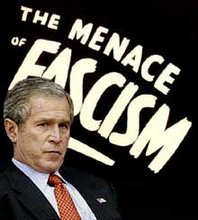
The Real Problem: Capitalism on Steroids or Imperial Corporatism.


This pretty much says it all!

By Charles Sullivan 01/12/07 "Information Clearing House"

Sometimes you look around and wonder how things could have gone so wrong so quickly. America has become the antithesis of everything she purports to be. We are the greatest purveyors of violence the world has ever known; the largest weapons dealers on earth; and death and misery are our principal exports. Everything is for sale here, even men’s tormented souls—at least, those who still possess them.

Our imperial leader, an impish little man with clear sociopathic symptoms, is incapable of empathy for the struggles of the common people, as those born into wealth and privilege often are. The man with his finger on the nuclear detonator is mentally ill, incapable of remorse—a fact that should terrify every world citizen. I do not say this out of malice or to demean the president; it is simply a statement of fact based upon quantifiable evidence that any student of psychology would easily recognize.

The fact that such a misfit could ascend to the presidency is testimony to the effectiveness of the capital system. Under capitalism, political power is not derived from the people, as would be the case in a democracy; nor does it not flow from the bottom up—it matriculates from the top down. It is really quite simple: The men and women who are in office were put there by people with immense wealth to represent the interests of the wealthy, to make money for them. And that is exactly what they are doing.

In many ways, George W. Bush is the perfect man for the job, if one understands what his real work entails as an emissary of the ruling class. He possesses all of the qualifications the vocation requires: callousness and indifference to the needs of others, the absence of conscience, truncated mental capacity; the inability to reason and to analyze; the incapacity to admit wrong doing; a penchant for cruelty that includes the enjoyment of inflicting pain and torture on others, as well as a powerful sense of nobility and entitlement that stems from being born into wealth and privilege.

He is also a pathological liar. From the president’s sickly perspective, the admission of failure is equivalent to a declaration of weakness and indecision, which explains his inability to change course, even if it means the destruction of America. Thus he has no guilt about sending thousands more men and women to kill and die in Iraq. You see, the president’s mind is defective. It does not work like the minds of normal human beings.

Corporate America placed George W. Bush in the White House to wage endless war; to bankrupt the federal treasury to the extent that few social programs will survive, and virtually all of our tax dollars will go into supporting the military industrial complex. The people who put him in office intend to end public ownership of the commons, as well as all government programs that do not directly benefit the wealthy. Let me clarify what this entails. If Bush and his handlers prevail in the class struggle, all social programs of value to the middle class and the poor, including Social Security, will be privatized and run for profit. The National Parks, National Forests, and all public lands will be privatized, and divvied up to private vendors such as the Disney Corporation. The public school system, like the public airwaves, will become for profit entities to serve corporate interests. Educating our children will be of secondary importance to the profitability of the corporations managing the schools. Every public service will be transferred to the private sector in order provide more wealth to corporate America at public expense.

We see the foundations of privatization being laid in Iraq by the war profiteers. Billions of dollars in stolen wealth are being hauled out of Iraq by the very same corporations that lobbied for war. War is money and in America money is power to control the political process. It is a vicious cycle that will not end until the people recognize it for what it is and rise up against it. Certainly no man of conscience or integrity could so easily betray the people of America he is sworn to serve.

That is why George W. Bush is the right man for the job and he is abetted by a compliant Congress acting under the influence of corporate lobbyists. But the president and his accomplices in Congress are only symptoms of a more pervasive disease that deeply afflicts our political system—capitalism. Class war is being waged simultaneously on many fronts and the dough keeps rolling in. Sources: Bush on the Couch: Inside the Mind of the President, Justin Frank, Harper Collins, 2004 Charles Sullivan is a photographer, free-lance writer and social justice activist residing in the Ridge and Valley Province of West Virginia. He welcomes your comments at csullivan@phreego.com.