Showing posts with label American corporate empire. Show all posts

Monday, September 15, 2008

There Is an Alternative to Corporate Rule


All over the world, truly democratic approaches are bubbling up from the grassroots.

By Mark Engler

14/09/08 "CommonDreams" -- - One of the remarkable features of modern political life is how consistently global elites deny that viable alternatives to the current global order exist, even as the terrain of international politics rapidly shifts. The "imperial globalists" that rose to power in the Bush years contend that without U.S. military strength decisively projected abroad, the forces of evil will sweep the globe. Meanwhile, "corporate globalists" of Wall Street persist in their belief that, in the post-Cold War world, we have no choice but to embrace the continual advance of the "free" market.

Neither idea is credible. The disastrous war in Iraq has firmly contradicted the neocons' argument that preemptive war can create security. Meanwhile, mainstream pundits continue to proclaim neoliberalism -- the radical free market doctrine that has defined the "Washington Consensus" in international economics in recent decades -- to be inevitable and irreplaceable. Yet as that ideology falls into disrepute across the globe, their contention is revealed as ever more deeply disingenuous. Today, there exist scores of books and hundreds of reports that offer new directions for the global order -- plus innumerable initiatives at local, national, and international levels to create political and economic systems that uphold human rights and defend the environment.

In truth, a lack of viable ideas is hardly the problem for those who reject both corporate and imperial models of globalization. Whether they are part of boisterous national uprisings or quiet, persistent community efforts to fuel a truly democratic globalization -- a globalization from below -- members of grassroots networks are now engaged in a debate about the proper balance of vision, program, political strategy, and tactics needed to move forward.


Changes in the Global Justice Movement


Part of what has fueled public confusion about alternatives was specific to the political moment when globalization protests captured the attention of the mainstream media. During the period around the year 2000, global justice organizing was being covered only in contexts where participants were providing a voice of opposition -- at the summit meetings of institutions like the World Trade Organization (WTO), World Bank, and International Monetary Fund (IMF). These events became flash points of resistance for a reason: the summit meetings were remarkably effective at drawing together a tremendously diverse body of global citizen activists.

Yet the globalization scene began to shift early in the Bush years, with the attacks of 9/11 playing an important role in the change. Just as abruptly as the major news outlets had announced the arrival of a "new" global movement after the Seattle protests against the WTO, challenges to the Washington Consensus became virtually invisible to their reporters once again after 9/11. This only partially reflected what was happening on the ground. In the months following the attacks, some protests -- notably a major mobilization against World Bank and IMF meetings in Washington, DC -- were cancelled as the world rose to express sympathy for the victims. However, the Bush administration's reckless response wiped out global good will and ultimately widened the scope of protests.

As strategies to impose elite visions of globalization continued, global justice protests throughout the world resumed. Many people, particularly in Southern countries, combined outrage at U.S. militarism with a repudiation of corporate globalization. When Bush traveled abroad, he was met with huge protests, many of which raised economic issues as well as anti-war concerns. Yet media outlets mostly reported these demonstrations as incoherent anti-American riots when they covered them at all. Beltway pundits rushed to declare the global justice movement dead. Leading the pack was Edward Gresser of the Progressive Policy Institute, the think-tank of the pro-"free trade" Democratic Leadership Council, who pronounced the movement "destined for irrelevance" in a realigned world.

Millions of people had reason to protest. These activists were about to redraw the political map of Latin America, preside over the collapse of neoliberalism's legitimacy, lead a worldwide rebellion against preemptive war, and push issues of economic justice to ever more prominent places in the global development debate. Their efforts for a democratic globalization, they would assert, were very much alive.


The View From Porto Alegre


As it turned out, a most visible manifestation of the next stage of global justice movement would come from a modest city of 1.5 million people deep in the south of Brazil, a place whose name has become synonymous with the pursuit of a more just and democratic global order. Today, mention of Porto Alegre, the original home of the World Social Forum, should be sufficient to forever put to rest the knee-jerk contention that there is no alternative to dominant visions of globalization.

Even as progressives within the U.S. turned to resisting Bush administration policies of preemptive war and its reactionary assaults on Constitutional rights, international movements have not waited for regime change in the U.S. to further the decline of the Washington Consensus. Massive crowds have joined Americans in rallying against the war in Iraq, as on February 15, 2003, when upwards of ten million people in over 500 cities took to the streets, constituting the largest coordinated global day of action in history. But, at the same time, local communities have waged battles to reverse privatization of public utilities and transnational campaigns have fought for reforms like debt cancellation. In countries throughout Latin America, they have successfully overthrown neoliberal governments, elected leaders who oppose the Washington Consensus, and they have pressured those officials to enact social policies that serve working people.

Reflecting this sustained torrent of global activity, the World Social Forum has grown and matured. While the first global forum in 2001 hosted 12,000 participants, subsequent events have grown larger and larger, drawing crowds of up to 150,000 people. In addition to returning to Porto Alegre for three additional years after the initial summit, the global event has also convened in Mumbai, India and Nairobi, Kenya, with smaller forums taking place at the regional level. At World Social Forum, community leaders, nonprofit representatives, scholars, organizers, and progressive lawmakers have presented, debated, and refined ideas that collectively represent as comprehensive a set of policies for the global economy as any wonky campaign office could ever hope to devise. These spaces have served as physical embodiments of the proposals for a democratic globalization.

Groups meeting in tents designated for discussion of energy and the environment have strategized about ways to break our dependence on the oil economy. They have proposed investment in mass public transportation, high mileage standards for cars, and shifting government subsidies for hydrocarbon exploitation to alternative energy. Other environmentalists have worked to promote an international carbon tax to penalize polluters -- something undoubtedly in the public interest, especially given mounting evidence about the perils of global warming. All these represent perfectly viable public policies, but have been vehemently opposed by the oil industry.

In other tents, family farmers and food safety advocates from throughout the world have gathered to promote models for redistributive land reform. Even the international financial institutions acknowledge that land reform would be beneficial for the poor, but it has been pushed off the political map by national elites and agribusiness conglomerates. Other advocates explained how current government subsidies for exports and for pesticides boost large-scale "mono-cropping" over organic agriculture; in response, they argued for a shift in public funds to support sustainable farming. Indigenous communities further asserted their right to self-determination, particularly with regard to maintaining traditional systems of land ownership and food production.

Tents holding discussions on the need to curb corporate power have advanced a slate of innovative proposals. These include public financing of elections to end what U.S. Senator Russ Feingold has called "a system of legalized bribery and legalized extortion." They include laws that allow victims of corporate abuses in the developing world to sue in U.S. or European courts. And they include detailed proposals for strengthening anti-trust law in order to break up business monopolies -- among them the massive media empires that do much to set the limits of public debate.

A group called ATTAC, one of the organizations that founded the World Social Forum, has set up tents promoting campaigning for the Tobin Tax. First proposed by Nobel Prize-winning economist James Tobin in the 1970s, the initiative would impose a low percentage tax on the hundreds of billions of dollars worth of international financial transactions that take place each day. This would provide a disincentive for short-term gambling on currencies, and it would encourage longer-term and more productive investment. Moreover, even a miniscule levy could create an annual fund of upwards of $100 billion that could be used to stop the spread of disease and alleviate global poverty.

Warehouse workspaces hosting labor organizations have offered myriad methods for protecting workers' rights and ending sweatshop conditions. Over seventy cities and localities in the United States have passed Living Wage laws since the early 1990s. These go beyond paltry minimum wage requirements and mandate that businesses pay employees at least enough to keep their families out of poverty. At the social forums, U.S. advocates discussed how to spread these campaigns. Meanwhile, representatives from the estimated 180 worker-run factories that formed after capital fled Argentina's collapsing neoliberal economy in 2001 spoke about their experiences in self-management. And groups like the Women's International Coalition for Economic Justice have stressed that U.N.-backed summits and other international efforts to advance women's rights must not be subordinated to multilateral trade agreements.

Finally, workshops organized by representatives from the fair trade movement profiled endeavors to build direct ties between producers in the global South and Northern consumers. The fair trade model aims to eliminate exploitative middlemen, ensure that workers get a living wage for their labor, and give local collectives a greater say in the determining the conditions under which international economic exchanges take place. Like organic food, fair trade remains a niche market, and it cannot substitute for wider structural changes in global economy. But it provides both a living alternative to exploitative trade and a hopeful model for future change.

Even this wide range of activity hardly constitutes an exhaustive survey. Unlike the corporate and imperial models, a globalization from below does not take the form of one-size-fits-all prescription for the global economy. With regard to alternative policies, the model of participatory democracy produces, in the words of another slogan, "One No, Many Yeses." It generates a strong challenge to structures of neoliberalism and empire, but allows for a wider sense of what might replace them.

Contrary to individual manifestos that presume that a lack of ideas is the problem for progressives, the advocates at Porto Alegre have presented an agenda for change rooted in local struggles and campaigns that have long been underway. Excellent volumes such as Alternatives to Economic Globalization, a book compiled by the San Francisco-based International Forum on Globalization, have profiled other aspects of this agenda. The Human Development Reports produced annually by the United Nations Development Program have backed many of these same initiatives. A number of progressive proposals have even been introduced as legislation in the U.S. Congress in such measures as the recent TRADE Act, advanced by fair trade advocates this summer. Needless to say, the elite beneficiaries of corporate and imperial rule, still steadfast in their contention that no alternatives exist, would prefer that the public not take notice of any of these developments.


Just Saying No, or First Do No Harm

The ideas, experiences, and proposals of the World Social Forum provide a trove of information for all those who want to construct a new agenda for the global economy. At the same time, as long as democratic movements do not have the power to overrule political and economic elites, there exists an important case for just saying "no" -- for first insisting that those now in power stop doing harm.

When Wall Street neoliberals and Washington militarists ask, "What is the alternative?" they base the question on faulty assumptions. Their question serves to naturalize very radical agendas of empire and corporate rule, suggesting that these are normal and acceptable states of affairs. They are not. In a situation where power is grossly imbalanced, where crimes are being perpetuated in the name of democracy, and where ever larger sections of public life are being handed over to the market, saying "no" to these radical agendas can be a perfectly worthy task in itself.

In an important respect, the alternative to invading Iraq is not invading Iraq. The alternative to NAFTA is no NAFTA. The neocons' invasion of Iraq has cost thousands of American lives, taken the lives of hundreds of thousands of Iraqi civilians, produced some two million refugees, and is set to squander over a trillion dollars of public funds. It has generated heightened regional tensions, greater instability, and more terrorism. Given the disastrous history of U.S. interventions -- not just in Iraq, but also, to mention some particularly ignoble examples of the past 60 years, in Vietnam, Indonesia, Chile, Guatemala, El Salvador, Iran, the Dominican Republic, and Nicaragua -- calling for a moratorium on such military actions, official and covert, is a first step in stemming the damage of imperial globalization.

The agenda of corporate globalization, which unfortunately thrived during the Clinton presidency and is still popular within the right wing of the Democratic Party, is subtler. But this, too, has relied on forceful maneuvering to come into existence. Neoliberalism involves aggressively opening markets, clearing the way for a previously unheard of level of speculative capital transfer, and dictating the restructuring of local economies. None of these things occur naturally, and they deserve opposition. A moratorium on harmful "free trade" deals and on further expansion of the WTO, especially into areas beyond the traditional realm of trade, is a vital immediate demand.

Simply refusing each of the mandates of the Washington Consensus -- or at least rejecting the idea that they should be imposed world as a one-size-fits-all uniform for development -- would itself allow for a substantial restructuring of globalization politics. The true utopians in the global economy are people who embraced the market fundamentalist fantasy that unchecked capital would serve the common good. Refuting this idea can be fairly straightforward.

Neoliberal corporate globalization prescribes the elimination of tariffs and other protections for local enterprises. An alternative would be to allow poorer countries to keep these intact, reviving what is known in trade agreements as "special and differential treatment." This model would give developing countries more flexibility in choosing to nurture infant industries and to protect agricultural commodities that are important to traditional cultures and to the security of their food supply. When the Washington Consensus demands the privatization of public industry and the division of the commons into private property, an alternative is to keep these things in the hands of the public, defending the provision of public goods as a way of ensuring economic human rights -- including guaranteed public access to water, electricity, and health care. If it calls for cuts in social services, an alternative is to reject the cuts, maintaining or bolstering these services and instead pushing for a redistributive tax system that makes the wealthy pay their fair share.

When Washington mandates a more "flexible" labor market -- one without unions or worker protections -- an alternative is to defend living wages, collective bargaining, and the right to associate. And when IMF bailouts for wealthy investors create a situation in which, to paraphrase author Eduardo Galeano, "risk is socialized while profit is privatized," an alternative is simply to end these bailouts, making speculators bear the cost of their gambles.

The demand to reverse neoliberal structural adjustment policies proposes a fundamentally different relationship between wealthy nations and the global South than currently exists. It would grant countries the freedom to determine their own economic policies, priorities for government spending, and rules for controlling foreign investment. Instead of imposing a single hegemonic model on the entire world, this new relationship would allow for broader diversity and experimentation in international development. While this does not by itself constitute a vision for ensuring human rights or protecting the environment, it nevertheless represents an important strategic gain. It alone would likely bring change of great enough magnitude to make the politics of the global economy look virtually unrecognizable to those who have grown accustomed to Washington-dictated corporate globalization.

Those who reject corporate and imperial models of globalization have a wealth of ideas at their disposal, a healthy internal debate to refine their strategies, and a vibrant, growing international network of citizens that see their efforts as part an interconnected whole. They also have very powerful enemies. Fortunately, as we enter the post-Bush era, the international community has voiced a firm rejection of unilateralism and preemptive war. Likewise, ever-larger swaths of the globe view the neoliberal doctrine of corporate expansion as a failed and discredited vision. This creates unique opportunities for citizens to fight to bring a democratic globalization into existence. More exciting still is that many people are already doing so, and, on key issues like debt relief and across entire regions like the Latin America, they are winning. The punditry is increasingly taking notice. For there is nothing so dangerous to those who insist that the world must remain as it is as the simple, stubbornly defiant doctrine of hope.

-- Mark Engler, a senior analyst with Foreign Policy In Focus, is author of How to Rule the World: The Coming Battle Over the Global Economy (Nation Books, 2008), from which this article is adapted. He can be reached via the web site http://www.DemocracyUprising.com


(In accordance with Title 17 U.S.C. Section 107, this material is distributed without profit to those who have expressed a prior interest in receiving the included information for research and educational purposes. I.U. has no affiliation whatsoever with the originator of this article nor is I.U endorsed or sponsored by the originator.)


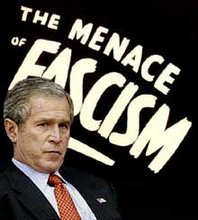
The Nazis, Fascists and Communists were political parties before they became enemies of liberty and mass murderers.



Friday, September 12, 2008

A Million Doors For Peace


This I can say with no doubt: Until the antiwar-movement becomes a full time PEACE movement, it will still take years to end an unpopular war, prosecuted on lies and fear-mongering, just as it did with Vietnam and, now, in Iraq.


The forces against whom we are pitted are enormously wealthy and powerful. They are the very same forces who have controlled our Democratic Republic, with increasingly authoritarian, fascist tactics for over 4 decades.


Until the forces for peace are continuously operational in those activities which bring about social and economic justice, real energy reform and the withdrawal of public support for the American-led Corporate Empire, the cost of which has nearly, if not in fact, destroyed this nation, future anti-war movements will be equally as ineffective as this one has been for the last 7 years.


Being devoutly for something is far less exhausting and demoralizing over the years than being devoutly against something in an emergency, when one's voice can hardly be heard over the screaming and yelling of the deceived and, therefore, fearful and irrational.


posted by Katrina vanden Heuvel on 09/10/2008

At The Nation

At this moment, when the mainstream media has largely abandoned coverage of the Iraq War and the majority antiwar opinion, the presidential campaign is underwhelming in offering any vision of peace, and the antiwar movement clearly needs to redouble its efforts, an exciting mobilization is re-energizing the peace movement--the Million Doors for Peace campaign.


On Saturday, September 20, 25,000 volunteers across the country will contact one million people in their neighborhoods and ask them to sign a petition urging the next Congress to bring US troops home from Iraq within one year. (The timetable is based on a new report from the Center of American Progress--coauthored by Dr. Lawrence Korb, former Assistant Secretary of Defense in the Reagan Administration – that suggests "an orderly and safe withdrawal is best achieved over an 8 to 10 month period.") This campaign is different from previous antiwar efforts because volunteers will be talking to their own communities instead of gathering in one place--such as the National Mall--for a traditional protest.


Spearheaded by USAction and TrueMajority, the Million Doors campaign has evolved into the broadest antiwar coalition to date. Karen Dolan, Director of Cities for Peace--one of the original cosponsoring organizations--said, "I've been at the center of the new peace movement since 2002 and I haven't seen anything like this before. Its exciting to me [because] Cities for Peace is involved with so many of these groups and I have often witnessed something like the divide between the more radical activists and more centrist groups - and I mean the terms 'radical' and 'centrist' in the most affectionate way, as two strategic sides of the same progressive coin! The unification of all of us bodes well for new energy and more creative, and hopefully effective, antiwar work nationally."


Other organizations participating in the campaign include: Catholics United, CodePink, MoveOn, Pax Christi USA, Peace Action, Progressive Accountability, Progressive Democrats of America, United for Peace and Justice, Voters for Peace, United Methodist Church-General Board of Church and Society, Organic Consumers Union, Democracy for America and Win Without War. Combined, the coalition boasts a membership in the millions and hundreds of state and local affiliates.


"We're shooting for at least 25,000 people to sign up and participate," said Leslie Cagan, National Coordinator of United for Peace and Justice. "This is a cooperative effort of all of the major antiwar groups in the country, and that's one reason we're so optimistic. It represents another level of the cooperation and collaboration within the antiwar movement."


Volunteers will be sent a list of 40 neighbors to contact and receive training materials, literature, and a petition from participating organizations and through the Million Doors website. The neighbors who volunteers will contact are all either newly registered or lapsed voters - a key strategy to broadening the movement.


"By targeting newly registered voters, and lapsed voters, we think that combination will allow us to talk to people who have not necessarily been engaged in the antiwar movement before," Cagan said. "They may agree with us, but they haven't yet taken a stand or taken any action.... We do believe that the vast majority of this country opposes the war. But it's also true that the organized antiwar movement has not yet been able to successfully tap into that constituency. September 20 will both energize people who are already part of the antiwar movement, and also reach beyond those folks to the next layer of antiwar activists."


All of the organizers feel that September 20 is critical to shining a light back on Iraq. Tom Swan, USAction's Iraq 2008 campaign coordinator and former campaign manager for Ned Lamont, said: "A lot of the Washington punditry is trying to ignore the fact that we're still at war, spending $12 billion a month, resources that could be put to use here at home. And while it's a slower pace, the number of our troops in Iraq who die continues to grow on a weekly basis.... There has been an entire vacuum on the war, and particularly the cost of the war, and the drain that it is on our economy.... We're going to go out and talk with [neighbors] about the war, its cost, and why we expect our leaders to end it now. By having these tens of thousands of people going out door to door on one day we're going to help put this issue back within the public debate.... About [how this] war was a bad idea, continuing it is a bad idea, and we need to end it now."


Beyond September 20, this mobilization has the potential to greatly strengthen the antiwar movement moving forward--and that's critical even if there is a Democratic president and Congress.


"No matter who wins in November, we... will need to continue to put the pressure on to bring the Troops Home from Iraq, and to stop new wars from starting or escalating," said CODEPINK co-founder Jodie Evans.


"We know full well that whoever is elected come November 4th the work of the antiwar movement is far from over," Cagan said. "And what our efforts on September 20 will do is help us expand the organized base of the antiwar movement... We will be able to then go back to people and get them involved in next steps, with local groups, or become part of a national effort."


"September 20 is very creative and it does several things," Dolan said. "[It] involves new voters; demonstrates a peace mandate for a new president and new congress; has the by-product of identifying antiwar voters; creates a new and dynamic list for the entire peace movement to engage after the action on September 20th and invite to join us in ending the war and in future grassroots activist campaigns."


Even if Barack Obama should win, Swan pointed out, "We think that when it comes to the war Obama is only going to be as good as progressives push him to be." (Swan mentioned my recent recounting of how FDR told progressives who sought his support on legislation, "You've convinced me. Now go out and make me do it." And they did. History repeats itself now - only through a strong, organized antiwar movement will any president be able to move aggressively to end the war and prevent future wars as well.)


You can sign up and get your friends to do the same up until the day before the mobilization. Do it now - start knocking on doors and help put an end to this insane, disastrous war.


(In accordance with Title 17 U.S.C. Section 107, this material is distributed without profit to those who have expressed a prior interest in receiving the included information for research and educational purposes. I.U. has no affiliation whatsoever with the originator of this article nor is I.U endorsed or sponsored by the originator.)


The Nazis, Fascists and Communists were political parties before they became enemies of liberty and mass murderers.


Sunday, June 8, 2008

On Days Like These....It's Hard To Find Hope

The only really good news is that this corrupt, evil, oppressive corporate empire is about to fall to pieces. Now, that is very good news.

The bad news? An awful lot of ordinary folks here and over seas will be hurt very badly before this is all over and the people who ought to be, won't be, unless the people decide to make them hurt, and I don't see that happening.


The Empire -- A Status Report

By William Blum


07/06/08 "ICH" -- - There are a number of expressions and slogans associated with the Nazi regime in Germany which have become commonly known in English.


"Sieg Heil!" -- Victory Hail!

"Arbeit macht frei" -- Work will make you free.

"Denn heute gehört uns Deutschland und morgen die ganze Welt" -- Today
Germany, tomorrow the world

But none perhaps is better known than "Deutschland über alles" -- Germany above all.


Thus I was taken aback when I happened to come across the website of the United States Air Force -- www.airforce.com/ -- and saw on its first page a heading "Above all". Lest you think that this refers simply and innocently to planes high up in the air, this page links to another -- www.airforce.com/achangingworld/ -- where "Above all" is repeated even more prominently, with links to sites for "Air Dominance", "Space Dominance", and "Cyber Dominance", each of which in turn repeats "Above all". These guys don't kid around. They're not your father's imperialist war mongers. If they're planning on a new "thousand-year Reich", let's hope that their fate is no better than the original, which lasted 12 years.


The events of recent years indicate that the world is wising up to and becoming less intimidated by Washington's overarching ambition for world dominance. Latin America is increasingly attempting to escape the empire's clutches. Leaders keenly aware of how US imperialism works and determined to keep it out of their own country are in power in Venezuela, Uruguay, Ecuador, Bolivia, Argentina, Brazil, Cuba, Guatemala, Nicaragua, Panama, and perhaps the latest addition, Paraguay.


And now Africa has turned down Washington's offer to be part of the imperial family. African governments have refused to host Africom, the US Africa Command. The Washington Post reported that "worry swept the continent that the United States planned major new military installations in Africa", and despite the promise of new development and security partnerships, many Africans concluded that Africom was primarily an extension of US counterterrorism policy, intended to keep an eye on Africa's large Muslim population. The United States "equates terrorism with Islam," said a senior Kenyan diplomat, and few African governments wanted to be seen as inviting US surveillance on their own people. [note from your editor: It would be more instructive to equate anti-American terrorism with American foreign policy, including building military bases in other people's countries.]


When Bush visited Africa in February, he was told by the Ghanian president: "You're not going to build any bases in Ghana." US-funded aid groups protested plans to expand the American military's role in economic development in Africa, sharply objecting to working alongside US troops. Said an Africom officer: "[Africom] was seen as a massive infusion of military might onto a continent that was quite proud of having removed foreign powers from its soil."[1]


There's also the oil factor. The US imports more oil from African nations than from Saudi Arabia, and the continent has huge unexplored areas. This undoubtedly is a major motivation behind Washington's desire for an expanded military presence in the region. The United States is not about to take Africa's rejection of Africom as the last word; indeed, some of the tough rhetoric by African officials may be for public consumption, for the US already has somewhat of a military presence on the continent. It will be interesting to observe the ongoing tug of war between Washington and African nationalists/anti-imperialists over expansion of the American presence.


Democracy American Style. You gotta problem wit dat?


Here's White House spokeswoman Dana Perino at a recent press briefing:

Reporter: The American people are being asked to die and pay for this, and you're saying that they have no say in this war?

Perino: I didn't say that ... this President was elected --

Reporter: Well, what it amounts to is you saying we have no input at all.

Perino: You had input. The American people have input every four years, and that's the way our system is set up.[2]


In 1941, Edward Dowling, editor and priest, commented: "The two greatest obstacles to democracy in the United States are, first, the widespread delusion among the poor that we have a democracy, and second, the chronic terror among the rich, lest we get it."


Can we look forward to Perino's memoir after she leaves the White House in which, like her predecessor Scott McClellan recently, she confesses that she was part of a "permanent campaign" mode to deceive the American public? I'm prepared to welcome her into the fold as I have McClellan. I have a soft spot in my heart for political late bloomers. I used to work for the State Department when I was a good, loyal anti-communist.


Washington's grand and noble new ally in the Free World


Scott McClellan has been criticized for not expressing his reservations about Bush administration policies while still at the White House. This would have indeed taken a measure of courage few people have, and likely meant his job and career committing suicide. I'm reminded of Carla Del Ponte, the Swiss diplomat who in 1999 became Chief Prosecutor for the International Criminal Tribunal for the former Yugoslavia, located in The Hague, Netherlands. In accordance with her official duties, she looked into possible war crimes of all the participants in the conflicts of the 1990s surrounding the breakup of Yugoslavia and the NATO (read the United States) 78-day bombing of Serbia and its province of Kosovo, where ethnic Albanians were trying to secede. In late December 1999, in an interview with The Observer of London, Del Ponte was asked if she was prepared to press criminal charges against NATO personnel (and not just against the former Yugoslav republics). She replied: "If I am not willing to do that, I am not in the right place. I must give up my mission."


The Tribunal then announced that it had completed a study of possible NATO crimes, declaring: "It is very important for this tribunal to assert its authority over any and all authorities to the armed conflict within the former Yugoslavia."


Was this a sign from heaven that the new millennium (2000 was but a week away) was going to be one of more equal international justice? Could this really be?


No, it couldn't. From official quarters, military and civilian, of the United States and Canada, came disbelief, shock, anger, denials ... "appalling" ... "unjustified". Del Ponte got the message. Her office quickly issued a statement: "NATO is not under investigation by the Office of the Prosecutor of the International Criminal Tribunal for the former Yugoslavia. There is no formal inquiry into the actions of NATO during the conflict in Kosovo."[3]


Del Ponte remained in her position until the end of 2007, leaving to become the Swiss ambassador to Argentina; at the same time writing a book about her time with the Tribunal -- "The Hunt: Me and War Criminals", published two months ago but available at the moment only in Italian. It hasn't been much reported yet what del Ponte has said about NATO, but the book has already created a scandal in Europe, for in it she reveals how the Kosovo Liberation Army (KLA) abducted hundreds of Serbs in 1999, and took them to Kosovo's fellow Muslims in Albania where they were killed, their kidneys and other body parts then removed and sold for transplant in other countries.


The KLA for years has been engaging in other equally charming activities, such as heavy trafficking in drugs, trafficking in women, various acts of terrorism, and carrying out ethnic cleansing of Serbs who have had the bad fortune to be in Kosovo because it's long been their home. Between 1998 and 2002, the KLA appeared at times on the State Department terrorism list; at first because of its tactic of targeting innocent Serb civilians in order to provoke retaliation from Serbian troops; later because Mujahadeen mercenaries from various Islamic countries, including some tied to al Qaeda, were fighting alongside the KLA, as they were in Bosnia with the Bosnian Muslims during the 1990s Yugoslav civil wars.[4] The KLA remained on the terrorist list until the US decided to make them an ally, in some measure due to the existence of a major American military base in Kosovo, Camp Bondsteel. (It's remarkable, is it not, how these bases pop up all around the world?) In November 2005, following a visit there, Alvaro Gil-Robles, the human rights envoy of the Council of Europe, described the camp as a "smaller version of Guantanamo", referring to the detainees there at the time from Washington's various wars, including the so-called War on Terror.[5]


On February 17 of this year, in a move of highly questionable international legality, the KLA declared the independence of Kosovo from Serbia. The next day the United States recognized this new "nation", thus affirming the unilateral declaration of independence of a part of another country's territory. The new country has as its prime minister a gentleman named Hashim Thaci, described in Del Ponte's book as the brain behind the abductions of Serbs and the sale of their organs. The new gangster state of Kosovo is supported by Washington and other Western powers who can't forgive Serbia-Yugoslavia-Milosevic -- "the last communists of Europe" -- for not wanting to wholeheartedly embrace the NATO/US/European Union triumvirate, which recognizes no higher power, United Nations or other. The independent state of Kosovo is regarded as reliably pro-west, a state that will serve as a militarized outpost for the triumvirate, which is intent on further encircling Russia and pushing it out of Europe.


In her book, Del Ponte asserts that there was sufficient evidence for prosecution of Kosovo Albanians involved in war crimes, but the investigation "was nipped in the bud", focusing instead on "the crimes committed by Serbia." She claims that she could do nothing because it was next to impossible to collect evidence in Kosovo, which was swarming with criminals, in and out of the government. Witnesses were intimidated, and even judges in The Hague were afraid of the Kosovo Albanians.


In April, the Swiss Foreign Department issued a statement that Del Ponte's book "contains statements which are impermissible for a representative of the government of Switzerland", ordered her to return to her ambassadorial post in Argentina, and prohibited any further appearances promoting her book. The Swiss have officially recognized the independence of Kosovo and established an embassy in the country. Kosovo appears likely to remain a highly controversial issue in Europe and Washington for some time to come.[6]


Reason number 3,468 to yearn for the lifting of the capitalist weight from our souls


My phone company, Verizon, recently raised the monthly charge for my international call plan by 30 percent. I phoned them to find out the reason for this and was told that their competitors had raised their charge for the international plan and so Verizon was doing the same. "To stay competitive", the earnest young man told me. I thought I must be misunderstanding him. We've all been raised to believe that one of the beauties of capitalism is that it provides a competitive environment which induces businesses to lower their rates so as to lure away customers from their competitors. In the end, the consumer benefits from lower prices. And this makes sense, at least within the capitalist framework. (Although there have of course been numerous cases of large companies lowering prices to force a small company -- which initiated the price cuts -- out of business, after which the large companies raise their prices back up.) But now? Now we're told that competition leads to price increases. What, pray tell, is there left of the system for us to believe in?


Supply and demand? Like in Burma, following the recent devastating cyclone? Prices for food and other essentials have risen significantly since the disaster. As they should, according to the revered and beloved law of supply and demand, inasmuch as things are obviously in short supply in Burma and people's needs are plainly much greater than usual. What could make more sense under circumstances of human desperation than to raise prices?


Yet, though questioning the law of supply and demand is normally regarded in the same light as being skeptical of the law of gravity, I have to do so, and refer to things I've expressed before: The price of gasoline in the United States has been increasing on a regular basis for a rather long time now, but there's no shortage of supply. There are no lines of cars waiting hours at gas stations trying to fill up before the pumps run dry. And there's been a considerable fall in demand as less-than-rich drivers cut back on car use. It does not require total cynicism to wonder whether the law of supply and demand has been repealed. Or can it be that what is known as "supply and demand" is not really any kind of immutable "law", but rather (choke, gasp) "corporate policies"?


The oil companies are currently spending big bucks to convince the American public that the super-high gasoline prices are not the companies' fault. "The industry," reported the Washington Post, "is trying to convince voters -- who, in turn, will make the case to their members of Congress -- that rising energy prices are not the producers' fault and that government efforts to punish the industry, especially with higher taxes, would only make pricing problems worse."[7]


Do the oil companies think they're being misunderstood? The next time you run into a friendly oil company executive ask him this: "If you lowered prices to what they were two years ago, would consumers stage protests outside your headquarters? Would the FBI raid your offices? Would your breathtakingly obscenely high profits drop into the red? Could you still maintain your decadent millionaire lifestyle? The oil companies are perfectly free to very significantly lower prices without anything that you or I would call financial suffering. But they don't do it. So what's being misunderstood by the public which obliges the companies to spend millions on advertisements? Money which could go toward price reductions.


Oil company executives at least produce a useful product compared to people in the hedge funds business. What are hedge funds, you ask? They're private, largely unregulated pools of capital whose managers can buy or sell any kind of assets. The income of the fund's executives -- often in the tens or hundreds of millions of dollars, sometimes even a billion -- is taxed as capital gains, a much lower tax rate than if it were taxed as regular earnings. One can say that hedge funds are simply pure speculation carried to absurdity; typical of the new American Dream: getting rich through speculation and inheritance instead of through skill, enterprise, and filling a human social need.


Here is Daniel Strachman, a former hedge fund consultant and author of "The Fundamentals of Hedge Fund Management." He's skeptical of raising taxes on hedge fund managers, saying they should be rewarded for taking huge risks. [So do firefighters, police officers, and bank robbers of course.] Most managers have their own money in their funds, he declares, and suffer massive losses when their investments go bad. "It's clear somebody has to win and somebody has to lose", says Strachman. "It's not pretty at all because people say, 'Oh my God. Look how much money these guys are making while people are losing their homes and are complaining about the cost of eggs and sugar.' But so what? We don't live in a society that is pretty all the time. That's why it's capitalism."[8]


William Blum is the author of: Killing Hope: US Military and CIA Interventions Since World War 2, Rogue State: A Guide to the World's Only Superpower, West-Bloc Dissident: A Cold War Memoir, Freeing the World to Death: Essays on the American Empire - Portions of the books can be read, and signed copies purchased, at www.killinghope.org


NOTES
[1] Washington Post, June 1, 2008, p.18

[2] White House press briefing, March 20, 2008

[3] The Observer (London), December 26, 1999; Washington Times, December 30 and 31, 1999; New York Times, December 30, 1999

[4] There are numerous articles in the world press of the past 20 years about the KLA's inordinate thuggery; Google "KLA" and one or more of the key words, such as drugs, prostitution, ethnic cleansing, transplants, etc.

[5] http://wikipedia.org/, under "Camp Bondsteel"

[6] Del Ponte's book and the turmoil it's produced have been largely ignored in the US media, but if one does a Google on her name and the book, one will find many reports from Europe.

[7] Washington Post, May 9, 2008, p.D1

[8] Washington Post, April 17, 2008, p.D1


(In accordance with Title 17 U.S.C. Section 107, this material is distributed without profit to those who have expressed a prior interest in receiving the included information for research and educational purposes. I.U. has no affiliation whatsoever with the originator of this article nor is I.U endorsed or sponsored by the originator.)


The Nazis, Fascists and Communists were political parties before they became enemies of liberty and mass murderers.

Thursday, May 22, 2008

Has The GOP Lost Its Faith?

Seems once tax cuts for the wealthiest 2% of Americans, the corporate welfare state and military-mania sours on the tongues of Americans, the GOP has nothing left to offer. They have done about all the damage they can do, this time around, to the nation. What's more is that they may have finally shot themselves in the head with one of there own big guns, leaving a mortal wound.

The media loves nothing better than a neck and neck presidential race, so they will try to create one, whether one actually exists or not. Witness the Democratic Primary, which for all practical purposes, was over months ago. To watch an evening of punditry on Cabal news is much like having night duty a on locked ward in a mental hospital. Nonsensical conversations abound. One pundit will say, "The numbers don't lie, there is no way Hillary can win this nomination." Then, everyone else, so-called experts and analysts go babbling on about how she can, in fact win. Hillary, herself, seems to have gone totally 'round the bend, comparing her campaign to everything from the civil rights struggle to women's rights to, now, the election in Zimbabwe.
Whats' next, Patton's Battle of the Bulge?

For me the real kicker was all the references to election 2000, after which we all called for the abolishment of the electoral college and to allow the popular vote to stand as the will of the people. I remember clearly the new junior senator from N.Y saying that she was against that. Well, of course she was. Abolishing the electoral college would make it almost impossible for the two political parties to play their electoral games of voter manipulation and electoral calculation by state rather than by voter, and rarely have we seen anyone play those games better than the Clintons and the Bushes.

I am still for allowing the electoral college to go the way of the horse and buggy (though the latter may be on its way back). I'm also for another blast from the past; pen and paper ballots. Who cares how much time it takes to count ballots, as long as the count represents the will of the people.

What no one wants is another 2000, because this one will not end as 2000 did, with fake vote counts, Brooks Brothers riots and unconstitutional Supreme Court rulings. We live in an entirely different political world than we did then. I honestly don't believe that the people will stand still for another "stolen election" be it real or imagined. Because of all the shenanigans in the last 4 elections, the American people are finally becoming suspicious of all kinds of elections weirdness, and I can assure my fellow independents that illegal aliens voting is the last of their concerns.

This country is as a powder keg. The tension is so think one could cut it with a knife, even though the politicians continue to smile and wave as if that were not the case. We are all living in something closely resembling the Twilight Zone. Tempers are flaring in the hintertlands, mostly at gas stations, but in other places as well. We, Americans, are all playing pretty fast and lose with what's left of our sanity, and the psychotics in Teevee news land are not helping.

We are headed for a full-blown, national break-down and the folks in the D.C. bubble are either as clueless as they seem or they just aren't reporting it or talking about it in the halls of power.

Sometimes, it is better to just stop resisting and hit bottom. Then, there will be nowhere to go but up. From the ashes the Phoenix does rise., or even better, a humble nation of can-do, courageous people, who long for the country we started out to be and finally see the evils of empire, will emerge. They will see the faces of the monster for which their sons and daughters are killing and dying and who will find their courage, if not their faith, and decide to pull the plug on the whole sociopathic government/corporate protection racket, a better word for which is fascism.

Fascism was not defeated in 1945. It simply moved.

It can't happen here?

It already has.

The only question for American voters now is who can lead us forward from here. Which way do we want to go? Toward peace, social and economic justice, beginning to really think outside the box, without destroying what makes us a people; our constitution? Or do we want to attempt to "shoot the moon" and continue down a path begun by some of the most idiotic people to ever gain power in modern day America with the most horrendous deception and fear-mongering, amounting to the most abject betrayal of the American people in history.

What's worse, it is a betrayal that threatens the whole world, in one way or another, very little of it good.

We, Dear Compatriots, are about to get smacked with the biggest load of karma to hit any nation since WWII. In my lifetime, I have found that when karma rolls around, it is far better to accept my due and be grateful for the profound lessons it offers. Karma is about balance, not punishment or reward. It is the correction of error; the error that caused the imbalance in the first place. Anyone care to guess what that error was? Think about it.

America had gone seriously off the rails. It isn't all that sudden. We have been careening back and forth on a down hill slide for the last 40 years, in many ways. Even in ways where we believe we have made progress, now we find that that progress may have been all for show; skin deep. Or perhaps, now, it is real, deep down, and the breathless reporting of an occult racism and/or sexism, possibly even more poisonous and than that which permeated this country back then, is just typical of today's idea of news reporting.

Sometimes I wonder, how divided are we really? Are we really in the middle of a cold civil war that could turn hot at any moment, or are we simply convinced of that, because it is far more entertaining than the truth of the matter, which is that we are all in the big ship of fools....er....state together, for better or for worse. Some of us who saw the writing on the wall early on have long since, quietly, left the country. Some of us may still leave. But many more will stay, ride it out and do the hard work to begin to turn things around, if that is still possible.

No decision is any better or worse than the other. For those who have left, America may well, one day, need her ex-patriots. For those who stayed, America needs her peacemakers and her conscious citizens, her independent thinkers and, especially, the generation coming of age now.

To them, I say only this, "Make peace with each other, but only an authentic peace; one that does not require that you trash your highest principles, park your brain at the door, or sell out to the highest bidder. Some things should not ever be trashed or be up for sale.

Democracy cannot exist where the people are unwilling to compromise. Compromise and consensus are as necessary to Democracy as oxygen and water are to human life. Nevertheless, when and where one group must always compromise, even their deepest held principles, Democracy does not live anyway, but is only a pretty word, turned into a most dangerous deception.


By P.M. Carpenter

If the Democratic Party thinks it has problems -- which it obviously does, what with its presidential-nomination process so clearly resembling Zimbabwe's and all, or so we're told -- it should pause for a moment and consider its blessings: chief among them, it isn't the GOP.

Now there's a party with problems, from its sitting president with Hooverian popularity to its larger image as "dog food" in need of mass recall.

It's panic time at the Grand Old Party, but I've got to give its operatives credit. "Mum" isn't their word, for they are airing their problems hither, yon and with stentorian force. He of last week's ground-meat metaphor is a former chairman of the National Republican Congressional Committee, and then yesterday there was this honest assessment in the New York Times from a prominent Republican adviser:

The loss of a congressional seat in Mississippi was only the second most disturbing sign for Republicans last week. The exodus of lobbyists from John McCain’s campaign wasn’t even close. The most ominous warning for what the fall might be like for the GOP was the throng of 75,000 people that Barack Obama turned out for a rally in Portland over the weekend ... [which was] was roughly two-thirds the number of Republicans who participated in the Iowa caucuses this year.

This, as the adviser continued for the benefit of those few still lingering in denial, is "growing and irrefutable evidence of an enthusiasm gap between the two parties."

Something, most Republicans realize, must be done. But what?

Most fortunate for the nation is that they haven't a clue. They are simply stumped, void of new ideas and doubtful of old tricks. Even the House GOP's starting point of a new slogan -- "The change you deserve" -- hit a depressing snag right off the bat. And as anyone familiar with modern politics knows, if one hasn't a spiffy slogan, one can't possibly advance one's cause.

Yet the even bigger problem for the GOP is that the party no longer knows what its cause is, let alone market the bloody thing. This huge bump in the electoral road became blisteringly clear this week as Republican House members convened to consider the thematic fate of their party.

As The Politico reports, "Rank-and-file Republicans met to clear the air Tuesday in a crowded, members-only session on the fifth floor of the Longworth House Office Building. Members who attended said the summit was typical of previous meetings, with lawmakers offering their individual visions for the party but failing to come to a consensus about a way forward."

Upon reading the story, however, what struck me wasn't so much their inability to come to a consensus -- they were, after all, a recently stunned assemblage, meeting as they did on the heels of three special-election losses deep within GOP territory -- but the almost morbidly anemic properties of the ideas that members proposed.

One would think that after suffering such humiliating setbacks, and now clearly seeing the writing on numerous other walls, that Gingrichlike fire-eaters would be coming out of the GOP woodwork, bellowing the newest, latest and hottest in demagogic folderol -- you know, exactly what once put them in power to begin with. But that wasn't the case. No, that wasn't the case at all.

Instead, for instance, no less than the chairman of the oxymoronic Republican Study Committee, Rep. Jeb Hensarling, proposed the utterly nonrevolutionary ideas of "reform[ing] the tax code and a unilateral earmark moratorium." And those were the meeting's blockbusters -- tax codes and earmarks, two items around which no typically uninformed electorate will ever wrap its brain. What's more, even the chairman's colleagues were unenthusiastic, having rejected for obvious reasons "the moratorium proposal on two previous occasions."

And things went downhill from there, ideologically -- which for this party is to say, demagogically -- speaking. For example another House member dusted off his years-old plan for a "suburban agenda," the "new version" of which "includes many of the same policy prescriptions as the original -- college savings accounts and legislation to target online predators -- plus new items, such as a food safety measure." A what? We're talking Rome burning here, and the fire brigade is fiddling and piddling. It's almost sad.

If they really wanted to rouse the multitudes, they would flee from their incumbent party leader and his unrepentant policies with vigorous abandon. They would, that is, agitate for something completely different -- say, real "Fortress America" stuff such as a return to Taftian isolationism and Smoot-Hawley protectionism. They would, in short, turn on an ideological dime, since the electoral worm's sensibilities have already turned.

They wouldn't have to believe any of it or anything like that. After all, they never really have in the past. But need I remind them that this is politics -- Republican politics, which has always excelled at trumping sane or executable policy. So the nuts and bolts of it are entirely beside the point.

We want and we demand, for we have come to expect, nothing but the most spectacular of rabble-rousing from the Grand Old Party. It doesn't have to be calls for Taftian isolationism, if that fails to trip their trigger. They could even stick with some of the old. They could, for instance, insist on invading Ethiopia or something; you know, real empire-reinvigorating Mussolini stuff -- anything but, for heaven's sake, a food safety measure.

Come on, GOPers. Show us some of that old-time political religion.

For personal questions or comments you can contact P.M. at fifthcolumnistmail@gmail.com

THE FIFTH COLUMNIST by P.M. Carpenter


(In accordance with Title 17 U.S.C. Section 107, this material is distributed without profit to those who have expressed a prior interest in receiving the included information for research and educational purposes. I.U. has no affiliation whatsoever with the originator of this article nor is I.U endorsed or sponsored by the originator.)


The Nazis, Fascists and Communists were political parties before they became enemies of liberty and mass murderers.