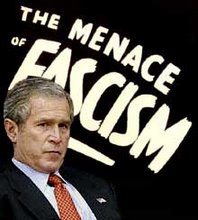


However, if there are supporters of Obama who are behaving ruthlessly (a la George Bush), especially people who are supposed to be relatively objective, like reporters, they are firing the first shots in a civil war that will destroy their own party and make it impossible for either Clinton or Obama to do what needs to be done to begin to get this country back on the right track.
I'm not fond of the Clintons. I make no secret of that. I don't believe that dynasties are good for the country. The two major, immovable, corrupt parties aren't good for America either, for that matter. Further, I believe it would be good to not only turn the page, but begin a whole new chapter, in which change leads to transformation in this country.
Nevertheless, If Hillary wins, as long as she does it sans shenanigans, I will vote for her in November.
We all have one thing in common (except for the super rich), we are facing nightmarish times in the very near future and I hope we can find it within us to face them together.
Hate Springs Eternal
By Paul Krugman
The New York Times
Monday 11 February 2008
In 1956 Adlai Stevenson, running against Dwight Eisenhower, tried to make the political style of his opponent's vice president, a man by the name of Richard Nixon, an issue. The nation, he warned, was in danger of becoming "a land of slander and scare; the land of sly innuendo, the poison pen, the anonymous phone call and hustling, pushing, shoving; the land of smash and grab and anything to win. This is Nixonland."
The quote comes from "Nixonland," a soon-to-be-published political history of the years from 1964 to 1972 written by Rick Perlstein, the author of "Before the Storm." As Mr. Perlstein shows, Stevenson warned in vain: during those years America did indeed become the land of slander and scare, of the politics of hatred.
And it still is. In fact, these days even the Democratic Party seems to be turning into Nixonland.
The bitterness of the fight for the Democratic nomination is, on the face of it, bizarre. Both candidates still standing are smart and appealing. Both have progressive agendas (although I believe that Hillary Clinton is more serious about achieving universal health care, and that Barack Obama has staked out positions that will undermine his own efforts). Both have broad support among the party's grass roots and are favorably viewed by Democratic voters.
Supporters of each candidate should have no trouble rallying behind the other if he or she gets the nod.
Why, then, is there so much venom out there?
I won't try for fake evenhandedness here: most of the venom I see is coming from supporters of Mr. Obama, who want their hero or nobody. I'm not the first to point out that the Obama campaign seems dangerously close to becoming a cult of personality. We've already had that from the Bush administration - remember Operation Flight Suit? We really don't want to go there again.
What's particularly saddening is the way many Obama supporters seem happy with the application of "Clinton rules" - the term a number of observers use for the way pundits and some news organizations treat any action or statement by the Clintons, no matter how innocuous, as proof of evil intent.
The prime example of Clinton rules in the 1990s was the way the press covered Whitewater. A small, failed land deal became the basis of a multi-year, multi-million-dollar investigation, which never found any evidence of wrongdoing on the Clintons' part, yet the "scandal" became a symbol of the Clinton administration's alleged corruption.
During the current campaign, Mrs. Clinton's entirely reasonable remark that it took L.B.J.'s political courage and skills to bring Martin Luther King Jr.'s dream to fruition was cast as some kind of outrageous denigration of Dr. King.
And the latest prominent example came when David Shuster of MSNBC, after pointing out that Chelsea Clinton was working for her mother's campaign - as adult children of presidential aspirants often do - asked, "doesn't it seem like Chelsea's sort of being pimped out in some weird sort of way?" Mr. Shuster has been suspended, but as the Clinton campaign rightly points out, his remark was part of a broader pattern at the network.
I call it Clinton rules, but it's a pattern that goes well beyond the Clintons. For example, Al Gore was subjected to Clinton rules during the 2000 campaign: anything he said, and some things he didn't say (no, he never claimed to have invented the Internet), was held up as proof of his alleged character flaws.
For now, Clinton rules are working in Mr. Obama's favor. But his supporters should not take comfort in that fact.
For one thing, Mrs. Clinton may yet be the nominee - and if Obama supporters care about anything beyond hero worship, they should want to see her win in November.
For another, if history is any guide, if Mr. Obama wins the nomination, he will quickly find himself being subjected to Clinton rules. Democrats always do.
But most of all, progressives should realize that Nixonland is not the country we want to be. Racism, misogyny and character assassination are all ways of distracting voters from the issues, and people who care about the issues have a shared interest in making the politics of hatred unacceptable.
One of the most hopeful moments of this presidential campaign came last month, when a number of Jewish leaders signed a letter condemning the smear campaign claiming that Mr. Obama was a secret Muslim. It's a good guess that some of those leaders would prefer that Mr. Obama not become president; nonetheless, they understood that there are principles that matter more than short-term political advantage.
I'd like to see more moments like that, perhaps starting with strong assurances from both Democratic candidates that they respect their opponents and would support them in the general election.
(In accordance with Title 17 U.S.C. Section 107, this material is distributed without profit to those who have expressed a prior interest in receiving the included information for research and educational purposes. I.U. has no affiliation whatsoever with the originator of this article nor is I.U endorsed or sponsored by the originator.)
The Nazis, Fascists and Communists were political parties before they became enemies of liberty and mass murderers.