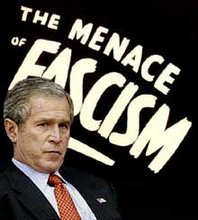


The Mercenary Revolution: Flush with Profits from the Iraq War, Military Contractors See a World of Business Opportunities
Originally published by The Indypendent newspaper
If you think the U.S. has only 160,000 troops in Iraq, think again.
With almost no congressional oversight and even less public awareness, the Bush administration has more than doubled the size of the U.S. occupation through the use of private war companies.
There are now almost 200,000 private “contractors” deployed in Iraq by Washington. This means that U.S. military forces in Iraq are now outsized by a coalition of billing corporations whose actions go largely unmonitored and whose crimes are virtually unpunished.
In essence, the Bush administration has created a shadow army that can be used to wage wars unpopular with the American public but extremely profitable for a few unaccountable private companies.
Since the launch of the “global war on terror,” the administration has systematically funneled billions of dollars in public money to corporations like Blackwater USA , DynCorp, Triple Canopy, Erinys and ArmorGroup. They have in turn used their lucrative government pay-outs to build up the infrastructure and reach of private armies so powerful that they rival or outgun some nation’s militaries.
“I think it’s extraordinarily dangerous when a nation begins to outsource its monopoly on the use of force and the use of violence in support of its foreign policy or national security objectives,” says veteran U.S . Diplomat Joe Wilson, who served as the last U.S. ambassador to Iraq before the 1991 Gulf War.
The billions of dollars being doled out to these companies, Wilson argues, “makes of them a very powerful interest group within the American body politic and an interest group that is in fact armed. And the question will arise at some time: to whom do they owe their loyalty?”
Precise data on the extent of U.S. spending on mercenary services is nearly impossible to
obtain - by both journalists and elected officials-but some in Congress estimate that up to 40 cents of every tax dollar spent on the war goes to corporate war contractors. At present, the United States spends about $2 billion a week on its Iraq operations.
While much has been made of the Bush administration’s “failure” to build international consensus for the invasion of Iraq, perhaps that was never the intention. When U.S. tanks rolled into Iraq in March 2003, they brought with them the largest army of “private contractors” ever deployed in a war. The White House substituted international diplomacy with lucrative war contracts and a coalition of willing nations who provided token forces with a coalition of billing corporations that supplied the brigades of contractors.
‘THERE’S NO DEMOCRATIC CONTROL’
During the 1991 Gulf War, the ratio of troops to private contractors was about 60 to 1. Today, it is the contractors who outnumber U.S . forces in Iraq. As of July 2007, there were more than 630 war contracting companies working in Iraq for the United States. Composed of some 180,000 individual personnel drawn from more than 100 countries, the army of contractors surpasses the official U.S. military presence of 160,000 troops.
In all, the United States may have as many as 400,000 personnel occupying Iraq, not including allied nations’ militaries. The statistics on contractors do not account for all armed contractors. Last year, a U.S. government report estimated there were 48,000 people working for more than 170 private military companies in Iraq. “It masks the true level of American involvement,” says Ambassador Wilson.
How much money is being spent just on mercenaries remains largely classified. Congressional sources estimate the United States has spent at least $6 billion in Iraq, while Britain has spent some $400 million. At the same time, companies chosen by the White House for rebuilding projects in Iraq have spent huge sums in reconstruction funds - possibly billions on more mercenaries to guard their personnel and projects.
The single largest U.S. contract for private security in Iraq was a $293 million payment to the British firm Aegis Defence Services, headed by retired British Lt. Col. Tim Spicer, who has been dogged by accusations that he is a mercenary because of his private involvement in African conflicts. The Texas-based DynCorp International has been another big winner, with more than $1 billion in contracts to provide personnel to train Iraqi police forces, while Blackwater USA has won $750 million in State Department contracts alone for “diplomatic security.”
At present, an American or a British Special Forces veteran working for a private security company in Iraq can make $650 a day. At times the rate has reached $1,000 a day; the pay dwarfs many times over that of active duty troops operating in the war zone wearing a U.S. or U.K. flag on their shoulder instead of a corporate logo.
“We got [tens of thousands of] contractors over there, some of them making more than the Secretary of Defense,” House Defense Appropriations Subcommittee Chairman John Murtha (D-Penn.) recently remarked. “How in the hell do you justify that?” In part, these contractors do mundane jobs that traditionally have been performed by soldiers. Some require no military training, but involve deadly occupations, such as driving trucks through insurgent-controlled territory.
Others are more innocuous, like cooking food or doing laundry on a base, but still court grave risk because of regular mortar and rocket attacks.
These services are provided through companies like KBR and Fluor and through their vast labyrinth of subcontractors. But many other private personnel are also engaged in armed combat and “security” operations. They interrogate prisoners, gather intelligence, operate rendition flights, protect senior occupation officials and, in at least one case, have commanded U.S. and international troops in battle.
In a revealing admission, Gen. David Petraeus, who is overseeing Bush’s troop “surge,” said earlier this year that he has, at times, been guarded in Iraq by “contract security.” At least three U.S. commanding generals, not including Petraeus, are currently being guarded in Iraq by hired guns. “To have half of your army be contractors, I don’t know that there’s a precedent for that,” says Rep. Dennis Kucinich (D-Ohio), a member of the House Oversight and Government Reform Committee, which has been investigating war contractors.
“Maybe the precedent was the British and the Hessians in the American Revolution. Maybe that’s the last time and needless to say, they lost. But I’m thinking that there’s no democratic control and there’s no intention to have democratic control here.”
The implications are devastating. Joseph Wilson says, “In the absence of international consensus, the current Bush administration relied on a coalition of what I call the co-opted, the corrupted and the coerced: those who benefited financially from their involvement, those who benefited politically from their involvement and those few who determined that their relationship with the United States was more important than their relationship with anybody else. And that’s a real problem because there is no underlying international legitimacy that sustains us throughout this action that we’ve taken.”
Moreover, this revolution means the United States no longer needs to rely on its own citizens to fight its wars, nor does it need to implement a draft, which would have made the Iraq war politically untenable.
‘AN ARM OF THE BUSH ADMINISTRATION’
During his confirmation hearings in the Senate this past January, Petraeus praised the role of private forces, claiming they compensate for an overstretched military. Petraeus told the senators that combined with Bush’s official troop surge, the “tens of thousands of contract security forces give me the reason to believe that we can accomplish the mission.”
Taken together with Petraeus’s recent assertion that the surge would run into mid-2009, this means a widening role for mercenaries and other private forces in Iraq is clearly on the table for the foreseeable future.
“The increasing use of contractors, private forces or as some would say ‘mercenaries’ makes wars easier to begin and to fight - it just takes money and not the citizenry,” says Michael Ratner, president of the Center for Constitutional Rights, whose organization has sued private contractors for alleged human rights violations in Iraq.
“To the extent a population is called upon to go to war, there is resistance, a necessary resistance to prevent wars of self-aggrandizement, foolish wars and in the case of the United States, hegemonic imperialist wars. Private forces are almost a necessity for a United States bent on retaining its declining empire. Think about Rome and its increasing need for mercenaries.”
Privatized forces are also politically expedient for many governments. Their casualties go uncounted, their actions largely unmonitored and their crimes unpunished. Indeed, four years into the occupation, there is no effective system of oversight or accountability governing contractors and their operations, nor is there any effective law - military or civilian being applied to their activities. They have not been subjected to military courts martial (despite a recent congressional attempt to place them under the Uniform Code of Military Justice), nor have they been prosecuted in U.S. civilian courts. And no matter what their acts in Iraq, they cannot be prosecuted in Iraqi courts because in 2004 the U.S. occupying authority granted them complete immunity.
“These private contractors are really an arm of the administration and its policies,” argues Kucinich, who has called for a withdrawal of all U.S. contractors from Iraq. “They charge whatever they want with impunity. There’s no accountability as to how many people they have, as to what their activities are.”
That raises the crucial question: what exactly are they doing in Iraq in the name of the U.S. and U.K. governments? Rep. Jan Schakowsky (D-Ill.), a leading member of the House Select Committee on Intelligence, which is responsible for reviewing sensitive national security issues, explained the difficulty of monitoring private military companies on the U.S. payroll: “If I want to see a contract, I have to go up to a secret room and look at it, can’t take any notes, can’t take any notes out with me, you know - essentially, I don’t have access to those contracts and even if I did, I couldn’t tell anybody about it.”
‘A MARKETPLACE FOR WARFARE’
On the Internet, numerous videos have spread virally, showing what appear to be foreign mercenaries using Iraqis as target practice, much to the embarrassment of the firms involved. Despite these incidents and the tens of thousands of contractors passing through Iraq, only two individuals have been ever indicted for crimes there. One was charged with stabbing a fellow contractor, while the other pled guilty to possessing child-pornography images on his computer at Abu Ghraib prison.
Dozens of American soldiers have been court-martialed - 64 on murder-related charges alone - but not a single armed contractor has been prosecuted for a crime against an Iraqi. In some cases, where contractors were alleged to have been involved in crimes or deadly incidents, their companies whisked them out of Iraq to safety.
U.S. contractors in Iraq reportedly have their own motto: “What happens here today, stays here today.” International diplomats say Iraq has demonstrated a new U.S. model for waging war; one which poses a creeping threat to global order.
“To outsource security-related, military related issues to non-government, non-military forces is a source of great concern and it caught many governments unprepared,” says Hans von Sponeck, a 32-year veteran U.N. diplomat, who served as head of the U.N. Iraq mission before the U.S. invasion.
In Iraq, the United States has used its private sector allies to build up armies of mercenaries many lured from impoverished countries with the promise of greater salaries than their home militaries can pay. That the home governments of some of these private warriors are opposed to the war itself is of little consequence.
“Have gun, will fight for paycheck” has become a globalized law.
“The most worrying aspect is that these forces are outside parliamentary control. They come from all over and they are answerable to no one except a very narrow group of people and they come from countries whose governments may not even know in detail that they have actually been contracted as a private army into a war zone,” says von Sponeck.
“If you have now a marketplace for warfare, it is a commercial issue rather than a political issue involving a debate in the countries.
You are also marginalizing governmental control over whether or not this should take place, should happen and, if so, in what size and shape. It’s a very worrying new aspect of international relations. I think it becomes more and more uncontrollable by the countries of supply.”
In Iraq, for example, hundreds of Chilean mercenaries have been deployed by U.S. companies like Blackwater and Triple Canopy, despite the fact that Chile, as a rotating member of the U.N. Security Council, opposed the invasion and continues to oppose the occupation of Iraq. Some of the Chileans are alleged to have been seasoned veterans of the Pinochet era.
“There is nothing new, of course, about the relationship between politics and the economy, but there is something deeply perverse about the privatization of the Iraq War and the utilization of mercenaries,” says Chilean sociologist Tito Tricot, a former political prisoner who was tortured under Pinochet’s regime.
“This externalization of services or outsourcing attempts to lower costs - third world mercenaries are paid less than their counterparts from the developed world - and maximize benefits. In other words, let others fight the war for the Americans. In either case, the Iraqi people do not matter at all.”
NEW WORLD DISORDER
The Iraq war has ushered in a new system. Wealthy nations can recruit the world’s poor, from countries that have no direct stake in the conflict, and use them as cannon fodder to conquer weaker nations. This allows the conquering power to hold down domestic casualties - the single-greatest impediment to waging wars like the one in Iraq. Indeed, in Iraq, more than 1,000 contractors working for the U.S. occupation have been killed with another 13,000 wounded. Most are not American citizens, and these numbers are not counted in the official death toll at a time when Americans are increasingly disturbed by casualties.
In Iraq, many companies are run by Americans or Britons and have well-trained forces drawn from elite military units for use in sensitive actions or operations. But down the ranks, these forces are filled by Iraqis and third-country nationals. Indeed, some 118,000 of the estimated 180,000 contractors are Iraqis, and many mercenaries are reportedly ill-paid, poorly equipped and barely trained Iraqi nationals.
The mercenary industry points to this as a positive: we are giving Iraqis jobs, albeit occupying their own country in the service of a private corporation hired by a hostile invading power.
Doug Brooks, the head of the Orwellian named mercenary trade group, the International Peace Operations Association, argued from early on in the occupation, “Museums do not need to be guarded by Abrams tanks when an Iraqi security guard working for a contractor can do the same job for less than one-fiftieth of what it costs to maintain an American soldier. Hiring local guards gives Iraqis a stake in a successful future for their country. They use their pay to support their families and stimulate the economy. Perhaps most significantly, every guard means one less potential guerrilla.”
In many ways, it is the same corporate model of relying on cheap labor in destitute nations to staff their uber-profitable operations. The giant multinationals also argue they are helping the economy by hiring locals, even if it’s at starvation wages.
“Donald Rumsfeld’s masterstroke, and his most enduring legacy, was to bring the corporate branding revolution of the 1990s into the heart of the most powerful military in the world,” says Naomi Klein, whose upcoming book, The Shock Doctrine: The Rise of Disaster Capitalism, explores these themes.
“We have now seen the emergence of the hollow army. Much as with so-called hollow corporations like Nike, billions are spent on military technology and design in rich countries while the manual labor and sweat work of invasion and occupation is increasingly outsourced to contractors who compete with each other to fill the work order for the lowest price. Just as this model breeds rampant abuse in the manufacturing sector - with the big-name brands always able to plead ignorance about the actions of their suppliers-so it does in the military, though with stakes that are immeasurably higher.” In the case of Iraq, the U.S. and U.K. governments could give the public perception of a withdrawal of forces and just privatize the occupation. Indeed, shortly after former British Prime Minister Tony Blair announced that he wanted to withdraw 1,600 soldiers from Basra, reports emerged that the British government was considering sending in private security companies to “fill the gap left behind.”
THE SPY WHO BILLED ME
While Iraq currently dominates the headlines, private war and intelligence companies are expanding their already sizable footprint. The U.S. government in particular is now in the midst of the most radical privatization agenda in its history. According to a recent report in Vanity Fair, the government pays contractors as much as the combined taxes paid by everyone in the United States with incomes under $100,000, meaning “more than 90 percent of all taxpayers might as well remit everything they owe directly to [contractors] rather than to the [government].”
Some of this outsourcing is happening in sensitive sectors, including the intelligence community. “This is the magnet now. Everything is being attracted to these private companies in terms of individuals and expertise and functions that were normally done by the intelligence community,” says former CIA division chief and senior analyst Melvin Goodman. “My major concern is the lack of accountability, the lack of responsibility. The entire industry is essentially out of control. It’s outrageous.”
RJ Hillhouse, a blogger who investigates the clandestine world of private contractors and U.S. intelligence, recently obtained documents from the Office of the Directorate of National Intelligence (DNI) showing that Washington spends some $42 billion annually on private intelligence contractors, up from $17.54 billion in 2000. Currently that spending represents 70 percent of the U.S. intelligence budget going to private companies.
Perhaps it is no surprise then that the current head of the DNI is Mike McConnell, the former chair of the board of the Intelligence and National Security Alliance, the private intelligence industry’s lobbying arm. Hillhouse also revealed that one of the most sensitive U.S. intelligence documents, the Presidential Daily Briefing, is prepared in part by private companies, despite having the official seal of the U.S. intelligence apparatus.
“Let’s say a company is frustrated with a government that’s hampering its business or business of one of its clients. Introducing and spinning intelligence on that government’s suspected collaboration with terrorists would quickly get the White House’s attention and could be used to shape national policy,” Hillhouse argues.
MUTLINATIONAL MERCENARIES
Empowered by their new found prominence, mercenary forces are increasing their presence on other battlefields: in Latin America, DynCorp International is operating in Colombia, Bolivia and other countries under the guise of the “war on drugs” - U.S. defense contractors are receiving nearly half the $630 million in U.S. military aid for Colombia; in Africa, mercenaries are deploying in Somalia, Congo and Sudan and increasingly have their sights set on tapping into the hefty U.N. peacekeeping budget (this has been true since at least the early 1990s and probably much earlier). Heavily armed mercenaries were deployed to New Orleans in the aftermath of Hurricane Katrina, while proposals are being considered to privatize the U.S. border patrol.
Brooks, the private military industry lobbyist, says people should not become “overly obsessed with Iraq,” saying his association’s “member companies have more personnel working in U.N. and African Union peace operations than all but a handful of countries.” Von Sponeck says he believes the use of such companies in warfare should be barred and has harsh words for the institution for which he spent his career working: “The United Nations, including the U.N. Secretary General, should react to this and instead of reacting, they are mute, they are silent.”
This unprecedented funding of such enterprises, primarily by the U.S. and U.K. governments, means that powers once the exclusive realm of nations are now in the hands of private companies with loyalty only to profits, CEOs and, in the case of public companies, shareholders. And, of course, their client, whoever that may be. CIA-type services, special operations, covert actions and small-scale military and paramilitary forces are now on the world market in a way not seen in modern history. This could allow corporations or nations with cash to spend but no real military power to hire squadrons of heavily armed and well-trained commandos.
“It raises very important issues about state and about the very power of state. The one thing the people think of as being in the purview of the government - wholly run and owned by - is the use of military power,” says Rep. Jan Schakowsky. “Suddenly you’ve got a for-profit corporation going around the world that is more powerful than states, can effect regime possibly where they may want to go, that seems to have all the support that it needs from this administration that is also pretty adventurous around the world and operating under the cover of darkness.
“It raises questions about democracies, about states, about who influences policy around the globe, about relationships among some countries. Maybe it’s their goal to render state coalitions like NATO irrelevant in the future, that they’ll be the ones and open to the highest bidder. Who really does determine war and peace around the world?”
Jeremy Scahill is author of The New York Times-bestseller Blackwater: The Rise of the World’s Most Powerful Mercenary Army. He is a Puffin Foundation Writing Fellow at the Nation Institute. This article appears in the current issue of The Indypendent newspaper. He can be reached at jeremy(AT)democracynow.org
(In accordance with Title 17 U.S.C. Section 107, this material is distributed without profit to those who have expressed a prior interest in receiving the included information for research and educational purposes. I.U. has no affiliation whatsoever with the originator of this article nor is I.U endorsed or sponsored by the originator.)
The Nazis, Fascists and Communists were political parties before they became enemies of liberty and mass murderers.