Showing posts with label FISA Court. Show all posts

Saturday, August 18, 2007

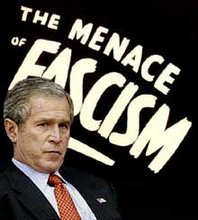
Four Alarmer For The White House

In Unprecedented Order, FISA Court Requires Bush Administration to Respond to ACLU's Request That Secret Court Orders Be Released to the Public (8/17/2007)

Government Must Respond by August 31


FOR IMMEDIATE RELEASE
CONTACT: media@aclu.org

TAKE ACTION
> Tell the Democratic Leadership, Congress Must Not Fail Freedom

CHALLENGING ILLEGAL NSA
SPYING
> News: In Unprecedented Order, FISA Court Requires Bush Administration to Respond to ACLU's Request That Secret Court Orders Be Released to the Public
> Legal Documents: FISA Court Order
> Fact Sheet: The "Police America Act" and FISA
> News: Congress Legalizes Warrantless Wiretapping for Americans
> Check How Leaders Voted: Senate | House
Learn More >>
HOLDING PHONE COMPANIES ACCOUNTABLE
> Map: The Fight Against Unchecked Surveillance, State by State
Learn More >>

WASHINGTON - In an unprecedented order, the Foreign Intelligence Surveillance Court (FISC) has required the U.S. government to respond to a request it received last week by the American Civil Liberties Union for orders and legal papers discussing the scope of the government's authority to engage in the secret wiretapping of Americans. According to the FISC's order, the ACLU's request "warrants further briefing," and the government must respond to it by August 31. The court has said that any reply by the ACLU must be filed by September 14.

"Disclosure of these court orders and legal papers is essential to the ongoing debate about government surveillance," said Anthony D. Romero, Executive Director of the ACLU. "We desperately need greater transparency and public scrutiny.We're extremely encouraged by today's development because it means that, at long last, the government will be required to defend its contention that the orders should not be released."

The ACLU filed the request with the FISC following Congress' recent passage of the so-called "Protect America Act," a law that vastly expands the Bush administration's authority to conduct warrantless wiretapping of Americans' international phone calls and e-mails. In their aggressive push to justify passing this ill-advised legislation, the administration and members of Congress made repeated and veiled references to orders issued by the FISC earlier this year. The legislation is set to expire in six months unless it is renewed.

"These court orders relate to the circumstances in which the government should be permitted to use its profoundly intrusive surveillance powers to intercept the communications of U.S. citizens and residents," said Jameel Jaffer, Director of the ACLU's National Security Project. "The debate about this issue should not take place in a vacuum.It's imperative that the public have access to basic information about what the administration has proposed and what the intelligence court has authorized."

FISC orders have played a critical role in the evolution of the government's surveillance activities over the past six years. After September 11, President Bush authorized the National Security Agency (NSA) to inaugurate a program of warrantless wiretapping inside the United States. In January 2007, however, just days before an appeals court was to hear the government's appeal from a judicial ruling that had found the NSA program to be illegal in a case brought by the ACLU, Attorney General Gonzales announced that the NSA program would be discontinued. Gonzales explained that the change was made possible by FISC orders issued on January 10, 2007, which he characterized as "complex" and "innovative." Those orders are among the documents requested by the ACLU.

Since January 2007, government officials have spoken publicly about the January 10 orders in congressional testimony, to the media and in legal papers - the orders remaining secret all the while. They have also indicated that the FISC issued other orders in the spring that restricted the administration's surveillance activities. House Minority Leader John Boehner stated that the FISC had issued a ruling prohibiting intelligence agents from intercepting foreign-to-foreign calls passing through the United States. To a large extent, it was the perception that the FISC had issued an order limiting the administration's surveillance authority that led Congress to pass the new legislation expanding the government's surveillance powers. Yet the order itself, like the January 2007 order, has remained secret.

The ACLU's request to the FISC acknowledges that the FISC's docket includes a significant amount of material that is properly classified. The ACLU argues, however, that the release of court orders and opinions would not raise any security concern to the extent that these records address purely legal issues about the scope of the government's wiretap authority, and points out that the FISC has released such orders and opinions before. The ACLU is seeking release of all information in those judicial orders and legal papers the court determines, after independent review, to be unclassified or improperly classified.

A copy of the FISA court order, the ACLU's motion to the FISC, as well as information about the ACLU's lawsuit against the NSA and other related materials are available online at: www.aclu.org/spying

In addition to Jaffer, lawyers on the case are Steven R. Shapiro, Melissa Goodman, and Alexa Kolbi-Molinas of the ACLU and Art Spitzer of the ACLU of the National Capital Area.


(In accordance with Title 17 U.S.C. Section 107, this material is distributed without profit to those who have expressed a prior interest in receiving the included information for research and educational purposes. I.U. has no affiliation whatsoever with the originator of this article nor is I.U endorsed or sponsored by the originator.)


The Nazis, Fascists and Communists were political parties before they became enemies of liberty and mass murderers.

Wednesday, August 8, 2007

BOO!!!!


The Fear of Fear Itself
The New York Times | Editorial

Tuesday 07 August 2007

It was appalling to watch over the last few days as Congress - now led by Democrats - caved in to yet another unnecessary and dangerous expansion of President Bush's powers, this time to spy on Americans in violation of basic constitutional rights. Many of the 16 Democrats in the Senate and 41 in the House who voted for the bill said that they had acted in the name of national security, but the only security at play was their job security.

There was plenty of bad behavior. Republicans marched in mindless lockstep with the president. There was double-dealing by the White House. The director of national intelligence, Mike McConnell, crossed the line from being a steward of this nation's security to acting as a White House political operative.

But mostly, the spectacle left us wondering what the Democrats - especially their feckless Senate leaders - plan to do with their majority in Congress if they are too scared of Republican campaign ads to use it to protect the Constitution and restrain an out-of-control president.

The votes in the House and Senate were supposed to fix a genuine glitch in the 1978 Foreign Intelligence Surveillance Act, which requires the government to obtain a warrant before eavesdropping on electronic communications that involve someone in the United States. The court charged with enforcing that law said the government must also seek a warrant if the people are outside the country, but their communications are routed through data exchanges here - a technological problem that did not exist in 1978.

Instead of just fixing that glitch, the White House and its allies on Capitol Hill railroaded Congress into voting a vast expansion of the president's powers. They gave the director of national intelligence and the attorney general authority to intercept - without warrant, court supervision or accountability - any telephone call or e-mail message that moves in, out of or through the United States as long as there is a "reasonable belief" that one party is not in the United States. The new law all but eviscerates the 1978 law. The only small saving grace is that the new statute expires in six months.

The House handled this mess somewhat better than the Senate, moving to the floor a far more sensible bill. Mr. McConnell certified that the House bill would address the problem raised by the court. That is, until the White House made clear that it wanted to use the court's ruling to grab a lot more power. Mr. McConnell then reversed his position and demanded that Congress pass the far more expansive bill.

In the Senate, the team of Harry Reid, the majority leader, gave up fast, agreeing to a deal that doomed any good bill. The senators then hurriedly approved the White House bill, dumped it on the House and skulked off on vacation. Representative Rahm Emanuel, the fourth-ranking member of the Democratic House leadership, said yesterday that his party would not wait for the new eavesdropping authority to expire, and would have a new, measured bill on the floor by October. We look forward to reading it.

But the problem with Congress last week was that Democrats were afraid to explain to Americans why the White House bill was so bad and so unnecessary - despite what the White House was claiming. There are good answers, if Democrats are willing to address voters as adults. To start, they should explain that - even if it were a good idea, and it's not - the government does not have the capability to sort through billions of bits of electronic communication. And the larger question: why, six years after 9/11, is this sort of fishing expedition the supposed first line of defense in the war on terrorism?

While serving little purpose, the new law has real dangers. It would allow the government to intercept, without a warrant, every communication into or out of any country, including the United States. Instead of explaining all this to American voters - the minimal benefits and the enormous risks - the Democrats have allowed Mr. Bush and his fear-mongering to dominate all discussions on terrorism and national security.

Mr. Bush claims that he has kept America safe since 9/11. But that claim ignores the country's very real and present vulnerabilities. Six years after the 9/11 attacks the administration has still failed to secure American ports, railroads and airports from terrorist attack, and has put the profits of the chemical and nuclear-power industries ahead of safeguarding their plants.

Mr. Bush also worries Democratic strategists by talking about "staying on the offensive" against terrorism, but it was his decision to invade Iraq that diverted resources from the real offensive, the one against Al Qaeda in Afghanistan and Pakistan.

Mr. Bush's incessant fear-mongering - and the Democrats' refusal to challenge him - has had one notable success. The only issue on which Americans say that they trust Republicans more than Democrats is terrorism. At least those Americans are afraid of terrorists. The Democrats who voted for this bill, and others like it over the last few years, show only fear of Republicans.

The Democratic majority has made strides on other issues like children's health insurance against White House opposition. As important as these measures are, they do not excuse the Democrats from remedying the damage Mr. Bush has done to civil liberties and the Bill of Rights. That is their most important duty.

(In accordance with Title 17 U.S.C. Section 107, this material is distributed without profit to those who have expressed a prior interest in receiving the included information for research and educational purposes. I.U. has no affiliation whatsoever with the originator of this article nor is I.U endorsed or sponsored by the originator.)


The Nazis, Fascists and Communists were political parties before they became enemies of liberty and mass murderers.

Thursday, August 2, 2007

Bush Wants to Re-Write FISA Laws

How can we trust an administration, the members of which, have lied to us non-stop, betrayed us and in on the verge of wrecking this country beyond repair?

A Push to Rewrite Wiretap Law
By Ellen Nakashima
The Washington Post

Wednesday 01 August 2007

White House seeks warrantless authority from Congress.

The Bush administration is pressing Congress this week for the authority to intercept, without a court order, any international phone call or e-mail between a surveillance target outside the United States and any person in the United States.

The proposal, submitted by Director of National Intelligence Mike McConnell to congressional leaders on Friday, would amend the Foreign Intelligence Surveillance Act (FISA) for the first time since 2006 so that a court order would no longer be needed before wiretapping anyone "reasonably believed to be located outside of the United States."

It would also give the attorney general sole authority to order the interception of communications for up to one year as long as he certifies that the surveillance is directed at a person outside the United States.

The administration and its Republican allies on Capitol Hill have mounted a full-court press to get the Democratic-controlled Congress to pass the measure before lawmakers leave town this week for the August recess, trying to portray reluctant Democrats as weak on terrorism.

Democratic lawmakers favor a narrower approach that would allow the government to wiretap foreign terrorists talking to other foreign terrorists overseas without a warrant if the communication is routed through the United States. They are also willing to give the administration some latitude to intercept foreign-to-domestic communications as long as there is oversight by the FISA court.

Senate Majority Leader Harry M. Reid (D-Nev.) suggested yesterday that a compromise could be reached this week. "The only question," he told reporters, "is how much involvement the attorney general will have" in approving the wiretapping "as compared to the FISA court itself."

The measure faces a number of procedural roadblocks due to the crowded congressional calendar. But the administration, in an effort to speed the process, separated its immediate demands from a more sweeping proposal to rewrite FISA that became tangled in a debate between Congress and the executive branch over access to related Justice Department legal documents.

Civil liberties and privacy groups have denounced the administration's proposal, which they say would effectively allow the National Security Agency to revive a warrantless surveillance program conducted in secret from 2001 until late 2005. They say it would also give the government authority to force carriers to turn over any international communications into and out of the United States without a court order.

In January, the administration announced that the surveillance program was under the supervision of a special FISA court that Congress set up to independently review and judge wiretap requests when it passed FISA in 1978. But critics said that if the proposal succeeds, the court's supervision will no longer be required for many wiretaps.

"It's the president's surveillance program on steroids," said Jim Dempsey, policy director at the Center for Democracy and Technology. Dempsey said that under the new law the government would no longer have to allege that one party to the call was a member of al-Qaeda or another terrorist group. An unstated facet of the program is that anyone the foreigner is calling inside the United States, as long as that person is not the primary target, would also be wiretapped.

"They're hiding the ball here," said Caroline Fredrickson, director of the ACLU's Washington legislative office. "What the administration is really going after is the Americans. Even if the primary target is overseas, they want to be able to wiretap Americans without a warrant."

The measure is intended as an "interim proposal" to close short-term "critical gaps in our intelligence capability," McConnell said in a letter to congressional leaders. It would make clear that court orders are not necessary to "effectively collect foreign intelligence about foreign targets overseas."

Bush, in his Saturday radio address, said that rewriting FISA is necessary because the "the terrorist network that struck America on September the 11th wants to strike our country again." GOP leaders have accused Democrats of blocking changes, suggesting that if another attack happens, Democrats will be to blame.

"With heightened risk of terror attack, why are Democrats holding up critical FISA changes?" read a news release issued yesterday by House Minority Leader John A. Boehner (R-Ohio). "It's time for Democrats to stop ignoring, downplaying and sidestepping our FISA problem and start working with Republicans to keep America safe."

Democratic leaders have been working with administration officials on altering FISA, aides said. "I am committed to giving our intelligence community the tools they need to fight terrorism and am working very hard with the most senior members of the administration to do that as soon as possible," Reid said.

Democrats have said for more than a year that they are willing to make targeted changes, such as making explicit that wiretapping a call between two suspects overseas, where the call that happens to pass through the United States, needs no court order.

But Reid said, "We hope our Republican counterparts will work together with us to fix the problem, rather than try again to gain partisan political advantage at the expense of our national security."

The proposal would also allow the NSA to "sit on the wire" and have access to the entire stream of communications without the phone company sorting, said Kate Martin, director of the Center for National Security Studies.

"It's a 'trust us' system," she said. "Give us access and trust us."

--------

Staff writer Dan Eggen contributed to this report.


(In accordance with Title 17 U.S.C. Section 107, this material is distributed without profit to those who have expressed a prior interest in receiving the included information for research and educational purposes. I.U. has no affiliation whatsoever with the originator of this article nor is I.U endorsed or sponsored by the originator.)

The Nazis, Fascists and Communists were political parties before they became enemies of liberty and mass murderers.

Sunday, June 24, 2007

A Reagan Judge Slams Bush's Warrantless Wire-tapping

Judge criticizes warrantless wiretaps
By MICHAEL J. SNIFFEN,

Associated Press Writer
Sat Jun 23, 3:28 PM ET

A federal judge who used to authorize wiretaps in terrorist and espionage cases criticized President Bush's decision to order warrantless surveillance after the Sept. 11 attacks.
Royce Lamberth, a district court judge in Washington, said Saturday it was proper for executive branch agencies to conduct such surveillance. "But what we have found in the history of our country is that you can't trust the executive," he said at the American Library Association's convention.

"We have to understand you can fight the war (on terrorism) and lose everything if you have no civil liberties left when you get through fighting the war," said Lamberth, who was appointed by President Reagan.

The judge disagreed with letting the executive branch alone decide which people to spy on in national security cases.

"The executive has to fight and win the war at all costs. But judges understand the war has to be fought, but it can't be at all costs," Lamberth said. "We still have to preserve our civil liberties. Judges are the kinds of people you want to entrust that kind of judgment to more than the executive."

Lamberth was named chief of the Foreign Intelligence Surveillance Court in 1995 by then-Chief Justice William H. Rehnquist. Lamberth held that post until 2002.

The Foreign Intelligence Surveillance Act of 1978 established the court after domestic spying scandals in the 1970s.

The court meets in secret to review applications from the FBI, the National Security Agency and other agencies for warrants to wiretap or search the homes of people in the United States in terrorist or espionage cases. Each application is signed by the attorney general. The court has approved more than 99 percent of them.

Shortly after the attacks of Sept. 11, 2001, Bush authorized the NSA to spy on calls between people in the U.S. and suspected terrorists abroad without FISA court warrants. The administration said it needed to act more quickly than the court could and that the president had inherent authority under the Constitution to order warrantless domestic spying.

After the program became public and was challenged in court, Bush put it under FISA court supervision this year. The president still claims the power to order warrantless spying.
White House spokesman Tony Fratto said Bush believes in the program, which is classified because its purpose is to stop terrorists' planning.

The program "is lawful, limited, safeguarded and — most importantly — effective in protecting American citizens from terrorist attacks," Fratto said. "It's specifically designed to be effective without infringing Americans' civil liberties."

Lamberth took issue with Bush's approach.

"I haven't seen a proposal for a better way than presenting an application to the FISA court and having an independent judge decide if it's really the kind of thing that we ought to be doing, recognizing that how we view civil liberties is different in time of war," he said.

"I have seen a proposal for a worse way and that's what the president did with the NSA program."

Lamberth said the FISA court met the challenge of acting quickly after Sept. 11. Lamberth was stuck in a car pool lane near the Pentagon when a hijacked jet slammed into it that day. With his car enveloped in smoke, he called marshals to help him get into the District of Columbia.

By the time officers reached him, "I had approved five FISA coverages (warrants) on my cell phone," Lamberth said. He also approved other warrants at his home at 3 a.m. and on Saturdays.

"In a time of national emergency like that, changes have to be made in procedures. We changed a number of FISA procedures," Lamberth said.

Normal FISA warrant applications run 40 to 50 pages, but he said he issued orders in the days after Sept. 11 "based on the oral briefing by the director of the FBI to the chief judge of the FISA court."

Lamberth would not say whether he thought Bush's warrantless surveillance was constitutional. "Judges shouldn't give advisory opinions and I was never asked to give an opinion in court," he said.

But he said when the NSA briefed him about the program, he advised them to keep good records so that if any applications came to the FISA court based on information obtained from warrantless surveillance, the court could rule on the legality.

He said he never got such an application before leaving the court in 2002.

Lamberth defended the court against those who say it is rubber stamp and said if the government is working properly, most applications should be approved.

"We're making sure there's not some political shenanigan going on or some improper motive for the surveillance," Lamberth said. "The fact that they have to submit it to us keeps them honest."

Lambert also criticized FBI Director Robert Mueller for allowing the agents in charge of all 56 FBI field offices to approve National Security Letters. These allow agents to demand information from phone companies, Internet service providers and corporations without court warrants in national security cases.

The Justice Department's inspector general recently estimated there were 3,000 violations of law between 2002 and 2005 in the FBI's use of the letters.

"Once they saw how the field offices had screwed this all up, I thought that would be a good time to centralize the approvals" in one Washington office that could enforce the rules uniformly, Lamberth said. "Unfortunately, Mueller and (Attorney General Alberto) Gonzales did not do that."


(In accordance with Title 17 U.S.C. Section 107, this material is distributed without profit to those who have expressed a prior interest in receiving the included information for research and educational purposes. I.U. has no affiliation whatsoever with the originator of this article nor is I.U endorsed or sponsored by the originator.)

The Nazis, Fascists and Communists were political parties before they became enemies of liberty and mass murderers.