Tuesday, September 30, 2008

What Did Pelosi Say That Isn't True?

Even as the wreckage of the Wall Street bailout bill was still smoldering on the House floor Monday, Republicans held a news conference in which they blamed "partisan" remarks by the House Speaker Nancy Pelosi (D-Calif.) for scuttling the bill.

But anyone who looked at the transcript of Pelosi’s speech released by her office might have been puzzled by the complaints.

The transcript seemed relatively tame — with only relatively mild shots at the Republicans in the text.

But a review of the video of Pelosi’s comments shows the speaker deviated substantially from her prepared remarks when she stepped into the well of the House at about 12:20 p.m. Monday afternoon – delivering a series of ad-libbed jabs at President Bush and his party.

Pelosi’s office continued to distribute the as-prepared version of her remarks as late as 1:24 p.m. — an hour after she had delivered the more incendiary version of her speech on the House floor.

Among the remarks Pelosi made on the floor that were not included in the prepared text:


"When President Bush took office, he inherited President Clinton's surpluses — four years in a row, budget surpluses, on a trajectory of $5.6 trillion in surplus. And with his reckless economic policies within two years, he had turned that around ... and now eight years later the foundation of that fiscal irresponsibility, combined with an anything-goes economic policy, has taken us to where we are today. They claim to be free-market advocates when it's really an anything-goes mentality, no regulation, no supervision, no discipline. ..."

"... Democrats believe in a free market ... but in this case, in its unbridled form as encouraged, supported by the Republicans — some in the Republican Party, not all — it has created not jobs, not capital, it has created chaos."

Pelosi's office did not immediately return a call for comment.

(In accordance with Title 17 U.S.C. Section 107, this material is distributed without profit to those who have expressed a prior interest in receiving the included information for research and educational purposes. I.U. has no affiliation whatsoever with the originator of this article nor is I.U endorsed or sponsored by the originator.)

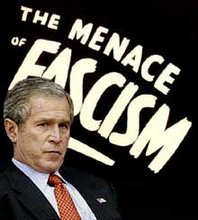
The Nazis, Fascists and Communists were political parties before they became enemies of liberty and mass murderers.
Blunt reaches out to Hoyer

House Minority Whip Roy Blunt is reaching to House Democratic leaders, hoping to reignite talks on the bailout bill.

Aides confirmed that Blunt spoke to House Majority Leader Steny Hoyer and Rep. Barney Frank by phone Monday afternoon after the bailout failed to pass the House.

Aides said Blunt did not discuss specific changes to the bill. However, some Republicans are calling for a change in mark-to-market accounting rules as a possible way to attract GOP support.

“You can’t do things that drive yes votes away, either on our side or the other side,” Blunt told Roll Call.

Blunt also told Roll Call he thought he had 75 votes going on to the House floor before the vote, but they fell well short of that.

“They knew that’s what I thought we had,” he said.

(Do we smell sabotage? Gopper sabotage against gooper? WTF?)


(In accordance with Title 17 U.S.C. Section 107, this material is distributed without profit to those who have expressed a prior interest in receiving the included information for research and educational purposes. I.U. has no affiliation whatsoever with the originator of this article nor is I.U endorsed or sponsored by the originator.)


The Nazis, Fascists and Communists were political parties before they became enemies of liberty and mass murderers.

Thinking The Unthinkable


Why weren't the bankers and governments thinking the unthinkable a few years ago, when this nightmare was obvious to the rest of us, none of whom are economists?

Financial Crisis: Think the Unthinkable


Totems are tumbling, shibboleths lie shattered.


When the US Republican administration proposes buying banking assets worth more than several European countries put together, you know the normal rules are being torn up. That means politics has to change too.


In the US, despite the rows over detail, Republicans and Democrats alike have been ready to think the previously unthinkable.


Here the Labour government has had to move fast to respond to changing circumstances, and more will need to be done. But the Conservatives have proved slow to keep up with seismic events, opposing the measures our economy needs. The scale of the challenge is considerable.


Dodgy lending decisions in the US housing market have infected financial institutions across the globe. Over-complex bundling of assets, lent round the world and back again, meant banks, credit ratings agencies and national regulators all struggled to understand where the risks lay. Banks have lost confidence in each other and global credit markets have frozen up. Add to the mix, wild fluctuations in world oil prices and increasing food prices.


The Irish economy is now in recession. France and Germany have experienced negative growth. And the UK economy is under pressure too. Governments, central banks and regulators across the world are rightly taking unprecedented action to promote financial stability.


(In accordance with Title 17 U.S.C. Section 107, this material is distributed without profit to those who have expressed a prior interest in receiving the included information for research and educational purposes. I.U. has no affiliation whatsoever with the originator of this article nor is I.U endorsed or sponsored by the originator.)


The Nazis, Fascists and Communists were political parties before they became enemies of liberty and mass murderers.


Bailout or Blowout.........

Markets to Congress: Bailout -- or blowout

Posted Sep 29 2008, 10:09 AM by Jon Markman
Rating:


Members of Congress shocked the world today by voting down legislation aimed at resolving the U.S. credit crisis, evidently determining that it was far from the comprehensive bailout or rescue plan that its promoters claimed and instead was little more than a larger version of several failed attempts that have come before. Investors responded by throwing a fit, punching the Dow Jones Industrial Average down 600 points by 3:30 p.m. ET.


The House move was one part nihilism, one part bluff-calling and one part an expression of total constituent outrage, and only history will be able to judge if representatives' snub of their political leadership will rank among the greatest blunders of all time or a brave move of principle. Both views will have their day in court, for dispassionate analysis of the $700-billion bailout plan reveals that it was in fact deeply flawed -- failing to provide a solution to the big problems that plague the banks while at the same time affronting the deep sense of exasperation among ordinary Americans that they were being asked to pay for the sins of the wealthy. One bank analyst said taxpayer sentiment was not 9-1 against, or 70-1, but rather, "there is no 1."


Putting aside the moral issues, here was the problem with the proposed law:


For the 15 months, the Federal Reserve has been trying to turn banks' bad mortgage loans into cash by allowing them to turn them in as collateral for Federal loans. With each new program with names like "term auction facility," the Fed has lowered its requirements for the quality of the loans it would take, widened the number of financial institutions eligible for the program, and stretched out the amount of time the institutions could keep the laundered money.


The only change in the new plan -- called the "troubled asset recovery program," or TARP -- is that the Fed will accept almost any kind of loan, from virtually any financial institution, and now it is just giving the money away rather than making a loan. That's why this one costs so much more. But it still doesn't get at the two root problems in the banking system. Read More...


(In accordance with Title 17 U.S.C. Section 107, this material is distributed without profit to those who have expressed a prior interest in receiving the included information for research and educational purposes. I.U. has no affiliation whatsoever with the originator of this article nor is I.U endorsed or sponsored by the originator.)


The Nazis, Fascists and Communists were political parties before they became enemies of liberty and mass murderers.


Two Portraits of a Bioterror Suspect

As FBI Paints Ivins as Killer, Friends Recall Him as Good, if Flawed

By Anne Hull, Marilyn W. Thompson and Lyndsey Layton
Washington Post Staff Writers
Sunday, September 28, 2008; A01


Two days before he was found unconscious at home, felled by a lethal dose of Tylenol and valium, microbiologist Bruce E. Ivins logged on to one of the "express computers" on the second floor of the library in downtown Frederick.


He typed in the name of a Web site devoted to the anthrax-mailings investigation, a perplexing, unsolved case that had dragged on for seven years. At 7:13 p.m., the computer connected to a page that included comments from FBI Director Robert S. Mueller III, who was confident that the case soon would be solved. "I tell you, we've made great progress in the investigation," he said.


Earlier that day, Ivins had been released from a psychiatric hospital, where the FBI had used the opportunity to obtain a DNA sample from him. Agents assigned to 24-hour surveillance followed him as he returned to his modest Cape Cod house outside the gates of Fort Detrick. Then Ivins "wasn't seen again," FBI documents say, until paramedics carried him out of his home unconscious.


The scientist who had spent his career studying lethal bacteria chose one of the simplest but most painful ways to die: acetaminophen poisoning, which causes liver damage and internal bleeding.


Some details of Ivins's final days emerged last week in a new release of FBI documents. The bureau found no suicide note, as it had hoped, and only sketchy evidence to bolster its case that Ivins was a diabolical and plotting criminal.


The new material emphasized the two irreconcilable versions of the man the FBI blames for the nation's most deadly act of biological terrorism.


The fatal spores used in the 2001 mailings came from a single flask in his custody, the FBI said, and for years Ivins displayed secretive behavior that fit the profile of a murderer who stuffed poison-laced letters into a Princeton, N.J., mailbox. He stalked members of a sorority, sent packages anonymously from out-of-town mailboxes, used false names in bizarre letters and e-mails, and took mysterious nocturnal car trips, sometimes rolling back his odometer.


But Ivins's defenders have cast enough doubt on the FBI's case that key members of Congress are demanding hearings. One recipient of an anthrax-laced letter, Sen. Patrick J. Leahy (D-Vt.), for the first time has publicly questioned the FBI, especially its conclusion that Ivins acted alone.


Friends say Ivins's psychiatric troubles intensified as the FBI hounded him, showing his children photos of victims and saying, "Your father did this." They knew Ivins as a father who cheered on his son's ball games and as a volunteer who cleaned out the muddied rescue vehicle used when two boys were swept away in a creek. Even in the face of the FBI's revelations -- the guns, the obsessions, the aliases -- Ivins's friends rationalized the details.


"For everything they want to pin on him . . . there is a counter to it, an alternate explanation," said Katie Carr, the former deputy commander at USAMRIID, the U.S. Army Medical Research Institute for Infectious Diseases, where Ivins worked for 27 years. "There are an awful lot of us in the community that surrounded Bruce who are not satisfied. Please prove it."


Ivins's attorney, Thomas M. DeGonia, likens his client to a diamond held up to the light. Turn it just so, and it could fit the FBI's idea of a sociopath. Turn it another way and see a flawed 62-year-old man. "The obsession with a sorority and the anthrax killings, these are two completely unrelated things," DeGonia said.


Brainy but Quirky


Growing up in Lebanon, Ohio, Ivins was a brainy kid with a quirky personality. A neighbor remembers Ivins inviting him into his garage one day to show off a stick of dynamite he was cutting in half with a surgical instrument. "He kind of grinned, with the scalpel in his hand, with his [other] hand on the dynamite," Robert Surface said.


Bruce's pharmacist father, Princeton graduate T. Randall Ivins, ran the local drugstore, and his mother, Mary Ivins, had a keen intellect and belonged to the Hill History Club. Ivins's parents attended the Presbyterian church and played bridge, but Ivins's older brother, Tom, said there was physical abuse in the house. Their father sometimes slept at the drugstore.


Ivins later said he felt "desolation" in high school, though most remember him as academically gifted if slightly awkward. The 1964 Lebanon High yearbook shows a skinny kid posing with the track team, all elbows and heavy black glasses.


A science standout, Ivins entered the University of Cincinnati in 1964 and earned his bachelor's and advanced degrees in microbiology. At 29, he married Diane Betsch, 20. They headed to the University of North Carolina at Chapel Hill, where Ivins had postdoctoral work.


"He was a very bright scientist and an awfully nice guy," said Priscilla B. Wyrick, then Ivins's professor at UNC and now the chair of the microbiology department at Quillen College of Medicine at East Tennessee State University. Wyrick had belonged to the sorority Chi Omega and remembers Ivins asking her about its rituals. "After about the second time he did it, I told him to buzz off," she said.


But Ivins's interest in another sorority, Kappa Kappa Gamma, frightened microbiologist Nancy L. Haigwood, a member who knew Ivins at UNC. Both ended up living in Gaithersburg, and one morning, Haigwood came out of the apartment she shared with her boyfriend and found "KKG" spray-painted on their Honda.


"Bruce figured out where I lived and what my fiance's car looked like," said Haigwood, now the director of the Oregon National Primate Research Center in Beaverton. She filed a police report and later confronted Ivins, who denied it.


By then Ivins was working at USAMRIID at Fort Detrick, in Frederick. He and his wife adopted twins, and Diane Ivins opened a day care at their home. She later led Frederick County Right To Life, participating in antiabortion rallies. The couple attended St. John the Evangelist Roman Catholic Church. They scrimped to buy a $140,000 house across the street from the Army installation. The slender Ivins often rode his bike to work, reminding one colleague of a scarecrow on wheels as he pedaled across the base.


A Respected Scientist


Within USAMRIID's high-security laboratories, Ivins was the go-to man for researchers probing anthrax disease. Ivins specialized in spore preparation, taking wet bacteria samples and culturing them in glass flasks. Ivins experimented on mice, rats, golden guinea pigs and monkeys, first injecting the animals with test vaccines and then blasting them with anthrax. After a few days, he counted bodies.


His research earned scientific notice, and the Pentagon awarded him its highest civilian honor in 2002 for helping solve a problem that had delayed production of the anthrax vaccine used to inoculate U.S. troops. The FBI suggested that Ivins's determination to promote the importance of the vaccine may have been a motive in sending the letters.


Ivins also worked to help develop vaccines offering broader protections. Partly through his efforts, the Army secured two patents that could aid in the production of a vaccine then under development. Ivins stood to gain some money from the patent rights, but hardly a financial bonanza.


"This was a guy who drove an older car with bare tires, who wore threadbare clothes. He was not in this for money," said another former supervisor, Jeffrey J. Adamovicz.


Although his work was going well, by 2000 Ivins was seeing a psychiatrist who prescribed for him the anti-depressant Celexa. The drug brought little relief. "I get incredible paranoid delusional thoughts at times, and there's nothing I can do until they go away, either by themselves or with drugs," he wrote in an e-mail.


That summer, Ivins attended weekly therapy sessions at Comprehensive Counseling Associates in Frederick, telling a counselor of his plans to travel out of town to watch a young woman play soccer. If she lost, Ivins said, he would poison her, according to the counselor, who spoke to The Washington Post on the condition of anonymity. "It was not a crime of impulse," the counselor said. "It was planned with cunning." The counselor notified authorities, who said nothing could be done without the intended victim's last name or address.


By mutual agreement, Ivins stopped seeing the counselor, whom he felt he could no longer trust. He cryptically wrote a friend, saying that his counselor "wanted to get me put in jail."


He also was using out-of-town mailboxes to anonymously send gifts and cards to someone in another city. He apparently made an 11-hour round-trip one night to leave a package for that person. When the FBI later questioned him, he explained that he liked taking mindless drives.


Ivins used a variety of names and e-mail addresses -- "jimmyflathead" was one -- and he rented a postal box under the name Carl Scandella. That was the name of Nancy Haigwood's husband -- her boyfriend at the time of the car vandalism.


Clues, and Holes, in the Case


The anthrax letters mailed in the fall of 2001 were distinguished by childlike block handwriting that warned: "We have this anthrax. You die now. . . . Death to America. Death to Israel." Though the FBI did not match Ivins's handwriting to that in the letters, agents were struck by phrasing in an e-mail he sent Sept. 26, after the first letters were mailed: "Bin Laden terrorists for sure have anthrax and saran gas" and have "just decreed death to all Jews and all Americans."


Ivins spent several late nights in the lab alone before the mailings. The FBI called the nighttime hours unusual, although his friends said they were not. Ivins later told agents he was merely escaping problems at home. He seemed fine that fall when he enrolled in an American Red Cross disaster-relief course with Peggy Magnanelli, a fellow volunteer who remembered how Ivins later stepped up to help Hurricane Katrina evacuees.


Ivins's professional skills were such that the FBI took him into its confidence as it analyzed the powder contained in a letter to Sen. Thomas A. Daschle (D-S.D.). He was kept informed as the bureau began a global quest to identify the distinctive genetic fingerprint of the bacteria packed into the mailings.


Eventually, it all came down to a single flask kept in Ivins's custody. In 1997, he had received anthrax spores prepared at Dugway Proving Ground, an Army test facility in Utah. Ivins cultured the Dugway spores, mixed them with his own and stored the unique concoction in a flask about the size of a half-pint of milk.


He labeled it "Dugway 97," then at some point added the name RMR 1029, which stands for "Reference Material Request." A prosecutor later called it the "murder weapon" in the anthrax case.


The FBI concluded that Ivins was the sole culprit in the mailings, growing the distinctive material in his lab, packing it into pre-stamped envelopes bought in Frederick and secretly driving six hours round-trip to Princeton, N.J., to mail them. Of special note, the bureau said, was the fact that the Kappa Kappa Gamma sorority had an office on the same street as the Princeton mailbox.


But the case had holes. No one had spotted Ivins in Princeton, and hair samples taken from the Nassau Street mailbox did not match his DNA. Moreover, Ivins was not the only person with access to RMR 1029. The FBI at first said about 100 people had access, but that number multiplied with the finding that Ivins had kept the flask in two different USAMRIID buildings, each with its own lab technicians and cleaning crews.


The FBI also made the case that Ivins, once so trusted, had tried to deceive investigators. When scientists were asked to give the FBI bacterial samples from their labs, he did not follow protocol. His second sample, the FBI later said, had been doctored.


By then, it was 2007. Ivins had worked without incident among pathogens for five years after the anthrax mailings.


Late last year, the circle was closing around Ivins. In November, the FBI searched his property, with his family sequestered at a hotel. Agents seized a Glock 34, a Glock 27 and a Beretta pistol, as well as directions to the home of a female former co-worker.


The lab revoked his access to pathogens. He kept office hours but was mixing anti-anxiety drugs with sleeping pills and alcohol. Someone alerted a fellow scientist who was in a 12-step recovery program that Ivins needed help. This spring, Ivins did two stints in rehab. His wife visited often.


This year, the FBI met with Ivins three times, documents say, including once in early June as prosecutors prepared to indict him. Out of the blue, Ivins contacted his counselor from 2000 to ask if he could obtain his patient records. The counselor no longer worked at Comprehensive Counseling Associates but said if the records still existed, they would be at the office.


Ivins, who tried to implicate several of his colleagues, e-mailed himself at an oddly named address to say that he was doing his own investigation and "should have been a private eye!"


A Pledge of Violence


On July 9, Ivins announced in group therapy that he was a suspect in the anthrax case. He vowed to kill co-workers who had wronged him. The account of this session came from Jean C. Duley, then a clinic addiction specialist. The next morning, Duley called Frederick police and later went to court to get a restraining order.

Ivins was taken into custody and sent to a Sheppard Pratt psychiatric hospital for evaluation. His house was again searched; seized were hundreds of rounds of ammunition, homemade body armor, a bulletproof vest and a handwritten note about Duley. Also found was a copy of "A Madman Dreams of Turing Machines," a novel based on the lives of Alan Turing and Kurt Godel, two towering figures of modern logic. Both men died in bizarre suicides, Godel in Princeton in 1978 from starvation and Turing, a Princeton alumnus, of cyanide poisoning in 1954 after applying the poison to an apple.


The trove of documents released since Ivins's suicide has added to the image seen by his counselors: a madman, driven by obsessions. He tracked members of Kappa Kappa Gamma and showed his command of the sorority's secrets in entries on Wikipedia. He became obsessed with Kathryn Price, a winner of "The Mole" television reality show, and wrote strange e-mails to her under a phony name, Cindy Wood.


"Family and friends deserve to know he had two sides," one of his counselors said. "In all my years of counseling, I never felt scared, except by this person."


But even after his death, the FBI acknowledged that the central forensic evidence in its case against Ivins left room for doubt. "There's always going to be a spore on the grassy knoll," said Vahid Majidi of the bureau's weapons of mass destruction directorate.


Days after his death, Ivins's family and friends prepared for a memorial service that drew so many people to the small Fort Detrick chapel that overflow chairs were hustled in by Army personnel. One weeping colonel after another praised Ivins's devotion to work and family, while co-workers recalled his endearing habits -- such as Tupperware lunches of lima beans and Jell-O.


At Ivins's house nearby, dead leaves covered the small yard where agents had come again to rummage through trash. They found notes Ivins wrote in the psychiatric hospital detailing his anxieties, including his fear of incarceration. They carted away the scraps of paper to log as evidence, passing a wooden shed with peeling paint where they had also searched for clues. The scientist's blue Saturn sat in the driveway, empty.


Staff researcher Julie Tate and staff writer Amy Goldstein contributed to this report.


(In accordance with Title 17 U.S.C. Section 107, this material is distributed without profit to those who have expressed a prior interest in receiving the included information for research and educational purposes. I.U. has no affiliation whatsoever with the originator of this article nor is I.U endorsed or sponsored by the originator.)


The Nazis, Fascists and Communists were political parties before they became enemies of liberty and mass murderers.

House ignores Bush, rejects $700B bailout bill


Wonder where we would be now, if the Greedy Old Pukes had rejected this drunken frat boy and his evil side-kick, Dick Vader, years ago instead of covering up for them.

By JULIE HIRSCHFELD DAVIS, Associated Press Writer

In a stunning vote that shocked the capital and worldwide markets, the House on Monday defeated a $700 billion emergency rescue for the nation's financial system, ignoring urgent warnings from President Bush and congressional leaders of both parties that the economy could nosedive without it. The Dow Jones industrials plunged nearly 800 points, the most ever for a single day.

Democratic and Republican leaders alike pledged to try again, though the Democrats said GOP lawmakers needed to provide more votes. Bush huddled with his economic advisers about a next step. The House was to reconvene on Thursday instead of adjourning for the year as planned.

Stocks began falling even before the 228-205 vote to reject the bill was officially announced on the House floor. The 777-point decline for the day surpassed the 721-point previous record, on the day after the Sept. 11, 2001, terror attacks, though in percentage terms it was well short of the drops on Black Monday of October 1987 and at the start of the Depression.

In the House chamber, as a digital screen recorded a cascade of "no" votes against the bailout, Democratic Rep. Joe Crowley of New York shouted news of the falling stocks. "Six hundred points!" he yelled, jabbing his thumb downward.

Bush and a host of leading congressional figures had implored the lawmakers to pass the legislation despite loud protest from their constituents back home. Not enough members were willing to take the political risk just five weeks before an election.

More than two-thirds of Republicans and 40 percent of Democrats opposed the bill.

The overriding question for congressional leaders was what to do next. Congress has been trying to adjourn so that its members can go out and campaign for the election that is just five weeks away.

"The legislation may have failed; the crisis is still with us," said House Speaker Nancy Pelosi, D-Calif., in a news conference after the defeat.

"What happened today cannot stand," Pelosi said. "We must move forward, and I hope that the markets will take that message."

At the White House, Bush said, "I'm disappointed in the vote. ... We've put forth a plan that was big because we've got a big problem." He pledged to keep pressing for a measure that Congress would pass.

Republicans blamed Pelosi's scathing speech near the close of the debate — which attacked Bush's economic policies and a "right-wing ideology of anything goes, no supervision, no discipline, no regulation" of financial markets — for the vote's failure.

"We could have gotten there today had it not been for the partisan speech that the speaker gave on the floor of the House," Minority Leader John Boehner said. Pelosi's words, the Ohio Republican said, "poisoned our conference, caused a number of members that we thought we could get, to go south."

Rep. Roy Blunt, R-Mo., the whip, estimated that Pelosi's speech changed the minds of a dozen Republicans who might otherwise have supported the plan.

That was a remarkable accusation by Republicans against Republicans, said Rep. Barney Frank, D-Mass., chairman of the House Financial Services Committee: "Because somebody hurt their feelings, they decided to punish the country."

The presidential candidates kept close track — from afar.

In Colorado, Democrat Barack Obama said, "Democrats, Republicans, step up to the plate, get it done."

Republican John McCain spoke with Treasury Secretary Henry Paulson and Federal Reserve Chairman Ben Bernanke before leaving Ohio for a campaign stop in Iowa, a spokeswoman said.

The legislation the administration promoted would have allowed the government to buy bad mortgages and other rotten assets held by troubled banks and financial institutions. Getting those debts off their books should bolster those companies' balance sheets, making them more inclined to lend and easing one of the biggest choke points in the credit crisis. If the plan worked, the thinking went, it would help lift a major weight off the national economy that is already sputtering.

Monday's action had been preceded by unusually aggressive White House lobbying, and Fratto said that Bush had been making calls to lawmakers until shortly before the vote.

Bush and his economic advisers, as well as congressional leaders in both parties had argued the plan was vital to insulating ordinary Americans from the effects of Wall Street's bad bets. The version that was up for vote Monday was the product of marathon closed-door negotiations on Capitol Hill over the weekend.

"We're all worried about losing our jobs," Rep. Paul Ryan, R-Wis., declared in an impassioned speech in support of the bill before the vote. "Most of us say, 'I want this thing to pass, but I want you to vote for it — not me.'"

Said Boehner, after the vote: "Americans are angry, and so are my colleagues. They don't want to have to vote for a bill like this. But I have concerns about what this means for the American people, what it means for our economy, and what it means for people's jobs. I think that we need to renew our efforts to find a solution that Congress can support."


(In accordance with Title 17 U.S.C. Section 107, this material is distributed without profit to those who have expressed a prior interest in receiving the included information for research and educational purposes. I.U. has no affiliation whatsoever with the originator of this article nor is I.U endorsed or sponsored by the originator.)


The Nazis, Fascists and Communists were political parties before they became enemies of liberty and mass murderers.


Monday, September 29, 2008

The Paulson Plan: Really Benefits....


Surprise, surprise, surprise. Guess who the Paulson plan benefits?


Bank of America's (BAC) top credit strategy analyst says Paulson Debt Plan May Benefit Mostly Goldman, Morgan.


Goldman Sachs Group Inc. and Morgan Stanley may be among the biggest beneficiaries of the $700 billion U.S. plan to buy assets from financial companies while many banks see limited aid, according to Bank of America Corp.

"Its benefits, in its current form, will be largely limited to investment banks and other banks that have aggressively written down the value of their holdings and have already recognized the attendant capital impairment," Jeffrey Rosenberg, Bank of America's head of credit strategy research, wrote in a report dated yesterday, without identifying particular banks.

Many banks may not participate in the Troubled Asset Relief Program because they haven't had to write down as much assets under accounting rules, meaning decisions to sell into the program would cause them to lose capital, Rosenberg wrote. Investment banks operate "under a mark-to-market accounting model while commercial banks hold assets at cost until realizing a loss (or until they reasonably expect one)," he wrote.

Even without sales by commercial banks and savings-and-loans under the program, the companies may be harmed as the disclosure of prices paid in the troubled-debt auctions force them to ``hasten the pace'' of their own losses, Rosenberg wrote in his report. Banks and insurers mark down certain securities and derivatives to market prices in their earnings reports, avoiding losses on others unless they deem the declines to not be temporary and provisioning against loans as they go bad.

Bank lobbying groups today asked Congress and the U.S. Securities and Exchange Commission to suspend a rule that forces companies to put a price on difficult-to-value assets such as subprime mortgages.


Here is a translation of that last paragraph: Banks are unhappy with the size of their bailout (of which they deserve zero), simply because Goldman and Morgan are getting a bigger bailout (of which they equally deserve zero).


Is it any wonder Paulson wanted his bill ramrodded through without debate?


1.8 Trillion dollar bailouts just do not go far enough these days. Everyone wants more.


(In accordance with Title 17 U.S.C. Section 107, this material is distributed without profit to those who have expressed a prior interest in receiving the included information for research and educational purposes. I.U. has no affiliation whatsoever with the originator of this article nor is I.U endorsed or sponsored by the originator.)


The Nazis, Fascists and Communists were political parties before they became enemies of liberty and mass murderers.


And This Woman Is Going To Clean Up Washington?

By BRETT J. BLACKLEDGE, Associated Press Writer

Sun Sep 28, 11:58 AM ET


Though Sarah Palin depicts herself as a pit bull fighting good-old-boy politics, in her years as mayor she and her friends received special benefits more typical of small-town politics as usual, an Associated Press investigation shows.


When Palin needed to sell her house during her last year as Wasilla mayor, she got the city to sign off on a special zoning exception — and did so without keeping a promise to remove a potential fire hazard.


She gladly accepted gifts from merchants: A free "awesome facial" she raved about in a thank-you note to a spa. The "absolutely gorgeous flowers" she received from a welding supply store. Even fresh salmon to take home.


She also stepped in to help friends or neighbors with City Hall dealings. She asked the City Council to add a friend to the list of speakers at a 2002 meeting — and then the friend got up and asked them to give his radio station advertising business.


That year, records show, she tried to help a neighbor and political contributor fighting City Hall over his small lakeside development. Palin wanted the city to refund some of the man's fees, but the city attorney told the mayor she didn't have the authority.


Palin claims she has more executive experience than her opponent and the two presidential candidates, but most of those years were spent running a city with a population of less than 7,000.


Some of her first actions after being elected mayor in 1996 raised possible ethical red flags: She cast the tie-breaking vote to propose a tax exemption on aircraft when her father-in-law owned one, and backed the city's repeal of all taxes a year later on planes, snow machines and other personal property. She also asked the council to consider looser rules for snow machine races. Palin and her husband, Todd, a champion racer, co-owned a snow machine store at the time.


Palin often told the City Council of her personal involvement in such issues, but that didn't stop her from pressing them, according to minutes of council meetings.


She sometimes followed a cautious path in the face of real or potential conflicts — for example, stepping away from the table in 1997 when the council considered a grant for the Iron Dog snow machine race in which her husband competes.


But mostly, like other Wasilla elected officials at the time, she took an active role on issues that directly affected and sometimes benefited her. Her efforts to clear the way for the $327,000 sale of the Palin family home on Lake Wasilla is an example.


Two months before Palin's tenure as mayor ended in 2002, she asked city planning officials to forgive zoning violations so she could sell her house. Palin had a buyer, but he wouldn't close the deal unless she persuaded the city to waive the violations with a code variance.


The Palins, who were finishing work on a new waterfront house on Lake Lucille about two miles away, asked the city for the variance. The request was opposed by one planning official and some neighbors.


"I would ask that the Wasilla Planning Commission apply the exact same rules in this situation that it would apply to other similar requests so that our community can see that being a public figure does not give anyone special benefits," urged neighbor Clyde Boyer Jr. in a 2002 note to the city.


The Palins' house was built by the original owner too close to the shoreline and too close to adjacent properties on each side, including a carport that stretched so far over it nearly connected the two houses.


The Palins didn't create the zoning problems, but they should have known about them when they bought the house, wrote Susan Lee, a code compliance officer with the Matanuska-Susitna Borough, in response to the Palins' request. The borough, similar to a county government, makes recommendations to the city, which has final say.


Lee, in recommending the city reject the request, noted that the exception was needed to resolve an "inconvenience" the Palins experienced while trying to sell their house. In 1989, another borough planner told a previous owner that a variance for the carport couldn't be approved because it didn't meet required conditions and was a potential fire hazard.


But in August 2002, Wasilla Planner Tim Krug approved a "shoreline setback exception" for the Palins' house being built too closely to the water. He sent an e-mail to the mayor saying he was drafting another variance for the side of the house built too close to the property line, but that he understood from her that the other side "will be corrected and the carport will be removed."


Krug asked Palin to let him know if he was wrong in his impression that the carport would be removed.


A few minutes later, the mayor e-mailed back: "Sounds good."


On Sept. 10, 2002, the seven-member Wasilla Planning Commission unanimously approved a variance for both sides of the property, with language covering "all existing structures." Less than a week later, the Palins signed a deed to sell the house to Henry Nosek.


The carport was never removed.


Nosek said Sarah Palin didn't do anything more than any other citizen would have done.


"I sincerely don't feel that Sarah used her position as mayor at the time to get that accomplished," said Nosek, who no longer lives in the home.


James Svara, professor of public affairs at Arizona State University and author of "The Ethics Primer for Public Administrators in Government and Nonprofit Organizations," suggested such behavior is part of small-town politics.


"Small towns are first-person politics, and if people are close, it's hard to separate one's own personal interest and one's own personal property from the work of the city," Svara said. The key questions from an ethics standpoint include whether the politician makes a potential conflict of interest known and removes himself or herself from actions related to it, he added.


"I think in a small town there is a greater likelihood that people will accept that you will pay careful attention to friends and neighbors," he said, adding that there may be some local gossip about it, but not a lot of public scrutiny. "At the national level, there will be far more people watching, there will be far more pressures to come forward to try to influence the outcome."

___

Associated Press writer Sharon Theimer in Washington contributed to this report.

Copyright © 2008 The Associated Press

(In accordance with Title 17 U.S.C. Section 107, this material is distributed without profit to those who have expressed a prior interest in receiving the included information for research and educational purposes. I.U. has no affiliation whatsoever with the originator of this article nor is I.U endorsed or sponsored by the originator.)


The Nazis, Fascists and Communists were political parties before they became enemies of liberty and mass murderers.

USA Today/Gallop Poll: Obama Did Better in First Debate

Obama Scores Big on Proposal to Change the Country

MARK MEMMOTT and JILL LAWRENCE

September 28, 2008—


A new USA TODAY/Gallup Poll shows 46% of people who watched Friday night's presidential debate say Democrat Barack Obama did a better job than Republican John McCain; 34% said McCain did better.


Obama scored even better -- 52%-35% -- when debate-watchers were asked which candidate offered the best proposals for change to solve the country's problems.


More than six in 10 people or 63% in the one-day poll, taken Saturday, said they watched the first faceoff in Oxford, Miss. For those 701 people, the margin of error was +/- 4 percentage points.


The poll suggested the debate was to some extent a wash for McCain: 21% of those who watched say it gave them a more favorable view of him, 21% say less favorable and 56% say it didn't change their opinion much.


Three in 10 said their opinion of Obama became more favorable after seeing the debate, compared to 14% who said less favorable and 54% who said it didn't make much difference.


More than one-third of viewers, or 37%, said they had less confidence in McCain to fix economic problems after seeing the debate; 23% said more. For Obama, the survey results were 34% more confidence, 26% less.


Neither candidate broke away on national security and foreign policy. About a third of viewers said they had more confidence in each man on that front after the debate, and slightly less in each case said they had less confidence.


Obama held a 5-percentage-point lead over McCain, 49%-45%, in the Gallup tracking poll taken Wednesday through Friday. Tomorrow's poll will be the first to include impact from the debate.


Highlighting powered by ClearForest ©


(In accordance with Title 17 U.S.C. Section 107, this material is distributed without profit to those who have expressed a prior interest in receiving the included information for research and educational purposes. I.U. has no affiliation whatsoever with the originator of this article nor is I.U endorsed or sponsored by the originator.)


The Nazis, Fascists and Communists were political parties before they became enemies of liberty and mass murderers.


McCrankypants

The Debate: The All-Important Grumpiness Factor


Here’s the politically incorrect way of phrasing one of the central questions about tonight’s presidential debate: Did John McCain come across as too much of a grumpy old man?


That might not be a nice question, but it’s an important one. Americans like to vote for the nice guy, not the grumbling prophet of doom. Throughout the 90-minute debate, McCain seemed contemptuous of Obama. He wouldn’t look at him. He tried to belittle him whenever possible -- how many times did he work “Senator Obama just doesn’t understand” into his answers? His body language was closed, defensive, tense. McCain certainly succeeded in proving that he can be aggressive, but the aggression came with a smirk and a sneer.


In terms of substance, there were no knockout blows. (I hate using the prizefight metaphor, which is the oldest cliché in the world, but unfortunately it’s the only metaphor approved for journalistic use in connection with a presidential debate. I don’t write the rules.) Both candidates got in numerous good lines and a couple of real zingers. McCain managed to cross the dangerous terrain of economic policy without suffering grievous harm, and Obama managed to surmount the foreign-policy toughness threshold. Voters who were leaning toward one or the other but wanted reassurance probably found it.


But we in the commentariat tend to forget that the electorate always, and I mean always, sees a presidential debate very differently from the way we see it. If you read the papers in the fall of 2000, for example, you learned that Al Gore wiped the floor with George Bush in their encounters -- but voters thought otherwise. Demeanor and body language have been important in every debate I can think of, so I can’t imagine why they wouldn’t be important in this one. The candidate who projects affability and optimism is usually seen to have bettered the candidate who projects resentment and gloom. If that is the case with tonight’s debate, Obama won and McCain lost.


By Eugene Robinson | September 26, 2008; 11:25 PM ET | Category: Robinson
Previous: The Debate: Senator Been There, Done That | Next: The Debate: The Prime Minister and the President


(In accordance with Title 17 U.S.C. Section 107, this material is distributed without profit to those who have expressed a prior interest in receiving the included information for research and educational purposes. I.U. has no affiliation whatsoever with the originator of this article nor is I.U endorsed or sponsored by the originator.)


The Nazis, Fascists and Communists were political parties before they became enemies of liberty and mass murderers.


Sunday, September 28, 2008

Any Way You Parse It, the Proposed Bailout is a Disaster for Ordinary Americans. It Must Be Stopped


Dave Lindroff


The idea of bailing out Wall Street for the results of a decade or more of greedy and even criminal behavior, using almost $1 trillion in borrowed money that will jeopardize everything from Social Security to school funding to medical research, and further drive the dollar into the ditch, cannot be justified.


The president has tried to stampede Congress into throwing this colossal pile of money at the bankers who caused the crisis, by using fear-mongering, instead of by following President Franklin Roosevelt's example of urging calm and coming up with a sensible response.


Congress, which is beholden to Wall Street's bankers because of all the campaign funds they bestow on its members, Republican and Democrat, is buying into the president's nonsense.


But like lipstick on a pig, no amount of window dressing, such as protection for homeowners facing foreclosure or limits on bank executive pay, can make this bailout acceptable.


This proposal is simply out and out theft from taxpayers to reward bankers and investors who have been on a binge for too long.

( Here's the problem with that, Dave. Investors today are not the investors of yesteryear. I would venture to say that the wealthy make up a relatively small % of of investors. Of course they may stand to lose more, but they have more to lose. The ones who stand to lose everything are the people who would never invest in the market if that investment were not in the form 401ks for retirement, trusts about which the beneficiary has zip to say about how the money is invested and other forms of "slave money." Most investors, the ones referred to as minor investors, have zip to say about what the corporate officers are up to. They aren't told. If we really want to clean up Wall Street, make the corporate officers who created this mess pay compensation, which will put the Deciders and their families in trailer parks. If there is enough evidence of a crime to bind them over for trial, let them wait it out in jail, like other people who can't afford bail. Allow the full force of the law and ethics fall on a few of them once and crime on Wall Street will not be that big of a problem for a very long time to come. Nevertheless, send in the observers. As old Ronnie would say, trust but verify.)


There are plenty of things that can be done to rebuild the economy and protect the public without rewarding the crooks and gamblers who created this mess.


Meanwhile, the American people need to make it clear that we will not allow this disastrous ripoff to occur.


The answer is to finally tell Congress that we're holding them accountable. No one who votes for a massive bailout of Wall Street gets re-elected. No one.


How do we do it? Go to this Web site and start a non-partisan viral campaign to get every voter to reject any senator or representative who supports the bailout.


DAVE LINDORFF is a Philadelphia-base journalist and columnist. His latest book is "The Case for Impeachment" (St. Martin's Press, 2006 and now available in paperback edition). His work is available at www.thiscantbehappening.net.


(In accordance with Title 17 U.S.C. Section 107, this material is distributed without profit to those who have expressed a prior interest in receiving the included information for research and educational purposes. I.U. has no affiliation whatsoever with the originator of this article nor is I.U endorsed or sponsored by the originator.)


The Nazis, Fascists and Communists were political parties before they became enemies of liberty and mass murderers.


Shock Capitalism and Continuing Grand Theft By The Wealthy

Thursday night I was joined by the brilliant Naomi Klein, author of The Shock Doctrine,” to talk about the current economic Shock Capitalism that is taking place right now, thanks to Bush and Paulson’s 700 billion dollar plan to bail out Wall Street. And all the wealthy free-market conservative CEOs that drained Main Street for ungodly sums of money until all the financial institutions began to crash and burn are cheering. Bush’s base is comprised of these CEOs and they pulled off the ultimate “complexity scheme” on the American people. Naomi hits on some very important ideas during this twenty minute interview.

audio_mp3 Download | Play (full audio)


Klein: But I think that it’s important to stress that this is money that could be used for actively preventing foreclosures. They could be using this money - a fraction of it - to keep people in their homes. They could be stimulating and rebuilding the fundamentals of the economy by investing in infrastructure, public works projects, a green-style New Deal - all of the investments that are so desperately needed. New technology, investing in the real economy and getting away from this casino economy. And because they want to throw all this money at Wall Street, that is money that will not be available for those real investments.


Say goodbye to Universal Health Care if McCain is elected. John and the House Republicans are now trying to pull another scam on the American people ,which is another tried and true method that conservatives use. As Digby says: They run as Populists, but govern as Aristocrats. It works all too well. It’s a wonderful scam. Now, I’m not saying that a deal shouldn’t take place, but a cautious approach should be paramount. As Krugman says: The Dodd-Frank changes make the plan less awful, mainly by creating an equity stake… Also, the oversight means that Treasury can be prevented from making the plan a pure gift to financial evildoers. If the plan looks not-awful enough, I’ll be pro. But I won’t be cheering - I’ll be holding my nose.


Klein: And they all knew it. They all knew it and they were making money as fast as they could based on their belief that they would get bailed out. Because it is entirely consistent with the Bush administration over the past 7 years. One of the other big lies floating around is this is somehow a departure from the way the Bush administration usually does business. It’s not a departure; it’s just a change in the direction of the flow. This is what they have been doing for 7 years: transferring public money, public wealth, into the hands of private crony contractors. And now as their final act they are taking the bad debts of the corporate sector and transferring them to the taxpayer. There is no aberration here; there is no big surprise. This is entirely consistent with everything they’ve done.


As Rachel Maddow notes:


For instance, where the heck did this $700 billion figure come from in the first place? A Treasury Department spokeswoman told Forbes.com this week, quote, “It’s not based on any particular data point, we just wanted to choose a really large number.” A really large number? That’s the calculus among our nation’s leading economic theorists and managers? We just need a ton of money; we don’t know how much, just make the pile really tall? Isn’t economics a science? Not reassuring.


Just think about that figure. They pulled it out of thin air. Here’s the interview. (full transcript below the fold)


(Read the rest of this story…)


(In accordance with Title 17 U.S.C. Section 107, this material is distributed without profit to those who have expressed a prior interest in receiving the included information for research and educational purposes. I.U. has no affiliation whatsoever with the originator of this article nor is I.U endorsed or sponsored by the originator.)


The Nazis, Fascists and Communists were political parties before they became enemies of liberty and mass murderers.