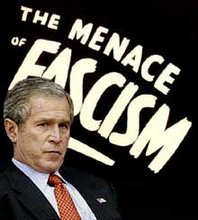


Or, at least, many of us haven't.
Oh yes, there are those of us who saw the Bush war on Iraq for exactly what it was, from day one.
But we don't belong to any party, are rarely listened to and routinely referred to as the loony left and the un-enlightened Right. Odd, because most of us are not leftist or Right-wing.
We are simply knowledgeable about how our government works. We are also all to familiar with that of which our government is capable. A number of us know first hand.
That is precisely why we are independents.
The FP Memo: The Endgame in Iraq
By Shawn Brimley, Kurt Campbell
Page 1 of 4
July/August 2007
What happens when you take a 40-year-old CIA memo on losing a war and replace the word “Vietnam” with the word “Iraq”? The result is a set of conclusions that are just as true today.
MEMORANDUM: TO: CIA Director Gen. Michael V. Hayden
FROM: Kurt Campbell and Shawn Brimley
RE: The Consequences of Losing in Iraq
American policymakers and intelligence analysts are currently struggling to consider the potential repercussions of failure in Iraq.
Forty years ago, an earlier generation of U.S. policymakers were thinking about the implications of defeat in another conflict—Vietnam.
During the summer of 1967, then CIA Director Richard Helms asked for a quiet review of the global political and strategic consequences of an American failure in Vietnam.
The result was a classified memorandum circulated on Sept. 11, 1967, “Implications of an Unfavorable Outcome in Vietnam,” which detailed a lengthy list of potential dark outcomes and worrisome prospects.
Excerpts from this document—with only minor edits—offer eerie parallels to the very different set of circumstances the United States faces today in Iraq. In considering the Iraq war’s endgame, the U.S. government would be wise to review its own notes.
Next >>
(In accordance with Title 17 U.S.C. Section 107, this material is distributed without profit to those who have expressed a prior interest in receiving the included information for research and educational purposes. I.U. has no affiliation whatsoever with the originator of this article nor is I.U endorsed or sponsored by the originator.)
The Nazis, Fascists and Communists were political parties before they became enemies of liberty and mass murderers.
Tuesday, June 19, 2007


GAO study of Bush signing statements: Big Power Grab
GAO Report on Presidential Signing Statements
June 18th, 2007
by Jesse Lee
From the Judiciary Committee:
GAO Report Shows Power Grab in Presidential Signing Statements
(Washington, DC)- Today, the nonpartisan General Accounting Office (GAO) released a report which found that in a limited number of Presidential signing statements examined, the Bush Administration failed to execute the law as instructed in over 30 percent of the cases. House Judiciary Committee Chairman John Conyers, Jr. (D-MI) and Senate Appropriations Chairman Robert C. Byrd (D-W.Va.) requested the report.
GAO researchers found signing statements in 11 of 12 appropriations acts in fiscal year 2006 and examined a sample of 19 provisions with which the President expressed concern in his signing statements. The President objected to, and federal agencies failed to execute, public law in six of those cases - 30 percent of the total sample.
“The Administration is thumbing its nose at the law,” Conyers said. “This study calls for an extensive review of these practices, something the Administration has so far refused to do.”
“The White House cannot pick and choose which laws it follows and which it ignores. When a president signs a bill into law, the president signs the entire bill. The Administration cannot be in the business of cherry picking the laws it likes and the laws it doesn’t,” Senator Byrd said. “This GAO opinion underscores the fact that the Bush White House is constantly grabbing for more power, seeking to drive the people’s branch of government to the sidelines. Too often, the Bush Administration does what it wants, no matter the law. It says what it wants, no matter the facts.
We must continue to demand accountability and openness from this White House to counter this
power grab.”
The new GAO opinion underscores an April finding by the nonpartisan Congressional Research Service (CRS). The April report found that President George W. Bush has raised objections in his signing statements far more than any of his predecessors. In fact, President Bush issued 149 signing statements, 127 (85 percent) of which raised some objection. The significant rise in the proportion of constitutional objections made by the President Bush is compounded by the fact that these statements are typified by multiple objections, resulting in over 700 challenges to distinct provisions of law.
In comparison, CRS found that President Reagan issued 276 signing statements, 71 of which (26%) contained provisions questioning the constitutionality of one or more of the statutory provisions signed into law. President Clinton issued 391 statements, 105 of which (27%) raised constitutional concerns or objections.
Some of the most troubling instances that the GAO examined include:
- The Defense Department did not include separate budget justifications documents explaining how Iraq war funding was to be spent in its 2007 budget request, as required by public law;
- The Federal Emergency Management Agency (FEMA) did not submit a proposal and expenditure plan for housing, as directed by Congress;
- Customs and Border patrol did not relocate its checkpoints in the Tuscon area every seven days, as directed by Congress.
GAO researchers also studied how federal courts view Presidential signing statements. They found that courts rarely rely on them as authoritative interpretations of the law.
Read the full report (pdf) >>
(In accordance with Title 17 U.S.C. Section 107, this material is distributed without profit to those who have expressed a prior interest in receiving the included information for research and educational purposes. I.U. has no affiliation whatsoever with the originator of this article nor is I.U endorsed or sponsored by the originator.)
The Nazis, Fascists and Communists were political parties before they became enemies of liberty and mass murderers.
June 18th, 2007
by Jesse Lee
From the Judiciary Committee:
GAO Report Shows Power Grab in Presidential Signing Statements
(Washington, DC)- Today, the nonpartisan General Accounting Office (GAO) released a report which found that in a limited number of Presidential signing statements examined, the Bush Administration failed to execute the law as instructed in over 30 percent of the cases. House Judiciary Committee Chairman John Conyers, Jr. (D-MI) and Senate Appropriations Chairman Robert C. Byrd (D-W.Va.) requested the report.
GAO researchers found signing statements in 11 of 12 appropriations acts in fiscal year 2006 and examined a sample of 19 provisions with which the President expressed concern in his signing statements. The President objected to, and federal agencies failed to execute, public law in six of those cases - 30 percent of the total sample.
“The Administration is thumbing its nose at the law,” Conyers said. “This study calls for an extensive review of these practices, something the Administration has so far refused to do.”
“The White House cannot pick and choose which laws it follows and which it ignores. When a president signs a bill into law, the president signs the entire bill. The Administration cannot be in the business of cherry picking the laws it likes and the laws it doesn’t,” Senator Byrd said. “This GAO opinion underscores the fact that the Bush White House is constantly grabbing for more power, seeking to drive the people’s branch of government to the sidelines. Too often, the Bush Administration does what it wants, no matter the law. It says what it wants, no matter the facts.
We must continue to demand accountability and openness from this White House to counter this
power grab.”
The new GAO opinion underscores an April finding by the nonpartisan Congressional Research Service (CRS). The April report found that President George W. Bush has raised objections in his signing statements far more than any of his predecessors. In fact, President Bush issued 149 signing statements, 127 (85 percent) of which raised some objection. The significant rise in the proportion of constitutional objections made by the President Bush is compounded by the fact that these statements are typified by multiple objections, resulting in over 700 challenges to distinct provisions of law.
In comparison, CRS found that President Reagan issued 276 signing statements, 71 of which (26%) contained provisions questioning the constitutionality of one or more of the statutory provisions signed into law. President Clinton issued 391 statements, 105 of which (27%) raised constitutional concerns or objections.
Some of the most troubling instances that the GAO examined include:
- The Defense Department did not include separate budget justifications documents explaining how Iraq war funding was to be spent in its 2007 budget request, as required by public law;
- The Federal Emergency Management Agency (FEMA) did not submit a proposal and expenditure plan for housing, as directed by Congress;
- Customs and Border patrol did not relocate its checkpoints in the Tuscon area every seven days, as directed by Congress.
GAO researchers also studied how federal courts view Presidential signing statements. They found that courts rarely rely on them as authoritative interpretations of the law.
Read the full report (pdf) >>
(In accordance with Title 17 U.S.C. Section 107, this material is distributed without profit to those who have expressed a prior interest in receiving the included information for research and educational purposes. I.U. has no affiliation whatsoever with the originator of this article nor is I.U endorsed or sponsored by the originator.)
The Nazis, Fascists and Communists were political parties before they became enemies of liberty and mass murderers.
American Heroes Tell The Truth!
...and Americans ignore them at their own peril!
How Not to Counter Terrorism
By Coleen Rowley & Other Intelligence Veterans
June 18, 2007
Editor's Note: Former FBI Special Agent Coleen Rowley and other members of the Veteran Intelligence Professionals for Sanity (VIPS) have compiled the following memo examining the question of whether Bush administration policies have made Americans safer from the threat of terrorism since 9/11.
Rowley gained national attention on June 6, 2002, when she testified before the Senate Judiciary Committee about pre-9/11 missteps and how the FBI could do a better job detecting and disrupting terrorism. Time magazine had acquired (not from Rowley) a long letter she had written to FBI Director Robert Mueller listing lapses before 9/11 that helped explain the failure to prevent the attacks.
Five years after her testimony, her VIPS colleagues asked Rowley to evaluate what has been done and what needs to be done. They also have contributed their own expertise to the memo:
Given the effort that many of us have put into suggestions for reform, how satisfying it would be, were we able to report that appropriate correctives have been introduced to make us safer. But the bottom line is that the PR bromide to the effect that we are “safer” is incorrect. We are not safer. What follows will help explain why.
Wrong-headed actions and ideas had already taken root before that Senate hearing on June 6, 2002. Post 9/11 dragnet-detentions of innocents, official tolerance of torture (including abuse of U.S. citizens like John Walker Lindh), and panic-boosting color codes, had already been spawned from the mother of all slogans—“The Global War on Terror”—rhetorically useful, substantively inane. GWOT was about to spawn much worse.
Within a few hours of the Senate hearing five years ago, President George W. Bush reversed himself and made a surprise public announcement saying he would, after all, create a new Department of Homeland Security. The announcement seemed timed to relegate to the “in-other-news” category the disturbing things reported to the Senate earlier that day about the mistakes made during the weeks prior to 9/11.
More important, the president’s decision itself was one of the most egregious examples of the doing-something-for-the-sake-of-appearing-to-be-doing-something-against-terrorism syndrome.
As anyone who has worked in the federal bureaucracy could immediately recognize, the creation of DHS was clearly a gross misstep on a purely pragmatic level. It created chaos by throwing together 22 agencies with 180,000 workers—many of them in jobs vital to our nation’s security, both at home and abroad.
It also enabled functionaries like the two Michaels—Brown and Chertoff—to immobilize key
agencies like the previously well-run Federal Emergency Management Agency (FEMA), leading to its feckless response to Hurricane Katrina.
Radical, Reckless Departures
There were so many other missteps, so much playing fast and loose with the law, that it is hard to know where to begin in critiquing the results. One transcendent error was the eagerness of senior political appointees to exploit the “9/11-Changed-Everything” chestnut to prime people into believing that effective detection and disruption of terrorism required radical departures from rules governing our criminal justice and intelligence collection systems.
Departures from established law and policies were introduced quickly. Many of the worst of these came to light only later—extraordinary rendition, “black-site” imprisonment, torture, and eavesdropping without a warrant. (We now know that senior Justice Department officials strongly objected to the eavesdropping program.)
The first protests came from those most concerned with human rights and constitutional law. But, by and large, the fear-laden populace “didn’t get it.” The prevailing attitude seemed to be, “Who cares? I want to be safe.”
Everyone wants security. But all too few recognize that security and liberty are basically flip sides of the same coin. Just as there can be no meaningful liberty in a situation devoid of security, there can be no real security in a situation devoid of liberty.
It took a bit longer for pragmatists to observe and explain how the draconian steps departing from established law and policy—not to mention the knee-jerk collection and storing of virtually all available information on everyone— are not, for the most part, helping to improve the country’s security.
The parallel with the introduction of officially sanctioned torture is instructive. TV programs aside, many if not most Americans instinctively know there is something basically wrong with torture—that it is immoral as well as illegal and a violation of human rights.
Pragmatists (experienced intelligence and law enforcement professionals, in particular) oppose torture because it does not work and often is counterproductive. Nevertheless, the president grabbed the headlines when he argued on Sept. 6, 2006 that “an alternative set of procedures” (already outlawed by the U.S. Army) for interrogation is required to extract information from terrorists. He then went on to intimidate a supine Congress into approving such procedures.
Virtually omitted from media coverage were the same-day remarks of the pragmatist chief of Army intelligence, Lt. Gen. John Kimmons, who conceded past “transgressions and mistakes” and made the Army’s view quite clear: “No good intelligence is going to come from abusive practices. I think history tells us that. I think the empirical evidence of the last five years, hard years, tells us that.” Who should enjoy more credibility in this area, Bush or Kimmons?
The War on [fill in the blank]
“War! Huh... What is it good for? Absolutely nothing!” This 1969 song lyric turns out to be even more applicable to Bush’s “global war on terror” than to the Vietnam War.
As for “The War on Drugs,” that one was readily recognized as little more than a catchy metaphor helpful in arguing for budget increases. But the use of our armed forces for war in Iraq was guaranteed to be self-defeating and to increase the terrorist threat.
-- Military weapons are inherently rough, crude tools. Our rhetoric makes bombs and missiles out to be capable of “surgical strikes,” but such weapons also injure and kill innocent men, women, and children, taking us down to the same low level inhabited by terrorists who rationalize the killing or injuring of civilians for their cause. Civilian casualties also serve to radicalize people and swell the terrorist ranks to the point where it becomes impossible for us to kill more terrorists than U.S. policy and actions create. (In one of his leaked memos, former defense secretary Donald Rumsfeld asked about that; he should have paused long enough to listen to the answer.) This inherent “squaring of the error” problem in applying military force in this context has been a boon to terrorist recruitment, and has spurred activity to the point of having actually quadrupled significant terrorist incidents worldwide.
-- Declaring “war” on the tactic of terrorism elevates to statehood what actually may be scattered, disorganized individuals, sympathizers, and small groups. It empowers the terrorists as they add to their numbers and provides the status of statehood to what often should be regarded and treated as a rag-tag group of criminals.
-- There is, of course, political advantage for a “war president” to rally Americans around the flag, but the negatives of the axioms “truth is the first casualty of war” and “all’s fair in love and war” far outweigh any positives. Ultimately, the recklessness and cover-up mid-wifed by the “fog of war” (everything from the friendly fire that killed Pat Tillman to the torture at Abu Ghraib and other atrocities) just magnify the “squaring the error” effect. Judiciousness—and just plain smarts—tend to be sacrificed for quick action.
-- Perhaps the most insidious blowback from war is that it weakens freedom and the rule of law inside the country waging it. James Madison was typically prescient in warning of this: “No nation can preserve its freedom in the midst of continual warfare;” and “If Tyranny and
Oppression come to this land, it will be in the guise of fighting a foreign enemy.”
Fire Hose to Niagara to Tsunami
Administration pressure on intelligence collection agencies, together with an extraordinary lack of professionalism and courage in the senior ranks of such agencies, have resulted in not only over-reaching the law, but over-collecting information.
Those on the front lines striving to prevent future attacks face the kind of pressure a soccer goalie would feel trying to keep the other team from scoring when his own team’s offense is off playing in an adjacent field—as when President George W. Bush sent our offense to invade Iraq, the wrong country with negligible ties to terrorism.
Facing that kind of pressure, and lacking strong professional coaching, the defense can feel hopelessly outmatched, leading to still further mishap.
Former Defense Secretary Donald Rumsfeld spoke of the difficulty of getting a sip from the fire hose of intelligence being collected and flowing through the system. The stream of intelligence before 9/11 was also described by others as gushing from a fire hose, rendering it hard to find the dots, much less connect them—making it impossible, for example, to find, translate, and disseminate until 9/12 a key 9/11-related intercept acquired shortly before the attacks.
Compounding the problem is the FBI’s unenviable record in acquiring computer technology to facilitate its work—witness the junking of a computerized records system two years ago after wasting $170 million on defense contractors hired to create the system.
But the fire hose soon became Niagara Falls. FBI Director Robert Mueller set the tone early on as he kept telling Congress, “The greatest threat is from al-Qaeda cells in the U.S. that we have not yet identified.” (sic)
Blindly following Mueller’s White House-induced fixation with the “greatest” (though not yet “identified”) threat, the FBI diverted about half its agents and other resources from areas like violent crime to work on terrorism.
Small wonder, then, that tons of additional data have been collected as a result, for example, of the “No-Tip-Will-Go-Uncovered” policy and the hundreds of thousands of National Security Letter requests. And who is surprised that most of that tonnage will never be evaluated?
There is no denying that the threat from Al Qaeda has grown over the past five years, and today probably better fits the earlier inflated warnings of multiple terrorist cells already in place in the U.S. Hard questions must be asked, however, when it appears as though collectors are being paid by the ream, while the drowning analysts go down for the third time.
Extraneous, irrelevant data clutter the system, making it even harder for analysts to make meaningful future connections.
A needle is hard enough to find in the proverbial haystack, without adding still more hay. And once the extra hay is piled onto the stack—by adding still more names to the 40,000-plus already on the “no-fly list,” for example—there doesn’t seem to be any way of reducing it.
Ask Northfield (Minnesota) Police Chief Gary Smith and other law enforcement officers whose very common names have gotten onto this seemingly indelible list and who get stopped every time they try to fly.
Ghost of Poindexter
Just when it appears this insanity cannot get any worse, here come still more dots. Recent news reports indicate that the FBI—presumably having hired different contractors this time around—is compiling a massive computer database that will hold 6 billion records by 2012. This equals 20 separate “records” for each man, woman and child in the United States.
“The universe of subjects will expand exponentially” is the proud spin being put on this recycled version of the Pentagon’s discredited “Total Information Awareness” program, which was launched after 9/11 with the goal of compiling records from a wide array of electronic transactions. (The Big Brother project, which was put under the direction of Iran-Contra figure John Poindexter, was shelved, but not entirely scrapped, after encountering strong congressional resistance.)
Data-mining experts are not convinced this new program is worth the effort. Since there are so few known terrorist patterns of behavior, one specialist has written that this kind of search would not only needlessly infringe on privacy and civil liberties, but also waste taxpayer dollars and misdirect still more time and energy by “flood[ing] the national security system with false positives—suspects who are truly innocent.”
If this were not enough, we learn that the terrorist watch list compiled by the FBI and the National Counterterrorism Center is out of control, having apparently swelled to include more than half a million names. So instead of trying to get a sip from a fire hose, or from Niagara Falls, the data-mining challenge is going to be more like sipping from a tsunami.
The good news is that this predicament is creating unusual consensus among people concerned with human rights and those dealing with pragmatic law enforcement. As one specialist on civil liberties observed recently, “There's a reason the FBI has a 'Ten Most Wanted' list, right? We need to focus the government's efforts on the greatest threats. When the watch list grows to this level, it's useless as an anti-terror tool."
Quantity cannot substitute for quality. Higher quality data collection depends not only on better guidance with respect to relevance, but also on judiciousness applied from the beginning and throughout the collection process.
Unfortunately, case and statutory law has come to be regarded as some kind of nicety—or a barrier that needs to be overcome. Not so. That law sets standards of relevancy for collection that used to hold down data clutter.
One might view the process of investigation, intelligence collection, increased intrusiveness, and erosion of liberties as a pyramid with the least intrusive actions and methods on the bottom of the pyramid entailing little or no interference with one’s civil liberties.
As a suspect proceeds up the pyramid from being the target of an investigation, to temporary detention, interview, search, arrest, and finally subject to criminal charges and long-term incarceration, each higher level of intrusiveness should correspond to a greater amount of evidence.
What the “war on terrorism” has done, however, to a large extent, is simply invert this pyramid on its head, allowing long-term incarceration with little or no corresponding evidence.
In the past, general awareness that collected data could either become publicly known through criminal processes (criminal discovery), or through a plain Freedom of Information/Privacy Act request, built an extra degree of judiciousness into data collection. Classifying all information about international terrorism secret, perpetually secret, which is the current practice, removes this natural safeguard.
Former FBI agent Mike German, whose life depended on government secrecy when he was working undercover in domestic terrorism investigations, has an acute understanding of the need for operational secrecy in undercover work.
At the same time, German has pointed to the pitfalls of secrecy where it is not essential, and has emphasized the importance of transparency within the government, even when conducting sensitive operations:
“While my activities were covert during the operational phase of my undercover work, I knew from day one that I would have to be able to defend in court my actions. This gave me extra incentive to do everything by the book, so as to avoid the kind of mistakes or over-reaching that could prejudice efforts to bring domestic terrorists to justice. Operations designed with the understanding that they can remain forever secret do not require this kind of diligence and this can easily lead to abuse.”
What About Emergencies?
J. Edgar Hoover’s vision during the early part of his 48-year control of the FBI not only led to creating the fingerprint identification system, but also brought in highly professional agents who could then be trained and trusted to conduct their own investigations and law enforcement actions without unnecessary interference from superiors.
The FBI became the role model for law enforcement due to its insistence on high educational standards and continuing legal and professional training. Thus, before the “Miranda Rule” became law as the protocol for conducting interrogations, the FBI had already voluntarily adopted and implemented such a procedure as part of its professional approach to interrogation.
At the same time, the law of criminal procedure, including search and seizure, interrogation, and the right to an attorney, need not be a barrier to effective investigation (or to the prevention of crime or terrorist acts), because “emergency exceptions” have already been carved into that law.
So, for example, if an FBI agent finds him/herself outside a home with probable cause to believe that evidence of a crime exists inside and is being destroyed, that agent can legally conduct a search pursuant to the “exigent circumstances” exception in the law, without having to wait for a court warrant.
Similar emergency exceptions exist under the statutes for monitoring of wire and/or electronic communications. This is one reason why it was difficult for us to understand why President Bush decided simply to ignore the Foreign Intelligence Surveillance Act (FISA) in ordering warrantless surveillance that included U.S. citizens.
There is in that law an explicit exception allowing emergency monitoring up to 72 hours if, for example, a cell phone of an al-Qaeda operative were suddenly discovered.
For some reason the media have not done a good job of informing the American people about this exception. Those of us who are aware of it have difficulty avoiding the conclusion that the president’s decision to violate FISA means the surveillance program is so intrusive and all-encompassing that it could not bear scrutiny.
The program has already been ruled both unconstitutional and illegal by U.S. District Judge Anna Diggs Taylor but, despite that, continues in operation.
The FISA emergency exception is not hard to obtain; it simply requires that the Attorney General approve. That approval is what my colleagues in the Minneapolis field office desperately sought in mid-August 2001 so that they could search the personal effects and computer of Zacarias Moussaoui, who was already in the custody of our immigration service.
The approval was denied for reasons that make little sense. Suffice it to point out a supreme irony here: because FBI headquarters personnel were reluctant, for whatever reason, to seek this emergency case-specific authority from the Attorney General and because the attacks of 9/11 were not thwarted, the net result was a presidential decision to ignore FISA altogether and institute a surveillance program in clear violation of the Fourth Amendment as well as FISA, as Judge Taylor has ruled.
A similar exception covering life-and-death situations allows law enforcement officers to dispense with the protection ordinarily afforded by Miranda warnings. The way the so-called “ticking-bomb scenario” has been disingenuously used to justify torture makes one reluctant to mention a scenario in which something like it might apply.
However, unlike TV-glorified “ticking-bomb torture,” there have in fact been cases in which a kidnap victim’s life was in serious, time-sensitive jeopardy. One such kidnap victim was buried alive with limited oxygen supply.
In such cases, the normally required Miranda warning-protection can legally give way to the need to protect the life or lives hanging in the balance. What often gets blurred here, sometimes deliberately by advocates of torture, is the significant difference between the issue of truly involuntary confession—one produced by torture, for example, and thus with no guarantee of reliability—and the much larger area that is protected by the prophylactic Miranda Rule.
Delegate Down
Judicious application of any emergency exception, of course, must obtain in order to prevent such exceptions from swallowing the rule. In the past, individual law enforcement officers have been trained and trusted to behave in such a way as to prevent that.
Some of us VIPS were trained to use deadly force under narrow “emergency” circumstances when an imminent threat existed to our lives or to other innocent victims and there was no reasonable alternative to stopping the imminent threat.
This delegation-down, this investing of trust in junior officers to exercise the enormous power of
using lethal force under limited circumstances and after sufficient training, is necessary in order to protect their own and others’ lives.
So, too, it can be argued that investigators and intelligence gatherers should be trained to spot the type of life-and-death circumstances that might allow them to conduct an emergency search without a warrant or to dispense with Miranda protections.
The existence under current law of these “emergency exceptions” means there is no need to paint over civil liberties with a broad brush from on high, in order to effectively detect and disrupt terrorism.
Despite the intense political and PR pressures, it is extremely unwise to allow the pendulum to swing in the reckless way it did post 9/11:
-- From ranking terrorism as the Justice Department’s lowest priority in August 2001 to establishing it as the FBI’s only real priority now. (Despite the word games, anything that consumes half of the FBI’s resources is its only real priority).
-- From ignoring specific instances where emergency action under the law (FISA, for example) was warranted to now simply ignoring long-standing law.
-- From the failure to follow up promptly on specific, well predicated tips pre-9/11 to the “No-Tip-Will-Go-Uncovered” tsunami post 9/11.
-- From training interrogators on the finer points of the Miranda Rule to training on torture techniques. The bottom-line result of this pronounced pendulum swing is not only that our own constitutional and legal protections are jeopardized as seldom before, but also that—far from bringing any real benefit—these practices impede efforts to find and stop actual terrorists, and they lengthen the waiting lines at al-Qaeda recruiting centers.
Steering GroupVeteran Intelligence Professionals for Sanity
Coleen Rowley, former FBI special agent
Tom Maertens, former NSC Director for Nonproliferation; former Deputy Coordinator for Counterterrorism, Department of State
Larry Johnson, former CIA analyst; former counterterrorism manager, Department of State
Ray McGovern, former CIA analyst
(In accordance with Title 17 U.S.C. Section 107, this material is distributed without profit to those who have expressed a prior interest in receiving the included information for research and educational purposes. I.U. has no affiliation whatsoever with the originator of this article nor is I.U endorsed or sponsored by the originator.)
The Nazis, Fascists and Communists were political parties before they became enemies of liberty and mass murderers.
How Not to Counter Terrorism
By Coleen Rowley & Other Intelligence Veterans
June 18, 2007
Editor's Note: Former FBI Special Agent Coleen Rowley and other members of the Veteran Intelligence Professionals for Sanity (VIPS) have compiled the following memo examining the question of whether Bush administration policies have made Americans safer from the threat of terrorism since 9/11.
Rowley gained national attention on June 6, 2002, when she testified before the Senate Judiciary Committee about pre-9/11 missteps and how the FBI could do a better job detecting and disrupting terrorism. Time magazine had acquired (not from Rowley) a long letter she had written to FBI Director Robert Mueller listing lapses before 9/11 that helped explain the failure to prevent the attacks.
Five years after her testimony, her VIPS colleagues asked Rowley to evaluate what has been done and what needs to be done. They also have contributed their own expertise to the memo:
Given the effort that many of us have put into suggestions for reform, how satisfying it would be, were we able to report that appropriate correctives have been introduced to make us safer. But the bottom line is that the PR bromide to the effect that we are “safer” is incorrect. We are not safer. What follows will help explain why.
Wrong-headed actions and ideas had already taken root before that Senate hearing on June 6, 2002. Post 9/11 dragnet-detentions of innocents, official tolerance of torture (including abuse of U.S. citizens like John Walker Lindh), and panic-boosting color codes, had already been spawned from the mother of all slogans—“The Global War on Terror”—rhetorically useful, substantively inane. GWOT was about to spawn much worse.
Within a few hours of the Senate hearing five years ago, President George W. Bush reversed himself and made a surprise public announcement saying he would, after all, create a new Department of Homeland Security. The announcement seemed timed to relegate to the “in-other-news” category the disturbing things reported to the Senate earlier that day about the mistakes made during the weeks prior to 9/11.
More important, the president’s decision itself was one of the most egregious examples of the doing-something-for-the-sake-of-appearing-to-be-doing-something-against-terrorism syndrome.
As anyone who has worked in the federal bureaucracy could immediately recognize, the creation of DHS was clearly a gross misstep on a purely pragmatic level. It created chaos by throwing together 22 agencies with 180,000 workers—many of them in jobs vital to our nation’s security, both at home and abroad.
It also enabled functionaries like the two Michaels—Brown and Chertoff—to immobilize key
agencies like the previously well-run Federal Emergency Management Agency (FEMA), leading to its feckless response to Hurricane Katrina.
Radical, Reckless Departures
There were so many other missteps, so much playing fast and loose with the law, that it is hard to know where to begin in critiquing the results. One transcendent error was the eagerness of senior political appointees to exploit the “9/11-Changed-Everything” chestnut to prime people into believing that effective detection and disruption of terrorism required radical departures from rules governing our criminal justice and intelligence collection systems.
Departures from established law and policies were introduced quickly. Many of the worst of these came to light only later—extraordinary rendition, “black-site” imprisonment, torture, and eavesdropping without a warrant. (We now know that senior Justice Department officials strongly objected to the eavesdropping program.)
The first protests came from those most concerned with human rights and constitutional law. But, by and large, the fear-laden populace “didn’t get it.” The prevailing attitude seemed to be, “Who cares? I want to be safe.”
Everyone wants security. But all too few recognize that security and liberty are basically flip sides of the same coin. Just as there can be no meaningful liberty in a situation devoid of security, there can be no real security in a situation devoid of liberty.
It took a bit longer for pragmatists to observe and explain how the draconian steps departing from established law and policy—not to mention the knee-jerk collection and storing of virtually all available information on everyone— are not, for the most part, helping to improve the country’s security.
The parallel with the introduction of officially sanctioned torture is instructive. TV programs aside, many if not most Americans instinctively know there is something basically wrong with torture—that it is immoral as well as illegal and a violation of human rights.
Pragmatists (experienced intelligence and law enforcement professionals, in particular) oppose torture because it does not work and often is counterproductive. Nevertheless, the president grabbed the headlines when he argued on Sept. 6, 2006 that “an alternative set of procedures” (already outlawed by the U.S. Army) for interrogation is required to extract information from terrorists. He then went on to intimidate a supine Congress into approving such procedures.
Virtually omitted from media coverage were the same-day remarks of the pragmatist chief of Army intelligence, Lt. Gen. John Kimmons, who conceded past “transgressions and mistakes” and made the Army’s view quite clear: “No good intelligence is going to come from abusive practices. I think history tells us that. I think the empirical evidence of the last five years, hard years, tells us that.” Who should enjoy more credibility in this area, Bush or Kimmons?
The War on [fill in the blank]
“War! Huh... What is it good for? Absolutely nothing!” This 1969 song lyric turns out to be even more applicable to Bush’s “global war on terror” than to the Vietnam War.
As for “The War on Drugs,” that one was readily recognized as little more than a catchy metaphor helpful in arguing for budget increases. But the use of our armed forces for war in Iraq was guaranteed to be self-defeating and to increase the terrorist threat.
-- Military weapons are inherently rough, crude tools. Our rhetoric makes bombs and missiles out to be capable of “surgical strikes,” but such weapons also injure and kill innocent men, women, and children, taking us down to the same low level inhabited by terrorists who rationalize the killing or injuring of civilians for their cause. Civilian casualties also serve to radicalize people and swell the terrorist ranks to the point where it becomes impossible for us to kill more terrorists than U.S. policy and actions create. (In one of his leaked memos, former defense secretary Donald Rumsfeld asked about that; he should have paused long enough to listen to the answer.) This inherent “squaring of the error” problem in applying military force in this context has been a boon to terrorist recruitment, and has spurred activity to the point of having actually quadrupled significant terrorist incidents worldwide.
-- Declaring “war” on the tactic of terrorism elevates to statehood what actually may be scattered, disorganized individuals, sympathizers, and small groups. It empowers the terrorists as they add to their numbers and provides the status of statehood to what often should be regarded and treated as a rag-tag group of criminals.
-- There is, of course, political advantage for a “war president” to rally Americans around the flag, but the negatives of the axioms “truth is the first casualty of war” and “all’s fair in love and war” far outweigh any positives. Ultimately, the recklessness and cover-up mid-wifed by the “fog of war” (everything from the friendly fire that killed Pat Tillman to the torture at Abu Ghraib and other atrocities) just magnify the “squaring the error” effect. Judiciousness—and just plain smarts—tend to be sacrificed for quick action.
-- Perhaps the most insidious blowback from war is that it weakens freedom and the rule of law inside the country waging it. James Madison was typically prescient in warning of this: “No nation can preserve its freedom in the midst of continual warfare;” and “If Tyranny and
Oppression come to this land, it will be in the guise of fighting a foreign enemy.”
Fire Hose to Niagara to Tsunami
Administration pressure on intelligence collection agencies, together with an extraordinary lack of professionalism and courage in the senior ranks of such agencies, have resulted in not only over-reaching the law, but over-collecting information.
Those on the front lines striving to prevent future attacks face the kind of pressure a soccer goalie would feel trying to keep the other team from scoring when his own team’s offense is off playing in an adjacent field—as when President George W. Bush sent our offense to invade Iraq, the wrong country with negligible ties to terrorism.
Facing that kind of pressure, and lacking strong professional coaching, the defense can feel hopelessly outmatched, leading to still further mishap.
Former Defense Secretary Donald Rumsfeld spoke of the difficulty of getting a sip from the fire hose of intelligence being collected and flowing through the system. The stream of intelligence before 9/11 was also described by others as gushing from a fire hose, rendering it hard to find the dots, much less connect them—making it impossible, for example, to find, translate, and disseminate until 9/12 a key 9/11-related intercept acquired shortly before the attacks.
Compounding the problem is the FBI’s unenviable record in acquiring computer technology to facilitate its work—witness the junking of a computerized records system two years ago after wasting $170 million on defense contractors hired to create the system.
But the fire hose soon became Niagara Falls. FBI Director Robert Mueller set the tone early on as he kept telling Congress, “The greatest threat is from al-Qaeda cells in the U.S. that we have not yet identified.” (sic)
Blindly following Mueller’s White House-induced fixation with the “greatest” (though not yet “identified”) threat, the FBI diverted about half its agents and other resources from areas like violent crime to work on terrorism.
Small wonder, then, that tons of additional data have been collected as a result, for example, of the “No-Tip-Will-Go-Uncovered” policy and the hundreds of thousands of National Security Letter requests. And who is surprised that most of that tonnage will never be evaluated?
There is no denying that the threat from Al Qaeda has grown over the past five years, and today probably better fits the earlier inflated warnings of multiple terrorist cells already in place in the U.S. Hard questions must be asked, however, when it appears as though collectors are being paid by the ream, while the drowning analysts go down for the third time.
Extraneous, irrelevant data clutter the system, making it even harder for analysts to make meaningful future connections.
A needle is hard enough to find in the proverbial haystack, without adding still more hay. And once the extra hay is piled onto the stack—by adding still more names to the 40,000-plus already on the “no-fly list,” for example—there doesn’t seem to be any way of reducing it.
Ask Northfield (Minnesota) Police Chief Gary Smith and other law enforcement officers whose very common names have gotten onto this seemingly indelible list and who get stopped every time they try to fly.
Ghost of Poindexter
Just when it appears this insanity cannot get any worse, here come still more dots. Recent news reports indicate that the FBI—presumably having hired different contractors this time around—is compiling a massive computer database that will hold 6 billion records by 2012. This equals 20 separate “records” for each man, woman and child in the United States.
“The universe of subjects will expand exponentially” is the proud spin being put on this recycled version of the Pentagon’s discredited “Total Information Awareness” program, which was launched after 9/11 with the goal of compiling records from a wide array of electronic transactions. (The Big Brother project, which was put under the direction of Iran-Contra figure John Poindexter, was shelved, but not entirely scrapped, after encountering strong congressional resistance.)
Data-mining experts are not convinced this new program is worth the effort. Since there are so few known terrorist patterns of behavior, one specialist has written that this kind of search would not only needlessly infringe on privacy and civil liberties, but also waste taxpayer dollars and misdirect still more time and energy by “flood[ing] the national security system with false positives—suspects who are truly innocent.”
If this were not enough, we learn that the terrorist watch list compiled by the FBI and the National Counterterrorism Center is out of control, having apparently swelled to include more than half a million names. So instead of trying to get a sip from a fire hose, or from Niagara Falls, the data-mining challenge is going to be more like sipping from a tsunami.
The good news is that this predicament is creating unusual consensus among people concerned with human rights and those dealing with pragmatic law enforcement. As one specialist on civil liberties observed recently, “There's a reason the FBI has a 'Ten Most Wanted' list, right? We need to focus the government's efforts on the greatest threats. When the watch list grows to this level, it's useless as an anti-terror tool."
Quantity cannot substitute for quality. Higher quality data collection depends not only on better guidance with respect to relevance, but also on judiciousness applied from the beginning and throughout the collection process.
Unfortunately, case and statutory law has come to be regarded as some kind of nicety—or a barrier that needs to be overcome. Not so. That law sets standards of relevancy for collection that used to hold down data clutter.
One might view the process of investigation, intelligence collection, increased intrusiveness, and erosion of liberties as a pyramid with the least intrusive actions and methods on the bottom of the pyramid entailing little or no interference with one’s civil liberties.
As a suspect proceeds up the pyramid from being the target of an investigation, to temporary detention, interview, search, arrest, and finally subject to criminal charges and long-term incarceration, each higher level of intrusiveness should correspond to a greater amount of evidence.
What the “war on terrorism” has done, however, to a large extent, is simply invert this pyramid on its head, allowing long-term incarceration with little or no corresponding evidence.
In the past, general awareness that collected data could either become publicly known through criminal processes (criminal discovery), or through a plain Freedom of Information/Privacy Act request, built an extra degree of judiciousness into data collection. Classifying all information about international terrorism secret, perpetually secret, which is the current practice, removes this natural safeguard.
Former FBI agent Mike German, whose life depended on government secrecy when he was working undercover in domestic terrorism investigations, has an acute understanding of the need for operational secrecy in undercover work.
At the same time, German has pointed to the pitfalls of secrecy where it is not essential, and has emphasized the importance of transparency within the government, even when conducting sensitive operations:
“While my activities were covert during the operational phase of my undercover work, I knew from day one that I would have to be able to defend in court my actions. This gave me extra incentive to do everything by the book, so as to avoid the kind of mistakes or over-reaching that could prejudice efforts to bring domestic terrorists to justice. Operations designed with the understanding that they can remain forever secret do not require this kind of diligence and this can easily lead to abuse.”
What About Emergencies?
J. Edgar Hoover’s vision during the early part of his 48-year control of the FBI not only led to creating the fingerprint identification system, but also brought in highly professional agents who could then be trained and trusted to conduct their own investigations and law enforcement actions without unnecessary interference from superiors.
The FBI became the role model for law enforcement due to its insistence on high educational standards and continuing legal and professional training. Thus, before the “Miranda Rule” became law as the protocol for conducting interrogations, the FBI had already voluntarily adopted and implemented such a procedure as part of its professional approach to interrogation.
At the same time, the law of criminal procedure, including search and seizure, interrogation, and the right to an attorney, need not be a barrier to effective investigation (or to the prevention of crime or terrorist acts), because “emergency exceptions” have already been carved into that law.
So, for example, if an FBI agent finds him/herself outside a home with probable cause to believe that evidence of a crime exists inside and is being destroyed, that agent can legally conduct a search pursuant to the “exigent circumstances” exception in the law, without having to wait for a court warrant.
Similar emergency exceptions exist under the statutes for monitoring of wire and/or electronic communications. This is one reason why it was difficult for us to understand why President Bush decided simply to ignore the Foreign Intelligence Surveillance Act (FISA) in ordering warrantless surveillance that included U.S. citizens.
There is in that law an explicit exception allowing emergency monitoring up to 72 hours if, for example, a cell phone of an al-Qaeda operative were suddenly discovered.
For some reason the media have not done a good job of informing the American people about this exception. Those of us who are aware of it have difficulty avoiding the conclusion that the president’s decision to violate FISA means the surveillance program is so intrusive and all-encompassing that it could not bear scrutiny.
The program has already been ruled both unconstitutional and illegal by U.S. District Judge Anna Diggs Taylor but, despite that, continues in operation.
The FISA emergency exception is not hard to obtain; it simply requires that the Attorney General approve. That approval is what my colleagues in the Minneapolis field office desperately sought in mid-August 2001 so that they could search the personal effects and computer of Zacarias Moussaoui, who was already in the custody of our immigration service.
The approval was denied for reasons that make little sense. Suffice it to point out a supreme irony here: because FBI headquarters personnel were reluctant, for whatever reason, to seek this emergency case-specific authority from the Attorney General and because the attacks of 9/11 were not thwarted, the net result was a presidential decision to ignore FISA altogether and institute a surveillance program in clear violation of the Fourth Amendment as well as FISA, as Judge Taylor has ruled.
A similar exception covering life-and-death situations allows law enforcement officers to dispense with the protection ordinarily afforded by Miranda warnings. The way the so-called “ticking-bomb scenario” has been disingenuously used to justify torture makes one reluctant to mention a scenario in which something like it might apply.
However, unlike TV-glorified “ticking-bomb torture,” there have in fact been cases in which a kidnap victim’s life was in serious, time-sensitive jeopardy. One such kidnap victim was buried alive with limited oxygen supply.
In such cases, the normally required Miranda warning-protection can legally give way to the need to protect the life or lives hanging in the balance. What often gets blurred here, sometimes deliberately by advocates of torture, is the significant difference between the issue of truly involuntary confession—one produced by torture, for example, and thus with no guarantee of reliability—and the much larger area that is protected by the prophylactic Miranda Rule.
Delegate Down
Judicious application of any emergency exception, of course, must obtain in order to prevent such exceptions from swallowing the rule. In the past, individual law enforcement officers have been trained and trusted to behave in such a way as to prevent that.
Some of us VIPS were trained to use deadly force under narrow “emergency” circumstances when an imminent threat existed to our lives or to other innocent victims and there was no reasonable alternative to stopping the imminent threat.
This delegation-down, this investing of trust in junior officers to exercise the enormous power of
using lethal force under limited circumstances and after sufficient training, is necessary in order to protect their own and others’ lives.
So, too, it can be argued that investigators and intelligence gatherers should be trained to spot the type of life-and-death circumstances that might allow them to conduct an emergency search without a warrant or to dispense with Miranda protections.
The existence under current law of these “emergency exceptions” means there is no need to paint over civil liberties with a broad brush from on high, in order to effectively detect and disrupt terrorism.
Despite the intense political and PR pressures, it is extremely unwise to allow the pendulum to swing in the reckless way it did post 9/11:
-- From ranking terrorism as the Justice Department’s lowest priority in August 2001 to establishing it as the FBI’s only real priority now. (Despite the word games, anything that consumes half of the FBI’s resources is its only real priority).
-- From ignoring specific instances where emergency action under the law (FISA, for example) was warranted to now simply ignoring long-standing law.
-- From the failure to follow up promptly on specific, well predicated tips pre-9/11 to the “No-Tip-Will-Go-Uncovered” tsunami post 9/11.
-- From training interrogators on the finer points of the Miranda Rule to training on torture techniques. The bottom-line result of this pronounced pendulum swing is not only that our own constitutional and legal protections are jeopardized as seldom before, but also that—far from bringing any real benefit—these practices impede efforts to find and stop actual terrorists, and they lengthen the waiting lines at al-Qaeda recruiting centers.
Steering GroupVeteran Intelligence Professionals for Sanity
Coleen Rowley, former FBI special agent
Tom Maertens, former NSC Director for Nonproliferation; former Deputy Coordinator for Counterterrorism, Department of State
Larry Johnson, former CIA analyst; former counterterrorism manager, Department of State
Ray McGovern, former CIA analyst
(In accordance with Title 17 U.S.C. Section 107, this material is distributed without profit to those who have expressed a prior interest in receiving the included information for research and educational purposes. I.U. has no affiliation whatsoever with the originator of this article nor is I.U endorsed or sponsored by the originator.)
The Nazis, Fascists and Communists were political parties before they became enemies of liberty and mass murderers.
And The Battle Is Joined
Only the people are missing.
High-handed hocus-pocus
The president will soon brandish his right of executive privilege to ward off congressional inquisitors who wish to grill, under oath, corrupt former White House officials who conspired with corrupt Justice Department officials to tweak the nation's time-honored system of impartial, nonpartisan jurisprudence -- the latter being, it is rumored, that which has always separated this great nation from the brutal banana republics of men, not laws.
As one news analysis put it, "Democrats want to know if the White House allowed politics to interfere with the Justice Department," which is like asking if the mob ever "allowed" criminal activity in the operation of unions under its malignant umbrella. But ask they must, as a formality.
Personally, I'd love it if Democrats came up empty handed; if they managed, that is, to isolate
one solitary department or agency or lonely bureaucrat somewhere, anywhere, in the last seven years that has not been subjected to White House politics. It would prove the proverbial exception to the rule, which is presumed a universal exception, but still eludes, to the best of everyone's knowledge, the Bush administration's rule.
At any rate, with high indignation the president will whoop and wail about preserving his right of executive privilege, which, he and his legal guns will imply, if not directly assert, the Founding Fathers embalmed in the U.S. Constitution. Even tin-horn dictators like Bush have, they will plead in effect, a constitutional right to hatch lunatic conspiracies in the Oval Office, free from prying eyes and prying ears. It's his constitutional sandbox, and he has every right to play in it however he wants. After all, how can he, as a mere, inept layman, be expected to slickly subvert the constitution in the absence of protected, free-ranging, expert felonious counsel?
Some of this reasoning will surely proceed from their sense of "strict constructionism," that legal curiosity around which Bush & Friends have built splendid political careers. And they are very strict about it. As just one example, they have campaigned for decades against a woman's right to choose based on the "right of privacy," because there's no such phrasing in the constitution. Hence Roe v. Wade -- that twisting of literal language and thus original intent -- is intolerable.
But there's a trifle hitch in what the president will claim as his own strict, constitutional right. And the hitch is, the constitution says no more about "executive privilege" than it does the "right to privacy." Nowhere in that document did the Founding Fathers enumerate this as a reigning doctrine of the land. Had they intended it, why in Jim Madison's name did they not nail it down in writing?
But ah, Bush & Friends will say, the de facto supremacy of executive privilege began with George Washington and, more important, has been constitutionally enshrined ever since by the Supreme Court through judicial review.
But there's another but, which likely strikes you before I can write it: Nowhere in the constitution do the words "judicial review" appear, either. It's merely an unAmerican construct concocted out of whole legal cloth by "activist judges" whose only intent has been to enslave us all through unelected, undemocratic, non-strict-constructionist arrogance and humbuggery.
Right? Or have I misread these paragons of strict constructionism in their railings against runaway activist judges?
We seem to be left with only one certainty. Bush & Friends' legal and political hypocrisy will prevail, of course. The inquisitors will be denied. The conspiracy's remnants will linger in camera. And the unitary executive will, once again, kick the stuffing out of accountability.
(In accordance with Title 17 U.S.C. Section 107, this material is distributed without profit to those who have expressed a prior interest in receiving the included information for research and educational purposes. I.U. has no affiliation whatsoever with the originator of this article nor is I.U endorsed or sponsored by the originator.)
The Nazis, Fascists and Communists were political parties before they became enemies of liberty and mass murderers.
High-handed hocus-pocus
The president will soon brandish his right of executive privilege to ward off congressional inquisitors who wish to grill, under oath, corrupt former White House officials who conspired with corrupt Justice Department officials to tweak the nation's time-honored system of impartial, nonpartisan jurisprudence -- the latter being, it is rumored, that which has always separated this great nation from the brutal banana republics of men, not laws.
As one news analysis put it, "Democrats want to know if the White House allowed politics to interfere with the Justice Department," which is like asking if the mob ever "allowed" criminal activity in the operation of unions under its malignant umbrella. But ask they must, as a formality.
Personally, I'd love it if Democrats came up empty handed; if they managed, that is, to isolate
one solitary department or agency or lonely bureaucrat somewhere, anywhere, in the last seven years that has not been subjected to White House politics. It would prove the proverbial exception to the rule, which is presumed a universal exception, but still eludes, to the best of everyone's knowledge, the Bush administration's rule.
At any rate, with high indignation the president will whoop and wail about preserving his right of executive privilege, which, he and his legal guns will imply, if not directly assert, the Founding Fathers embalmed in the U.S. Constitution. Even tin-horn dictators like Bush have, they will plead in effect, a constitutional right to hatch lunatic conspiracies in the Oval Office, free from prying eyes and prying ears. It's his constitutional sandbox, and he has every right to play in it however he wants. After all, how can he, as a mere, inept layman, be expected to slickly subvert the constitution in the absence of protected, free-ranging, expert felonious counsel?
Some of this reasoning will surely proceed from their sense of "strict constructionism," that legal curiosity around which Bush & Friends have built splendid political careers. And they are very strict about it. As just one example, they have campaigned for decades against a woman's right to choose based on the "right of privacy," because there's no such phrasing in the constitution. Hence Roe v. Wade -- that twisting of literal language and thus original intent -- is intolerable.
But there's a trifle hitch in what the president will claim as his own strict, constitutional right. And the hitch is, the constitution says no more about "executive privilege" than it does the "right to privacy." Nowhere in that document did the Founding Fathers enumerate this as a reigning doctrine of the land. Had they intended it, why in Jim Madison's name did they not nail it down in writing?
But ah, Bush & Friends will say, the de facto supremacy of executive privilege began with George Washington and, more important, has been constitutionally enshrined ever since by the Supreme Court through judicial review.
But there's another but, which likely strikes you before I can write it: Nowhere in the constitution do the words "judicial review" appear, either. It's merely an unAmerican construct concocted out of whole legal cloth by "activist judges" whose only intent has been to enslave us all through unelected, undemocratic, non-strict-constructionist arrogance and humbuggery.
Right? Or have I misread these paragons of strict constructionism in their railings against runaway activist judges?
We seem to be left with only one certainty. Bush & Friends' legal and political hypocrisy will prevail, of course. The inquisitors will be denied. The conspiracy's remnants will linger in camera. And the unitary executive will, once again, kick the stuffing out of accountability.
(In accordance with Title 17 U.S.C. Section 107, this material is distributed without profit to those who have expressed a prior interest in receiving the included information for research and educational purposes. I.U. has no affiliation whatsoever with the originator of this article nor is I.U endorsed or sponsored by the originator.)
The Nazis, Fascists and Communists were political parties before they became enemies of liberty and mass murderers.
Monday, June 18, 2007
MAJOR FASCISM ALERT!
Intel Chief Changing 1981 Security Order
By KATHERINE SHRADER Associated Press Writer
AP Photo/Gerald Herbert
WASHINGTON (AP) -- The national intelligence director has won White House approval to begin revising an executive order that lays out each spy agency's responsibilities and the government's protections against spying on Americans.
The Reagan-era 1981 presidential order is woven into the culture at the 16 spy agencies and spells out their powers. It also provides fundamental guidance to protect against spying on Americans, prohibitions against human experimentation and the long-standing ban on assassination.
Some officials familiar with Intelligence Director Mike McConnell's plans, speaking only on condition of anonymity because the deliberations remain internal, said his intent is solely to update the policy to reflect changes in the intelligence community since Sept. 11, 2001, including the creation of his own office.
But other officials, who also spoke on condition they not be identified, said opening the order to changes could lead well beyond that. They said the exercise could threaten civil liberties protections approved by President Reagan following intelligence abuses in the 1970s, and that intelligence agencies will be tempted to expand their powers.
McConnell himself has said the authorities of his office need to be adjusted. "We don't have it right yet," he told an audience in April.
In a recent interview, Vice Adm. Robert Murrett, director of the National Geospatial-Intelligence Agency, characterized the effort as an "overhaul" aimed at helping all 16 spy agencies work more closely together. He said the discussions about the order - known by its number, 12333 - are still in the early stages.
Murrett has told McConnell he supports the effort. "I've told him I think it's time. I think his intentions in taking another look at 12333 are right," Murrett said, noting the document is a quarter-century old.
The debate comes at a politically touchy time, with President Bush still under scrutiny for his post-9/11 intelligence-gathering methods. McConnell, who became spy chief in February, is expected to be in the job until the end of the Bush administration, and some officials believe he would like to leave his mark on national security issues like this one before leaving office.
The effort to redo the executive order comes as McConnell has been pushing a skeptical Democratic Congress to overhaul a landmark law that provides the rules of the road for foreign intelligence investigations on U.S. soil, known as the Foreign Intelligence Surveillance Act. Lawmakers have demanded more information about government surveillance before they act, but the administration has thus far been unwilling to respond to all of their requests.
Unlike the surveillance law, the White House can change an executive order without congressional or judicial approval.
McConnell's spokesman, Steve Shaw, said he would not comment on internal deliberations of U.S. spy agencies but noted that the director's 100-day plan unveiled in April promised to change statutes, regulations and directives that need updating.
Kate Starr, a spokeswoman at the White House's National Security Council, said she would not comment on executive orders before the president signs them.
Reagan's executive order was signed Dec. 4, 1981. It incorporated parts of earlier presidential orders and laid a foundation for the intelligence community by providing a roadmap for each agencies' responsibilities.
"It is sort of the basic rule book for running the intelligence community," specifying who is part of it and what their roles are, said Jeffrey Richelson, a senior fellow with the National Security Archive and an expert on presidential intelligence directives. "It is certainly outdated in that ... you have elements of the intelligence community that weren't in it when this thing was written."
For instance, the order doesn't discuss the powers of the national intelligence director, created by Congress in late 2004 to oversee all U.S. spy agencies in response to the intelligence failures of 9/11 and prewar Iraq. Instead, the order directs intelligence agencies to respond to requests from the CIA director, who headed the intelligence community for decades before the creation of McConnell's office.
Among other flaws, the order doesn't reference two major defense spy agencies - the National Reconnaissance Office, which operates spy satellites, and the National Geospatial-Intelligence Agency, which analyzes imagery. Nor does it explain the FBI's domestic intelligence mission, which has gotten increasing attention since 9/11.
The order also created guidelines to prohibit spying on Americans. Senior intelligence officials say officers frequently refer to the order as they do their work around the globe.
But civil liberties advocates say the executive order isn't strong enough now because it didn't prevent the Bush administration from running controversial operations including the National Security Agency's warrantless domestic eavesdropping program.
Lisa Graves, deputy director of the Center for National Security Studies, said the administration has pointed to the executive order as evidence that Americans are protected from government spying. But the order "doesn't provide adequate protection now for civil liberties. Any watering down would be problematic," she said.
---
On the Net:
Director of National Intelligence: http://www.dni.gov/
Executive Order 12333:
http://www.archives.gov/federal-register/codification/executive-order/12333 .
html
© 2007 The Associated Press. All rights reserved. This material may not be published, broadcast, rewritten or redistributed. Learn more about our Privacy Policy.
In accordance with Title 17 U.S.C. Section 107, this material is distributed without profit to those who have expressed a prior interest in receiving the included information for research and educational purposes. I.U. has no affiliation whatsoever with the originator of this article nor is I.U endorsed or sponsored by the originator.)
The Nazis, Fascists and Communists were political parties before they became enemies of liberty and mass murderers.
By KATHERINE SHRADER Associated Press Writer
AP Photo/Gerald Herbert
WASHINGTON (AP) -- The national intelligence director has won White House approval to begin revising an executive order that lays out each spy agency's responsibilities and the government's protections against spying on Americans.
The Reagan-era 1981 presidential order is woven into the culture at the 16 spy agencies and spells out their powers. It also provides fundamental guidance to protect against spying on Americans, prohibitions against human experimentation and the long-standing ban on assassination.
Some officials familiar with Intelligence Director Mike McConnell's plans, speaking only on condition of anonymity because the deliberations remain internal, said his intent is solely to update the policy to reflect changes in the intelligence community since Sept. 11, 2001, including the creation of his own office.
But other officials, who also spoke on condition they not be identified, said opening the order to changes could lead well beyond that. They said the exercise could threaten civil liberties protections approved by President Reagan following intelligence abuses in the 1970s, and that intelligence agencies will be tempted to expand their powers.
McConnell himself has said the authorities of his office need to be adjusted. "We don't have it right yet," he told an audience in April.
In a recent interview, Vice Adm. Robert Murrett, director of the National Geospatial-Intelligence Agency, characterized the effort as an "overhaul" aimed at helping all 16 spy agencies work more closely together. He said the discussions about the order - known by its number, 12333 - are still in the early stages.
Murrett has told McConnell he supports the effort. "I've told him I think it's time. I think his intentions in taking another look at 12333 are right," Murrett said, noting the document is a quarter-century old.
The debate comes at a politically touchy time, with President Bush still under scrutiny for his post-9/11 intelligence-gathering methods. McConnell, who became spy chief in February, is expected to be in the job until the end of the Bush administration, and some officials believe he would like to leave his mark on national security issues like this one before leaving office.
The effort to redo the executive order comes as McConnell has been pushing a skeptical Democratic Congress to overhaul a landmark law that provides the rules of the road for foreign intelligence investigations on U.S. soil, known as the Foreign Intelligence Surveillance Act. Lawmakers have demanded more information about government surveillance before they act, but the administration has thus far been unwilling to respond to all of their requests.
Unlike the surveillance law, the White House can change an executive order without congressional or judicial approval.
McConnell's spokesman, Steve Shaw, said he would not comment on internal deliberations of U.S. spy agencies but noted that the director's 100-day plan unveiled in April promised to change statutes, regulations and directives that need updating.
Kate Starr, a spokeswoman at the White House's National Security Council, said she would not comment on executive orders before the president signs them.
Reagan's executive order was signed Dec. 4, 1981. It incorporated parts of earlier presidential orders and laid a foundation for the intelligence community by providing a roadmap for each agencies' responsibilities.
"It is sort of the basic rule book for running the intelligence community," specifying who is part of it and what their roles are, said Jeffrey Richelson, a senior fellow with the National Security Archive and an expert on presidential intelligence directives. "It is certainly outdated in that ... you have elements of the intelligence community that weren't in it when this thing was written."
For instance, the order doesn't discuss the powers of the national intelligence director, created by Congress in late 2004 to oversee all U.S. spy agencies in response to the intelligence failures of 9/11 and prewar Iraq. Instead, the order directs intelligence agencies to respond to requests from the CIA director, who headed the intelligence community for decades before the creation of McConnell's office.
Among other flaws, the order doesn't reference two major defense spy agencies - the National Reconnaissance Office, which operates spy satellites, and the National Geospatial-Intelligence Agency, which analyzes imagery. Nor does it explain the FBI's domestic intelligence mission, which has gotten increasing attention since 9/11.
The order also created guidelines to prohibit spying on Americans. Senior intelligence officials say officers frequently refer to the order as they do their work around the globe.
But civil liberties advocates say the executive order isn't strong enough now because it didn't prevent the Bush administration from running controversial operations including the National Security Agency's warrantless domestic eavesdropping program.
Lisa Graves, deputy director of the Center for National Security Studies, said the administration has pointed to the executive order as evidence that Americans are protected from government spying. But the order "doesn't provide adequate protection now for civil liberties. Any watering down would be problematic," she said.
---
On the Net:
Director of National Intelligence: http://www.dni.gov/
Executive Order 12333:
http://www.archives.gov/federal-register/codification/executive-order/12333 .
html
© 2007 The Associated Press. All rights reserved. This material may not be published, broadcast, rewritten or redistributed. Learn more about our Privacy Policy.
In accordance with Title 17 U.S.C. Section 107, this material is distributed without profit to those who have expressed a prior interest in receiving the included information for research and educational purposes. I.U. has no affiliation whatsoever with the originator of this article nor is I.U endorsed or sponsored by the originator.)
The Nazis, Fascists and Communists were political parties before they became enemies of liberty and mass murderers.
Religion Poisons Everything?
As a group, we do not agree with all Hitchens says here, but we certainly understand where he is coming from.
Christopher Hitchens: Religion Poisons Everything
Posted on Jun 6, 2007
bigheadrob.com
By Jon Wiener
In his latest book, “God Is Not Great,” Christopher Hitchens makes the case against religion and for “free inquiry and open-mindedness.” Hitchens, of course, is a contributing editor to Vanity Fair, a visiting professor of liberal studies at the New School, and author of many books. He spoke recently with Truthdig’s Jon Wiener.
Jon Wiener: You show in your book how many horrible things men have done because of religion. In Belfast, Beirut, Bombay, Belgrade and Baghdad, men kill other men, and say God told them to do it. But why blame God for the bad things that men do?
Christopher Hitchens: I don’t blame God. I blame religion. I don’t believe there is such a thing as God. Religion makes people do wicked things they wouldn’t ordinarily do. It doesn’t make them behave better—it makes them behave worse. You couldn’t get people to hack away at the genitals of their newborn children if they didn’t think there was a religious obligation to do so.
The licenses for genocide, slavery, racism, are all right there in the holy text.
Wiener: Yes, the Old Testament is full of these horrors. But it also contains the Ten Commandments, prohibiting killing, stealing, adultery, and lying—isn’t this a good thing?
Hitchens: No. it’s not. Because these are prefaced by a series of injunctions to fear a permanent, unalterable dictatorship. The first three commandments say “just realize who’s boss.” Let’s assume the story of Moses is true, even though archaeologists have utterly discredited it. Do our Jewish ancestors have to put up with the insult from us at this late stage that, until they got to Sinai, they thought murder and theft and perjury were OK? Of course not. There would have been no such people if they thought that. There has never been a society or civilization that did warrant those things. And you don’t need divine urging to see that they’re wrong yourself.
Wiener: There’s one other commandment, the tenth—thou shalt not covet.
Hitchens: That is a particularly horrible crime of dictatorship, namely the crime of thought. It says you can’t even think about this. To say you’re not allowed to steal your neighbor’s possessions—including his wife—that’s one thing. But to say you’re not allowed to envy your neighbor is absurd. It’s impossible. And the spirit of envy can lead to ambition and innovation and initiative. I would say that’s an immoral commandment.
Wiener: Let’s talk about Islam. You point out that the 9/11 terrorists said Allah wanted them to fly planes into buildings. But there are something like a billion Muslims in the world today, and only 19 of them flew planes into the World Trade Center. Why hold all of Islam responsible for the acts of those 19?
Hitchens: I don’t. Islam in fact has one advantage over Christianity—it doesn’t have a papacy. There is no center that can say “we condemn this” or “we support this,” the way the church supported Franco Spain and said prayers in Germany on Hitler’s birthday by order of the Vatican. But the centers of legislation and authority in the Islamic world, such as Al-Azhar University in Cairo, have a lot of difficulty condemning suicide bombing. In fact they’ve never got around to doing it. They can’t seem to condemn even the blowing up of other Muslims—in Iraq, for instance, where they are blowing up each other’s children and each other’s holy places. No words seem to come from either Sunni or Shiite religious authorities there or elsewhere in the world saying “this is wrong.” That’s because they don’t really think it is. If it’s done for their cause, they surreptitiously sympathize with it, and you can detect that surreptitious sympathy if you read any of the statements from the Muslim authorities. That’s a grave crisis for Islam—and for us, too.
Wiener: Are you saying Islam is worse than other religions? It seems to me your position has to be that all religions are equally bad.
Hitchens: The position I take in the book is, of course, that all religion is equally stupid and an expression of contempt for reason and an exaltation of the idea of faith, of believing things without evidence. But that doesn’t mean I think a Quaker and a Bin Laden are exactly the same. They all have individual disadvantages. I would say that, with Catholicism, the mad insistence on celibacy is peculiarly deforming. With Islam, the problem is that it claims to be the last and final revelation. All that’s required now is that everybody realize the truth of this book. That’s extremely dangerous preaching, in my opinion.
Wiener: Don’t Christian fundamentalists say pretty much the same thing?
Hitchens: Yes they do. But I think there is a real problem with Islam of intolerance in that way—it forbids itself to have a reformation. That’s fanatical and actually murderous right now.
Wiener: Is the problem you have been describing religion per se, or is it the monotheistic religions of the West: Judaism, Christianity, Islam? Are Eastern religions different and better? Especially Buddhism, with its compassion for all living things; especially Tibetan Buddhism, with its impressive leader, the Dalai Lama.
Hitchens: The Dalai Lama claims to be a hereditary god and a hereditary king. I don’t think any decent person can assent to that proposition. You should take a look at what Tibet was like when it was run by the lamas. Buddhism has some of the same problems as Western religion. Zen was the official ideology of Hirohito’s fascism that was used to conquer and reduce the rest of Asia to subservience. The current dictatorship in Burma is officially Buddhist. The Buddhist forces in Sri Lanka are the ones who began the horrific civil war there with their pogroms against the Tamils in the 1950s and 1960s. Lon Nol’s army in Cambodia was officially Buddhist.
Wiener: Let’s talk about the U.S. Polls show that 94 per cent of Americans believe in God, and 89 per cent believe in heaven; of those, three-fourths think they will go to heaven, but only 2 per cent think they will go to hell. This seems laughable, but what’s the harm in people believing they will go to heaven after they die—and see their mothers there?
Hitchens: All you have to do is promise them 72 virgins, and they’ll kill to get there. That’s what’s wrong with it, along with the fact that it’s a solipsistic delusion. And the spreading of delusion in the end isn’t a good thing, because credulous and deluded people are easy to exploit. People arise who are aware of that fact.
If belief in heaven was private, like the tooth fairy, I’d say fine. But tooth fairy supporters don’t come around to your house and try to convert you. They don’t try to teach your children stultifying pseudo-science in school. They don’t try to prevent access to contraception. The religious won’t leave us alone. These are not just private delusions, they’re ones they want to inflict on other people.
Wiener: Of course, you are right that we have Pat Robertson and, until recently, Jerry Falwell, saying horrible things in the name of religion. Both welcomed 9/11 as payback for America’s tolerance of homosexuality and abortion. But we have also had Martin Luther King and Daniel Berrigan and William Sloane Coffin. Why not conclude that religion can lead people to do good things as well as bad?
Hitchens: Let me start with a question: Can you name a moral action taken, or a moral statement made, by a believer that could not have been made by an atheist? I don’t think so. I’ll take your case at its strongest—that would be Dr. King. Fortunately for us, he wasn’t really a Christian, because if he had followed the preachments in Exodus about the long march to freedom, he would have invoked the right that the Bible gives to take the land of others, to enslave other tribes, to kill their members, to rape their women, and to destroy them down to their uttermost child. Fortunately for us, he didn’t take that route.
The people who actually organized the March on Washington, Bayard Rustin and A. Phillip Randolph, were both secularists and socialists. The whole case for the emancipation of black America had already been made perfectly well by secularists. I don’t particularly object to the tactic of quoting the Bible against the white Christian institutions that maintained at first slavery and then segregation. But there’s no authority in the Bible for civil rights—none whatever. There is authority for slavery and segregation.
The widespread view among white liberals that black people in some way prefer to be led by preachers is a condescending one. It leaves out heroes of the movement like Rustin and Randolph, and has licensed the assumption that people like Jesse Jackson and, much worse, a complete charlatan and thug like Al Sharpton, are somehow OK because they’ve got the word “Reverend” in front of their names. That’s done enormous damage, not just to black people, but to the country in general. It’s the Falwell equivalent.
Wiener: What about practical politics for progressives: since almost all Americans believe in God, for progressives to attack, ridicule and dismiss religion as you do is political suicide that will ensure religious Republican domination forever. Instead, we must argue that God is not on their side, and we must respect the fact that people belong to different communities of belief.
Hitchens: If you want to argue that God is not on their side, you can’t argue “that’s because he’s on my side”—you have to argue there is no such person. Marxism begins by arguing that people have to emancipate their minds. The beginning of that emancipation is outgrowing of religion. If religion were true, there would be no need for politics; you’d only need to have faith.
Wiener: I know you’ve often been told that everybody has faith in something—for most Americans, it’s Jesus; for you, it’s reason and science.
Hitchens: That’s not faith, by definition. You can’t have faith in reason. It’s not a dogma. It’s a conviction that this is the only way that discovery and progress can be made.
Wiener: The intelligent person’s argument for religion is that religion and rationality don’t compete—they deal with different parts of life. Religion answers questions that science doesn’t: Why do the innocent suffer? What is the meaning of life? What happens when we die?
Hitchens: I wish it was true. But, in fact, religion doesn’t keep its part of the bargain here. It incessantly seeks to limit first discoveries and innovation in science and then their application. Galileo, of course, but more recently discoveries about the possibilities of limiting the size of your family. Really, they don’t want us to reconsider our place in the universe, because if we face the fact that we live on a tiny speck in an immense universe, it’s going to be difficult to convince people it was all created with that tiny speck in mind. It’s not possible to believe that nonsense if you have any interest in science.
Wiener: The final killer argument of your critics is that Hitler and Stalin were not religious. The worst crimes of the 20th century did not have a religious basis. They came from political ideology.
Hitchens: That’s easy. Hitler never abandoned Christianity and recommends Catholicism quite highly in “Mein Kampf.” Fascism, as distinct from National Socialism, was in effect a Catholic movement.
Wiener: What about Stalin? He wasn’t religious.
Hitchens: Stalin—easier still. For hundreds of years, millions of Russians had been told the head of state should be a man close to God, the czar, who was head of the Russian Orthodox Church as well as absolute despot. If you’re Stalin, you shouldn’t be in the dictatorship business if you can’t exploit the pool of servility and docility that’s ready-made for you. The task of atheists is to raise people above that level of servility and credulity. No society has gone the way of gulags or concentration camps by following the path of Spinoza and Einstein and Jefferson and Thomas Paine.
(In accordance with Title 17 U.S.C. Section 107, this material is distributed without profit to those who have expressed a prior interest in receiving the included information for research and educational purposes. I.U. has no affiliation whatsoever with the originator of this article nor is I.U endorsed or sponsored by the originator.)
The Nazis, Fascists and Communists were political parties before they became enemies of liberty and mass murderers.
Christopher Hitchens: Religion Poisons Everything
Posted on Jun 6, 2007
bigheadrob.com
By Jon Wiener
In his latest book, “God Is Not Great,” Christopher Hitchens makes the case against religion and for “free inquiry and open-mindedness.” Hitchens, of course, is a contributing editor to Vanity Fair, a visiting professor of liberal studies at the New School, and author of many books. He spoke recently with Truthdig’s Jon Wiener.
Jon Wiener: You show in your book how many horrible things men have done because of religion. In Belfast, Beirut, Bombay, Belgrade and Baghdad, men kill other men, and say God told them to do it. But why blame God for the bad things that men do?
Christopher Hitchens: I don’t blame God. I blame religion. I don’t believe there is such a thing as God. Religion makes people do wicked things they wouldn’t ordinarily do. It doesn’t make them behave better—it makes them behave worse. You couldn’t get people to hack away at the genitals of their newborn children if they didn’t think there was a religious obligation to do so.
The licenses for genocide, slavery, racism, are all right there in the holy text.
Wiener: Yes, the Old Testament is full of these horrors. But it also contains the Ten Commandments, prohibiting killing, stealing, adultery, and lying—isn’t this a good thing?
Hitchens: No. it’s not. Because these are prefaced by a series of injunctions to fear a permanent, unalterable dictatorship. The first three commandments say “just realize who’s boss.” Let’s assume the story of Moses is true, even though archaeologists have utterly discredited it. Do our Jewish ancestors have to put up with the insult from us at this late stage that, until they got to Sinai, they thought murder and theft and perjury were OK? Of course not. There would have been no such people if they thought that. There has never been a society or civilization that did warrant those things. And you don’t need divine urging to see that they’re wrong yourself.
Wiener: There’s one other commandment, the tenth—thou shalt not covet.
Hitchens: That is a particularly horrible crime of dictatorship, namely the crime of thought. It says you can’t even think about this. To say you’re not allowed to steal your neighbor’s possessions—including his wife—that’s one thing. But to say you’re not allowed to envy your neighbor is absurd. It’s impossible. And the spirit of envy can lead to ambition and innovation and initiative. I would say that’s an immoral commandment.
Wiener: Let’s talk about Islam. You point out that the 9/11 terrorists said Allah wanted them to fly planes into buildings. But there are something like a billion Muslims in the world today, and only 19 of them flew planes into the World Trade Center. Why hold all of Islam responsible for the acts of those 19?
Hitchens: I don’t. Islam in fact has one advantage over Christianity—it doesn’t have a papacy. There is no center that can say “we condemn this” or “we support this,” the way the church supported Franco Spain and said prayers in Germany on Hitler’s birthday by order of the Vatican. But the centers of legislation and authority in the Islamic world, such as Al-Azhar University in Cairo, have a lot of difficulty condemning suicide bombing. In fact they’ve never got around to doing it. They can’t seem to condemn even the blowing up of other Muslims—in Iraq, for instance, where they are blowing up each other’s children and each other’s holy places. No words seem to come from either Sunni or Shiite religious authorities there or elsewhere in the world saying “this is wrong.” That’s because they don’t really think it is. If it’s done for their cause, they surreptitiously sympathize with it, and you can detect that surreptitious sympathy if you read any of the statements from the Muslim authorities. That’s a grave crisis for Islam—and for us, too.
Wiener: Are you saying Islam is worse than other religions? It seems to me your position has to be that all religions are equally bad.
Hitchens: The position I take in the book is, of course, that all religion is equally stupid and an expression of contempt for reason and an exaltation of the idea of faith, of believing things without evidence. But that doesn’t mean I think a Quaker and a Bin Laden are exactly the same. They all have individual disadvantages. I would say that, with Catholicism, the mad insistence on celibacy is peculiarly deforming. With Islam, the problem is that it claims to be the last and final revelation. All that’s required now is that everybody realize the truth of this book. That’s extremely dangerous preaching, in my opinion.
Wiener: Don’t Christian fundamentalists say pretty much the same thing?
Hitchens: Yes they do. But I think there is a real problem with Islam of intolerance in that way—it forbids itself to have a reformation. That’s fanatical and actually murderous right now.
Wiener: Is the problem you have been describing religion per se, or is it the monotheistic religions of the West: Judaism, Christianity, Islam? Are Eastern religions different and better? Especially Buddhism, with its compassion for all living things; especially Tibetan Buddhism, with its impressive leader, the Dalai Lama.
Hitchens: The Dalai Lama claims to be a hereditary god and a hereditary king. I don’t think any decent person can assent to that proposition. You should take a look at what Tibet was like when it was run by the lamas. Buddhism has some of the same problems as Western religion. Zen was the official ideology of Hirohito’s fascism that was used to conquer and reduce the rest of Asia to subservience. The current dictatorship in Burma is officially Buddhist. The Buddhist forces in Sri Lanka are the ones who began the horrific civil war there with their pogroms against the Tamils in the 1950s and 1960s. Lon Nol’s army in Cambodia was officially Buddhist.
Wiener: Let’s talk about the U.S. Polls show that 94 per cent of Americans believe in God, and 89 per cent believe in heaven; of those, three-fourths think they will go to heaven, but only 2 per cent think they will go to hell. This seems laughable, but what’s the harm in people believing they will go to heaven after they die—and see their mothers there?
Hitchens: All you have to do is promise them 72 virgins, and they’ll kill to get there. That’s what’s wrong with it, along with the fact that it’s a solipsistic delusion. And the spreading of delusion in the end isn’t a good thing, because credulous and deluded people are easy to exploit. People arise who are aware of that fact.
If belief in heaven was private, like the tooth fairy, I’d say fine. But tooth fairy supporters don’t come around to your house and try to convert you. They don’t try to teach your children stultifying pseudo-science in school. They don’t try to prevent access to contraception. The religious won’t leave us alone. These are not just private delusions, they’re ones they want to inflict on other people.
Wiener: Of course, you are right that we have Pat Robertson and, until recently, Jerry Falwell, saying horrible things in the name of religion. Both welcomed 9/11 as payback for America’s tolerance of homosexuality and abortion. But we have also had Martin Luther King and Daniel Berrigan and William Sloane Coffin. Why not conclude that religion can lead people to do good things as well as bad?
Hitchens: Let me start with a question: Can you name a moral action taken, or a moral statement made, by a believer that could not have been made by an atheist? I don’t think so. I’ll take your case at its strongest—that would be Dr. King. Fortunately for us, he wasn’t really a Christian, because if he had followed the preachments in Exodus about the long march to freedom, he would have invoked the right that the Bible gives to take the land of others, to enslave other tribes, to kill their members, to rape their women, and to destroy them down to their uttermost child. Fortunately for us, he didn’t take that route.
The people who actually organized the March on Washington, Bayard Rustin and A. Phillip Randolph, were both secularists and socialists. The whole case for the emancipation of black America had already been made perfectly well by secularists. I don’t particularly object to the tactic of quoting the Bible against the white Christian institutions that maintained at first slavery and then segregation. But there’s no authority in the Bible for civil rights—none whatever. There is authority for slavery and segregation.
The widespread view among white liberals that black people in some way prefer to be led by preachers is a condescending one. It leaves out heroes of the movement like Rustin and Randolph, and has licensed the assumption that people like Jesse Jackson and, much worse, a complete charlatan and thug like Al Sharpton, are somehow OK because they’ve got the word “Reverend” in front of their names. That’s done enormous damage, not just to black people, but to the country in general. It’s the Falwell equivalent.
Wiener: What about practical politics for progressives: since almost all Americans believe in God, for progressives to attack, ridicule and dismiss religion as you do is political suicide that will ensure religious Republican domination forever. Instead, we must argue that God is not on their side, and we must respect the fact that people belong to different communities of belief.
Hitchens: If you want to argue that God is not on their side, you can’t argue “that’s because he’s on my side”—you have to argue there is no such person. Marxism begins by arguing that people have to emancipate their minds. The beginning of that emancipation is outgrowing of religion. If religion were true, there would be no need for politics; you’d only need to have faith.
Wiener: I know you’ve often been told that everybody has faith in something—for most Americans, it’s Jesus; for you, it’s reason and science.
Hitchens: That’s not faith, by definition. You can’t have faith in reason. It’s not a dogma. It’s a conviction that this is the only way that discovery and progress can be made.
Wiener: The intelligent person’s argument for religion is that religion and rationality don’t compete—they deal with different parts of life. Religion answers questions that science doesn’t: Why do the innocent suffer? What is the meaning of life? What happens when we die?
Hitchens: I wish it was true. But, in fact, religion doesn’t keep its part of the bargain here. It incessantly seeks to limit first discoveries and innovation in science and then their application. Galileo, of course, but more recently discoveries about the possibilities of limiting the size of your family. Really, they don’t want us to reconsider our place in the universe, because if we face the fact that we live on a tiny speck in an immense universe, it’s going to be difficult to convince people it was all created with that tiny speck in mind. It’s not possible to believe that nonsense if you have any interest in science.
Wiener: The final killer argument of your critics is that Hitler and Stalin were not religious. The worst crimes of the 20th century did not have a religious basis. They came from political ideology.
Hitchens: That’s easy. Hitler never abandoned Christianity and recommends Catholicism quite highly in “Mein Kampf.” Fascism, as distinct from National Socialism, was in effect a Catholic movement.
Wiener: What about Stalin? He wasn’t religious.
Hitchens: Stalin—easier still. For hundreds of years, millions of Russians had been told the head of state should be a man close to God, the czar, who was head of the Russian Orthodox Church as well as absolute despot. If you’re Stalin, you shouldn’t be in the dictatorship business if you can’t exploit the pool of servility and docility that’s ready-made for you. The task of atheists is to raise people above that level of servility and credulity. No society has gone the way of gulags or concentration camps by following the path of Spinoza and Einstein and Jefferson and Thomas Paine.
(In accordance with Title 17 U.S.C. Section 107, this material is distributed without profit to those who have expressed a prior interest in receiving the included information for research and educational purposes. I.U. has no affiliation whatsoever with the originator of this article nor is I.U endorsed or sponsored by the originator.)
The Nazis, Fascists and Communists were political parties before they became enemies of liberty and mass murderers.
Gooper Identity Crisis? We know who they are.
GOP Identity Crisis
Posted on Jun 15, 2007
By E.J. Dionne
Note: This column has been revised since its original posting.
WASHINGTON—The great drama in American politics today revolves around the question: What is the Republican Party? (Well, let's see...a number of words come to mind, but fascist best describes the Goopers of today)
We think we know. Republicans are the party of business and of evangelical Christians, of better-off voters and people who hate taxes, the party of conservatism and the South, the party that wants to be aggressive in the war on terror. (The party that doesn't give a damn, because it doesn't believe in safety nets, about the elderly or the youth; the party that has been trying to turn back the clock to the wonderful days of Hoover and the great Depression for the last 60 some-odd years. They may well be succeeding.)
But the instability in the Republican presidential campaign, the longing for a Fred Thompson candidacy, and the sharp split over immigration all point to an identity crisis at the end of the Bush era. (What indentity crisis. A certain number of Retthugs have always been racists. That's why they are the party of the south, ever since Nixon's bigotry strategy in 1968. Republicans seem to live in an alternative universe where a president can be dumber than a bag of hammers as long as he looks tough, good, whatever, on TeeVee, and can remember his soundbites.)
The last great redefinition of Republicanism, kicked off in 1964 with Barry Goldwater’s nomination, was resolved with Ronald Reagan’s election in 1980. Republicans bled liberals and embraced conservatism.
President Bush’s goal to turn this alignment into a long-term majority was, at first, advanced by the public’s reaction to the attacks of Sept. 11, 2001. Bush’s trump card, like Reagan’s, was the assertion that Republicans were smarter and tougher on foreign policy than Democrats. (Well, that illusion should be foever out to rest, after this nightmare caused by the Bushites.)
But the failure in Iraq has turned the party’s trump card into a joker at the very moment when the war has become the defining characteristic of the Bush presidency.
Largely forgotten are compassionate conservatism, Bush’s early emphasis on education reform, even his close identification with Americans who are both conservative and religious. (Compassionate Conservatism is an oxymoron, which has been used by Bush as a wayof giving millions of tax-payer dollars to the crusading crackpot, fundamentalists)
The most surprising finding of a Pew Research Center poll released earlier this month is that only 44 percent of white Evangelical Protestants approved of Bush’s handling of his job, down from a peak of 95 percent in October 2001.
Rudy Giuliani has managed to stay on top in the Republican polls, despite his relative social liberalism, largely because Bush has imprinted national security as the Republicans’ defining issue. Giuliani’s entire campaign has rested on the tough image he cultivated in the weeks after 9/11. (That is also what will do him in. Live by the Lie, die by the lie)
But since the beginning of the year, Giuliani’s support has dropped from the 35 percent to 40 percent range to about 25 percent among Republican voters. There is good reason to believe he will slip further. The Pew survey, for example, found that only 43 percent of Republicans identified him as the party’s pro-choice candidate. As awareness of his position among anti-abortion Republicans goes up, his support could go down. More importantly, the exhaustion with Bush, and Bush’s close association with the war on terrorism, could make national security less of a voting issue as the year goes on. If the security constituency shrinks, so will support for Giuliani.
Thompson has emerged as the back-to-the-future candidate on whom many Republicans seem ready to project all their aspirations. His supporters are the core of the old Goldwater-Reagan fan club. The Pew survey suggested that voters well disposed toward Thompson are more likely to attend church than Giuliani sympathizers, be somewhat more conservative, older, better educated and overwhelmingly male. A recent Washington Post/ABC News survey indicated that Thompson is especially strong in the South.
(Well, isn't that a kick: better educated southern Republican males are strong Thompson supporters. Guess that says a lot about education in the southland. It says quite a bit about Republican males as well, but we already knew that.)
This makes Thompson a particular threat to Mitt Romney, who has used heavy spending to push himself to the top in the Iowa and New Hampshire polls and had hoped to be the sole candidate of the conservative restoration. The flow of the contest has left John McCain in the worst of all possible positions: He is closely identified with Bush in support of an unpopular war and of an immigration bill despised by the party’s base.
(McCain has only himself to blame. I don't know how any woman could support him. The Bushites called his wife a drug addict because she became dependent on prescription drugs, and sought treatment, and called his adopted child a bastard, essentially. saying she was the product of an extra-marital affair. So what does McCain do? He embraces Bush whole-heartedly. I could never trust a man who would betray his wife and child to their slanderers)
All this has won McCain well-deserved courage points in his old press constituency, but few new enthusiasts among Republicans. No wonder McCain’s campaign this week, looking for an opening somewhere, went after Romney’s flip-flopping on abortion.
With the new Wall Street Journal/NBC News poll showing Americans giving the Republican Party “their most negative assessment” in the survey’s two-decade history, the party’s presidential contest has become a battle of unhappy warriors.
This disaffection explains the pure rage in many parts of the party over immigration. By highlighting the failure of border enforcement, the battle has given rank-and-file Republicans an acceptable channel for venting against the administration’s incompetence. It has also become the focus of Republican doubts about Bush-style internationalism and, especially for less affluent Republicans, a means for expressing legitimate economic and cultural anxieties.
(If just one of those raging Goopers would seriously ask themselves why the borders remain unprotected all these years after 9/11, they would seriously have to ponder why the Bushites are so confident that no terrorists are coming across the border to wreak havoc on another American city. Think about that for a few minutes, Goopers)
This could be the new Republican Party in the making: a disappointed, dissatisfied and inward-looking coalition that abandons Reagan’s hopefulness and tries to hang on by playing on fears of terrorism and anger about immigration. If Fred Thompson’s job is to restore optimism to a dispirited bunch, he faces a task that might have overwhelmed even Ronald Reagan. E.J.
E.J, fer chrissake, Reagan was a fear-monger as well. When he came into office, the CIA was reporting that the Soviet Union was crumbling under the weight of it's own corruption and military spending. A CIA purge was in order. Then we had the "Evil Empire" and the biggest debt and deficit in American history, until now, that is. Any Republican will feed the beast knwn as the military-idustrial-security comples even is they have to make up threats to do it.
Dionne’s e-mail address is postchat(at symbol)aol.com.
© 2007, Washington Post Writers Group
(In accordance with Title 17 U.S.C. Section 107, this material is distributed without profit to those who have expressed a prior interest in receiving the included information for research and educational purposes. I.U. has no affiliation whatsoever with the originator of this article nor is I.U endorsed or sponsored by the originator.)
The Nazis, Fascists and Communists were political parties before they became enemies of liberty and mass murderers.
Is This Freakin' Joke? Lil Alberto Just Doesn't get it.
The man is unfit to serve, let alone decide who else does.
http://www.chicagotribune.com/news/opinion/chi-gonzales_thinkjun17,1,4462628.story?ctrack=2&cset=true
POINTING THE WAY FOR PROSECUTORS
Under fire, not in retreat
Gonzales' plan for attorney reviews would further politicize process
By Andrew Zajac, a national correspondent based in the Tribune's Washington Bureau
June 17, 2007
Atty Gen. Alberto Gonzales so far has survived a political crisis over the firing of nine U.S. attorneys, a rare potential vote of no-confidence in the Senate and numerous calls for his resignation.His response? Gonzales recently proposed tightening the leash on the men and women who prosecute federal crimes across the nation.Gonzales described what he delicately calls "a more vigorous and a little bit more formal process" for annually evaluating prosecutors.
What that means, as he explained it, is hauling in every U.S. attorney for a meeting to hear, among other things, politicians' beefs against the prosecutor.
If that should happen, expect the fair-mindedness and independence Americans still count on from their Justice Department to slip.
In testimony to Congress and comments at the National Press Club, Gonzales framed the meetings as a way of improving communications. But it also looks a lot like a way to remind recalcitrant U.S. attorneys what the home team expects.
On Friday, a spokesman for Gonzales insisted in a written statement that the attorney general has no intention of holding one-on-ones with every U.S. attorney."The view of the overwhelming majority of U.S. attorneys is that they do not want a new, formalized review process -- including one that might involve annual one-on-one meetings between each U.S. attorney and the Attorney General or the Deputy Attorney General. We have listened and agree with these views," the spokesman said.But later Friday a senior Justice Department official said one-on-one meetings are still on the table. "We haven't ruled that out," the official said.
Here's what Gonzales told the House Judiciary Committee last month about what he would do to avoid another uproar in the event he wants to fire more prosecutors:"At least once a year every United States attorney is going to sit down with either myself or the deputy attorney general, and we're going to have a very candid conversation about issues and problems in their districts," Gonzales said. "If I've heard of complaints from a member of Congress, it gives me an opportunity or the deputy attorney general an opportunity to tell the U.S. attorney what we're hearing."
For an idea of the effect that "what we're hearing" can have, consider the case of former U.S. Atty. David Iglesias of New Mexico. Iglesias was fired after Republican Sen. Pete Domenici -- his one-time sponsor -- complained repeatedly to Gonzales and the White House that Iglesias was reluctant to prosecute vote fraud cases, a sensitive topic in a state George W. Bush lost by 366 votes in 2000.
Domenici also phoned Iglesias last fall and asked him if a certain high-profile Democrat was going to be indicted before the election, an inquiry Iglesias told lawmakers made him feel "leaned on."Gonzales said he fired Iglesias based on "what I understood to be the consensus recommendation of the senior leadership in the department," but he offered no specifics -- except Domenici's complaints.
What, exactly, would a sit-down with the attorney general have been expected to yield in Iglesias' case?
Whatever Gonzales does to review prosecutors' performances will, by design, be murky, in the interests of maximizing executive power, the attorney general has indicated."If you have a more formal process, and a U.S. attorney gets a great evaluation, politically it may be more difficult for the president to make a change simply because he wants to make a change," Gonzales told the National Press Club on May 15. "A president should be able to do that."
Got that?
There's a "process" to tell prosecutors what they're doing wrong. But nothing that would impede dismissing them for any reason.
Of course, there's already an evaluation process run by the Justice Department's executive office for U.S. attorneys. But that only measures how well a prosecutor runs the office, not how loyal he or she is to the administration's agenda.
In truth, everyone in the game understands that U.S. attorneys serve at the pleasure of the president. But until now, presidents have tended to give prosecutors wide berths and have been exceedingly careful about firing them. They have understood that respect for prosecutors' authority hinges on the public's belief that they are independent actors, not marionettes.
Because of that traditional circumspection, U.S. attorneys have been replaced en masse only at the beginning of a new presidential administration. Once appointed and confirmed, they've rarely been fired and usually only for serious ethical or legal lapses. Such lapses were not alleged among the nine prosecutors sent packing last year.
Gonzales could have maintained the tradition of reserve by repudiating the firings as an overreach. Instead he apologized only for bungling them so badly that they've become a public issue.Gonzales seems intent on making sure they're viewed as a precedent, a handy club for himself and future attorneys general to, depending on your viewpoint, either make sure prosecutors hew to the administration's priorities or make sure they factor political considerations in their deliberations.
But it would be naive to think this newfound flexibility would not also find uses in a Democratic administration. Then how eager would Republicans be to defend it mailto:it-azajac@tribune.com
Copyright © 2007, Chicago Tribune
(In accordance with Title 17 U.S.C. Section 107, this material is distributed without profit to those who have expressed a prior interest in receiving the included information for research and educational purposes. I.U. has no affiliation whatsoever with the originator of this article nor is I.U endorsed or sponsored by the originator.)
The Nazis, Fascists and Communists were political parties before they became enemies of liberty and mass murderers.
We Must Demand Publicly Funded Campaigns!
A relative problem for Congress
June 18, 2007 - 7:12am.
What to do with kin on the payroll
By DOUG THOMPSON
Memo to all those partisans who claims their party is better than the other guys or the cult of the gullible who think Ron Paul is a political messiah: Your bubbles have been burst once again.
A new study by Citizens for Responsibility & Ethics in Washington (CREW), a non-partisan activist group, found that 72 members of Congress diverted some $5.1 million in campaign funds to their relatives, or companies owned by their relatives, over the past six years.
The list includes 41 Republicans and 31 Democrats. It also includes rabid John Bircher Ron Paul, the laughable GOP candidate for President who, for reasons that defy even the normal silliness of politics, has become a poster child for both Libertarians and so-called "progressives."
Paul arranged for more than $175,000 of his campaign funds to be siphoned off to relatives -- $163,890 for his daughter alone - in a fundraising Ponzi scheme that sure beats having to pay the kids an allowance out of his own pocket.
The practice of putting your kin on your payroll is an old one in Washington. Former Democratic Speaker of the House Tom Foley hired his wife to be his chief of staff and other members put their girlfriends and boyfriends on the public dole. Rep. Dan Burton, the bombastic Republican from Indiana, put his mistress on both the public and campaign payroll at the same time - a practice he ended only after the Justice Department launched an investigation.
As CREW's report so-clearly reveals, the practice of letting your relatives live large off campaign money is so widespread that a Democrat and Republican joined forces to introduce legislation to prevent Members of Congress from putting their spouses on the payroll.
Reps. Adam Schiff, D-Calif., and Mike Castle, R-Del, know the bill doesn't stand much a chance because Congress, as a rule, doesn't approve legislation that curbs their ability to abuse the system.
"I think the ban on spouses drawing campaign checks is needed because there's simply been too much abuse of the practice," Schiff told USA Today.
Ah, the value of understatement.
The two biggest abusers of the system are Rep. Zoe Lofgren, Democrat from California, who diverted $285,481 in campaign funds to her husband's firm and California Republican Buck McKeon, who managed to siphon off $263,168 in direct payments to his wife.
Dan Burton made this list as well - skimming $143,900 in payments to his daughter.
Although it comes as no surprise to those of us who know him, shock may hit that small, but extremely loud, minority of uninformed voters who think Texas Rep. Ron Paul is, somehow, the savior of all things political in next year's Presidential race.
Paul, a populist opportunist who tailors his campaigns to the whim of the day, has generated an aggressive following among the tin-foil hat community who like to flood web sites with email and dominate discussion boards with claims that the long-shot candidate is the Next Big Thing in Presidential politics.
Those who embrace Paul because of his latest campaign positions seem unaware of his longtime membership in the ultra-right-wing John Birch Society or his extremist positions of the past.
As the CREW study shows, Paul is just another corrupt politician who plays the system to benefit himself and his family. Thankfully, after he fails to score any delegates in the upcoming primaries, he will fade into the dustbin of political obscurity where he belongs.
What will be even more fun will be watching partisans on both sides of the political fence spin the use of campaign funds to pay off relatives. Some will no doubt claim it is no big deal because campaign funds are not public money. Others will say spending $5.1 million on relatives is not that much in a political system where campaigns cost hundreds of millions of dollars.
Such rationalizations seldom pass the smell test. Some of those who will dismiss the practice as no big deal because the money isn't taxpayer funds are the same ones who want public financing of elections, in which case it would be taxpayer money.
And arguing over the amount of the graft reminds us of an old story about an exchange between British author George Bernard Shaw and longtime foil Lady Astor at a fancy dinner party in London.
Shaw asked Lady Astor: "Madam, would you spend the evening with me for a million pounds?"
Replied Lady Astor: "Yes, Mr. Shaw, I believe I would."
Shaw shot back: "How about five pounds?"
Lady Astor retorted: "Mr. Shaw, what do you think I am?"
Concluded Shaw: "I've established that Madam. What I'm trying to determine now is the price."
(In accordance with Title 17 U.S.C. Section 107, this material is distributed without profit to those who have expressed a prior interest in receiving the included information for research and educational purposes. I.U. has no affiliation whatsoever with the originator of this article nor is I.U endorsed or sponsored by the originator.)
The Nazis, Fascists and Communists were political parties before they became enemies of liberty and mass murderers.
June 18, 2007 - 7:12am.
What to do with kin on the payroll
By DOUG THOMPSON
Memo to all those partisans who claims their party is better than the other guys or the cult of the gullible who think Ron Paul is a political messiah: Your bubbles have been burst once again.
A new study by Citizens for Responsibility & Ethics in Washington (CREW), a non-partisan activist group, found that 72 members of Congress diverted some $5.1 million in campaign funds to their relatives, or companies owned by their relatives, over the past six years.
The list includes 41 Republicans and 31 Democrats. It also includes rabid John Bircher Ron Paul, the laughable GOP candidate for President who, for reasons that defy even the normal silliness of politics, has become a poster child for both Libertarians and so-called "progressives."
Paul arranged for more than $175,000 of his campaign funds to be siphoned off to relatives -- $163,890 for his daughter alone - in a fundraising Ponzi scheme that sure beats having to pay the kids an allowance out of his own pocket.
The practice of putting your kin on your payroll is an old one in Washington. Former Democratic Speaker of the House Tom Foley hired his wife to be his chief of staff and other members put their girlfriends and boyfriends on the public dole. Rep. Dan Burton, the bombastic Republican from Indiana, put his mistress on both the public and campaign payroll at the same time - a practice he ended only after the Justice Department launched an investigation.
As CREW's report so-clearly reveals, the practice of letting your relatives live large off campaign money is so widespread that a Democrat and Republican joined forces to introduce legislation to prevent Members of Congress from putting their spouses on the payroll.
Reps. Adam Schiff, D-Calif., and Mike Castle, R-Del, know the bill doesn't stand much a chance because Congress, as a rule, doesn't approve legislation that curbs their ability to abuse the system.
"I think the ban on spouses drawing campaign checks is needed because there's simply been too much abuse of the practice," Schiff told USA Today.
Ah, the value of understatement.
The two biggest abusers of the system are Rep. Zoe Lofgren, Democrat from California, who diverted $285,481 in campaign funds to her husband's firm and California Republican Buck McKeon, who managed to siphon off $263,168 in direct payments to his wife.
Dan Burton made this list as well - skimming $143,900 in payments to his daughter.
Although it comes as no surprise to those of us who know him, shock may hit that small, but extremely loud, minority of uninformed voters who think Texas Rep. Ron Paul is, somehow, the savior of all things political in next year's Presidential race.
Paul, a populist opportunist who tailors his campaigns to the whim of the day, has generated an aggressive following among the tin-foil hat community who like to flood web sites with email and dominate discussion boards with claims that the long-shot candidate is the Next Big Thing in Presidential politics.
Those who embrace Paul because of his latest campaign positions seem unaware of his longtime membership in the ultra-right-wing John Birch Society or his extremist positions of the past.
As the CREW study shows, Paul is just another corrupt politician who plays the system to benefit himself and his family. Thankfully, after he fails to score any delegates in the upcoming primaries, he will fade into the dustbin of political obscurity where he belongs.
What will be even more fun will be watching partisans on both sides of the political fence spin the use of campaign funds to pay off relatives. Some will no doubt claim it is no big deal because campaign funds are not public money. Others will say spending $5.1 million on relatives is not that much in a political system where campaigns cost hundreds of millions of dollars.
Such rationalizations seldom pass the smell test. Some of those who will dismiss the practice as no big deal because the money isn't taxpayer funds are the same ones who want public financing of elections, in which case it would be taxpayer money.
And arguing over the amount of the graft reminds us of an old story about an exchange between British author George Bernard Shaw and longtime foil Lady Astor at a fancy dinner party in London.
Shaw asked Lady Astor: "Madam, would you spend the evening with me for a million pounds?"
Replied Lady Astor: "Yes, Mr. Shaw, I believe I would."
Shaw shot back: "How about five pounds?"
Lady Astor retorted: "Mr. Shaw, what do you think I am?"
Concluded Shaw: "I've established that Madam. What I'm trying to determine now is the price."
(In accordance with Title 17 U.S.C. Section 107, this material is distributed without profit to those who have expressed a prior interest in receiving the included information for research and educational purposes. I.U. has no affiliation whatsoever with the originator of this article nor is I.U endorsed or sponsored by the originator.)
The Nazis, Fascists and Communists were political parties before they became enemies of liberty and mass murderers.
Nauseating Corruption
Corruption Gone Wild
Private contracts are handed out by the federal government in droves these days. The industrial company Northrop Grumman, which manufactures the stealth bomber, has been granted a number of lucrative contracts despite past lawsuits filed against the company.
Named the company of the year by Forbes in 2002, and ranked number 67 on Forbes 2006 Fortune 500 list, the Los Angeles based Northrop is the third largest defense contractor in the U.S.
Bruenn v. Northrop
Vaughn Bruenn worked as a cost analyst for Northrop until being fired after he sought treatment for Hepatitis C. Bruenn filed an unsuccessful lawsuit against the company. “Bruenn’s due process rights were violated when the trial judge failed to remove an incompetent juror,” states a petition to the U.S. Supreme Court.
The judge also refused to admit evidence of discriminatory remarks made by one of Bruenn’s supervisors. The supervisor mistakenly accused Bruenn of being a homosexual with AIDS. The Supreme Court refused to re-hear the case.
Bruenn remarked, “Can you image the torment I’ve endured, reading 45 days after my appeal to US Supreme Court for unlawful termination from Northrop after treatment for Hep C and Depression, the implication I was a homosexual and had AIDS by a manager and co-worker.”
Northrop Awarded USAID/PEPFAR Contracts
The President’s Emergency Plan for AIDS Relief (PEPFAR) established the Partnership for Supply Chain Management (the Partnership) in 2005, a multi-billion dollar contract with 15 private sector institutions, including Northrop. The Partnership strengthens “the lifeline of essential drugs and supplies for people living with or affected by HIV/AIDS and other infectious diseases in developing countries,” according to PEPFAR. President Bush created PEPFAR in 2003, through the U.S. Agency for International Development.
The United States Agency for International Development (USAID) awarded Northrop a $4 billion dollar grant in May 2006, shared with four other companies, to provide services in the information technology platform and infrastructure services. Months later, in August 2006, USAID picked Northrop, along with three other companies, to compete for awards totaling $300 billion.
Political Connections and Contributions
According to the website OpenSecrets.org, Northrop maintains connections in the federal government. Several former Bush administration officials had ties to the company. Disgraced former Chief to the President, Lewis Libby served as a consultant to Northrop. Douglas J. Feith, former Under-Secretary for Policy, is the managing partner of a law firm whose clients include Northrop. Paul Wolfowitz, former World Bank president, also served as a consultant to Northrop. The current Under Secretary for the Comptroller Dov Zakheim is on Northrop’s paid advisory board.
Lobbying in Washington, D.C. is a multi-billion dollar industry. In 2000 Northrop gave lobbyists a total of $6,882,720, and $1,181,280 in 2001 and 2002. Northrop gave contributions to several members of Congress including $20,000 to Senator Trent Lott (R) and $17,000 to Rep. Ike Shelton (D).
Current Northrop CEO Ron Sugar makes political contributions to both sides of the aisle. California Senator Dianne Feinstein (D) received a $900 campaign contribution in June 2006. George Allen (R) of Virginia, the incumbent senator defeated by Senator Jim Webb, received $1,000.
(In accordance with Title 17 U.S.C. Section 107, this material is distributed without profit to those who have expressed a prior interest in receiving the included information for research and educational purposes. I.U. has no affiliation whatsoever with the originator of this article nor is I.U endorsed or sponsored by the originator.)
The Nazis, Fascists and Communists were political parties before they became enemies of liberty and mass murderers.
Private contracts are handed out by the federal government in droves these days. The industrial company Northrop Grumman, which manufactures the stealth bomber, has been granted a number of lucrative contracts despite past lawsuits filed against the company.
Named the company of the year by Forbes in 2002, and ranked number 67 on Forbes 2006 Fortune 500 list, the Los Angeles based Northrop is the third largest defense contractor in the U.S.
Bruenn v. Northrop
Vaughn Bruenn worked as a cost analyst for Northrop until being fired after he sought treatment for Hepatitis C. Bruenn filed an unsuccessful lawsuit against the company. “Bruenn’s due process rights were violated when the trial judge failed to remove an incompetent juror,” states a petition to the U.S. Supreme Court.
The judge also refused to admit evidence of discriminatory remarks made by one of Bruenn’s supervisors. The supervisor mistakenly accused Bruenn of being a homosexual with AIDS. The Supreme Court refused to re-hear the case.
Bruenn remarked, “Can you image the torment I’ve endured, reading 45 days after my appeal to US Supreme Court for unlawful termination from Northrop after treatment for Hep C and Depression, the implication I was a homosexual and had AIDS by a manager and co-worker.”
Northrop Awarded USAID/PEPFAR Contracts
The President’s Emergency Plan for AIDS Relief (PEPFAR) established the Partnership for Supply Chain Management (the Partnership) in 2005, a multi-billion dollar contract with 15 private sector institutions, including Northrop. The Partnership strengthens “the lifeline of essential drugs and supplies for people living with or affected by HIV/AIDS and other infectious diseases in developing countries,” according to PEPFAR. President Bush created PEPFAR in 2003, through the U.S. Agency for International Development.
The United States Agency for International Development (USAID) awarded Northrop a $4 billion dollar grant in May 2006, shared with four other companies, to provide services in the information technology platform and infrastructure services. Months later, in August 2006, USAID picked Northrop, along with three other companies, to compete for awards totaling $300 billion.
Political Connections and Contributions
According to the website OpenSecrets.org, Northrop maintains connections in the federal government. Several former Bush administration officials had ties to the company. Disgraced former Chief to the President, Lewis Libby served as a consultant to Northrop. Douglas J. Feith, former Under-Secretary for Policy, is the managing partner of a law firm whose clients include Northrop. Paul Wolfowitz, former World Bank president, also served as a consultant to Northrop. The current Under Secretary for the Comptroller Dov Zakheim is on Northrop’s paid advisory board.
Lobbying in Washington, D.C. is a multi-billion dollar industry. In 2000 Northrop gave lobbyists a total of $6,882,720, and $1,181,280 in 2001 and 2002. Northrop gave contributions to several members of Congress including $20,000 to Senator Trent Lott (R) and $17,000 to Rep. Ike Shelton (D).
Current Northrop CEO Ron Sugar makes political contributions to both sides of the aisle. California Senator Dianne Feinstein (D) received a $900 campaign contribution in June 2006. George Allen (R) of Virginia, the incumbent senator defeated by Senator Jim Webb, received $1,000.
(In accordance with Title 17 U.S.C. Section 107, this material is distributed without profit to those who have expressed a prior interest in receiving the included information for research and educational purposes. I.U. has no affiliation whatsoever with the originator of this article nor is I.U endorsed or sponsored by the originator.)
The Nazis, Fascists and Communists were political parties before they became enemies of liberty and mass murderers.
Stone Walling and American Democracy
Why aren't we suing the bastards now?
Presidential Stone Walls
The New York Times Editorial
Sunday 17 June 2007
The template for the Bush administration's mania for secrecy was signed by the president six years ago - Executive Order 13233, reversing the presumption of right of public access to presidential papers. This basic right of taxpayers and historians alike was embedded in the 1978 laws enacted after the Nixon administration. The reforms established a reasonable 12-year waiting period for access. But Mr. Bush's reversal lets presidents or vice presidents (guess who?) keep their records sealed in perpetuity unless they or their heirs approve access.
Fortunately, Congress is in the process of demonstrating that such hermetic devotion to secrecy has no place in a democracy. Mr. Bush's order would be rescinded by a proposal approved overwhelmingly in the House in March and now making its way to passage in the Senate. The White House, of course, is vowing to veto any final bill. So it is important that the Senate re-establish the public's obvious right to historical transparency with the same veto-proof support achieved in the House.
Otherwise, Mr. Bush's dictum will stand, with no explanation required for denying requests, nor any appeal allowed. The executive order leaves a costly, lengthy lawsuit as Americans' only avenue of possible redress.
Hiding secrets and embarrassments may be a predictable part of a politician's instinct for survival. But attempting to enshrine this instinct timelessly is a stain on the Constitution and an insult to history. The administration insists that only 64 of more than two million pages have been sealed thus far. They would be a good place to start reading once Congress re-establishes the public's right to know.
-------
(In accordance with Title 17 U.S.C. Section 107, this material is distributed without profit to those who have expressed a prior interest in receiving the included information for research and educational purposes. I.U. has no affiliation whatsoever with the originator of this article nor is I.U endorsed or sponsored by the originator.)
The Nazis, Fascists and Communists were political parties before they became enemies of liberty and mass murderers.
Presidential Stone Walls
The New York Times Editorial
Sunday 17 June 2007
The template for the Bush administration's mania for secrecy was signed by the president six years ago - Executive Order 13233, reversing the presumption of right of public access to presidential papers. This basic right of taxpayers and historians alike was embedded in the 1978 laws enacted after the Nixon administration. The reforms established a reasonable 12-year waiting period for access. But Mr. Bush's reversal lets presidents or vice presidents (guess who?) keep their records sealed in perpetuity unless they or their heirs approve access.
Fortunately, Congress is in the process of demonstrating that such hermetic devotion to secrecy has no place in a democracy. Mr. Bush's order would be rescinded by a proposal approved overwhelmingly in the House in March and now making its way to passage in the Senate. The White House, of course, is vowing to veto any final bill. So it is important that the Senate re-establish the public's obvious right to historical transparency with the same veto-proof support achieved in the House.
Otherwise, Mr. Bush's dictum will stand, with no explanation required for denying requests, nor any appeal allowed. The executive order leaves a costly, lengthy lawsuit as Americans' only avenue of possible redress.
Hiding secrets and embarrassments may be a predictable part of a politician's instinct for survival. But attempting to enshrine this instinct timelessly is a stain on the Constitution and an insult to history. The administration insists that only 64 of more than two million pages have been sealed thus far. They would be a good place to start reading once Congress re-establishes the public's right to know.
-------
(In accordance with Title 17 U.S.C. Section 107, this material is distributed without profit to those who have expressed a prior interest in receiving the included information for research and educational purposes. I.U. has no affiliation whatsoever with the originator of this article nor is I.U endorsed or sponsored by the originator.)
The Nazis, Fascists and Communists were political parties before they became enemies of liberty and mass murderers.
The Thunderous Sounds of the Arctic Melting
June 7, 2007
ATOP Greenland's Suicide Cliff, from which old Inuit women used to hurl themselves when they felt they had become a burden to their community, a crack and a thud like thunder pierce the air.
"We don't have thunder here. But I know it from movies," says Ilulissat nurse Vilhelmina Nathanielsen, while walking through the melting snow. "It's the ice cracking inside the icebergs. If we're lucky we might see one break apart."
It's too early in the year to see icebergs crumple regularly, but the sound is a reminder.
As politicians squabble over how to act on climate change, Greenland's icecap is melting faster than scientists had thought possible.
A new island in East Greenland is a clear sign of how the place is changing. It was dubbed Warming Island by US explorer Dennis Schmitt when he found in 2005 that it had emerged from beneath the ice.
If the icecap melts entirely, oceans would rise by seven metres. A total meltdown would take centuries, but global warming — which climate experts blame mainly on human use of fossil fuels — is heating the Arctic faster than anywhere else on Earth.
Greenland, the world's largest island, is mostly covered by an icecap of about 2.6 million cubic kilometres which accounts for a 10th of all the fresh water in the world.
Over the past 30 years, its melt zone has expanded by 30 per cent. Now the cap loses 100 to 150 cubic kilometres of ice every year — more than all the ice in the Alps.
"Some people are scared to discover the process is running faster than the models," said Konrad Steffen, a glaciologist at the University of Colorado at Boulder and a Greenland expert who serves on a US Government advisory committee on abrupt climate change.
In the past 15 years, winter temperatures have risen about five degrees on the cap, while spring and autumn temperatures increased about three degrees.
Swiss-born Dr Steffen is one of dozens of scientists who have peppered the Greenland icecap with instruments to measure temperature, snowfall and the movement, thickness and melting of the ice.
The more the surface melts, the faster the ice sheet moves towards the ocean. The glacier that Swiss Camp rests on has doubled its speed to about 15 kilometres a year in the past 12 years, while its tongue retreated 10 kilometres into the fjord.
"It is scary," Dr Steffen said. "This is only Greenland. But Antarctica and glaciers around the world are responding as well."
The rush of new water leaves scientists with crucial questions about how much sea levels could rise and whether the system of ocean currents that ensures Western Europe's mild winters could shut down.
If you're a fisherman in Greenland, however, global warming is doing wonders for your business because the harbour no longer freezes over.
Warmer weather also boosts tourism, a source of big development hopes for the 56,000 mostly Inuit inhabitants of Greenland, a self-governing territory of Denmark. Hoping to lure American visitors, Air Greenland launched a direct flight from Baltimore last month. One commentator, noting the carbon dioxide emissions such travel would create, has called that "eco-suicide tourism".
REUTERS
(In accordance with Title 17 U.S.C. Section 107, this material is distributed without profit to those who have expressed a prior interest in receiving the included information for research and educational purposes. I.U. has no affiliation whatsoever with the originator of this article nor is I.U endorsed or sponsored by the originator.)
The Nazis, Fascists and Communists were political parties before they became enemies of liberty and mass murderers.
ATOP Greenland's Suicide Cliff, from which old Inuit women used to hurl themselves when they felt they had become a burden to their community, a crack and a thud like thunder pierce the air.
"We don't have thunder here. But I know it from movies," says Ilulissat nurse Vilhelmina Nathanielsen, while walking through the melting snow. "It's the ice cracking inside the icebergs. If we're lucky we might see one break apart."
It's too early in the year to see icebergs crumple regularly, but the sound is a reminder.
As politicians squabble over how to act on climate change, Greenland's icecap is melting faster than scientists had thought possible.
A new island in East Greenland is a clear sign of how the place is changing. It was dubbed Warming Island by US explorer Dennis Schmitt when he found in 2005 that it had emerged from beneath the ice.
If the icecap melts entirely, oceans would rise by seven metres. A total meltdown would take centuries, but global warming — which climate experts blame mainly on human use of fossil fuels — is heating the Arctic faster than anywhere else on Earth.
Greenland, the world's largest island, is mostly covered by an icecap of about 2.6 million cubic kilometres which accounts for a 10th of all the fresh water in the world.
Over the past 30 years, its melt zone has expanded by 30 per cent. Now the cap loses 100 to 150 cubic kilometres of ice every year — more than all the ice in the Alps.
"Some people are scared to discover the process is running faster than the models," said Konrad Steffen, a glaciologist at the University of Colorado at Boulder and a Greenland expert who serves on a US Government advisory committee on abrupt climate change.
In the past 15 years, winter temperatures have risen about five degrees on the cap, while spring and autumn temperatures increased about three degrees.
Swiss-born Dr Steffen is one of dozens of scientists who have peppered the Greenland icecap with instruments to measure temperature, snowfall and the movement, thickness and melting of the ice.
The more the surface melts, the faster the ice sheet moves towards the ocean. The glacier that Swiss Camp rests on has doubled its speed to about 15 kilometres a year in the past 12 years, while its tongue retreated 10 kilometres into the fjord.
"It is scary," Dr Steffen said. "This is only Greenland. But Antarctica and glaciers around the world are responding as well."
The rush of new water leaves scientists with crucial questions about how much sea levels could rise and whether the system of ocean currents that ensures Western Europe's mild winters could shut down.
If you're a fisherman in Greenland, however, global warming is doing wonders for your business because the harbour no longer freezes over.
Warmer weather also boosts tourism, a source of big development hopes for the 56,000 mostly Inuit inhabitants of Greenland, a self-governing territory of Denmark. Hoping to lure American visitors, Air Greenland launched a direct flight from Baltimore last month. One commentator, noting the carbon dioxide emissions such travel would create, has called that "eco-suicide tourism".
REUTERS
(In accordance with Title 17 U.S.C. Section 107, this material is distributed without profit to those who have expressed a prior interest in receiving the included information for research and educational purposes. I.U. has no affiliation whatsoever with the originator of this article nor is I.U endorsed or sponsored by the originator.)
The Nazis, Fascists and Communists were political parties before they became enemies of liberty and mass murderers.
Subscribe to:
Posts (Atom)