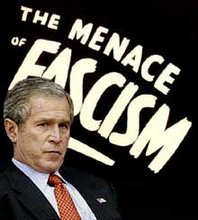


Tuesday, February 13, 2007
Does Anyone Remember What Democracy Means, Anymore....
....or has the dumbing down of America become a complete success?
Published on Monday, February 12, 2007 by TomPaine.com
Discovering What Democracy Means
by Bill Moyers
We are often asked whether our kind of journalism matters. People are curious about why we give so much time to novelists, playwrights, artists, historians, philosophers, composers, scholars, teachers—all of whom we consider public thinkers. The answer is simple: They are worth listening to.
Some years ago I was invited to testify before a House of Representatives committee on funding of the arts and humanities. Opponents were making their skepticism felt toward PBS, the National Endowment of the Arts, and the National Endowment for the Humanities. I had been present at the creation of all three during my time in the White House with Lyndon Johnson, and now all three were once again in the crosshairs of conservatives like Ronald Reagan who were asking: “Why should we subsidize intellectual curiosity?” Reading Shakespeare, it was said, does not erase the budget deficit. Plunging into the history of the 15th century does not ease traffic jams. Listening to Mozart or reading the ancient Greeks does not repair the ozone layer.
We had recently produced two series on poetry called “The Language of Life” and “The Power of the Word.”
Our series on “Joseph Campbell and the Power of Myth” was resonating far and wide, much to the displeasure of sectarian dogmatists. We had created a documentary special called “The Power of the Past,” about how Florence valued art for public, and not merely private, consumption. Our series “A World of Ideas” offered conversations from a wide spectrum of voices: Chinua Achebe, Carlos Fuentes, Northrop Frye, Joseph Heller, Thomas Wolfe, Richard Rodriguez, Bharati Mukherjee, Jonas Salk, William L. Shirer, Tu Wei-ming, Toni Morrison, Joanne Ciulla, Ernesto Cortes, M.F.K. Fisher, Mary Ann Glendon, Leon Kass, and so many others who opened viewers to what my old friend and colleague Eric Sevareid once called “news of the mind.”
Critics said these programs taught no one how to bake bread or build bridges. And they were right. Despite public television—not to mention symphony orchestras, municipal libraries, art museums, and public theaters—crime was still rampant, the divorce rate was soaring, corruption flourished, legislatures remained stubbornly profligate, corporations cooked their books, liberals were loose in the world doing the work of the devil, and you still couldn’t get a good meal on the Metro to Washington. Why persist, some members of Congress wanted to know, when there are so many more urgent needs to be met and so many practical problems to be solved?
I did not have a tried-and-true answer for members of the committee. I could not hand them a ledger showing that ideas have consequences. I chose instead to tell them what they could have learned if they had been listening to the people who appeared in our broadcasts.
They would have heard the novelist Maxine Hong Kingston say: “All human beings have this burden in life to constantly figure out what’s true, what’s authentic, what’s meaningful, what’s dross, what’s a hallucination, what’s a figment, what’s madness. We all need to figure out what is valuable, constantly. As a writer, all I am doing is posing the question in a way that people can see very clearly.”
They would have heard Peter Sellars, the iconoclastic director of Shakespeare in a swimming pool and Mozart in the Bronx, explain that he wants “to put our society up next to these great masterpieces. Are we thinking big enough? Are we generous of spirit? What does our society look like, next to the greatest things a human being ever uttered?”
They would have heard Vartan Gregorian, then head of the New York Public Library, talk about how “in a big library, suddenly you feel humble. The whole of humanity is in front of you. It gives you a sense of cosmic relation, but at the same time a sense of isolation. You feel both pride and insignificance. Here it is, the human endeavor, human aspiration, human agony, human ecstasy, human bravura, human failures—all before you. And you look around and say, ‘Oh, my God! I am not going to be able to know it all.’”
They would have heard the philosopher Martha Nussbaum confess that in one sense there is no message or moral in the ancient Greek dramatists—“simply the revelation of life as seen through the sufferer.” But there is a value, she went on, in seeing “the complexity that’s there, and seeing it honestly, without flinching, and without reducing it to some excessively simple theory.” You begin then, she said, to realize that trying to wrest a good life from the world may lead to tragedy, but you still must try.
They would have heard the filmmaker David Puttnam tell how as a boy he sat through dozens of screenings of A Man for All Seasons, the story of Sir Thomas More’s fatal defiance of Henry VIII: “It allowed me the enormous conceit of walking out of the cinema thinking, ‘Yeah, I think I might have had my head cut off for the sake of a principle.’ I know absolutely I wouldn’t, and I probably never met anyone who would, but the cinema allowed me that conceit. It allowed me for one moment to feel that everything decent in me had come together.”
And they would have heard Mike Rose talk about what it’s like teaching disadvantaged older college students in California. He had recounted to me his battle with a street-wise grownup who was flogging her way through Macbeth. “What does Shakespeare have to do with me?” she would ask. But when she finally got through the play she said to Mike Rose: “You know, people always hold this stuff over you. They make you feel stupid. But now, I’ve read it. I can say, ‘I, Olga, have read Shakespeare.’ I won’t tell you I like it, because I don’t know if I do, or I don’t.
But I like knowing what it’s about.” And Mike Rose said: “The point is not that reading Shakespeare gave her overnight some new discriminating vision of good and evil. What she got was something more precious: a sense that she was not powerless and she was not dumb.”
Some members of Congress got it. They realized that we were talking not only about how to improve our lives as individuals but how to nurture a flourishing democracy. Wouldn’t we have been likely to deal more effectively and quickly with pollution if we had thought about where we fit in the long sweep of the Earth’s story? Could we better tackle our spending priorities as a society if we were prepared to acknowledge and confront the pain of conflicting choices, which the ancient poets knew to be the incubus of agony and the crucible of wisdom?
Might we better decide how to use our wealth and power if we have measured and tested ourselves against the greatest things a human being ever uttered? Are we not likely to be more wisely led by officials who have learned from history and literature that great nations die of too many lies?
Furthermore, if we nurtured the higher affections of our intuition—what has been called our “inner tutor”—might we be more resolute in sparing our children from the appalling accretion of violent entertainment that permeates American life—what Newsweek described as “the flood of mass-produced and mass-consumed violence that pours upon us, masquerading as amusement and threatening to erode the psychological and moral boundary between real life and make-believe?”
We know who the enemies of democracy are. In his Jefferson Lecture the late Cleanth Brooks of Yale identified them as the “bastard muses” propaganda, which pleads, sometimes unscrupulously, for a special cause or issue at the expense of the total truth; sentimentality, which works up emotional responses unwarranted by, and in excess of, the occasion; and pornography, which focuses upon one powerful human drive at the expense of the total human personality. To counter the “bastard muses,” Brooks proposed cultivating the “true muses” of the moral imagination. Not only do these arm us to resist the little lies and fantasies of advertising, the official lies of power, and the ghoulish products of nightmarish minds, they open us to the lived experience of others—to the affirmations of a heightened consciousness—to empathy. So it is that when Lear cried out to Gloucester on the heath: “You see how this world goes.....” Gloucester, who was blind, answered: “I see it feelingly.”
Many years ago we produced a series called “Six Great Ideas” with the didactic, irascible but compelling philosopher and educator, Mortimer Adler—one hour each on liberty, equality and justice, truth, beauty, and goodness. From the deluge of mail I kept two letters that summed up the response. One came from Utah.
“Dear Dr. Adler,
I am writing in behalf of a group of construction workers (mostly, believe it or not, plumbers!) who have finally found a teacher worth listening to. While we cannot all agree whether or not we would hire you as an apprentice, we can all agree that we would love to listen to you during our lunch breaks. I am sure that it is just due to our well-known ignorance as tradesmen that not a single one of us had ever heard of you until one Sunday afternoon we were watching public television and Bill Moyers came on with Six Great Ideas. We listened intensely and soon became addicted and have been ever since. We never knew a world of ideas existed. The study of ideas has completely turned around our impression of education…We have grown to love the ideas behind our country’s composition, and since reading and discussing numerous of your books we have all become devout Constitutionalists. We thank you and we applaud you. We are certain that the praise of a few plumbers could hardly compare with the notoriety that you deserve from distinguished colleagues, but we salute you just the same. We may be plumbers during the day, but at lunch time and at night and on weekend, we are Philosophers at Large. God bless you.”
The second letter came from Marion, Ohio—from the federal prison there. The writer said he had been a faithful viewer of the series, and he described it as “a truly joyous opportunity… for an institutionalized intellectual. After several months in a cell, with nothing but a TV, it was salvation.”
Salvation. Deliverance. Redemption.
I had to think about this a while before I realized what he meant. He was, after all, a lifer. How is it a man condemned to an institution for the remainder of his years finds salvation in a television program? And then one day I came across something Leo Strauss had written. The Greek word for vulgarity, Strauss said, is apeirokalia, the lack of experience in things beautiful. Wherever you are and however it arrives, a liberal education can liberate you from the coarseness and crudity of circumstances beyond your control.
As I watch and listen to our public discourse today, it seems to me we are all “institutionalized” in one form or another, locked away in our separate realities, our parochial loyalties, our fixed ways of seeing ourselves and others. For democracy to prosper it requires us to escape those bonds and join what John Dewey called “a life of free and enriching communion”—to become “We, the People.” The late James W. Carey, one of our noted scholars of communication, wrote that the very concept of “public” could once be defined as “a group of strangers who gather to discuss the news.”
In early America the printing press generated a body of popular knowledge. Towns were small, and taverns, inns, coffeehouses, street corners, and the public greens—the commons—were places where people gathered to discuss what they were reading. These places of public communication “provided the underlying social fabric of the town and, when the Revolution began, made it possible to quickly gather militia companies, to form effective committees of correspondence and of inspection, and to organize and to manage mass town meetings.”
The public was no fiction, Carey said. The public had no life, no social relationships, without news. The news was what activated conversation between strangers, and strangers were assumed to be capable of conversing about the news. In fact, the whole point of the press was not so much to disseminate fact as to assemble people. The press furnished materials for argument—“information,” in the narrow sense—“but the value of the press was predicated on the existence of the public, not the reverse.” The media’s role was humble but serious, and that role was to take the public seriously.
It would be hard to argue that we do so today, except in isolated examples. Our public conversation is mediated by politicians who have mastered “sound bites” sculpted from polling data, by “pundits” whose credibility increases with the frequency of exposure despite being consistently wrong, and “experts” whose authority depends not on reason, evidence or logic but on ideology and affiliation. The public, J.R. Priestly observed, “has been transformed into a vast crowd, a permanent audience, waiting to be amused.”
What kind of “public intellectual” survives in such an environment? Turn on the television and you’re likely to see them talking about the war in Iraq, for which they were cheerleaders, or the upcoming presidential race—still a year away. Notice where they sit—in a Times Square studio or a media stage in Washington, their messages beamed across the public airwaves courtesy of huge media conglomerates whose intent is not the informing of citizens but the maximizing of profit through the delivery to advertisers of mass audiences addicted to consumerism.
How forlorn a figure Socrates of Athens would be in this environment. Arguably the first public intellectual, proclaimed by the oracle of Delphi as the wisest of men, Socrates went about Athens on a divine mandate of self-reflection, some celestial spark glowing in his breast, some voice whispering in his head that only he could hear. Led by this voice he went to the wise men and great poets and master technicians of the city to cross-examine them, casting doubt on their knowledge by exposing their received opinions and unexamined assumptions, the deep-seated corruption of thought which leads to grave moral danger; or sometimes simply pointing to the common failing of so many experts: that of mistaking their expertise in one subject or practice for universal wisdom about the human condition.
Exposing the ignorance of the leaders was Socrates’ way of helping the “cause of God,” as he explained when he was put on trial. He reasoned thus from his interviews with them that the wisest of men—as the oracle, remember, described Socrates to be—is the one who is most conscious of his own ignorance, most aware of the limits of knowledge which are introduced by our limited methods of obtaining knowledge. Meletus, the main accuser featured in Socrates’ Apology (as told by Plato), was a young religious fanatic who charged Socrates with believing in deities of his own invention rather than the gods recognized by the state. Scholars now believe that Meletus was simply a “front man” for political interests, put forward to stir the public against the philosopher—a forerunner of modern punditry, or maybe something quite like today’s political fundamentalism.
I sadly think of [former Secretary of State] Colin Powell addressing the United Nations in February 2003, with his artist’s renderings of those trailers that were supposed to be mobile biological warfare factories; and I think of all the rest of the cooked intelligence that sold so many of our public intellectuals on invading Iraq. It was too crude to even qualify as false wisdom on the Socratic model, really, but the resulting disaster—as great a blunder as Vietnam to which many of the same mistakes could be assigned—would result from relying on the knowledge of self-interested experts and deluded leaders. When they sentenced Socrates to death, he reminded them that they were proving how groundless knowledge made it impossible to escape from doing wrong. Succumbing to wishful thinking that leads to disastrous self-delusion, he pointed out, is the only real death. “When I leave this court,” he said of his jurors, “I will go away condemned by you to death.” But his accusers, he told them, “will go away convicted by truth herself….”
The Hebrew prophet was another kind of public intellectual, one who was also condemned and persecuted by the political elites he addressed. A century before Socrates, one of those prophets—Jeremiah—came from a small village into Jerusalem to preach repentance to a faithless Israel, with its houses full of treachery, and its rich kings and princes who gave no justice to the poor widow and the fatherless child.
And of course, near the end of his life, Jesus of Nazareth also went to Jerusalem, to preach the same message in an even more dangerous public way, confronting the ruling elites before great crowds on the Temple grounds. When he predicted their imminent destruction in his parable about the wicked tenants who hoarded the fruits of creation, his fate was sealed.
Jesus would not be crucified today. The prophets would not be stoned. Socrates would not drink the hemlock. They would instead be banned from the Sunday talk shows and op-ed pages by the sentries of establishment thinking who guard against dissent with the one weapon of mass destruction most cleverly designed to obliterate democracy—the rubber stamp.
A stock broker who makes bad picks doesn’t last too long. A baseball player in an extended slump gets traded. A worker made redundant by cheaper labor abroad or by a new machine—well, she’s done for, too. But four years after the invasion of Iraq—the greatest blunder in foreign policy since Vietnam—the public apologists and advocates of the war flourish in the media, while the costs of their delusions accrue in body counts and lost treasure. A public that detests the war is relegated to the bleachers, fated to watch from afar the playing out by political and media elites of a game that has been rigged.
Yet the salvation of democracy requires a public aroused by the knowledge of what is being done to them in their name. Here is the crisis of the times as I see it: We talk about problems, issues, policies, but we don’t talk about what democracy means—what it bestows on us—the revolutionary idea that it isn’t just about the means of governance but the means of dignifying people so they become fully free to claim their moral and political agency. “I believe in Democracy because it releases the energies of every human being.” So spoke Woodrow Wilson, the namesake of your foundation and, I would suggest, still your guiding spirit.
The only PhD ever to reach the White House was a public intellectual and genuine reformer who understood what a major battleground higher education was. He learned what the political struggle was about while a professor and later the president of Princeton, where he lost his share of institutional battles with wealthy alumni who largely controlled the university’s development, and the nation beyond.
In his forgotten political testament The New Freedom (1913), Wilson took up something of the ancient, critical task of the public intellectual, a fact all the more remarkable in that he was president at the time. Louis Brandeis, the people’s lawyer, was his inspiration and the source of this vision, but Wilson stood for it, right there at the center of power. “Don’t deceive yourselves for a moment as to the power of the great interests which now dominate our development.” “No matter that there are men in this country big enough to own the government of the United States. They are going to own it if they can.” But “there is no salvation,” he said, “in the pitiful condescensions of industrial masters. Guardians have no place in a land of freemen. Prosperity guaranteed by trustees has no prospect of endurance.” From his stand came progressive income taxation, the federal estate tax, tariff reform, and a resolute spirit “to deal with the new and subtle tyrannies according to their deserts.”
Wilson described his reformism in plain English no one could fail to understand: “The laws of this country do not prevent the strong from crushing the weak.” That was true in 1800, it was true in 1860, in 1892, in 1912, and 1932; it was true in 1964, and it is true today. We have often been pressed to the limit, the promise of the Declaration and the ideals of the Gettysburg Address ignored or trampled upon and our common interests brought low. But every time there came a great wave of reform, and I believe one is coming again, helped along by the bright young people this foundation is nurturing.
We cannot build a political consensus or a nation across the vast social divides that mark our country today. Consensus arises from bridging that divide and making society whole again, the fruits of freedom and prosperity made available to the least among us. What we have to determine now, as Wilson said in his day, “is whether we are big enough…whether we are free enough, to take possession again of the government which is our own. We haven’t had free access to it, our minds have not touched it by way of guidance, in half a generation, and now we are engaged in nothing less than the recovery of what was made with our own hands, and acts only by our delegated authority.”
As we face that challenge even today, a story about Helen Keller is worth remembering. Toward the end of her career, as she was speaking at a Midwestern college, a student asked: “Miss Keller, is there anything that could have been worse than losing your sight?” Helen Keller replied: “Yes, I could have lost my vision.”
Bill Moyers is chairman of the Schumann Center for Media and Democracy and a journalist for the Public Broadcasting System. On February 7, the Woodrow Wilson National Fellowship Foundation presented Judith and Bill Moyers the first Frank E. Taplin, Jr. Public Intellectual Award for “extraordinary contributions to public cultural, civic and intellectual life.” The above is an excerpt from his remarks upon accepting the award.
(In accordance with Title 17 U.S.C. Section 107, this material is distributed without profit to those who have expressed a prior interest in receiving the included information for research and educational purposes. I.U. has no affiliation whatsoever with the originator of this article nor is I.U endorsed or sponsored by the originator.)
The Nazis, Fascists and Communists were political parties before they became enemies of liberty and mass murderers.


Surge Into Hell
So far, what exactly is surging in Iraq?
U.S. casualties, which are at a post-invasion high: According to an Associated Press analysis, more American troops were "killed in combat in Iraq over the past four months -- at least 334 through Jan. 31 -- than in any comparable stretch since the war began"; and February, with 34 American deaths in its first nine days, is exceeding this pace. These loses are largely due to roadside bombs (IEDs) and to the fact that U.S. troops are now engaged in almost continuous urban warfare. Before the invasion of Iraq, the possibility of fighting an urban war in the Iraqi capital's streets and alleys was the American high command's personal nightmare. Now, it's their reality -- and the President's surge plan can only make it more nightmarish.
Downings of U.S. helicopters, six in less than three weeks: With road travel, even in convoys, now so dangerous, thanks to IEDs, the helicopter has been a transport workhorse for the U.S. military in Iraq. The sudden surge in downed helicopters raises the specter of new tactics by the insurgents as well as the possibility that they have new, advanced missiles in their hands. It raises a warning flag of the first order. Let's not forget that the beginning of the end of the Russian occupation of Afghanistan in the 1980s came when CIA-supplied Stinger missiles began to take down Russian helicopters in significant numbers.
Iraqi and American no-shows: The first Iraqi Army units promised by Prime Minister Nouri al-Maliki for the beginning of the February surge in the capital have shown up. But as with everything involving that Green Zone government and Iraqi forces generally, there is a catch: The initial Iraqi brigades are evidently at only 55-65% troop strength. Undoubtedly, these no-shows are Kurds and Shiites who didn't want to leave their home areas to fight in Baghdad. In addition, according to McClatchy's Tom Lasseter, who went out on patrol with Iraqi forces in Baghdad recently, despite the $15.4 billion the American military has so far poured into "standing them up," they are militia-infiltrated, incompetent, and exceedingly corrupt.
"Two weeks with American units that patrolled with Iraqi forces in west and east Baghdad found," he wrote, "that Iraqi officers sold new uniforms meant for their troops, and that their soldiers wore plastic shower sandals while manning checkpoints, abused prisoners and solicited bribes to free suspects they'd captured." Nor have most American troops designated to surge into Baghdad arrived yet. Louise Roug of the Los Angeles Times estimates that only 20% of the promised surge forces, Iraqi and American -- about 5,000 troops in all -- have even made it to the capital. (The fifth and final American brigade in this plan isn't scheduled to arrive until May!) In the meantime, senior American diplomats, voting with their analytic feet, are resisting taking posts in Iraq, assignments which, unlike military personnel, they are not obliged to accept. (They are evidently doing so on the same basic what-the-hell-am-I-going-there-for principle as the Kurdish and Shiite troops.)
Iraqi refugees: One out of every seven Iraqis has by now "fled his or her home or sought refuge abroad," reports the U.N. High Commissioner for Refugees (UNHCR). "Every day," according to McClatchy's Warren Strobel, "violence displaces an estimated 1,300 more Iraqis in the country; every month, at least 40,000." According to UN officials, in surging Iraq, things are only expected to worsen. "The UNHCR projects that the number of internally displaced in Iraq could grow to about 2.7 million by year's end." An in-depth assessment conducted by the International Medical Corps, a humanitarian organization, suggests that "over one million residents of Baghdad could be driven from their homes in the next six months if Iraq's sectarian violence continues at its current level." That would be a surge indeed.
The devastation of Sunni neighborhoods in Baghdad: Some of these are being turned into ghost areas, as Ilana Ozernoy and Ali Hamdani indicate in a limited survey of one street in a Sunni area of the capital that appeared recently in the Atlantic. Other accounts seem to verify this. For instance, New York Times reporter Damien Cave, in a piece on how the vast Shiite slum of Sadr City is beginning to thrive under the protection of Moqtada al-Sadr's Mahdi Army and with reconstruction money from the Maliki government, comments in passing that, in contrast, "middle-class Sunni enclaves are withering into abandoned ghettos, starved of government services."
Massive publicity about the details of the slow-to-happen surge operation: These have been offered copiously by the supposedly security-conscious Bush administration, giving Sunnis and Shiites opportunity to prepare both defenses and evasions. It has meant, according to early American military assessments, that in the first search operations in key neighborhoods, they are finding little or nothing. ("'I don't know if it's bad information, bad intelligence, of if they knew we were coming and left,' said Capt. Isaac Torres of the Army's 3rd Brigade Stryker Combat Team. ‘They were all dry holes.'")
Oh, as for the surge plan itself, Michael Schwartz, whose Tomdispatch pieces on U.S. and Iraqi strategies and tactics in the complex struggle engulfing that country, have regularly been significantly ahead of the mainstream analytic curve, points out that the President's new surge plan has already been tested in the last few weeks and found to be most successful -- in further depopulating Baghdad neighborhoods as well as creating more destruction, greater sectarian violence, and new levels of animosity. His is a devastating piece on another bit of Bush administration planning that takes us right through the "gates of hell." Tom
Baghdad Surges into Hell
First Results from the President's Offensive
By Michael Schwartz
In his Iraq policy address on January 10, President Bush promised three new initiatives: a "surge" of American troops accompanied by a new "clear, hold, and build" strategy in Sunni insurgent strongholds; an offensive against Shia militias, particularly the Sadrist Mahdi Army which "U.S. military officials now identify as the greatest security threat in Iraq"; and forceful action to prevent Iran from further increasing its influence in Iraq and the Middle East.
Events in the last few weeks make it clear that all three prongs of this strategy are being enacted, even while the Congress is engaged in a prolonged debate over its (non-binding) opposition to the "surge" part of the new regional plan.
The "surge" strategy was actually initiated one day before the speech was even given -- in an offensive on Baghdad's Haifa Street that briefly dominated the headlines. The new initiative aimed at Shia militias appears to have begun with a battle outside of Najaf in which about 200 members of the Al-Hawatim and al-Khazali tribes were killed by American and Iraqi forces -- apparently because the tribal militias had been involved in a growing (if under-reported) "anti-U.S. and anti-Baghdad" guerrilla war that "has been spreading like wildfire" in the Shia south. And the new aggressiveness towards Iran is now being played out not only in Iraq, but in the increasingly credible threats of an American or Israeli, or combined American and Israeli, air assault on Iran itself.
We may have to wait weeks, or even months, to evaluate the consequences of American actions against those Shia militias and Iran. But the Haifa Street offensive, now almost a month old, already offers us a vivid portrait of the horrific consequences that are the likely result of the Sunni insurgent part of the President's "surge" strategy.
Haifa Street as an Enemy Stronghold
Haifa Street, a moderately prosperous two-mile-long avenue just outside the American-controlled Green Zone in Baghdad, has been a center of Sunni resistance since early in the war. Despite the imagery of constant violence associated with the neighborhood in the media, it has, like most insurgent areas, largely been quiet -- except when American troops attempted to pacify it.
Soon after the fall of Baghdad, anti-American forces became the military and political leadership in the Haifa Street neighborhood, setting up local militias to combat a wave of criminal violence that swept through the capital after the Americans dismantled the Iraqi military and police. By 2004, the insurgents were the local government in the area, institutionalizing their form of Sunni fundamentalism but at that early date still tolerating the presence of a Shia minority, who continued to live peacefully among the Sunni majority.
Sustained violence only occurred when American patrols entered the area. Then snipers, IEDs, and gun battles would -- often successfully -- be brought into play to divert the Americans from their goal of arresting or killing suspected insurgents. The ferocity of the resistance led American soldiers to dub the area "Death Street." After one abortive attempt at conquering the neighborhood, the number of U.S. patrols dwindled as Haifa Street became one of many virtual "no-go" areas in the capital (not to speak of the country), "off-limits for American and even Iraqi soldiers."
In November 2004, an IED exploded near one of those occasional American patrols, demolishing a Humvee and triggering a cascading set of events that culminated in an American helicopter shooting into a crowd and killing Mazen Tomeizi, a Palestinian reporter for the al Arabiya satellite news network of Dubai. Because Tomeizi was filming his follow-up to the earlier incident when he was shot, his death became one of the most horrific, widely viewed images of the war -- at least in the Middle East -- with his blood splattering on the camera as he cried, "I'm going to die, I'm going to die." This incident, apparently, convinced the American military command to make another attempt to pacify Haifa Street.
Under the headline, "A Violent Street Finds Calm," Christian Science Monitor reporter Scott Peterson described how the Americans took control of the neighborhood in a six-month military offensive, involving "rooftop snipers" and other "tough measures that reportedly included abuse of detainees." This running battle, which began in January 2005, qualifies as the most violent period in recent Haifa Street history -- until the latest offensive. But in American reportage, the emphasis was on the pacification and quiescence achieved, once -- by the late spring of 2005 -- the Americans had suppressed the active resistance.
Sprinkled in with the positive stories of grateful residents welcoming the end of the fighting were telltale signs of an unpopular military occupation: Some residents would "glower" when American troops passed by; "tensions [were] a little higher" whenever American troops entered a street; and graffiti proclaiming, "Long Live the Mujahideen," were quickly restored after American soldiers tried to obliterate them. Nevertheless, in June of 2005, ABC reporter Nick Watt declared that "Death Street is indeed a thing of the past."
That battle, now two years past, was a perfect example of how the new "clear, hold, and build" strategy that President Bush announced in his recent speech is supposed to work. An American clearing-and-holding operation was to be followed by a transfer of power to Iraqi military units, supposedly already "stood up" through intensive American training and advising. This particular turn-over operation was hailed at the time by occupation authorities as "a high-profile example of how Iraqi National Guard troops -- trained, supported, and let loose by US advisers -- can claw back territory from insurgents." It was heralded as a giant step forward, "a template for spreading government control across Iraq and undercutting the insurgency."
The template, however, ultimately collapsed because the Haifa Street guerrillas did what guerillas normally do: They melted into the population and awaited new opportunities to attack the occupation. Just before the declarations of success were issued, they initiated their own "surge of violence" before again melting into the neighborhood. And even at the moment when ABC reporter Watt was offering an obituary to "Death Street," American troops and their Iraqi protégés were conducting dozens of weekly patrols, breaking into homes in the Haifa Street neighborhood to arrest or kill suspected insurgents. These patrols, together with a massive increase in unemployment, the precipitous deterioration of public services, and economic shocks generated by the removal of government food and fuel subsidies only led to increased support for, as well as membership in, the resistance.
This ever-growing resistance insured that the "build" part of "clear, hold, and build" remained unbuilt. In February 2006, the Americans finally left without securing the neighborhood, probably because the troops were needed for a new Baghdad-wide offensive, which began at about that time.
Soon after, the guerrillas resurfaced and expelled the Iraqi army, thus putting an end to all military patrols, home invasions, arrests, and detentions as well as the sporadic fighting they had generated. Haifa Street once again became a quiescent enemy enclave, and -- with the rise of sectarian violence -- was suspected of "harboring terrorists" of an anti-Shiite variety. As New York Times reporter Marc Santora put it:
"For the past two years, [Haifa Street] has been relatively quiet, but in recent months, as the sectarian fighting has intensified, Iraqi and American military officials suspected it was being used as a base of operations for insurgents concentrating on the Shiite civilian population and American forces."
The Americans Re-enter, Bringing Sectarian Violence with Them
Haifa Street's calm was sustained even while ferocious sectarian violence erupted elsewhere in the capital. Ethnic cleansing, so prevalent in other parts of the city, had not yet invaded the neighborhood and most of the Shia members of the community remained in their homes.
When adjoining Shia neighborhoods also calmed down, an uneasy but genuine peace settled over the area. The foundation of this truce was no mystery: Haifa Street militia members, freed from defensive fights against the American military and strengthened by their victory over the Iraqi military, were mobilized to protect and defend the community against Shia death squads. In fact, all around Baghdad militias have become a critical protection for Sunnis. As Asia Times commentator Mahan Abedin put it, "The residents widely welcome the presence of the guerrillas as vital protection against Shi'ite paramilitaries (often operating as Iraqi security forces)."
The work of the local mujaheddin was complemented by the work of Moqtada al-Sadr's Mahdi's army in neighboring Shia communities. Since al-Qaeda in Mesopotamia began its car-bombing campaign against Shia civilians in late 2004, the Mahdis had been patrolling the vast Shiite slum of Sadr city, and -- for the most part -- successfully preventing such suicide bombings. As the violence spread in Baghdad, the Mahdis also spread, and their arrival in the Shia neighborhoods around Haifa Street insured mutual deterrence on both sides of the sectarian divide.
Until the Americans arrived.
In early January, as part of President Bush's new strategy of attacking Shia militias, American troops entered a border area near Haifa Street and arrested a "senior member" of the Mahdi Army, apparently the local commander in that part of the city. This attack seems to have disrupted the Mahdis' protective patrols and left Shia communities in the area increasingly vulnerable to terrorist attack. Quoting an American military official, New York Times journalist Santora reported:
These attacks may or may not have originated in the Haifa Street neighborhood, but when 27 Shia bodies were dumped there on January 6, this became the occasion for the first American offensive in Bush's not-quite-yet-announced "surge." As U.S. military spokesman Lieutenant Colonel Scott Bleichwehl explained, "It's an area that needed to be brought back under Iraqi security control."
Ali al-Dabaggh, a spokesman for Iraqi Prime Minister Nouri al-Maliki, was blunter: "This area must be cleansed," he said.
Haifa Street residents believed al-Dabaggh, particularly after the American commanders mentioned the 2005 battle of Tal Afar as the exemplar of their new strategy. In Tal Afar, a city of about 300,000 near the Syrian border, the entire population was moved out as part of the pacification process.
Iraqi military forces were sent in to Haifa Street first, but within a couple of days, they had been repulsed. This battle, and the growing sectarian violence in bordering areas, shattered the fragile foundation of sectarian peace within Haifa Street, and Shia residents soon began receiving threats that they would be killed "if they did not leave immediately."
Before dawn on January 9, the Americans and Iraqis attacked in force, backed by helicopters and jets. Washington Post reporters Sudarsan Raghavan and Joshua Partlow offered this description of the battle, quoting Major Jesse Pearson and Sergeant Israel Schaeffer:
"In the pre-dawn darkness, the joint forces took control of the buildings surrounding Tallil Square, a key target of the operation.
"'We showed up in their living room for breakfast,' Pearson said.
"About 7 a.m., the trouble began. 'As soon as the sun came up, the insurgents began shooting,' he said.
"'We started taking it from all sides,' Schaeffer recalled.
"From rooftops and doorways, the gunmen fired AK-47 assault rifles and machine guns. Snipers also were targeting the U.S. and Iraqi soldiers. U.S. soldiers started firing back with 50-caliber machine guns mounted on their Stryker armored vehicles. They used TOW missiles and Mark-19 grenade launchers. The F-15 fighter jets strafed rooftops with cannons, while the Apaches fired Hellfire missiles."
After 11 hours of death and devastation, the Americans prevailed and 1,000 American and Iraqi troops began house-to-house searches, arresting and killing suspected insurgents.
The Denouement
One week later, McClatchy News reporters Nancy Youssef and Zaineb Obeid visited Haifa Street to survey the results of the first offensive action in the President's new strategy. Partly what they found was a depressingly familiar scene: massive destruction, police state conditions, widespread suffering, and ongoing fighting. But partly they found something new: Even as the threatened ethnic cleansing of Shias in the neighborhood finally appeared to be completed, there was now a contrary campaign -- mounted by the mainly Shiite Iraqi Army with the support of the US military -- to expel the Sunni majority:
"'They are shooting randomly,' he said. 'Today, they shot Raghad Marwan, a 28-year-old young woman who was trying to get food. She got a bullet in her shoulder, and now we don't know how to get her to the hospital.'
"He said several families were evacuating the neighborhood: 'I can see the families with their children walking in the narrow streets of the neighborhood taking nothing but small bags.'
'The new security plan has given militias permission to go into our houses and apartments and kill people,' Abu Mohammed said. 'This plan targets Sunnis and forces them to leave their homes. And they are.'"
The next day, CBS News reporter Lara Logan provided horrifying visual evidence of conditions on Haifa Street, in a report that only appeared on the CBS website. It showed demolished buildings, deserted neighborhoods, and the results of sectarian torture on both sides. It concluded with a resident who blamed the Americans for the plight of his community:
According to the McClatchy reporters, "A U.S. military spokesman said he had no reason to believe Haifa Street residents' accounts." U.S. Ambassador Zalmay Khalilzad told a press conference, ''I am encouraged by what I have seen."
One week later, the battle for Haifa Street continued. More and more residents were fleeing the area, trying to escape American airstrikes, avoid the crossfire between the Americans and the insurgents, or elude the death threats from either side of the sectarian divide.
Reflecting on the battle for a neighborhood that "the United States has now fought to regain from a mysterious enemy at least three times in the past two years," Sgt. First Class Marc Biletski told New York Times reporters Damien Cave and James Glanz, "This place is a failure…. Every time we come here, we have to come back."
In the meantime, the departing Sunni population viewed the still unfinished battle as the latest episode in American sponsorship of ethnic cleansing. During the first day of fighting, Harith al-Dari, the leader of the Association of Muslim Scholars (AMS), the political arm of the Sunni resistance, called it, "a bloody sectarian massacre." Nine days later, an AMS spokesman read the names of 12 men who had been killed in the battle on al-Jazeera Television and then commented:
The final word for the present was perhaps spoken by another inhabitant of the area, commenting on the ongoing assassination of neighborhood residents by the Iraqi military and police: "The Americans are doing nothing, as if they are backing the militias. This military siege is killing us... If this plan continues for one more week, I don't think you will find one family left on Haifa Street."
The Early Returns Are Not Encouraging
Even before the Americans arrived on Haifa Street in January as the vanguard of the new Bush strategy to pacify Baghdad, previous experience strongly suggested that the effort was doomed to failure. A month later, that expectation has certainly been fulfilled.
Unfortunately, there are some genuinely new, grim elements to the battle for Haifa Street; elements that threaten to make the coming Baghdad-wide "surge" dramatically more damaging than its predecessors. To begin with, there is the far greater application of American airpower; bombing runs and high caliber assaults from helicopter gunships have dramatically increased the death and destructiveness of the still ongoing battle, rendering much of Haifa Street an unlivable graveyard.
Added to this is the systematic and largely successful effort of the Sunni jihadists to expel the Shia minority from the area, an effort triggered by the initial American incursions. And then, overlaid on top of the cleansing of the Shia minority, came the contrary cleansing of the Sunni majority; engineered by the Iraqi military that arrived in the neighborhood with the Americans, and conducted their own purge with the support or acquiescence of the U.S. military.
The Haifa Street battle sadly shows that Bush's new strategy will measurably increase the violence in Baghdad above already intolerable levels. With more troops at their disposal, American generals will try to pacify many more neighborhoods like Haifa Street and cities like Tal Afar that need "to be brought back under Iraqi security control." And when they do this, they will bring the same mix of horror that they brought to Haifa Street, including brutal air power, house-to-house searches and fighting, sectarian violence, massive dislocation, and ethnic cleansing.
Like the other campaigns initiated by the U.S. occupation of Iraq, this new strategy will make things measurably worse.
Michael Schwartz, Professor of Sociology and Faculty Director of the Undergraduate College of Global Studies at Stony Brook University, has written extensively on popular protest and insurgency as well as on American business and government dynamics. His books include Radical Protest and Social Structure, and Social Policy and the Conservative Agenda (edited with Clarence Lo). His work on Iraq has appeared on numerous Internet sites including Tomdispatch.com, Asia Times, Mother Jones.com, and ZNet; and in print in Contexts, Against the Current, and Z Magazine. His email address is Ms42@optonline.net.
Copyright 2007 Michael Schwartz
(In accordance with Title 17 U.S.C. Section 107, this material is distributed without profit to those who have expressed a prior interest in receiving the included information for research and educational purposes. I.U. has no affiliation whatsoever with the originator of this article nor is I.U endorsed or sponsored by the originator.)
The Nazis, Fascists and Communists were political parties before they became enemies of liberty and mass murderers.
U.S. casualties, which are at a post-invasion high: According to an Associated Press analysis, more American troops were "killed in combat in Iraq over the past four months -- at least 334 through Jan. 31 -- than in any comparable stretch since the war began"; and February, with 34 American deaths in its first nine days, is exceeding this pace. These loses are largely due to roadside bombs (IEDs) and to the fact that U.S. troops are now engaged in almost continuous urban warfare. Before the invasion of Iraq, the possibility of fighting an urban war in the Iraqi capital's streets and alleys was the American high command's personal nightmare. Now, it's their reality -- and the President's surge plan can only make it more nightmarish.
Downings of U.S. helicopters, six in less than three weeks: With road travel, even in convoys, now so dangerous, thanks to IEDs, the helicopter has been a transport workhorse for the U.S. military in Iraq. The sudden surge in downed helicopters raises the specter of new tactics by the insurgents as well as the possibility that they have new, advanced missiles in their hands. It raises a warning flag of the first order. Let's not forget that the beginning of the end of the Russian occupation of Afghanistan in the 1980s came when CIA-supplied Stinger missiles began to take down Russian helicopters in significant numbers.
Iraqi and American no-shows: The first Iraqi Army units promised by Prime Minister Nouri al-Maliki for the beginning of the February surge in the capital have shown up. But as with everything involving that Green Zone government and Iraqi forces generally, there is a catch: The initial Iraqi brigades are evidently at only 55-65% troop strength. Undoubtedly, these no-shows are Kurds and Shiites who didn't want to leave their home areas to fight in Baghdad. In addition, according to McClatchy's Tom Lasseter, who went out on patrol with Iraqi forces in Baghdad recently, despite the $15.4 billion the American military has so far poured into "standing them up," they are militia-infiltrated, incompetent, and exceedingly corrupt.
"Two weeks with American units that patrolled with Iraqi forces in west and east Baghdad found," he wrote, "that Iraqi officers sold new uniforms meant for their troops, and that their soldiers wore plastic shower sandals while manning checkpoints, abused prisoners and solicited bribes to free suspects they'd captured." Nor have most American troops designated to surge into Baghdad arrived yet. Louise Roug of the Los Angeles Times estimates that only 20% of the promised surge forces, Iraqi and American -- about 5,000 troops in all -- have even made it to the capital. (The fifth and final American brigade in this plan isn't scheduled to arrive until May!) In the meantime, senior American diplomats, voting with their analytic feet, are resisting taking posts in Iraq, assignments which, unlike military personnel, they are not obliged to accept. (They are evidently doing so on the same basic what-the-hell-am-I-going-there-for principle as the Kurdish and Shiite troops.)
Iraqi refugees: One out of every seven Iraqis has by now "fled his or her home or sought refuge abroad," reports the U.N. High Commissioner for Refugees (UNHCR). "Every day," according to McClatchy's Warren Strobel, "violence displaces an estimated 1,300 more Iraqis in the country; every month, at least 40,000." According to UN officials, in surging Iraq, things are only expected to worsen. "The UNHCR projects that the number of internally displaced in Iraq could grow to about 2.7 million by year's end." An in-depth assessment conducted by the International Medical Corps, a humanitarian organization, suggests that "over one million residents of Baghdad could be driven from their homes in the next six months if Iraq's sectarian violence continues at its current level." That would be a surge indeed.
The devastation of Sunni neighborhoods in Baghdad: Some of these are being turned into ghost areas, as Ilana Ozernoy and Ali Hamdani indicate in a limited survey of one street in a Sunni area of the capital that appeared recently in the Atlantic. Other accounts seem to verify this. For instance, New York Times reporter Damien Cave, in a piece on how the vast Shiite slum of Sadr City is beginning to thrive under the protection of Moqtada al-Sadr's Mahdi Army and with reconstruction money from the Maliki government, comments in passing that, in contrast, "middle-class Sunni enclaves are withering into abandoned ghettos, starved of government services."
Massive publicity about the details of the slow-to-happen surge operation: These have been offered copiously by the supposedly security-conscious Bush administration, giving Sunnis and Shiites opportunity to prepare both defenses and evasions. It has meant, according to early American military assessments, that in the first search operations in key neighborhoods, they are finding little or nothing. ("'I don't know if it's bad information, bad intelligence, of if they knew we were coming and left,' said Capt. Isaac Torres of the Army's 3rd Brigade Stryker Combat Team. ‘They were all dry holes.'")
Oh, as for the surge plan itself, Michael Schwartz, whose Tomdispatch pieces on U.S. and Iraqi strategies and tactics in the complex struggle engulfing that country, have regularly been significantly ahead of the mainstream analytic curve, points out that the President's new surge plan has already been tested in the last few weeks and found to be most successful -- in further depopulating Baghdad neighborhoods as well as creating more destruction, greater sectarian violence, and new levels of animosity. His is a devastating piece on another bit of Bush administration planning that takes us right through the "gates of hell." Tom
Baghdad Surges into Hell
First Results from the President's Offensive
By Michael Schwartz
In his Iraq policy address on January 10, President Bush promised three new initiatives: a "surge" of American troops accompanied by a new "clear, hold, and build" strategy in Sunni insurgent strongholds; an offensive against Shia militias, particularly the Sadrist Mahdi Army which "U.S. military officials now identify as the greatest security threat in Iraq"; and forceful action to prevent Iran from further increasing its influence in Iraq and the Middle East.
Events in the last few weeks make it clear that all three prongs of this strategy are being enacted, even while the Congress is engaged in a prolonged debate over its (non-binding) opposition to the "surge" part of the new regional plan.
The "surge" strategy was actually initiated one day before the speech was even given -- in an offensive on Baghdad's Haifa Street that briefly dominated the headlines. The new initiative aimed at Shia militias appears to have begun with a battle outside of Najaf in which about 200 members of the Al-Hawatim and al-Khazali tribes were killed by American and Iraqi forces -- apparently because the tribal militias had been involved in a growing (if under-reported) "anti-U.S. and anti-Baghdad" guerrilla war that "has been spreading like wildfire" in the Shia south. And the new aggressiveness towards Iran is now being played out not only in Iraq, but in the increasingly credible threats of an American or Israeli, or combined American and Israeli, air assault on Iran itself.
We may have to wait weeks, or even months, to evaluate the consequences of American actions against those Shia militias and Iran. But the Haifa Street offensive, now almost a month old, already offers us a vivid portrait of the horrific consequences that are the likely result of the Sunni insurgent part of the President's "surge" strategy.
Haifa Street as an Enemy Stronghold
Haifa Street, a moderately prosperous two-mile-long avenue just outside the American-controlled Green Zone in Baghdad, has been a center of Sunni resistance since early in the war. Despite the imagery of constant violence associated with the neighborhood in the media, it has, like most insurgent areas, largely been quiet -- except when American troops attempted to pacify it.
Soon after the fall of Baghdad, anti-American forces became the military and political leadership in the Haifa Street neighborhood, setting up local militias to combat a wave of criminal violence that swept through the capital after the Americans dismantled the Iraqi military and police. By 2004, the insurgents were the local government in the area, institutionalizing their form of Sunni fundamentalism but at that early date still tolerating the presence of a Shia minority, who continued to live peacefully among the Sunni majority.
Sustained violence only occurred when American patrols entered the area. Then snipers, IEDs, and gun battles would -- often successfully -- be brought into play to divert the Americans from their goal of arresting or killing suspected insurgents. The ferocity of the resistance led American soldiers to dub the area "Death Street." After one abortive attempt at conquering the neighborhood, the number of U.S. patrols dwindled as Haifa Street became one of many virtual "no-go" areas in the capital (not to speak of the country), "off-limits for American and even Iraqi soldiers."
In November 2004, an IED exploded near one of those occasional American patrols, demolishing a Humvee and triggering a cascading set of events that culminated in an American helicopter shooting into a crowd and killing Mazen Tomeizi, a Palestinian reporter for the al Arabiya satellite news network of Dubai. Because Tomeizi was filming his follow-up to the earlier incident when he was shot, his death became one of the most horrific, widely viewed images of the war -- at least in the Middle East -- with his blood splattering on the camera as he cried, "I'm going to die, I'm going to die." This incident, apparently, convinced the American military command to make another attempt to pacify Haifa Street.
Under the headline, "A Violent Street Finds Calm," Christian Science Monitor reporter Scott Peterson described how the Americans took control of the neighborhood in a six-month military offensive, involving "rooftop snipers" and other "tough measures that reportedly included abuse of detainees." This running battle, which began in January 2005, qualifies as the most violent period in recent Haifa Street history -- until the latest offensive. But in American reportage, the emphasis was on the pacification and quiescence achieved, once -- by the late spring of 2005 -- the Americans had suppressed the active resistance.
Sprinkled in with the positive stories of grateful residents welcoming the end of the fighting were telltale signs of an unpopular military occupation: Some residents would "glower" when American troops passed by; "tensions [were] a little higher" whenever American troops entered a street; and graffiti proclaiming, "Long Live the Mujahideen," were quickly restored after American soldiers tried to obliterate them. Nevertheless, in June of 2005, ABC reporter Nick Watt declared that "Death Street is indeed a thing of the past."
That battle, now two years past, was a perfect example of how the new "clear, hold, and build" strategy that President Bush announced in his recent speech is supposed to work. An American clearing-and-holding operation was to be followed by a transfer of power to Iraqi military units, supposedly already "stood up" through intensive American training and advising. This particular turn-over operation was hailed at the time by occupation authorities as "a high-profile example of how Iraqi National Guard troops -- trained, supported, and let loose by US advisers -- can claw back territory from insurgents." It was heralded as a giant step forward, "a template for spreading government control across Iraq and undercutting the insurgency."
The template, however, ultimately collapsed because the Haifa Street guerrillas did what guerillas normally do: They melted into the population and awaited new opportunities to attack the occupation. Just before the declarations of success were issued, they initiated their own "surge of violence" before again melting into the neighborhood. And even at the moment when ABC reporter Watt was offering an obituary to "Death Street," American troops and their Iraqi protégés were conducting dozens of weekly patrols, breaking into homes in the Haifa Street neighborhood to arrest or kill suspected insurgents. These patrols, together with a massive increase in unemployment, the precipitous deterioration of public services, and economic shocks generated by the removal of government food and fuel subsidies only led to increased support for, as well as membership in, the resistance.
This ever-growing resistance insured that the "build" part of "clear, hold, and build" remained unbuilt. In February 2006, the Americans finally left without securing the neighborhood, probably because the troops were needed for a new Baghdad-wide offensive, which began at about that time.
Soon after, the guerrillas resurfaced and expelled the Iraqi army, thus putting an end to all military patrols, home invasions, arrests, and detentions as well as the sporadic fighting they had generated. Haifa Street once again became a quiescent enemy enclave, and -- with the rise of sectarian violence -- was suspected of "harboring terrorists" of an anti-Shiite variety. As New York Times reporter Marc Santora put it:
"For the past two years, [Haifa Street] has been relatively quiet, but in recent months, as the sectarian fighting has intensified, Iraqi and American military officials suspected it was being used as a base of operations for insurgents concentrating on the Shiite civilian population and American forces."
The Americans Re-enter, Bringing Sectarian Violence with Them
Haifa Street's calm was sustained even while ferocious sectarian violence erupted elsewhere in the capital. Ethnic cleansing, so prevalent in other parts of the city, had not yet invaded the neighborhood and most of the Shia members of the community remained in their homes.
When adjoining Shia neighborhoods also calmed down, an uneasy but genuine peace settled over the area. The foundation of this truce was no mystery: Haifa Street militia members, freed from defensive fights against the American military and strengthened by their victory over the Iraqi military, were mobilized to protect and defend the community against Shia death squads. In fact, all around Baghdad militias have become a critical protection for Sunnis. As Asia Times commentator Mahan Abedin put it, "The residents widely welcome the presence of the guerrillas as vital protection against Shi'ite paramilitaries (often operating as Iraqi security forces)."
The work of the local mujaheddin was complemented by the work of Moqtada al-Sadr's Mahdi's army in neighboring Shia communities. Since al-Qaeda in Mesopotamia began its car-bombing campaign against Shia civilians in late 2004, the Mahdis had been patrolling the vast Shiite slum of Sadr city, and -- for the most part -- successfully preventing such suicide bombings. As the violence spread in Baghdad, the Mahdis also spread, and their arrival in the Shia neighborhoods around Haifa Street insured mutual deterrence on both sides of the sectarian divide.
Until the Americans arrived.
In early January, as part of President Bush's new strategy of attacking Shia militias, American troops entered a border area near Haifa Street and arrested a "senior member" of the Mahdi Army, apparently the local commander in that part of the city. This attack seems to have disrupted the Mahdis' protective patrols and left Shia communities in the area increasingly vulnerable to terrorist attack. Quoting an American military official, New York Times journalist Santora reported:
The arrest, the official said, created an opening for Sunni insurgents, and they
began aggressively singling out Shiites who had relocated south from the
neighborhood of Kadhimiya, the official said.
These attacks may or may not have originated in the Haifa Street neighborhood, but when 27 Shia bodies were dumped there on January 6, this became the occasion for the first American offensive in Bush's not-quite-yet-announced "surge." As U.S. military spokesman Lieutenant Colonel Scott Bleichwehl explained, "It's an area that needed to be brought back under Iraqi security control."
Ali al-Dabaggh, a spokesman for Iraqi Prime Minister Nouri al-Maliki, was blunter: "This area must be cleansed," he said.
Haifa Street residents believed al-Dabaggh, particularly after the American commanders mentioned the 2005 battle of Tal Afar as the exemplar of their new strategy. In Tal Afar, a city of about 300,000 near the Syrian border, the entire population was moved out as part of the pacification process.
Iraqi military forces were sent in to Haifa Street first, but within a couple of days, they had been repulsed. This battle, and the growing sectarian violence in bordering areas, shattered the fragile foundation of sectarian peace within Haifa Street, and Shia residents soon began receiving threats that they would be killed "if they did not leave immediately."
Before dawn on January 9, the Americans and Iraqis attacked in force, backed by helicopters and jets. Washington Post reporters Sudarsan Raghavan and Joshua Partlow offered this description of the battle, quoting Major Jesse Pearson and Sergeant Israel Schaeffer:
"In the pre-dawn darkness, the joint forces took control of the buildings surrounding Tallil Square, a key target of the operation.
"'We showed up in their living room for breakfast,' Pearson said.
"About 7 a.m., the trouble began. 'As soon as the sun came up, the insurgents began shooting,' he said.
"'We started taking it from all sides,' Schaeffer recalled.
"From rooftops and doorways, the gunmen fired AK-47 assault rifles and machine guns. Snipers also were targeting the U.S. and Iraqi soldiers. U.S. soldiers started firing back with 50-caliber machine guns mounted on their Stryker armored vehicles. They used TOW missiles and Mark-19 grenade launchers. The F-15 fighter jets strafed rooftops with cannons, while the Apaches fired Hellfire missiles."
After 11 hours of death and devastation, the Americans prevailed and 1,000 American and Iraqi troops began house-to-house searches, arresting and killing suspected insurgents.
The Denouement
One week later, McClatchy News reporters Nancy Youssef and Zaineb Obeid visited Haifa Street to survey the results of the first offensive action in the President's new strategy. Partly what they found was a depressingly familiar scene: massive destruction, police state conditions, widespread suffering, and ongoing fighting. But partly they found something new: Even as the threatened ethnic cleansing of Shias in the neighborhood finally appeared to be completed, there was now a contrary campaign -- mounted by the mainly Shiite Iraqi Army with the support of the US military -- to expel the Sunni majority:
A 44-year-old Haifa Street resident, who asked to be identified only as Abu
Mohammed for security reasons, said that only three or four [Sunni] families of
an estimated 60 families remained on his block. He said no vehicles were allowed
to drive through the area and that there was no electricity, kerosene or running
water. [U.S.] Snipers have taken positions on the rooftops.
"'They are shooting randomly,' he said. 'Today, they shot Raghad Marwan, a 28-year-old young woman who was trying to get food. She got a bullet in her shoulder, and now we don't know how to get her to the hospital.'
"He said several families were evacuating the neighborhood: 'I can see the families with their children walking in the narrow streets of the neighborhood taking nothing but small bags.'
'The new security plan has given militias permission to go into our houses and apartments and kill people,' Abu Mohammed said. 'This plan targets Sunnis and forces them to leave their homes. And they are.'"
The next day, CBS News reporter Lara Logan provided horrifying visual evidence of conditions on Haifa Street, in a report that only appeared on the CBS website. It showed demolished buildings, deserted neighborhoods, and the results of sectarian torture on both sides. It concluded with a resident who blamed the Americans for the plight of his community:
They told us they would bring democracy. They promised life would be better than
it was under Saddam. But they brought us nothing but death and killing. They
brought mass destruction to Baghdad."
According to the McClatchy reporters, "A U.S. military spokesman said he had no reason to believe Haifa Street residents' accounts." U.S. Ambassador Zalmay Khalilzad told a press conference, ''I am encouraged by what I have seen."
One week later, the battle for Haifa Street continued. More and more residents were fleeing the area, trying to escape American airstrikes, avoid the crossfire between the Americans and the insurgents, or elude the death threats from either side of the sectarian divide.
Reflecting on the battle for a neighborhood that "the United States has now fought to regain from a mysterious enemy at least three times in the past two years," Sgt. First Class Marc Biletski told New York Times reporters Damien Cave and James Glanz, "This place is a failure…. Every time we come here, we have to come back."
In the meantime, the departing Sunni population viewed the still unfinished battle as the latest episode in American sponsorship of ethnic cleansing. During the first day of fighting, Harith al-Dari, the leader of the Association of Muslim Scholars (AMS), the political arm of the Sunni resistance, called it, "a bloody sectarian massacre." Nine days later, an AMS spokesman read the names of 12 men who had been killed in the battle on al-Jazeera Television and then commented:
"All of their guilt was that they defended their neighbourhood… The American
president said in 2003, 'Mission accomplished.' Now in 2007 he uses jetfighters
a few meters from the Green Zone."
The final word for the present was perhaps spoken by another inhabitant of the area, commenting on the ongoing assassination of neighborhood residents by the Iraqi military and police: "The Americans are doing nothing, as if they are backing the militias. This military siege is killing us... If this plan continues for one more week, I don't think you will find one family left on Haifa Street."
The Early Returns Are Not Encouraging
Even before the Americans arrived on Haifa Street in January as the vanguard of the new Bush strategy to pacify Baghdad, previous experience strongly suggested that the effort was doomed to failure. A month later, that expectation has certainly been fulfilled.
Unfortunately, there are some genuinely new, grim elements to the battle for Haifa Street; elements that threaten to make the coming Baghdad-wide "surge" dramatically more damaging than its predecessors. To begin with, there is the far greater application of American airpower; bombing runs and high caliber assaults from helicopter gunships have dramatically increased the death and destructiveness of the still ongoing battle, rendering much of Haifa Street an unlivable graveyard.
Added to this is the systematic and largely successful effort of the Sunni jihadists to expel the Shia minority from the area, an effort triggered by the initial American incursions. And then, overlaid on top of the cleansing of the Shia minority, came the contrary cleansing of the Sunni majority; engineered by the Iraqi military that arrived in the neighborhood with the Americans, and conducted their own purge with the support or acquiescence of the U.S. military.
The Haifa Street battle sadly shows that Bush's new strategy will measurably increase the violence in Baghdad above already intolerable levels. With more troops at their disposal, American generals will try to pacify many more neighborhoods like Haifa Street and cities like Tal Afar that need "to be brought back under Iraqi security control." And when they do this, they will bring the same mix of horror that they brought to Haifa Street, including brutal air power, house-to-house searches and fighting, sectarian violence, massive dislocation, and ethnic cleansing.
Like the other campaigns initiated by the U.S. occupation of Iraq, this new strategy will make things measurably worse.
Michael Schwartz, Professor of Sociology and Faculty Director of the Undergraduate College of Global Studies at Stony Brook University, has written extensively on popular protest and insurgency as well as on American business and government dynamics. His books include Radical Protest and Social Structure, and Social Policy and the Conservative Agenda (edited with Clarence Lo). His work on Iraq has appeared on numerous Internet sites including Tomdispatch.com, Asia Times, Mother Jones.com, and ZNet; and in print in Contexts, Against the Current, and Z Magazine. His email address is Ms42@optonline.net.
Copyright 2007 Michael Schwartz
(In accordance with Title 17 U.S.C. Section 107, this material is distributed without profit to those who have expressed a prior interest in receiving the included information for research and educational purposes. I.U. has no affiliation whatsoever with the originator of this article nor is I.U endorsed or sponsored by the originator.)
The Nazis, Fascists and Communists were political parties before they became enemies of liberty and mass murderers.
Though the Bush dynasty has long been America's most notorious crime family, the current administration has been even more nepotistic towards the Cheney clan -- with disastrous results.
Take one of Cheney's daughters, for example. Elizabeth Cheney's husband was appointed general counsel for the Homeland Security Department (where he blatantly hindered and stalled multiple government investigations).
But Elizabeth herself is far more connected to political favoritism and neoconservatism within the government. And it might just help the Cheney back-office effort to lead us into war with Iran.
Her official role in the Bush Administration started in 2002. In those pre-Condi Rice days, the administration needed all the help it could get in the State Department. George Bush apparently couldn't find an existing job Elizabeth was qualified for, so Cheney had someone create a brand new one through which she could monitor and influence "Foggy Bottom": Deputy Assistant Secretary of State for Near Eastern Affairs.
Elizabeth Cheney was no impartial bureaucrat. She left the post after just a year to work for her father's reelection campaign, where she parroted the administration's mindless rhetoric and talking points.
After the election, the nepotism grew worse. In February 2005 she was appointed the Principal Deputy Assistant Secretary of State for Near Eastern Affairs and Coordinator for Broader Middle East and North Africa Initiatives (how's that for a job title?). Last year the Sunday Times reported her job entailed "responsibility for bringing about a different type of regime change in Iran."In her new job, Elizabeth was given $85 million to "promote democracy in Iran," and we all know from the Iraq war what that means. Folks in the State Department call her the "freedom agenda coordinator" and the "democracy czar."
It doesn't get any more ironic than "democracy czar."But that's not all. Elizabeth was also placed at the head of the brand new Office of Iranian Affairs, the reincarnation of the Office of Special Plans, who developed the Iraq invasion strategy. They apparently share the same Pentagon offices and many of the same personnel.Upon the creation of the Office of Iranian Affairs last March, a State Department spokesperson would not give many details but said it would play a role in "transformational diplomacy." He added that its actions would be "consistent with programs and activities that we do around the world."
Two weeks ago Elizabeth Cheney gave a very telling portrayal of her political values and motivations. For some reason, the Washington Post decided to print her op-ed blasting Hillary Clinton for trying to end the war, titled "Retreat Isn't an Option." Despite her complete lack of any military experience whatsoever, Elizabeth proceeded to lecture us on such things as how "retreat from Iraq hurts us in the broader war" and why we can't support our troops by calling for them to be sent home.
Like her father, Liz mysteriously called the battle with Islam "existential," when it seems pretty down to earth to the families of the dead GIs and Iraqis.One can only imagine how Elizabeth may have used her $85 million budget to implement her neocon agenda, but it should be no coincidence that talk of war with Iran is starting to heat up -- and Elizabeth isn't peddling democracy; she's boosting bombs.
When our Founding Fathers were pondering the separation of powers and democracy, they could not have imagined such blatant nepotism. It's one thing to follow a parent to prominence based on your own merits, but quite another to be your father's puppet in a shadow government.
Even if Elizabeth Cheney actually deserved her appointments and was not another neocon drone, she should still have not been given such high-ranking positions in an area so controlled by her father. As one Washington insider put it, "her last name can make things difficult for her because people assume everything you tell her is going to go straight to the vice-president."
Everyone Elizabeth oversaw vicariously had immediate pressure placed on them straight from the top, given that she was her father's eyes and ears on Mid-East policy in the State Department.
With poor leadership and even worse ideas, it should come as little surprise that the Iranian Affairs Office has been a complete failure. The Iranian regime shows no signs of collapse, and American officials recently claimed that Iran is responsible for the improved technology available to the Iraqi insurgence that has resulted in higher casualties. The Cheney/Bushevik squad is adept at one thing: turning their own failures into an excuse for even more war.Now that Liz has left Washington following the birth of little Dick II, her fifth child, our vote for her replacement is Jackson or Dave Cheney, the VP's Labradors.
(In accordance with Title 17 U.S.C. Section 107, this material is distributed without profit to those who have expressed a prior interest in receiving the included information for research and educational purposes. I.U. has no affiliation whatsoever with the originator of this article nor is I.U endorsed or sponsored by the originator.)
The Nazis, Fascists and Communists were political parties before they became enemies of liberty and mass murderers.
Take one of Cheney's daughters, for example. Elizabeth Cheney's husband was appointed general counsel for the Homeland Security Department (where he blatantly hindered and stalled multiple government investigations).
But Elizabeth herself is far more connected to political favoritism and neoconservatism within the government. And it might just help the Cheney back-office effort to lead us into war with Iran.
Her official role in the Bush Administration started in 2002. In those pre-Condi Rice days, the administration needed all the help it could get in the State Department. George Bush apparently couldn't find an existing job Elizabeth was qualified for, so Cheney had someone create a brand new one through which she could monitor and influence "Foggy Bottom": Deputy Assistant Secretary of State for Near Eastern Affairs.
Elizabeth Cheney was no impartial bureaucrat. She left the post after just a year to work for her father's reelection campaign, where she parroted the administration's mindless rhetoric and talking points.
After the election, the nepotism grew worse. In February 2005 she was appointed the Principal Deputy Assistant Secretary of State for Near Eastern Affairs and Coordinator for Broader Middle East and North Africa Initiatives (how's that for a job title?). Last year the Sunday Times reported her job entailed "responsibility for bringing about a different type of regime change in Iran."In her new job, Elizabeth was given $85 million to "promote democracy in Iran," and we all know from the Iraq war what that means. Folks in the State Department call her the "freedom agenda coordinator" and the "democracy czar."
It doesn't get any more ironic than "democracy czar."But that's not all. Elizabeth was also placed at the head of the brand new Office of Iranian Affairs, the reincarnation of the Office of Special Plans, who developed the Iraq invasion strategy. They apparently share the same Pentagon offices and many of the same personnel.Upon the creation of the Office of Iranian Affairs last March, a State Department spokesperson would not give many details but said it would play a role in "transformational diplomacy." He added that its actions would be "consistent with programs and activities that we do around the world."
Two weeks ago Elizabeth Cheney gave a very telling portrayal of her political values and motivations. For some reason, the Washington Post decided to print her op-ed blasting Hillary Clinton for trying to end the war, titled "Retreat Isn't an Option." Despite her complete lack of any military experience whatsoever, Elizabeth proceeded to lecture us on such things as how "retreat from Iraq hurts us in the broader war" and why we can't support our troops by calling for them to be sent home.
Like her father, Liz mysteriously called the battle with Islam "existential," when it seems pretty down to earth to the families of the dead GIs and Iraqis.One can only imagine how Elizabeth may have used her $85 million budget to implement her neocon agenda, but it should be no coincidence that talk of war with Iran is starting to heat up -- and Elizabeth isn't peddling democracy; she's boosting bombs.
When our Founding Fathers were pondering the separation of powers and democracy, they could not have imagined such blatant nepotism. It's one thing to follow a parent to prominence based on your own merits, but quite another to be your father's puppet in a shadow government.
Even if Elizabeth Cheney actually deserved her appointments and was not another neocon drone, she should still have not been given such high-ranking positions in an area so controlled by her father. As one Washington insider put it, "her last name can make things difficult for her because people assume everything you tell her is going to go straight to the vice-president."
Everyone Elizabeth oversaw vicariously had immediate pressure placed on them straight from the top, given that she was her father's eyes and ears on Mid-East policy in the State Department.
With poor leadership and even worse ideas, it should come as little surprise that the Iranian Affairs Office has been a complete failure. The Iranian regime shows no signs of collapse, and American officials recently claimed that Iran is responsible for the improved technology available to the Iraqi insurgence that has resulted in higher casualties. The Cheney/Bushevik squad is adept at one thing: turning their own failures into an excuse for even more war.Now that Liz has left Washington following the birth of little Dick II, her fifth child, our vote for her replacement is Jackson or Dave Cheney, the VP's Labradors.
(In accordance with Title 17 U.S.C. Section 107, this material is distributed without profit to those who have expressed a prior interest in receiving the included information for research and educational purposes. I.U. has no affiliation whatsoever with the originator of this article nor is I.U endorsed or sponsored by the originator.)
The Nazis, Fascists and Communists were political parties before they became enemies of liberty and mass murderers.
CIA Agent Sues about Being Fired: BuCheny didn't like his attitude
A federal judge has ruled that a CIA agent identified only as "Doe," allegedly fired after he gathered prewar intelligence showing that Iraq was not developing weapons of mass destruction, can proceed with his lawsuit against the CIA. The judge has ordered both parties to submit discovery requests–evidence they want for their case–to be completed by March 15, according to the CIA agent's lawyer and a spokesman for the Justice Department, which is defending the CIA in court.
U.S. District Judge Gladys Kessler issued her ruling after what Doe's attorney, Roy Krieger, described as an extraordinary, secret status conference by telephone this afternoon that lasted nearly a half an hour. So concerned was the CIA about the agent's identity becoming public that the Justice Department prevailed upon the judge to issue a highly restrictive order regarding press contacts by the agent and Krieger. The order barred them from "requesting, allowing, encouraging, or directing" any members of the media from appearing at Krieger's office or even within a two-block vicinity of the building where he works or of any other location of the status conference, until two hours after the conference was completed.
Krieger and his client were also barred from notifying the media ahead of time about the status conference or its location. The judge sealed her order until 2 p.m. today.
"They are worried about his photograph being taken or his likeness being sketched," Krieger told U.S. News, "because if his appearance became public, we are told we will lose one of our most valued assets because [the asset has] been publicly associated with him."
At the hearing, Krieger said, Justice Department attorney Marcia Tiersky told Kessler the department wanted to file a motion for summary judgment, leading to dismissal of the case, before discovery commenced. In response to Kessler's request for a basis for summary judgment, according to Krieger and the Justice Department, Tiersky said that the department would produce affidavits in support of the move. But the judge, indicating that she viewed this as a delaying tactic, said she would allow the discovery process to begin.
This is the second setback for the government in this case. In January, Kessler decided on technical grounds that the CIA employee's lawsuit could not be dismissed. However, the judge did not rule on the agent's central claim that he was fired because he refused to alter intelligence that contradicted the Bush administration's central rationale for the war in Iraq. In that earlier ruling, Kessler said that the covert agent could plausibly argue that his firing was based on allegedly false information placed in his personnel file. Krieger said that his client had gathered intelligence from several countries in the Middle East, including Iraq.
The intelligence was picked up as the United States began its push for invading Iraq in 2003. As has been widely reported, the Bush administration has since failed to find any weapons of mass destruction. The CIA agent has alleged in his suit that supervisors told him they would notify President Bush that he had found contradictory information but that they failed to follow through on their promise.
(In accordance with Title 17 U.S.C. Section 107, this material is distributed without profit to those who have expressed a prior interest in receiving the included information for research and educational purposes. I.U. has no affiliation whatsoever with the originator of this article nor is I.U endorsed or sponsored by the originator.)
The Nazis, Fascists and Communists were political parties before they became enemies of liberty and mass murderers.
U.S. District Judge Gladys Kessler issued her ruling after what Doe's attorney, Roy Krieger, described as an extraordinary, secret status conference by telephone this afternoon that lasted nearly a half an hour. So concerned was the CIA about the agent's identity becoming public that the Justice Department prevailed upon the judge to issue a highly restrictive order regarding press contacts by the agent and Krieger. The order barred them from "requesting, allowing, encouraging, or directing" any members of the media from appearing at Krieger's office or even within a two-block vicinity of the building where he works or of any other location of the status conference, until two hours after the conference was completed.
Krieger and his client were also barred from notifying the media ahead of time about the status conference or its location. The judge sealed her order until 2 p.m. today.
"They are worried about his photograph being taken or his likeness being sketched," Krieger told U.S. News, "because if his appearance became public, we are told we will lose one of our most valued assets because [the asset has] been publicly associated with him."
At the hearing, Krieger said, Justice Department attorney Marcia Tiersky told Kessler the department wanted to file a motion for summary judgment, leading to dismissal of the case, before discovery commenced. In response to Kessler's request for a basis for summary judgment, according to Krieger and the Justice Department, Tiersky said that the department would produce affidavits in support of the move. But the judge, indicating that she viewed this as a delaying tactic, said she would allow the discovery process to begin.
This is the second setback for the government in this case. In January, Kessler decided on technical grounds that the CIA employee's lawsuit could not be dismissed. However, the judge did not rule on the agent's central claim that he was fired because he refused to alter intelligence that contradicted the Bush administration's central rationale for the war in Iraq. In that earlier ruling, Kessler said that the covert agent could plausibly argue that his firing was based on allegedly false information placed in his personnel file. Krieger said that his client had gathered intelligence from several countries in the Middle East, including Iraq.
The intelligence was picked up as the United States began its push for invading Iraq in 2003. As has been widely reported, the Bush administration has since failed to find any weapons of mass destruction. The CIA agent has alleged in his suit that supervisors told him they would notify President Bush that he had found contradictory information but that they failed to follow through on their promise.
(In accordance with Title 17 U.S.C. Section 107, this material is distributed without profit to those who have expressed a prior interest in receiving the included information for research and educational purposes. I.U. has no affiliation whatsoever with the originator of this article nor is I.U endorsed or sponsored by the originator.)
The Nazis, Fascists and Communists were political parties before they became enemies of liberty and mass murderers.
House Dems Roll Out Iraq Resolution
By ANNE FLAHERTY, Associated Press Writer
House Democrats rolled out their resolution opposing President Bush's troop increase in Iraq on Monday, setting up a likely rebuke in a political landscape turned upside-down since Congress' overwhelming 2002 endorsement of force against Saddam Hussein.
Lawmakers are expected to vote on a resolution by week's end opposing Bush's decision to send 21,500 more troops to Iraq. The measure states simply that the House "will continue to support and protect" troops serving in Iraq but "disapproves" of the troop buildup.
Debate was to begin Tuesday, and the House vote will mark its first on the war since Democrats won control in the November elections. While the measure is not binding and would not affect the funding of the war, passage would be an embarrassing rejection of Bush's Iraq war policy and could force many Republicans to choose between backing the president or criticizing a deeply unpopular war.
"What the American people want to know is: Does their member of Congress support the president's proposed escalation or do they not?" said House Majority Leader Steny Hoyer (news, bio, voting record).
Hoyer, D-Md., told reporters he had heard from about 20 Republicans who said they opposed the troop buildup, and from one Democrat reluctant to support the resolution. The measure's simple language — it totaled just a few dozen words — was crafted to maximize the number of Republicans who would support it and to emphasize support for the troops
While Democrats predicted the measure would pass easily, Republican leaders tried to refocus debate on the measure in hopes of putting Democrats on the defensive.
"This resolution is the first step in the Democrats' plan to cut off funding for American troops who are in harm's way, and their leaders have made this abundantly clear," said House Republican leader John Boehner R-Ohio.
Each of the House's 435 members and five delegates will be allotted five minutes to speak on the issue — stretching the debate until midnight most nights until Friday's vote. Democratic leaders said Monday they planned a weeklong debate that would restrict members to a single vote by week's end, barring any amendments or a GOP alternative.
This week's debate will be in sharp contrast to the one in 2002, which authorized Bush to use force if Iraqi President Saddam Hussein did not comply with U.N. weapons inspectors.
That debate resulted in solid margins of support from Republicans and Democrats — a victory for a president buoyed by popular ratings following the Sept. 11 attacks and easily assuring a jittery nation that Hussein posed an imminent threat to the United States.
In October 2002, just over half of the public — 52 percent — approved of Bush's handling of Iraq in Gallup polling.
But Bush now faces a new political landscape. After 47 months of war, more than 3,100 U.S. troops have died and the justification for the invasion — Saddam's ties to al-Qaida and development of weapons of mass destruction — has been discredited. And last November, voters unseated enough Republicans with anti-war candidates to hand the reins to Democrats, who are united against the war if not what to do about it.
Public approval of Bush's handling of Iraq is now at 32 percent, the lowest in AP-Ipsos polling. And the latest intelligence estimate on Iraq found that Iraqi leaders will be hard pressed to craft a lasting political settlement — a key component of Bush's strategy — in the next year and a half.
In 2002, midterm elections were a month away and control of both chambers up for grabs when Congress held its most heated debates on whether to invade Iraq. Many did not want to be on the opposite side from a popular president if war came, and the White House played on domestic political concerns to roll up big margins of support in both houses.
After quarreling among themselves on Iraq over the summer, Republicans lined up dutifully behind Bush when the final votes were tallied. With the economy stagnant, consumer confidence shaken and the stock market in the dumps, the Iraq crisis offered a common rallying theme.
House Democrats were divided on the issue. Hoyer voted in favor of authorizing the war, whereas Nancy Pelosi (news, bio, voting record), D-Calif., who has since risen to power as House speaker, voted against it. But overall, Democrats were eager to vote quickly and get back to their states and districts to campaign, hoping there was still time to change the subject back to domestic issues like prescription drugs and Social Security.
Ultimately, Bush prevailed by a 296-133 vote in the GOP-run House and a 77-23 vote in the Democratic-led Senate. Only six House Republicans and one GOP senator — Sen. Lincoln Chafee of Rhode Island — voted against the president.
This time, midterm elections are again playing a role in the debate — but not in Bush's favor. Last November, Chafee and other Republicans were ousted by voters angered by the war. And with every House member up for re-election in 2008, Republicans are questioning whether to stick with a lame-duck president who has lost favor with the American public.
Rep. Walter Jones R. of North Carolina, one of 215 Republicans who voted to authorize force in Iraq, is now co-sponsoring the Democratic resolution condemning the troop buildup.
As the House moved toward debate this week, Senate Republicans opposed to Bush's Iraq plan sought to revive a vote on a similar resolution that was stalled by GOP procedural moves last week.
Sen. John Warner R-Va., proposed Monday attaching his resolution to a must-pass budget bill. While Warner was considered unlikely to be successful, his proposal suggested he was not backing down.
"I, like my colleagues, intend to do everything in our power as United States senators to ensure a full and open debate of the Iraq war here on the Senate floor in front of the American people," said Sen. Chuck Hagel who supports Warner's resolution.
___
Eds: AP Diplomatic Writer Anne Gearan contributed to this report.
(In accordance with Title 17 U.S.C. Section 107, this material is distributed without profit to those who have expressed a prior interest in receiving the included information for research and educational purposes. I.U. has no affiliation whatsoever with the originator of this article nor is I.U endorsed or sponsored by the originator.)
The Nazis, Fascists and Communists were political parties before they became enemies of liberty and mass murderers.
CFR Says Iraq is FUBAR
BAGHDAD (AFP) - An independent think tank warned that the situation in
was beyond repair and urged that US forces should be pulled out whatever the result of the current "surge" of troops into Baghdad.
A report from Washington's Council on Foreign Relations concluded that a US military victory was impossible in Iraq, where "amateurish" post-invasion rule by American officials had seen Iraq collapse into civil war.
The respected institute's stark assessment comes at a time of collapsing public support for the war in the United States and mounting opposition to President George W. Bush's strategy within Congress.
"The United States has already achieved all that it is likely to achieve in Iraq... Staying in Iraq can only drive up the price of those gains in blood, treasure and strategic position," wrote Steven Simon, author of the report.
"The time has come to acknowledge that the United States must fundamentally recast its commitment to Iraq. It must do so without any illusions that there are unexplored or magic fixes, whether diplomatic or military," he warned.
"Some disasters are irretrievable," he continued, calling for troops to be pulled out by the end of 2008.
Simon, in a paper entitled "After the Surge: The Case for US Military Disengagement from Iraq," said troop levels are still too low to quell the fighting but more reinforcements would make little difference in any case.
The US invasion "plunged the country into a civil war that brought about the deaths of tens of thousands of Iraqi civilians, wrecked the country's already debilitated infrastructure, and spurred violent sectarian rivalries."
"The crisis has now moved beyond the capacity of Washington to control on its own... The United States lacks the military resources and the domestic and international political support to master the situation," Simon warned.
Bush and his commanders have pinned the success of his Iraq strategy on sending 21,500 additional US troops to secure Baghdad and allow the embattled Iraqi government and US reconstruction teams to rebuild the country.
But Prime Minister Nuri al-Maliki's so-called unity government is wracked by sectarian rivalry and much of the country is prey to illegal Shiite militias and roving bands of Sunni anti-US insurgents.
In addition, Simon warns, Washington has been unable to contribute enough personnel for a sustained counterinsurgency and nation building effort.
He notes that the US civilian agencies have been only able to find 116 staff to fill a planned 167 positions on "provincial reconstruction teams," compared to the 1,700 who were thrown into a similar failed effort in Vietnam.
And even accounting for the extra troops in the ongoing "surge," the new US commander in Iraq, Lieutenant General David Petraeus, has only half the number of soldiers he would need to follow his own counterinsurgency doctrine.
In addition to destroying the Iraqi state and plunging the country into crisis, the US invasion has strengthened the hand of Washington's enemies in and tied down troops that could be more usefully used elsewhere.
"By siphoning resources and political attention away from Afghanistan, a continuing military commitment to Iraq may lead to US losses in southwest Asia," Simon warned starkly of
NATO's ongoing operation against the Taliban.
American failures since the March 2003 invasion had cost Bush public support at home, making military disengagement inevitable, the report warns.
"It is now just a matter of time," Simon wrote. "Better to withdraw as a coherent and somewhat volitional act than withdraw later in hectic response to public opposition to the war in the United States."
(In accordance with Title 17 U.S.C. Section 107, this material is distributed without profit to those who have expressed a prior interest in receiving the included information for research and educational purposes. I.U. has no affiliation whatsoever with the originator of this article nor is I.U endorsed or sponsored by the originator.)
The Nazis, Fascists and Communists were political parties before they became enemies of liberty and mass murderers.
was beyond repair and urged that US forces should be pulled out whatever the result of the current "surge" of troops into Baghdad.
A report from Washington's Council on Foreign Relations concluded that a US military victory was impossible in Iraq, where "amateurish" post-invasion rule by American officials had seen Iraq collapse into civil war.
The respected institute's stark assessment comes at a time of collapsing public support for the war in the United States and mounting opposition to President George W. Bush's strategy within Congress.
"The United States has already achieved all that it is likely to achieve in Iraq... Staying in Iraq can only drive up the price of those gains in blood, treasure and strategic position," wrote Steven Simon, author of the report.
"The time has come to acknowledge that the United States must fundamentally recast its commitment to Iraq. It must do so without any illusions that there are unexplored or magic fixes, whether diplomatic or military," he warned.
"Some disasters are irretrievable," he continued, calling for troops to be pulled out by the end of 2008.
Simon, in a paper entitled "After the Surge: The Case for US Military Disengagement from Iraq," said troop levels are still too low to quell the fighting but more reinforcements would make little difference in any case.
The US invasion "plunged the country into a civil war that brought about the deaths of tens of thousands of Iraqi civilians, wrecked the country's already debilitated infrastructure, and spurred violent sectarian rivalries."
"The crisis has now moved beyond the capacity of Washington to control on its own... The United States lacks the military resources and the domestic and international political support to master the situation," Simon warned.
Bush and his commanders have pinned the success of his Iraq strategy on sending 21,500 additional US troops to secure Baghdad and allow the embattled Iraqi government and US reconstruction teams to rebuild the country.
But Prime Minister Nuri al-Maliki's so-called unity government is wracked by sectarian rivalry and much of the country is prey to illegal Shiite militias and roving bands of Sunni anti-US insurgents.
In addition, Simon warns, Washington has been unable to contribute enough personnel for a sustained counterinsurgency and nation building effort.
He notes that the US civilian agencies have been only able to find 116 staff to fill a planned 167 positions on "provincial reconstruction teams," compared to the 1,700 who were thrown into a similar failed effort in Vietnam.
And even accounting for the extra troops in the ongoing "surge," the new US commander in Iraq, Lieutenant General David Petraeus, has only half the number of soldiers he would need to follow his own counterinsurgency doctrine.
In addition to destroying the Iraqi state and plunging the country into crisis, the US invasion has strengthened the hand of Washington's enemies in and tied down troops that could be more usefully used elsewhere.
"By siphoning resources and political attention away from Afghanistan, a continuing military commitment to Iraq may lead to US losses in southwest Asia," Simon warned starkly of
NATO's ongoing operation against the Taliban.
American failures since the March 2003 invasion had cost Bush public support at home, making military disengagement inevitable, the report warns.
"It is now just a matter of time," Simon wrote. "Better to withdraw as a coherent and somewhat volitional act than withdraw later in hectic response to public opposition to the war in the United States."
(In accordance with Title 17 U.S.C. Section 107, this material is distributed without profit to those who have expressed a prior interest in receiving the included information for research and educational purposes. I.U. has no affiliation whatsoever with the originator of this article nor is I.U endorsed or sponsored by the originator.)
The Nazis, Fascists and Communists were political parties before they became enemies of liberty and mass murderers.
Joe Lieberman's Irrational Fear of Muslims
by BooMan
Sun Feb 11th, 2007
According to Jeffrey's Goldberg's new article in the New Yorker Joe Lieberman is fascinated with Mark Steyn's new book, America Alone: The End of the World as We Know It. Here's a description:
(In accordance with Title 17 U.S.C. Section 107, this material is distributed without profit to those who have expressed a prior interest in receiving the included information for research and educational purposes. I.U. has no affiliation whatsoever with the originator of this article nor is I.U endorsed or sponsored by the originator.)
The Nazis, Fascists and Communists were political parties before they became enemies of liberty and mass murderers.
Sun Feb 11th, 2007
According to Jeffrey's Goldberg's new article in the New Yorker Joe Lieberman is fascinated with Mark Steyn's new book, America Alone: The End of the World as We Know It. Here's a description:
In this, his first major book, Mark Steyn--probably the most widely read, andHere's what Lieberman has to say about the book:
wittiest, columnist in the English-speaking world--takes on the great poison of
the twenty-first century: the anti-Americanism that fuels both Old Europe and
radical Islam. America, Steyn argues, will have to stand alone. The world will
be divided between America and the rest; and for our sake America had better
win.
“The thing I quote most from it is the power of demographics, in Europe
particularly,” Lieberman said. “That’s what struck me the most. But the other
part is a kind of confirmation of what I know and what I’ve read elsewhere,
which is that Islamist extremism has an ideology, and it’s expansionist, it’s an
aggressive ideology. And the title I took to mean that we Americans will have
ultimate responsibility for stopping this expansionism.”
Here's how his colleague Chris Dodd explains Joe Lieberman's myopia:
Christopher Dodd offered another perspective. A popular figure in the Senate who has the buoyancy of a natural politician, Dodd portrayed Lieberman as the last of the uncomplicated neoconservatives.
I think there was this assumption that democracy was just waiting to blossom,”
Dodd said of Iraq. “Let’s assume the President believed this, that it wouldn’t
take much to produce a democratic society in Iraq. I’m not opposed to that, and
I think that may happen, but the idea that you could go from where they were was
a leap of faith, and many took that leap. Joe took that leap. He thought this
was one way to bring stability in the region.”An 'uncomplicated neo-conservative' that thinks it is America's mission to fight alone against the rest of the world, including Europe, against the threat of Islam; that is Joe Lieberman, and if we follow his advice the whole world is doomed.
Let's look at Lieberman's dedication to the Democratic Party.
In the campaign, Lieberman said that he would join the Democratic caucus if elected, and his victory was the deciding one that gave the Democrats control of the Senate. But he told me recently that his attachment to the Party is based in some measure on sentiment, and should not necessarily be thought of as eternal.
And what might make Lieberman bolt the party?
Lieberman was not willing to say whether he would remain a Democrat if the Party cut off funding for the war. “That would be stunning to me,” he said. “And very hurtful. And I’d be deeply affected by it. Let’s put it that way.”
So, basically, he won't remain a Democrat if the Democrats actually prevail over the neo-conservative agenda of permanent solo war against the will of the rest of the world combined. He's already said that he may not support the Democratic nominee for President in 2008.
Let's face it. Lieberman is bordering on insane in his irrational fear of Muslims. We should consider having him committed.
And this is what Chris Dodd has to say about Lieberman's detachment from reality.
“I’ll tell you, I bet this has happened fifteen times in the last few
days—conservative Republicans have said to me that they’ve told the White House
that this is the last vote you’re going to get out of them, a vote against the
Iraq resolution,” Dodd said. “They’re angry, and they sure don’t believe the new
plan is going to work.”
You're out there all alone, Joe. Your grasp of reality is slipping by the day. And the people back home are beginning to notice.
Later, a leader of the local Strafford County Democrats, Tim Ashwell, said, “This is a very antiwar community.” I asked him about Lieberman, and his hapless 2004 campaign for the Democratic Presidential nomination; Lieberman placed fifth in the New Hampshire primary, and dropped out of the race soon after. Ashwell didn’t find that surprising. “People don’t think of Lieberman as a Democrat,” he said.
More and more, people don't think he has a handle on reality either.
(In accordance with Title 17 U.S.C. Section 107, this material is distributed without profit to those who have expressed a prior interest in receiving the included information for research and educational purposes. I.U. has no affiliation whatsoever with the originator of this article nor is I.U endorsed or sponsored by the originator.)
The Nazis, Fascists and Communists were political parties before they became enemies of liberty and mass murderers.
Monday, February 12, 2007
The Horribly Impolite Trurh
February 12, 2007
Remember the initial looks of shock on the faces of theatre goers to "Springtime for Hitler"? The dropped jaws, the catatonic stares, the frozen visages of incredulity?
According to news reports, there was a repeat performance of that audience reaction in Munich Saturday, as an estimable assemblage of Western government officials, leading politicians and political cognoscenti were treated to a blistering reality check by an exceedingly undiplomatic Vladimir Putin.
Attending the 43rd Munich Conference on Security Policy, an annual gathering of Cold War origins, Mr. Putin said, in effect, You got your policies, you got your conferences, but global security is increasingly fleeting -- a victim of one superpower's chauvinism, ignorance, hubris and unidimensional thinking.
"One single center of power. One single center of force. One single center of decision making. This is the world of one master, one sovereign," said President Putin to the stunned gathering, many of whom in representative attendance by the maligned "one sovereign."
International conferences are usually polite open forums for equally polite closed minds, but Putin would have none of it.
"It has nothing in common with democracy, of course.
"Today we are witnessing an almost uncontained hyper use of force in international relations -- military force"; an assessment he further peppered with the adjectival rebukes of "illegitimate" and "unilateral" -- a force that has "overstepped its national borders" and "not been able to resolve any matters at all."
Instead, "They bring us to the abyss of one conflict after another. Political solutions are becoming impossible."
Yet Mr. Putin's most poignant and helpfully exhortative observation was of a Cassandra-like bent, which likely will meet the same reception as the Greek prophetess'. Any power that arrogantly presumes a globally hegemonic right, Mr. Putin forewarned, "destroys it[self] from within."
History is riddled with unexceptional examples, the dark warnings of which are ignored only at a modern perp's peril.
One could respond anemically with an irrelevant, ad hominem "poisoning the well" argument, as Senator and wannabe president John McCain did: "Will Russia’s autocratic turn become more pronounced, its foreign policy more opposed to the principles of the Western democracies?"
But what, item by agonizing item, of Mr. Putin's points? Ah, there's the rub.
Or, after recovering from "surprise" and "disappointment," one could offer an exhaustive critique of profound counterargument, as a White House spokesman did: "His accusations are wrong."
Ouch.
Or, after failing to logically punch holes in Mr. Putin's blunt "accusations," the "one sovereign" could simply heed his insights and set about correcting course.
Before it's too late.
(In accordance with Title 17 U.S.C. Section 107, this material is distributed without profit to those who have expressed a prior interest in receiving the included information for research and educational purposes. I.U. has no affiliation whatsoever with the originator of this article nor is I.U endorsed or sponsored by the originator.)
The Nazis, Fascists and Communists were political parties before they became enemies of liberty and mass murderers.
Remember the initial looks of shock on the faces of theatre goers to "Springtime for Hitler"? The dropped jaws, the catatonic stares, the frozen visages of incredulity?
According to news reports, there was a repeat performance of that audience reaction in Munich Saturday, as an estimable assemblage of Western government officials, leading politicians and political cognoscenti were treated to a blistering reality check by an exceedingly undiplomatic Vladimir Putin.
Attending the 43rd Munich Conference on Security Policy, an annual gathering of Cold War origins, Mr. Putin said, in effect, You got your policies, you got your conferences, but global security is increasingly fleeting -- a victim of one superpower's chauvinism, ignorance, hubris and unidimensional thinking.
"One single center of power. One single center of force. One single center of decision making. This is the world of one master, one sovereign," said President Putin to the stunned gathering, many of whom in representative attendance by the maligned "one sovereign."
International conferences are usually polite open forums for equally polite closed minds, but Putin would have none of it.
"It has nothing in common with democracy, of course.
"Today we are witnessing an almost uncontained hyper use of force in international relations -- military force"; an assessment he further peppered with the adjectival rebukes of "illegitimate" and "unilateral" -- a force that has "overstepped its national borders" and "not been able to resolve any matters at all."
Instead, "They bring us to the abyss of one conflict after another. Political solutions are becoming impossible."
Yet Mr. Putin's most poignant and helpfully exhortative observation was of a Cassandra-like bent, which likely will meet the same reception as the Greek prophetess'. Any power that arrogantly presumes a globally hegemonic right, Mr. Putin forewarned, "destroys it[self] from within."
History is riddled with unexceptional examples, the dark warnings of which are ignored only at a modern perp's peril.
One could respond anemically with an irrelevant, ad hominem "poisoning the well" argument, as Senator and wannabe president John McCain did: "Will Russia’s autocratic turn become more pronounced, its foreign policy more opposed to the principles of the Western democracies?"
But what, item by agonizing item, of Mr. Putin's points? Ah, there's the rub.
Or, after recovering from "surprise" and "disappointment," one could offer an exhaustive critique of profound counterargument, as a White House spokesman did: "His accusations are wrong."
Ouch.
Or, after failing to logically punch holes in Mr. Putin's blunt "accusations," the "one sovereign" could simply heed his insights and set about correcting course.
Before it's too late.
(In accordance with Title 17 U.S.C. Section 107, this material is distributed without profit to those who have expressed a prior interest in receiving the included information for research and educational purposes. I.U. has no affiliation whatsoever with the originator of this article nor is I.U endorsed or sponsored by the originator.)
The Nazis, Fascists and Communists were political parties before they became enemies of liberty and mass murderers.
We Reached Our Limit For Tolerance Awhile Back
We are sick and tired of politics as usual!
In addition to seperation of Chruch and State, there needs to be seperation of corporate board rooms and State.
I wonder if Congress believes that the American people are such idiots that they will stand for much more of this hogwash.
We Shall See.
The Limits of Tolerance
Patricia Goldsmith
With the words, "I'm in it to win," Hillary Clinton tossed her hat into the ring-and gave us the motto of the Democratic Leadership Council, the group that launched her husband's presidency and continues to dominate Democratic Party strategy. In the mid- to late-eighties, at the height of the Reagan Revolution, this group of Democratic politicians and strategists realized that unless they could figure out a way to start winning elections again, they would not have political careers.
So instead of bucking Reaganomics, they hitched the Democratic Party to the Republicans' bumper, like a string of tin cans bouncing along in the dust. They declared that business and government would henceforth be friends and partners. They had found a third way, a new center. No more unseemly scuffles.In practice, however, it turned out to be a very lopsided partnership.
If the average citizen won by inches during Bill Clinton's tenure-with his popular family leave bill, for example-big business won by light years, especially with the passage of NAFTA. (This is the same Bill Clinton, by the way, who chose to leave the Kyoto global warming protocols unsigned at the end of his term.) Hillary's current war chest shows just how handsomely the move to a business-friendly party has paid off in cold hard cash-at least for people named Clinton. Rupert Murdoch actually held a fundraiser for Hillary over the summer-which just goes to show that corporate moguls know the value of having two parties to choose from. But not everyone has the billions it takes to put a down payment on a president. And the price is going up.
.Senator Clinton has opted out of public financing, the first candidate to do so for both the nomination and the general election campaigns-which, according to experts, will probably be the end of the current voluntary system for regulating big money in presidential campaigns.
Since the passage of NAFTA, we've seen the same effects in the US that we've seen with globalization all around the world: increasing economic inequality. Monetary agreements are harshly enforced, but there is no corresponding enforcement of labor, human rights, or environmental standards. Free trade has, in fact, turned out to be a very efficient vehicle for concentrating wealth in a few private hands at the expense of whole societies. It's a privatizing, planet-eating machine.
As the war in Iraq should make clear to the least attentive among us, where resources cannot be obtained through unequal trade and debt agreements, they are being taken at gunpoint. Iran is next.FDR and LBJ talked openly about class war. Like his cousin Teddy before him, FDR warned about monopolies that corner markets, fix prices, lie, cheat, and chisel in a relentless and single-minded quest for profits. Johnson, for all his sins, pointed out the shameful relationship between race and poverty. Not the DLC.
In an attempt to woo back Reagan Democrats, Clinton constantly intoned the mantra of the little guy who "works hard and plays by the rules"-a culture war pitch. Let's forget for a minute that effort and obedience are more properly attributes of a robot than a citizen in a modern republic, and consider the fact that the same centrists who tell us that big business is our friend are also telling us that we have to be tolerant and respectful of "deeply held beliefs"-for the sake of winning.
I might actually go for that, if I thought the culture war was about gay marriage or immigration or abortion. But it's not. The culture war is not about any particular conflict. It's about the ground rules for deciding differences.One way is based on equality, the primary assumption of secular government. The first sentence of the Declaration of Independence declares all men equal and endowed with certain inalienable rights. Over a hundred years later that promise of equality was extended to black people with the Fourteenth Amendment's guarantee of equal protection under the law for everyone, a promise many state constitutions also make. Constitutional guarantees are bedrock, not to be voted away-in the same way that we can't simply vote slavery back into existence.
The other way to settle differences is to give more weight to "good" people. We decide issues not on the basis of evidence and expertise, but on the basis of values and moral authority. For example, when it comes to gay marriage, a lot of citizens are very happy to see family values prevail over scientific expertise and equal rights. They're quite willing to amend their state constitutions, or even the Constitution of the United States, to make an exception to the requirement of equal rights for all.
The problem is, gay marriage isn't the only decision we're making that way. We're making decisions about when and how to go to war in the exact same way.
During the run-up to the war on Iraq, we heard a lot about George W. Bush's character, his faith and steely resolve, his instincts and ability to recognize and confront evil, his refreshing black-and-white moral clarity. Evidence and expertise were very much in the background. Not only that, but this "good" Republican president, a faithful evangelical Christian, wasn't pressed for corroboration in the same way that a "bad" Democratic secularist like Clinton was when, for example, he sent American troops into Somalia.
The culture war is about manufacturing the attitudes required for people to accept endless resources wars and extremes of economic inequality. The culture-warring right isn't asking for tolerance. It demands submission.
It certainly wasn't tolerance when President Bill Clinton sat on his hands as Republican operatives wielding baseball bats stopped votes from being counted in Florida in 2000.It's the class war that has the potential to unite us. Hatred of George Bush has brought together a very broad coalition of unconscious class warriors. Now it's time for us to realize that hatred of Bush is really hatred of the ruthless corporate oligarchy he represents.
The good news is that the increasing economic insecurity of the middle class in this country is reaching a critical mass. As Princeton economist and Hamilton Project participant Alan Blinder puts it, "There's a whole class of people who are smart, well educated and articulate, and politically involved who will not just sit there and take it." I'd like to think I'm one of those people, and I know a lot of others who fit that description. We have an opening. It will be an uphill battle.
Centrist Democrats are working as hard as Republicans to protect free trade, while the deregulated corporate media continues to block most discussion of class inequality-and almost no one is pointing out the connections between culture war and class war inequality.It's also likely that there are those Republicans who, having shot government in the head, would be quite content to see it flatline on a Democrat's watch.
They're already getting the Dems in the new Congress to do their dirty work. While the GOP continue their insatiable shrieking for more and more corporate welfare, Democratic leaders Nancy Pelosi and Harry Reid are returning to PAYGO standards-a move which would, without a return to fair taxation for the rich and big business, require that Democrats slash the remaining tatters of our social safety net.
No way.
That's not winning. We need a complete turnaround, not a slight course correction. Roll back obscene corporate welfare. Pass universal health care. Drop out of NAFTA, sign Kyoto, withdraw from Iraq. Return to FCC fairness and equal-time rules, and begin enforcing the Sherman Anti-Trust Act again, beginning with the big media monopolies. Real public financing of elections and paper ballots.
If grass- and netroots Democrats can re-ignite the class war, the culture war will lose its wallop, and we might just stand a chance of, at least, beginning to think about the problems that are threatening our very survival.
Patricia Goldsmith is a member of Long Island Media Watch, a grassroots free media and democracy watchdog group. She can be reached at http://plgoldsmith@optonline.net.
(In accordance with Title 17 U.S.C. Section 107, this material is distributed without profit to those who have expressed a prior interest in receiving the included information for research and educational purposes. I.U. has no affiliation whatsoever with the originator of this article nor is I.U endorsed or sponsored by the originator.)
The Nazis, Fascists and Communists were political parties before they became enemies of liberty and mass murderers.
Let's All Go Crazy!
This touches close to home. I am extremely familiar with the many cases of PTSD which followed Vietnam. As a matter of fact, the Iraq war has triggered a lot of left over nigtmares for Vietnam Vets.
It never really goes away, PTSD; though with the proper treatment, and education of the patient and his/her family, it can be greatly ameliorated. It takes time. It takes money. The VA is being slashed to the bone, again, and they never were all that good at treating the disorder anyway
American citizens, in general, are being affected. Certainly those Americans who are the most vulnerable to relapse into a chronic condition, began showing up at hospitals first. As time wore on, Psychiatrists began being swamped, psyhotropic drug sales grew steadily upward. Rehab centers have certainly had a good-size uptick in admissions in the last couple of years.
This shouldn't suprise anyone.
Decent, compassionate, caring people must do one of two things at times like these: Tune it all out or endure the pain of it; see the stark reality of it all, for just what it is, no less no more.
When the truth starts to seep in through the cracks in a person's psychic wall, there is indescribale pain; psychic pain. There is fear, rage, seething anger, Depression, anxiety, phobias, panic attacks and Bipolor patients who are suddenly no longer maintainable on their medication.
These folks are not the ones who keep me up at night.
It's the ones who are cheering on the violence in Iraq and want more in Iran.
It is the ones who couldn't care less.
It's the soldier who comes home unchanged, by killing people; by death in general.
February 11, 2007 at 08:06:16
Let's Go Crazy: The Decline in US Mental Health under Bush
by Heather Wokusch
document.write ("")
Factors linked with mental illness (including poverty, homelessness, violence and social uncertainty) have run rampant during the Bush years while psychiatric treatment options have disappeared. Nowhere has this trend been more prevalent – and more heartbreaking - than with Katrina survivors and veterans of Bush's wars.
Suicide levels in the Big Easy soared 300% in the four months following Katrina, and hurricane-related mental disorders remain widespread today. Yet with hospitals still shuttered and psychiatric clinics closed, those suffering from chronic mental illnesses or post-Katrina depression and post-traumatic stress disorder have few options.
A Centers for Disease Control and Prevention survey found that while 26% of respondents reported at least one family member needing mental health support following Katrina, less than 2% was receiving any.
New Orleans' mental health crisis exacerbates its already debilitating crime rate, with police reporting a 15% higher incidence of psychiatric-related emergency calls than before Katrina. But instead of receiving treatment, many of the mentally ill end up in local prisons – a trend repeated across the country.
In Florida, for example, over 250 prisoners who should have been transferred to state mental hospitals languish in prisons unequipped to handle their special needs. As The St. Petersburg Times reported last month, mentally-ill inmates "play poker with ghosts, climb the bars like bats or dump their lunch trays into the toilet and eat the food like soup. They will slam their heads against the wall, slice themselves with razors or plunge head-first off their bunks onto the concrete floor."
With no psychiatric beds available due to funding cutbacks, inmates charged with only misdemeanors end up deteriorating in jails one Floridian official called "a dumping ground for the mentally ill."
Veterans face a similar lack of support. An estimated one out of every five service members returning from Iraq suffers from psychiatric problems and, with a backlog of 400,000 cases, the Department of Veterans Affairs has proven incapable of handling the deluge. Veterans subsequently have to wait an average of five and a half months for an initial decision on disability benefits and an appeal can take years.
That's not supporting our troops.The number of veterans trying to get mental health support doubled to 9,103 between October 2005 and June 2006. The Government Accountability Office recently found, however, that most who show symptoms of post-traumatic stress disorder (PTSD) are not referred for treatment, no doubt due to the VA's lack of capacity to meet demand. Considering that combat PTSD can take years to surface and that over a million troops have been deployed, it's safe to say the US will soon be facing a mental health crisis of ominous proportions.
After the Vietnam War, tens of thousands of veterans either committed suicide, became drug addicts or ended up on the streets. Today, the National Coalition for Homeless Veterans reports that almost 200,000 veterans are homeless each night, roughly one in three adult homeless males. Half of today's homeless vets suffer from substance abuse problems and 45% from mental illness. Yet the administration continues to fund military escalation instead of providing them with shelter and treatment.The psychiatric needs of active-duty service members have also been ignored. A tragic example is Steven Green, the former Army private charged in the March 2006 murder of an Iraqi family and the rape/murder of their 14-year-old daughter. In December 2005, Green had tried to get help from an Army Combat Stress Team in Iraq, claiming that he was enraged and wanted to kill Iraqi citizens. Doctors diagnosed Green with "homicidal ideations," gave him a psychoactive drug, told him to rest – and sent him back to fight.
It took Army mental health officials a full three months to contact Green again (over a week after the family had been murdered) due to reports he had thrown a puppy off a roof and set its body on fire.
It's safe to say that many other US service members are like Green, walking time bombs in desperate need of psychiatric care they may never receive.Bush has, unfortunately, been pro-active in one mental health area: the push for mandatory screening of US citizens. In April 2002, Bush set up the New Freedom Commission on Mental Health, ostensibly to "eliminate inequality for Americans with disabilities" but whose recommendations include broad-based mental health screening for US adults/children and the prescription of psychoactive medication.
Civil rights advocates fear the disturbing implications of comprehensive mandatory psychological testing and therapists question the Commission's emphasis on psychiatric drugs over other forms of therapy.
Put bluntly, big-donor pharmaceutical companies are slated to profit at the expense of US citizens' rights.
David Oaks, Director of the advocacy group Mind Freedom International, had this to say about the administration's screening plans: "President Bush wants to test all Americans for 'mental illness.' We demand that President Bush start with himself first. We will provide the mental health professional to do the screening."
Virginia-based physician Patch Adams even volunteered to screen Bush, adding, "He needs a lot of help. I'll see him for free."
The National Alliance on Mental Illness recently conducted an analysis of mental health care systems across the US, incorporating factors such as infrastructure and information access. The national average grade was D, a shameful record for such a wealthy nation.
Factoring in the long-term psychiatric implications of Bush's ongoing military adventurism, the future looks even worse. That is for everyone but pharmaceutical companies.
Action ideas:
1. Visit the National Alliance on Mental Illness site (www.nami.org) for information on everything from "Public Education and Information Activities" to "Advocacy on Behalf of People Living with Mental Illness." Find out how your state ranks on mental health care and consider signing up for their fundraising walks. Also check out the terrific MindFreedom International site (www.mindfreedom.org) dedicated to "defending human rights and promoting humane alternatives in mental health."
2. Urge your congressmembers to provide more mental-health support to those hit by Katrina.3. Learn about the plight of homeless veterans at the National Coalition of Homeless Veterans site (www.nchv.org), which offers legislation information, support for homeless veterans and service providers and opportunities to get involved.
http://www.heatherwokusch.com
Heather Wokusch is the author of The Progressives' Handbook: Get the Facts and Make a Difference Now (Volumes 1 and 2).
Heather can be reached at http://www.heatherwokusch.com/, where each recent article is accompanied by a 3-minute podcast summary.
(In accordance with Title 17 U.S.C. Section 107, this material is distributed without profit to those who have expressed a prior interest in receiving the included information for research and educational purposes. I.U. has no affiliation whatsoever with the originator of this article nor is I.U endorsed or sponsored by the originator.)
The Nazis, Fascists and Communists were political parties before they became enemies of liberty and mass murderers.
Subscribe to:
Posts (Atom)