Showing posts with label Kurds. Show all posts

Thursday, July 3, 2008

Bush Ties To Corrupt Hunt Oil Contract in Iraq

Panel Questions State Dept. Role in Iraq Oil Deal


Bush administration officials knew that a Texas oil company with close ties to President Bush was planning to sign an oil deal with the regional Kurdistan government that ran counter to American policy and undercut Iraq’s central government, a Congressional committee has concluded.


The conclusions were based on e-mail messages and other documents that the committee released Wednesday.


United States policy is to warn companies that they incur risks in signing contracts until Iraq passes an oil law and to strengthen Iraq’s central government. The Kurdistan deal, by ceding responsibility for writing contracts directly to a regional government, infuriated Iraqi officials. But State Department officials did nothing to discourage the deal and in some cases appeared to welcome it, the documents show.


The company, Hunt Oil of Dallas, signed the deal with Kurdistan’s semiautonomous government last September. Its chief executive, Ray L. Hunt, a close political ally of President Bush, briefed an advisory board to Mr. Bush on his contacts with Kurdish officials before the deal was signed.


In an e-mail message released by the Congressional committee, a State Department official in Washington, briefed by a colleague about the impending deal with the Kurdistan Regional Government, wrote: “Many thanks for the heads up; getting an American company to sign a deal with the K.R.G. will make big news back here. Please keep us posted.”


The release of the documents comes as the administration is defending help that United States officials provided in drawing up a separate set of no-bid contracts, still pending, between Iraq’s Oil Ministry in Baghdad and five major Western oil companies to provide services at other Iraqi oil fields.


In the no-bid contracts, the administration said it had provided what it called purely technical help writing the contracts. The United States played no role in choosing the companies, the administration has said.


Disclosure of those contracts has provided substantial fuel to critics of the Iraq war, both in the United States and abroad, who contend that the enormous Iraqi oil reserves were a motivation for the American-led invasion — an assertion the administration has repeatedly denied.


Iraq’s oil minister, Hussain al-Shahristani, has condemned the Kurdistan deal as illegal because it was not approved by Iraq’s central government and was struck without an oil law, which has still not been passed.


After the deal was signed last year, a senior State Department official in Baghdad criticized it, saying, “We believe these contracts have needlessly elevated tensions between the K.R.G. and the national government of Iraq.”


The State Department said Wednesday that it had discouraged the deal. Hunt officials declined to comment, and Kurdish government officials said there was no impropriety.


In a letter to the House Committee on Oversight and Government Reform, whose chairman is Representative Henry A. Waxman, Democrat of California, a State Department official wrote that the department had strongly discouraged Hunt from signing the deal until an oil law had been passed.


The State Department told Hunt that “we continue to advise all companies that they incur significant political and legal risk by signing contracts” before then, wrote Jeffrey T. Bergner, an assistant secretary for legislative affairs at the department, in one of the documents made public on Wednesday.


But in a letter to Secretary of State Condoleezza Rice, Mr. Waxman wrote that the documents his committee had collected “tell a different story about the role of administration officials.” In letters obtained by the committee, Mr. Hunt informed the President’s Foreign Intelligence Advisory Board, of which he was a member, last July and August that he was pursuing serious business interests in Kurdistan.


“We were approached a month ago by representatives of a private group in Kurdistan as to the possibility of our becoming interested in that region,” Mr. Hunt wrote to the board last July 12.:


“We had one team of geoscientists travel to Kurdistan several weeks ago and we were encouraged by what we saw.”


In August 2007, Mr. Hunt informed State Department officials directly of his intentions in Kurdistan, and on Sept. 5, three days before the deal was signed, a flurry of e-mail messages among Hunt and State Department officials make clear that the department was aware of what was in the works.


In a message to a colleague with the subject line “Hunt Oil to Sign Contract With K.R.G.,” one State Department official gives a highly detailed summary of the agreement. Mr. Hunt, the official wrote, “is expecting to sign an exploration contract with the K.R.G. for a field located in the Shakkan district, an area under K.R.G. control (inside the Green Line) but technically in Nineveh Governorate.”


“Hunt would be the first U.S. company to sign such a deal,” the official wrote, suggesting that the news should be rushed onto the State Department’s internal distribution network as quickly as possible.


Despite those exchanges, a State Department official said Wednesday that the company had in fact been discouraged from completing its deal.


“All companies, including Hunt Oil, which have spoken with the United States government about investing in Iraq’s oil sector, have and will continue to be given the same advice,” John Fleming, an Iraq press officer in the State Department’s Bureau of Near Eastern Affairs, wrote Wednesday in an e-mailed response to questions. “We advise companies that they incur significant political and legal risk by signing any contracts with any party before a national law is passed by the Iraqi Parliament.”


Another State Department official, who asked to remain anonymous, expressed frustration, saying that a local State Department official in Erbil, the Kurdish provincial capital, who was the head of a so-called Regional Reconstruction Team, tried to dissuade Hunt officials from making the deal.


But no notes were taken at that meeting, the official said, and Hunt representatives later gave a conflicting account of what had been said.


“I have talked to the R.R.T. team leader personally, and he sticks by his story and they stick by theirs,” the State Department official said.


Jeanne L. Phillips, a senior vice president for corporate affairs and international relations at Hunt Oil whose correspondence appears at certain points in the documents released Wednesday, said that because Mr. Waxman’s letter was not addressed directly to the company, she could not comment on it.


“As a matter of company policy, Hunt Oil Company does not comment on correspondence between third parties,” Ms. Phillips wrote in an e-mail message.


An official in the Kurdistan Regional Government reached late Wednesday who asked not to be named said that the government had written some 22 contracts to date.


“Anyone can have a contract with the K.R.G., but it must be accepted and suitable according to assessment by our experts,” the official said. “Hunt is a good company and never had its contracts with us illegally or improperly.”


The documents released by Mr. Waxman also lay bare what has become a serious dispute between the company and the State Department over what was said between them before the deal last year.


For example, a senior Hunt official said he was told by State Department officials during a meeting on June 15, 2007, that the United States government did not object to deals with the Kurdish regional government.


“I specifically asked if the U.S.G. had a policy toward companies entering contracts with the K.R.G.,” the Hunt official, David McDonald, wrote in an e-mail message to a colleague last Sept. 28. The State Department officials, Mr. McDonald wrote, replied that there was no policy, neither for nor against.


His message concluded: “There was no communication to me or in my presence made by the nine State Department officials with whom I met prior to 8 September that Hunt should not pursue our course of action leading to a contract. In fact, there was ample opportunity to do so, but it did not happen.”


The encouragement by State Department officials did not end with the signing of the contract on Sept. 8, the documents suggest. Five days later, a State Department official in the southern city of Basra wrote to Ms. Phillips, “I read and heard about with interest your deal with the regional Kurdish government.”


“I don’t know if you are aware of another opportunity,” the official wrote, mentioning an enormous port project and a natural gas project in the south. After a few more lines, the official concluded, “This seems like it would be a good opportunity for Hunt.”


James Glanz reported from New York, and Richard A. Oppel Jr. from Baghdad. Andrew E. Kramer contributed reporting from Moscow, Mudhafer al-Husaini from Baghdad and an Iraqi employee of The New York Times from Kurdistan.


(In accordance with Title 17 U.S.C. Section 107, this material is distributed without profit to those who have expressed a prior interest in receiving the included information for research and educational purposes. I.U. has no affiliation whatsoever with the originator of this article nor is I.U endorsed or sponsored by the originator.)


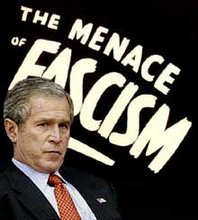
The Nazis, Fascists and Communists were political parties before they became enemies of liberty and mass murderers.



Saturday, October 27, 2007

BushCo Continues Push To WWIII

Deja Vu All Over Again.

Bush sanctions on Iranian military force, banks, and companies doomed to failure. Russia and China are pushing back on unilateral U.S. sanctions against Iran.

Turkey masses troops in Iraqi border. Bush Iraqi folly stands to unravel in wider regional conflict.


(In accordance with Title 17 U.S.C. Section 107, this material is distributed without profit to those who have expressed a prior interest in receiving the included information for research and educational purposes. I.U. has no affiliation whatsoever with the originator of this article nor is I.U endorsed or sponsored by the originator.)


The Nazis, Fascists and Communists were political parties before they became enemies of liberty and mass murderers.

Sunday, October 14, 2007

Congress: How Freakin' Stupid Can You Get!

It's been 90 years since the Armenian genocide.
Was it necessary to condemn the Turks Now?

Or why not just condemn every genocide that has ever happened anywhere, at any time in recorded history? (Not that our congress has the moral authority to condemn anyone at this point)

U.S. Urges Turkish Restraint On Kurds
Strike Could Imperil Broader War in Iraq

By Molly Moore and Robin Wright
Washington Post Foreign Service
Sunday, October 14, 2007; A01

ISTANBUL, Oct. 13 -- U.S. officials began an intense lobbying effort Saturday to defuse Turkish threats to launch a cross-border military attack against Kurdish rebels in northern Iraq and to limit access to critical air and land routes that have become a lifeline for U.S. troops in Iraq.

"The Turkish government and public are seriously weighing all of their options," Assistant Secretary of State Daniel Fried said after meetings with Turkish officials in Ankara, the capital. "We need to focus with Turkey on our long-term mutual interests."

But even as the U.S. official appealed for restraint, Turkish Prime Minister Recep Tayyip Erdogan, speaking at a political rally in Istanbul on Saturday, urged the parliament to vote unanimously next week to "declare a mobilization" against Kurdish rebels and their "terrorist organization," the Kurdistan Workers' Party (PKK).

Fears of a new frontier of instability in the troubled Middle East sent oil prices soaring Friday to a record high of $84 a barrel. U.S. military officials predicted disastrous consequences if Turkey carries out a threat to strike northern Iraq, and they warned of serious repercussions for the safety of American troops if Turkey reduces supply lines in response to a congressional vote last week on the killing of Armenians nine decades ago.

The confluence of two seemingly unrelated events could not have come at a worse time. Thirteen soldiers killed last weekend in Turkey in the most deadly attack by Kurdish separatists in more than a decade had barely been buried when the House Foreign Affairs Committee in Washington approved a resolution labeling as genocide the mass killings of Armenians during the final decades of the Ottoman Empire. Turkey does not deny the deaths but argues that they occurred as part of a war in which Turks were also killed.

"This is not only about a resolution," said Egemen Bagis, a member of the Turkish parliament and a foreign policy adviser to Erdogan. "We're fed up with the PKK -- it is a clear and present danger for us. This insult over the genocide claims is the last straw."

Domestic politics in both countries -- the Armenian lobby that pushed for the genocide resolution in the U.S. Congress and growing pressure on the Turkish president to stop Kurdish rebel attacks -- collided to create an international crisis.

"It's a difficult time for the relationship," U.S. Secretary of State Condoleezza Rice told reporters Saturday during her trip to Russia, noting that Fried and another senior State Department official had traveled to Turkey to reassure the Turks "that we really value this relationship."

A recent poll conducted by the German Marshall Fund of the United States, a transatlantic public policy organization, found that Turkish attitudes toward the United States were becoming increasingly hostile. Using its 100-degree thermometer scale, the fund found that Turkish "warmth" toward the United States had plunged from 28 degrees in 2004 to 11 degrees in 2007.

"Each time we have a soldier killed, many people look at Washington and they believe that Americans are responsible for this because they prevent us from stopping the infiltration into Turkey," said Onur Oymen, deputy chairman of the opposition Republican People's Party.

Erdogan is feeling increased heat from his military, which is suspicious of his Islamic roots and acquiescence to Washington in taking no action against Kurdish rebels in Iraq. His public is angry over the genocide vote, frustrated with a European Union that is unwilling to admit Turkey to its club, and outraged that the United States has turned its back on what Turks consider their own fight against terrorism, a 23-year-long war with the Kurdish separatists.

"The Turkish newspapers are printing full front-page pictures of dead soldiers with Turkish flags," said Bulent Aliriza, director of the Turkey project at the Center for Strategic and International Studies. "The accusation is that this guy is soft on the Kurdish issue and does only what the U.S. wants him to do."

That perception prompted Erdogan to issue a warning to Washington this week: "If you're against [the rebels], make your attitude clear and do whatever is necessary. If you cannot do it, then let us do it."

A major operation by Turkey "would start a war with the Iraqi Kurds," said Henri Barkey, a former State Department official who now heads the International Relations Department at Lehigh University. "Northern Iraq is the only place that the U.S. has managed to achieve a modicum of stability and [it] is afraid that a major operation would unleash violence in the north.

"I'm sure the U.S. would say okay to a limited, one-time operation," Barkey said. "But everyone knows a one-time operation is not going to solve the problem. The Turks want a carte blanche to do whatever they want to do. That's the problem."

Marc Grossman, a former U.S. ambassador to Turkey and undersecretary of state for political affairs during President Bush's first term, said there were three reasons the United States has been reluctant to take action in northern Iraq against the PKK: U.S. troops are already fully engaged, and the north is generally stable. Plus, he said, "there's a lot of sympathy in some parts of our government for the Kurds and some residual disappointment for the Turkish government decision on March 1, 2003," to forbid the United States to launch an assault in Iraq through Turkey.

Human rights groups have long criticized Turkey for the brutal treatment of its Kurdish minority and its efforts to suppress the Kurdish culture and language within Turkish borders.

The PKK problem had become so frustrating to both Turkey and the United States that the retired U.S. and Turkish generals appointed in 2006 to help resolve some of the tensions have left their jobs: The Turk was relieved of his position just before he planned to resign, and the American offered his resignation letter weeks ago, though it was accepted by the Bush administration only this week, according to U.S. and Turkish officials.

Bagis, the soft-spoken Turkish lawmaker and Erdogan adviser, has what for the moment might be one of the world's least enviable positions -- chairman of the Turkey-USA Interparliamentary Friendship Caucus, a group of Turkish lawmakers who meet regularly with their counterparts in the U.S. Congress.

He returned here from Washington on Friday after a failed push to head off the genocide resolution. On Saturday, in the midst of the Muslim festival of Eid al-Fitr, marking the end of the Ramadan fasting period, Bagis's young children were pleading with him to get off the telephone and play.

But Bagis could not shake the frustration of the past several months. He and other Turkish officials, including Erdogan, have been warning the Americans for months that the situation on the Turkish-Iraqi border had deteriorated.

The PKK leadership operates freely in northern Iraq, they argued. The rebels have established camps and a safe haven, and the attacks in Turkey are becoming increasingly bold. Neither the United States nor the Iraqi government had taken any action to arrest PKK leaders or curb their activities.

Even though the U.S. government was the first foreign country to declare the PKK a terrorist organization, it appeared to many Turkish officials that the United States was setting a double standard in not allowing them to launch an attack against the rebels to protect their soldiers and citizens.

After the past two weeks' spate of PKK attacks, which killed a total of 30 soldiers, police officers and civilians, Turkish authorities arrested suspected rebels who were carrying U.S. military-issue 9mm Glock semiautomatic pistols. U.S. officials said at the time that the weapons had been stolen.

Bagis's response: "The good news, we have found your stolen weapons; the bad news, they're killing us."

He added, "And while all this is going on, all of a sudden this resolution comes along with this ally you consider as your most important strategic partner in the world, your strong NATO ally -- insulting you with something that is claimed to have happened back in 1915.

"It's not like we're saying, 'Oh, it never happened,' " Bagis said. "We're saying, 'Let the historians judge it, not the politicians.' "

Wright reported from Washington.


(In accordance with Title 17 U.S.C. Section 107, this material is distributed without profit to those who have expressed a prior interest in receiving the included information for research and educational purposes. I.U. has no affiliation whatsoever with the originator of this article nor is I.U endorsed or sponsored by the originator.)


The Nazis, Fascists and Communists were political parties before they became enemies of liberty and mass murderers.