Showing posts with label Justice Department. Show all posts

Friday, April 4, 2008

Another Torture Memo and Crystal Clear Evidence!


Not just torture, a program of torture


It is clear that Congress is willfully ignoring out and out, hard evidence that the president and others have committed war crimes. I realize that this is an election year, but then what year isn't anymore? It is past time that we addressed this horrendous issue or stand guilty along with Bush and company of war crimes .


Usually, the cover-up is worse than the crime, however not in this case, which makes the cover-up a high crime right along with the original crime.

Congress members had better get off their asses on this. This crime is a crime we cannot afford to try to sweep under the proverbial rug; not morally, not legally, not in any sense can we ignore this. If we do, we will deserve whatever we get, as the old Karmic winds of justice blow in our direction.

And blow they shall, before the next inauguration the winds will pick up speed. Before it is all over, what is to come will make Katrina look like a tropical depression.

Torture Memo Gave White House Broad Powers
Declassified Memo Outlined Justification for Interrogation Tactics, Presidential Authority

by Jason Ryan

The Justice Department’s newly declassified torture memo outlined the broad legal authority its lawyers gave to the Bush White House on matters of torture and presidential authority during times of war.0402 06

The March 14, 2003 memorandum, which has been replaced by later memos, provided legal guidance for military interrogations of alien unlawful combatants, and concluded that the president’s authority during wartime took precedence over the individual rights of enemies captured in the field.

The memo, released Tuesday, determined that amendments to the U.S. Constitution, which in part protect rights of individuals charged with crimes, do not apply equally to enemy combatants.

“The Fifth Amendment due process clause does not apply to the president’s conduct of a war,” the memo noted. It also asserted, “The detention of enemy combatants can in no sense be deemed ‘punishment’ for purposes of the Eighth Amendment,” which prohibits “cruel and unusual” forms of punishment.

“Unlike imprisonment pursuant to a criminal sanction, the detention of enemy combatants involves no sentence judicially imposed or legislatively required,” the memo said. “Accordingly the Eighth Amendment has no application here.”

The memo was drafted by John Yoo, who was at the time the deputy assistant attorney general for the Justice Department’s Office of Legal Counsel. It was sent to William J. Haynes, then the general counsel at the Pentagon.

Former aides to John Ashcroft say the then-attorney general privately dubbed Yoo “Dr. Yes” for being so closely aligned with lawyers at the White House.

The memo also provided an argument in defense of government interrogators who used harsh tactics in their line of work.

Towards its conclusion, the document noted, “Finally, even if the criminal prohibitions outlined above applied, and an interrogation method might violate those prohibitions, necessity or self-defense could provide justifications for any criminal liability.”

Citing related opinions, the memo said the United States had a right to defend itself after the Sept. 11 attacks.

“If a government defendant were to harm an enemy combatant during an interrogation in a manner that might arguably violate a criminal prohibition, he would be doing so in order to prevent further attacks on the United States by the al Qaeda terrorist network. In that case, we believe that he could argue that the executive branch’s constitutional authority to protect the nation from attack justified his actions.”

“This national and international version of the right to self-defense could supplement and bolster the government defendant’s individual right.”

The memo also laid out a defense against the authority of the U.N. Convention Against Torture, or CAT. The 81-page memorandum noted, “Even if any nation had properly objected, that would mean only that there would be no provision prohibiting torture in effect between the United States and the objecting nation — effectively mooting the question whether an interrogation method violates the Torture Convention.”

“We conclude that the Bush administration’s understanding created a valid and effective reservation to CAT.”

The Justice Department still has not disclosed an additional February 2005 legal opinion, which was drafted after Attorney General Alberto Gonzales took office. But previous interrogation memos, which have been released, include an Aug. 1, 2002 memorandum, which laid out standards and legal guidance for interrogation, including possible justification for torture.

The memo is known as the Bybee memo after Jay Bybee, who was at the time the head of the Office of Legal Counsel, though Yoo drafted much of the document.

Jack Goldsmith who headed OLC from October 2003 to July 2004, and worked at the Pentagon before coming to the department, has described many of the legal opinions, including the Bybee memo, as “flawed.”

In a 2007 interview with the PBS program “Frontline,” Goldsmith described the problems he had reviewing and standing by Yoo’s work.

“After I read these opinions I had a whole flurry of emotions,” he said. “My first one was disbelief that programs of this importance could be supported by legal opinions that were this flawed. My second was the realization that I would have a very, very hard time standing by these opinions if pressed. My third was the sinking feeling, what was I going to do if I was pressed about reaffirming these opinions or something required my decision related to these programs?”

“At that point I wasn’t sure,” Goldsmith said.

A Dec. 30, 2004 memorandum by former head of the Office of Legal Counsel Dan Levin replaced both memos.

Levin’s memo noted, “Torture is abhorrent both to American law and values and to international norms.”

Senate Judiciary Chairman Patrick Leahy, D-Vt., weighed in on the memo Tuesday. He said in a statement that the memo’s release is a “small step forward” in his quest for documents from the Bush administration, though he said there are still many documents the White House “continues to shield& even from members of Congress.”

“The memo they have declassified today reflects the expansive view of executive power that has been the hallmark of this administration,” Leahy said. “It is no wonder that this memo, like the now-infamous ‘Bybee memo,’ could not withstand scrutiny and had to be withdrawn. Like the ‘Bybee memo,’ this memo seeks to find ways to avoid legal restrictions and accountability on torture and threatens our country’s status as a beacon of human rights around the world.”

Copyright © 2008 ABC News Internet Ventures


(In accordance with Title 17 U.S.C. Section 107, this material is distributed without profit to those who have expressed a prior interest in receiving the included information for research and educational purposes. I.U. has no affiliation whatsoever with the originator of this article nor is I.U endorsed or sponsored by the originator.)


The Nazis, Fascists and Communists were political parties before they became enemies of liberty and mass murderers.
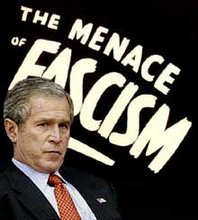
Friday, May 4, 2007

GOP and Democracy Theft (Using The DOJ)

Having been born and raised in the South, I have no problem with voter registration drives, as a matter of fact, I am all for them!.

Democracy is not a spectator sport, though it certainly seems like it at times. The more eligible voters we have voting the better for Democracy, whatever is left of it.

But for gawdsake, DO NOT register people who are not eligible to vote in the first place.

Having said that, I read before the 2006 elections, that the GOP planned to use voter fraud against the Democrats everywhere they possibly could, but especially in battleground states. This was not a well kept secret, except from the MSM, and they are easy

The kind of voter fraud described here is not likely to effect most elections, one way or the other.

But wholesale voter disenfranchisement, through voter roll scrubbing, as in Florida in 2000, voter intimidation, like the threats of arrest at the polls, if a voter has outstanding traffic tickets and electronic manipulation of vote tallies have proven themselves very effective at, literally, stealing Democracy, right out from under us.


By Bill Boyarsky


Since Attorney General Alberto Gonzales’ inept stonewalling before the Senate Judiciary Committee shed no light on the firing of eight U.S. attorneys, let’s dig into one of the real reasons—the Republican effort to stop voter registration campaigns in poor neighborhoods.


The assault is an early battle of the 2008 presidential campaign. Republicans are trying to limit registration of African-Americans and Latinos in a number of states that Democrats have a chance of carrying. It’s not the only reason that attorneys were fired, but it is the most reprehensible.

U.S. attorneys are political appointees. When a new president and his party take power, the old are swept out for the new. But once in office, the attorneys usually work with local law enforcement and lawyers and are not often micro-managed from Washington. There have been exceptions to this. The power of local segregationists sent Kennedy administration lawyers into action to take over some law enforcement in the South during the civil rights movement.

This operation is different.

The Kennedys wanted to give African-Americans rights guaranteed by the Constitution.

The Bush crowd is trying to exclude African-Americans and Latinos.


One of the fired attorneys is David Iglesias of New Mexico, who was dismissed after state Republican officials complained that he wouldn’t prosecute registration fraud allegations.
(The state produced another, unrelated, example of Republicans using the Justice Department to win elections. Republican Sen. Peter Domenici complained that Iglesias was too slow in prosecuting a political corruption case that would have helped the campaign of Rep. Heather Wilson, a Republican who eventually won a tight race.)

In 2004, President Bush beat Sen. John Kerry in New Mexico by just a single percentage point, 50 percent to 49 percent.

In 2008, the state’s five electoral votes are within Democratic grasp. Although that’s not a lot of votes, the Democrats’ near success in 2004 reflects the party’s hopes of big gains throughout the Southwest and Rockies next year.


Another U.S. attorney firing was linked to efforts to stop a Democratic registration drive in Washington state. Kerry carried it in 2004, but a Republican came within 129 votes of the Democratic winner in last year’s election for governor. U.S. Attorney John McKay, who was appointed by Bush, was dumped by Gonzales after Republican officials complained he would not investigate supposed registration fraud.

The Republicans’ main target in New Mexico, Washington and other states is a progressive grass-roots group, the Association of Community Organizations for Reform Now, ACORN. It has chapters in more than 100 cities engaged in organizing the poor for a living wage, improved housing, jobs, healthcare, better schools and child care.


What angers the Republicans are ACORN’s voter registration efforts, mostly in poor African-American and Latino neighborhoods. In the last few years, it has registered about 500,000 voters in poor communities.

ACORN members tend to be tough and focused. They organize poor families ignored by the politicians, the big contributors and the reporters and pundits who dominate today’s political dialogue. While political writers report on the so-called money primary—the contribution competition among the top contenders—ACORN is signing up voters in neighborhoods where the major candidates and journalists seldom venture.


It’s the hardest kind of political organizing. The organizers—invariably low paid—must convince the overworked and poor to give up a portion of their limited time to activities such as staging marches, visiting city halls and state capitols and organizing registration drives.

Professor Peter Dreier, director of the Urban and Environmental Policy Program at Occidental College in Los Angeles, told me that “of all the organizations in the country that represent the poor, except for the labor unions, ACORN is the most effective.” With a good political research operation and a grasp of local, state and national politics, ACORN targets its work in swing districts, “registering voters who are likely to be Democrats,” Dreier said.


ACORN’s success woke up New Mexico State Republican Chairman Allen Weh and other state party officials. They accused ACORN of fraud in the 2004 drive that registered 35,000 potential voters, according to The Albuquerque Tribune.

U.S. Attorney Iglesias investigated the complaints. He formed a task force that took a close look at more than 300 of them. In fact, some ACORN workers, who were paid for each person they registered, weren’t too fussy about whom they signed up. ACORN fired a worker for registering a 13-year-old boy.


But in January 2005, The Albuquerque Tribune reported that the U.S. attorney’s office had said most of the complaints were “not criminally prosecutable.”

Unhappy about this, Weh met with Iglesias over coffee. “I told him there were well-known instances of voter fraud and people expect them to be prosecuted,” Weh told the Tribune. Weh said he then took his complaint to an aide to Karl Rove, President Bush’s political brain. “The next time I saw that [Rove] staffer, I said, ‘Man, you guys need to get a new U.S. attorney. This guy is hopeless,’ ” Weh said.


When he saw Rove at a White House function a few months later, Weh asked him about Iglesias. Rove replied that Iglesias was “gone,” Weh told the Tribune.

The Senate Judiciary Committee hearings revealed what had happened. A firing list was assembled in the White House and the Justice Department, and Iglesias and McKay were on it.


The accusations were phony.

On April 12, The New York Times reported that the Bush administration campaign had turned up virtually no evidence of an organized operation to fix elections. In the last five years, only 120 people, most of them Democrats, have been charged. Only 86 were convicted. Most of the offenses involved mistakes in filling out registration forms or misunderstood eligibility rules.


Iglesias and McKay refused to use the tremendous power at their disposal to bring indictments on the basis of flimsy evidence. Unlike the attorney general, and the president, they would not abuse their authority. Of course they had to be fired.

(In accordance with Title 17 U.S.C. Section 107, this material is distributed without profit to those who have expressed a prior interest in receiving the included information for research and educational purposes. I.U. has no affiliation whatsoever with the originator of this article nor is I.U endorsed or sponsored by the originator.)

The Nazis, Fascists and Communists were political parties before they became enemies of liberty and mass murderers.

Saturday, April 28, 2007

The Abramoff Mess Has Reached Into The Justice Department

Or so it seems.........

Justice Dept official resigns over investigation connected with Abramoff
by Marisa Taylor and David Whitney
McClatchy Newspapers

WASHINGTON - A senior Justice Department official has resigned after coming under scrutiny in the Department’s expanding investigation of convicted super-lobbyist Jack Abramoff, according to a Justice Department official with knowledge of the case.

Making the situation more awkward for the embattled Department, the official, Robert E. Coughlin II, was deputy chief of staff for the criminal division, which is overseeing the Department’s probe of Abramoff.

He stepped down effective April 6 as investigators in Coughlin’s own division ratcheted up their investigation of lobbyist Kevin Ring, Coughlin’s long-time friend and a key associate of Abramoff.

When contacted at his home in Washington, Coughlin said he resigned voluntarily because he was relocating to Texas. “I was not asked to resign,” he said in an interview with McClatchy Newspapers. “It’s important to me that it's made clear that I left voluntarily.”

He said he couldn’t comment on the Abramoff investigation, nor on whether he has a job lined up in Texas. He referred all other questions to friend Michael Horowitz.

Horowitz, a criminal defense attorney and former Justice Department official and public corruption prosecutor, did not respond to questions, including about whether he is representing Coughlin. Coughlin also would not say whether he had hired a lawyer.

McClatchy’s source at the Justice Department asked not to be identified because of the sensitivity of the case.

Coughlin appears to be the first Justice Department official to come under scrutiny in the wide-ranging probe that has implicated a veteran congressman, a deputy Cabinet secretary, a White House aide and eight others. Abramoff has pleaded guilty to three counts in the corruption probe and could face up to 11 years in prison.

It was unclear whether Coughlin is a target in the investigation, which would mean he is under intense scrutiny, or whether he is a subject in the investigation, which would mean investigators have not yet determined whether he committed any wrongdoing.

A Justice Department spokesman declined to respond to any questions about the Abramoff investigation because it is still ongoing. Spokesman Bryan Sierra, however, confirmed Coughlin had resigned. He also said Coughlin had recused himself from the Abramoff investigation.

The disclosure, nevertheless, was another blow to a Justice Department already struggling to recover from the controversy over the firing of 8 U.S. Attorneys. Democrats and a number of Republicans have criticized Attorney General Alberto Gonzales for his handling of the ousters, which critics charge were politically motivated.


(In accordance with Title 17 U.S.C. Section 107, this material is distributed without profit to those who have expressed a prior interest in receiving the included information for research and educational purposes. I.U. has no affiliation whatsoever with the originator of this article nor is I.U endorsed or sponsored by the originator.)

The Nazis, Fascists and Communists were political parties before they became enemies of liberty and mass murderers.

Wednesday, April 25, 2007

Senator Who Said Gonzales Lied to Him Hasn't Heard Back
By Chitra Ragavan
Mon Apr 23, 9:44 PM ET


At the Senate Judiciary Committee hearing on Thursday, one particular bone of contention that earned Attorney General Alberto Gonzales a bipartisan scolding was the Justice Department's use of a provision in the U.S.A. Patriot Act allowing Gonzales to name interim U.S. attorneys to replace those fired without Senate confirmation.

That issue has greatly angered Sen. Mark Pryor (news, bio, voting record), an Arkansas Democrat in whose state Gonzales replaced the existing U.S. attorney, H. E. "Bud" Cummins, with J. Timothy Griffin, a former prot �g� of Bush political adviser Karl Rove, using this controversial provision.

Pryor has said that he called Gonzales and the White House on December 15 to weigh in on who Cummins's replacement should be. When Pryor heard that the administration was planning to name Griffin as an interim appointee, the senator says, he "asked them to please not do that, and please send someone through the confirmation process. And if it was Tim Griffin, send him through," even though Pryor could not guarantee he would vote for Griffin. Gonzales assured him that he supported the idea of a Senate-confirmed nominee as well.

But just four days later, Gonzales's chief of staff, Kyle Sampson, sent an E-mail to Christopher Oprisem in the White House, regarding circumventing Pryor and his fellow Arkansas senator, Blanche Lincoln (news, bio, voting record), also a Democrat.

"I think we should gum this to death," Sampson wrote. "Ask the senators to give Tim a chance, meet with him, give him some time in office to see how he performs, etc. If they ultimately say, 'no, never,' (and the longer we can forestall that, the better), then we can tell them we'll look for other candidates, ask them for their recommendations, evaluate the recommendations, interview their candidates, and otherwise run out the clock. All of this should be done in 'good faith,' of course."

Sampson also says the administration should "pledge" to desire a Senate-confirmed U.S. attorney but "otherwise hunker down." He concludes by saying he's not "100 percent sure" that Griffin was the "guy on which to test-drive this authority, but know that getting him appointed was important to [then White House counsel] Harriet Miers, Karl [Rove], etc."
Pryor was infuriated by the memo and said last month that in their talk on December 15, Gonzales appeared to be using the same points Sampson listed in his E-mail (which was sent to the White House four days later) as a "playbook" and hit every point, assuring him that Pryor would get a Senate-confirmed U.S. attorney.

"This is why I feel lied to," Pryor said in angry remarks on the Senate floor last month. "And the truth is I was lied to, because I was told that the attorney general...wanted a Senate-confirmed U.S. attorney in every slot. That is absolutely not true in Arkansas, based on this E-mail from the Justice Department." Pryor said he felt particularly betrayed because he was one of six Democratic senators who had backed Gonzales for attorney general. He called on Gonzales to "resign immediately" because he didn't think Gonzales "has the credibility to run that department anymore."

Then Pryor became even more emphatic. Gonzales "not only lied to me as a person, but when he lied to me, he lied to the Senate and he lied to the people I represent," Pryor said. "And for that reason, I'm asking him and demanding that he resign today."

At Thursday's Judiciary Committee hearing, Gonzales was probed by both Sen. Charles Schumer (news, bio, voting record), a New York Democrat, and Sen. Lindsey Graham (news, bio, voting record), a South Carolina Republican, about his discussion with Pryor. Gonzales said he never liked the idea of an interim appointment without Senate confirmation because it dilutes the prosecutor's authority. But Schumer said it "defies credulity" that Sampson could have unilaterally sent the memo to the White House and "after you tell somebody you're going one way goes exactly the opposite way."

Describing Pryor as "one of the most temperate" and "mild-mannered" senators, Schumer said that his colleague's words "were all the more striking" for that reason. Graham had some "personal advice" for Gonzales, saying he needed to make amends to Pryor, who had "said some pretty harsh things, which is out of character." Graham advised Gonzales to "sit down with him and walk through what happened" and asked Gonzales to clean up the mess.

"Senator, I couldn't agree more," said Gonzales. "I have a great deal of admiration for Senator Pryor, and I think that's a good idea."

But as of Friday afternoon, Gonzales had not reached out to Pryor, the senator's communications director, Michael Teague, told U.S. News. Teague said Pryor's "door is always open" and that the senator "doesn't have any reservations" about meeting with Gonzales but is not sure "what good it would do at this point."

"They not only wrote the E-mail, they implemented that E-mail," says Teague. "And Griffin still holds that position." Teague said Pryor still feels lied to and still wants Gonzales to resign.
"We don't buy this story about the attorney general saying he rejected the idea," said Teague. "In Arkansas, we got a word for that--it's 'baloney.' "


(In accordance with Title 17 U.S.C. Section 107, this material is distributed without profit to those who have expressed a prior interest in receiving the included information for research and educational purposes. I.U. has no affiliation whatsoever with the originator of this article nor is I.U endorsed or sponsored by the originator.)


The Nazis, Fascists and Communists were political parties before they became enemies of liberty and mass murderers.

Wednesday, February 21, 2007

Justice Department infalted/defalted Terrorism Cases

By LARA JAKES JORDAN, Associated Press Writer Tue Feb 20, 4:35 PM ET

WASHINGTON - Federal prosecutors counted immigration violations, marriage fraud and drug trafficking among anti-terror cases in the four years after 9/11 even though no evidence linked them to terror activity, a Justice Department audit said Tuesday.

Overall, nearly all of the terrorism-related statistics on investigations, referrals and cases examined by department Inspector General Glenn A. Fine were either diminished or inflated. Only two of 26 sets of department data reported between 2001 and 2005 were accurate, the audit found.

Responding, a Justice spokesman pointed to figures showing that prosecutors in the department's headquarters for the most part either accurately or underreported their data — underscoring what he called efforts to avoid pumping up federal terror statistics.

The numbers, used to monitor the department's progress in battling terrorists, are reported to Congress and the public and help, in part, shape the department's budget.

"For these and other reasons, it is essential that the department report accurate terrorism-related statistics," the audit concluded.

Fine's office took care to say the flawed data appear to be the result of "decentralized and haphazard" methods of collection or disagreement over how the numbers are reported, and do not appear to be intentional.

Still, the errors led Sen. Charles E. Schumer, D-N.Y., to question whether the department had exaggerated the number of terror cases.

"If the Department of Justice can't even get their own books in order, how are we supposed to have any confidence they are doing the job they should be?" said Schumer, who sits on the Senate Judiciary Committee, which oversees the department. "Whether this is just an accounting error or an attempt to pad terror prosecution statistics for some other reason, the Department of Justice of all places should be classifying cases for what they are, not what they want us to think them to be."

Auditors looked at 26 categories of statistics — including numbers of suspects charged and convicted in terror cases, and terror-related threats against cities and other U.S. targets — compiled by the FBI, Justice's Criminal Division, and the Executive Office of U.S. Attorneys.

It found that data from the Executive Office of U.S. Attorneys were the most severely flawed. Auditors said the office, which compiles statistics from the 94 federal prosecutors' districts nationwide, both under- and over-counted the number of terror-related cases during a four-year period.

The office has since agreed to change the way it counts and classifies anti-terrorism cases, said department spokesman Dean Boyd.

Boyd denied suggestions that the department pumped up its numbers. He said Criminal Division prosecutors at Justice headquarters and the FBI have overhauled their respective case reporting systems since 2004 for a more accurate picture of terror-related workloads. Both agencies, he said, were strained to accurately report terrorism data in the flood of cases immediately after the Sept. 11, 2001, attacks.

"The notion that the Justice Department intentionally inflated its statistics is false and flatly contradicted by the OIG report itself," Boyd said.

In all but one area, Criminal Division prosecutors either accurately stated or underreported their data — the ones the department usually uses in public statements about its counterterror efforts, Boyd noted. He said the Justice Department has already completed most of the fixes recommended in the audit.

Much of the problem stemmed from how that office defines anti-terrorism cases.

A November 2001 federal crackdown on security breaches at airports, for example, yielded arrests on immigration and false document charges, but no evidence of terrorist activity. Nonetheless, the attorneys' office lumped them in with other anti-terror cases since they were investigated by federal Joint Terrorism Task Forces or with other counterterror measures.
Other examples, according to the audit, included:

_Charges against a marriage-broker for being paid to arrange six fraudulent marriages between Tunisians and U.S. citizens.

_Prosecution of a Mexican citizen who falsely identified himself as another person in a passport application.

_Charges against a suspect for dealing firearms without a license. The prosecutor handling the case told auditors it should not have been labeled as anti-terrorism.

"We do not agree that law enforcement efforts such as these should be counted as anti-terrorism," the audit concluded. Even if those cases were not taken into account, the audit said, the U.S. attorneys' office had overstated statistics in all other categories it reported.
___
On the Net:
The audit can be found at: http://www.usdoj.gov/oig/reports/plus/a0720/final.pdf


(In accordance with Title 17 U.S.C. Section 107, this material is distributed without profit to those who have expressed a prior interest in receiving the included information for research and educational purposes. I.U. has no affiliation whatsoever with the originator of this article nor is I.U endorsed or sponsored by the originator.)


The Nazis, Fascists and Communists were political parties before they became enemies of liberty and mass murderers.

Tuesday, February 20, 2007

Whistleblowers Anonymous: Fascism Alert!


Only one of many whistleblowers, Jesselyn Raddack, found out the hard way what can and does happen when government officials tell the truth, or attempt to hold an ethical line in the face of the fascism creep that is part and parcel of the Bush government.

This woman needs, at least, our moral support.

We are all in this nightmare together.


A BUZZFLASH INTERVIEW

...Whistleblowers have been blacklisted at best, and completely terrorized at worst. -- Jesselyn Radack, former Justice Department ethics specialist
* * *

The Bush administration likes to say they're fighting the "war on terror" there, so we don't have to fight it here. The reality, as Jesselyn Radack makes clear, is that they actually are conducting a war of terror against American citizens here. Like Ambassador Joe Wilson and FBI translator Sybil Edmonds, Jesselyn Radack was targeted by the administration as an enemy of the people. Her offense was simply that she advised the Justice Department about the ethical restraints that applied toeir pursuit of "the bad guys." Radack was doing her job, but the John Ashcrofts of the world wouldn't allow that. They feared Radack couldn't be trusted to throw ethics to the wind and keep quiet. She was forced out and given no choice but to blow the whistle on administration lies about the first American citizen nabbed in the "war on terror" -- John Walker Lindh. Lindh was also the first high profile case of "aggressive interrogation."

It happened in 2001. She's still paying the price to this day.
* * *
BuzzFlash: The Canary in the Coalmine: Blowing the Whistle in the Case of the 'American Taliban' John Walker Lindh is your memoir about a particular experience you’ve had. Let’s start with the person who’s very much at the heart of this. What was your involvement with the case of John Walker Lindh?

Jesselyn Radack: I was the ethics attorney at the Department of Justice. The FBI contacted me about the ethical propriety of interrogating him without his lawyer. Very simply, that started my involvement in the case.

I had joined the Justice Department in October of 1995 and then started with the relatively new Professional Responsibility Advisory Office (PRAO) when it was created in 1999.

BuzzFlash: Is this a political appointment?

Jesselyn Radack: It’s a career position. I planned on being a career civil servant.

BuzzFlash: Your day-to-day responsibilities were to review the practices of the Department of Justice, to see that they were in compliance with ethical regulations and standards.

Jesselyn Radack: That’s right. A lot of people confuse the office for which I worked with the Office of Professional Responsibility (OPR). They are the people who do the discipline; we were the office that would render advice on things that DOJ attorneys wanted to do, that they thought could be ethically problematic, or that they wanted to make sure they were doing things by the book. We were there to keep government attorneys out of trouble, basically.

BuzzFlash: What standards did you use?

Jesselyn Radack: Our measuring stick was the American Bar Association’s "Model Rules of Professional Conduct," and some states still follow the predecessor, "Model Code." Basically, there was a law passed in around 1999 called the McDade Amendment, which said that government attorneys had to abide by not only the bar rules of the state in which they were admitted, but the bar rules of any state in which they practiced. That created a lot of conflicts of law for Justice Department attorneys, because we have multiple jurisdictional practices. We were there to help tease out those problems.

BuzzFlash: In essence, you were applying American Bar Association ethical standards.

Jesselyn Radack: Yes. And there’s case law from the Supreme Court that says government lawyers are actually held to a higher standard than lawyers in private practice. We could debate whether that still holds true, or whether that’s enforced.

BuzzFlash: Could you walk us through how your life as a professional attorney, employed as a career civil servant in the Department of Justice, dealing with ethics, suddenly took a surprising turn as it intersected with the treatment of John Walker Lindh?

Jesselyn Radack: I was just doing my ordinary duty. I was contacted on December 7. I happened to be the duty officer on call that day, and I received a telephone inquiry from an attorney in the Terrorism and Violent Crime Section about the ethical propriety of having the FBI interview John Walker Lindh in Afghanistan. I was told unambiguously that he was represented by counsel. Those were the operative facts with which I was presented.

Under those circumstances, we ordinarily advised that contact with a represented person was not authorized by law, except for pre-indictment, non-custodial, undercover situations. John Walker Lindh’s case struck out on two of those criteria, because he was in custody, and this was not an undercover interview that was being contemplated.

I advised that it would be problematic to do this and discussed some creative ways around that.

I tried to help them figure out some ways to interview him and still stay within ethical boundaries -- for example, by saying to him, your parents are saying very publicly that they think you were brainwashed. Do you really want the lawyer of their choosing? Or trying to do an undercover -- we talked about some ways that they could do this.

That was on a Friday. The same attorney called me back on Monday and said, “Well, the FBI is interviewing him anyway. What will we do now?” At that point, I advised that the interview would have to be sealed and used only for national security or intelligence-gathering purposes, not for criminal prosecution.

BuzzFlash: What happened next?

Jesselyn Radack: Normally, if an office has disregarded our advice, we kept close tabs on what was being done in the aftermath, because we were there not only to advise proactively, ahead of time, as to what an office should do, but we were there to help clean up after, if there was a problem. And here, there had been a problem.

So I kept following up with this attorney. He kept kind of blowing me off. I wasn’t hearing a response. I don’t know what was going on on his end, but there was no follow-up.

Then he sent an e-mail on December 20th saying that John Walker Lindh had been Mirandized. I told my boss that, and she just said, "Good. Our office’s involvement in this matter is over."

Our offices closed the file.

That seemed very strange to me, because normally we remained involved in cases where our advice had not been followed, and where there could be some kind of ethical liability.

BuzzFlash: What became the source of conflict, where the Department of Justice came down very hard on you for being what one would call a whistleblower?

Jesselyn Radack: On January 15th -- so we’re talking a month later -- Ashcroft had a very public press conference announcing that a criminal complaint was being filed against John Walker Lindh -- which was exactly what I had advised against. Ashcroft said: "The subject here is entitled to choose his own lawyer, and to our knowledge, has not chosen a lawyer at this time."

Well, I knew that wasn’t true, but I just let it go because the Department of Justice can take whatever position the Attorney General ultimately wants to take.

Then on February 4th, out of the blue, my supervisor gave me a blistering, untimely, unsigned performance evaluation and told me that I should find another job or it would be put in my permanent personnel file. I didn’t read it at first, because I didn’t think she could really be serious. But the evaluation was so over-the-top and so contradicted by my performance -- meaning I had received a merit bonus and a promotion in the preceding months of the evaluation -- it didn’t make any sense to me.

So, I get this horrible review, and then the very next day, Ashcroft has another one of his flashy, dramatic press conferences announcing the indictment of Lindh. Again, Ashcroft says "that Lindh’s rights had been carefully, scrupulously honored." Another lie, but that wasn’t my real problem. That was not my complaint in any of this.

My real complaint concerns March 7th. I was contacted directly by the prosecutor. And he said, “As you know, there is a federal court order for all correspondence related to the interrogation of John Walker Lindh. I have two of your e-mails. I wanted to make sure I have everything.”

Well, number one, no one had told me about a court order, although that was the usual practice in the Department of Justice. Second, I knew that I had written more than two e-mails -- a lot more.

But I was still giving everybody the benefit of the doubt. I didn’t think anything suspect was going on. I went and checked the hard-copy file, and it was empty. There was nothing there. There were two pieces -- two minor, innocuous e-mails -- and a fax cover sheet from my boss to senior officials within the Department of Justice.

BuzzFlash: Let’s go back to this blistering review that seemed to come out of nowhere. Is it safe to assume that the Department of Justice saw you potentially as someone who could undercut the Attorney General by revealing the truth about the availability of counsel to John Walker Lindh, and the manner in which the case had been handled?

Jesselyn Radack: Well, yes, I realize that now in hindsight. I had advised that they shouldn’t do this, and that it would be unethical to do this. My advice that they would be committing an ethical violation by doing so completely contradicted the position ultimately taken by the Department of Justice, which was that they had every right to do this, and did it properly.

At the time, I didn’t know all of that. It wasn’t clear to me whether the missing e-mail was a result of my boss just trying to preserve the reputation of our office, or how far up the food chain it went. That became clear to me over the years, as this unfolded -- that what this is really about is that our government -- Rumsfeld was at the top -- that he was directly involved in the interrogation of John Walker Lindh. He said to take the gloves off. This went all the way to the top. I don’t know if he actually gave a directive to destroy e-mail. I don’t know whose brilliant idea that was. But this really was the first instance of someone being tortured. This was the embryonic stages of American torture policy in the war on terrorism.

BuzzFlash: When did you discover that John Walker Lindh was being tortured?

Jesselyn Radack: I think it was pretty clear to most people, if you look back on the famous picture of him that circulated, in which he was naked, blindfolded, gagged, bound, strapped to a board, and videotaped. It looks a lot like what we later saw at Abu Ghraib, and what caused everybody to flinch. No one was flinching back when this photo circulated. It was pretty clear evidence of someone who was definitely being treated in a degrading, inhumane and very rough kind of way.

But for me, it unfolded over a course of years. There was a heavy-handed response, both in the John Walker Lindh case, and then to me.

BuzzFlash: What then happened with you in relation to the Justice Department? You went looking for the file. Found it was empty. E-mails had been erased -- important e-mail that might have impeached the character of the then-Attorney General, John Ashcroft. What happened at that point?

Jesselyn Radack: When I saw the file was empty, my heart sank. I consulted with a colleague who was very senior within the department, and said, 'I don’t know what to make of this." It gave me a bad feeling. Something was definitely wrong, but I didn’t know what to attribute it to at that point.

He said, “Look, you’ve got to cover yourself. Cover your own back right now. Call the computer help line. Resurrect as many of the missing e-mails as you can. Write a letter to our boss documenting all those e-mails and attach them. And that way, at least you’re covered.” So I did exactly that.

I’m not a computer expert, so I called the technical support folks. Even if you delete your e-mail and empty your virtual trash, it’s still there on the computer archives. I was able to reconstruct the e-mails -- resurrect, basically, the e-mail that was missing from the files. I gave it to my boss, along with the memo, and I took home copies for safekeeping, in case they "disappeared" again.

Then I resigned. I said, I don’t know what’s going on here, but I’m not going to be a part of it.

Then I started working at a private law firm.

By all public statements that the Justice Department was making, it didn’t sound like the e-mail had ever been turned over. I gave the e-mail to Newsweek in accordance with the Whistleblower Protection Act, and that unleashed the full force of the entire Executive Branch.

BuzzFlash: In what way?

Jesselyn Radack: First they called my law firm and told them that I was a criminal and under criminal investigation. They wanted to secure the law firm’s files, or else I could steal the files from the firm.

The law firm didn’t completely know what to do with this. The Department of Justice was putting pressure on them to fire me, and they were too scared to do that. The Justice Department did eventually put me under a criminal investigation, though they never told me for what I was being investigated. That lasted for about a year and a half. When the criminal complaint was finally dismissed with no charges ever being brought, like many times along the trajectory, I felt like, good, it’s over with.

But then they referred me to the state bar, in which I’m licensed as an attorney. And I apparently was also put on the no-fly list. And it’s still going on. One of the bar complaints was dismissed, but the D.C. bar complaint is still pending after three and a half years.

BuzzFlash: This is a complaint by the Department of Justice?

Jesselyn Radack: Yes.

BuzzFlash: And you don’t have access to the accusation against you before the D.C. bar?

Jesselyn Radack: That’s right. They had based it on a report that was under seal with the court. I eventually did get access to it years and years later. A Constitutional expert here in D.C. was representing me, and they did a motion to unseal. Eventually, the secret report was unsealed, and I responded to the bar about Discipline's contradictory, poorly done report. And it still just remained a cloud over my head. It’s only thanks to the good graces of my current boss that I have a job, because I could not get a job during that time. A referral to a bar association, even without a finding of misconduct, can increase a law firm’s malpractice liability insurance.

BuzzFlash: But the complaint was dismissed by the Maryland bar.

Jesselyn Radack: Yes, they dismissed it. But normally, bars have reciprocity with each other and they’ll follow the lead of what the other bar has done. But D.C. has not followed what Maryland did, and has just sat on the complaint for three and a half years.

BuzzFlash: Am I understanding correctly you’re not at liberty to discuss what is in that file?

Jesselyn Radack: I can talk about it. They’re not supposed to be talking about it, though they don’t seem to have refrained from doing that. The bar complaint against me basically alleges that I violated Department confidentiality and ethics rules by blowing the whistle, and that I had violated attorney-client privilege. I’ve even written a Law Review article about the fact that whistle-blowing is not a violation of the ethics rules, and you can’t use the attorney-client privilege as both a sword and a shield to commit illegal acts, and then say that people cannot blow the whistle on that.

BuzzFlash: So the Department of Justice, under the Bush Administration, and now under Alberto Gonzales, is continuing with the complaint. If we may summarize or paraphrase, it basically says that you committed an ethical violation by disclosing that the Department of Justice committed an ethical violation.

Jesselyn Radack: That’s correct. And to make this even more Kafkaesque than it already is, I serve on the D.C. bar legal ethics committee. I was elected to that position after the bar referrals. Obviously the legal ethics committee is different from the disciplinary committee, and one hand doesn’t speak to the other. One of my attorneys kind of joked, like, how are they going to punish you? Make you teach legal ethics? Make you talk about it? You already do that. You’re already teaching legal ethics. You’re already a well-regarded legal ethicist. Technically, I guess Alberto Gonzales, when he took over the reins from Ashcroft, could have withdrawn the complaint from the D.C. bar if he wanted to.

BuzzFlash: Going back again to John Walker Lindh -- we’ve gone through so many waves of revelations of Bush administration activity that has been abhorrent to many of us. And we forgot the case of John Walker Lindh, and particularly how it was used for such propaganda purpose. The picture of him nude and blindfolded was disseminated, in a way, to sort of say this is what a traitor deserves in some primitive sort of way. But you were sort of there at the beginning. This was in Afghanistan, prior to the Iraq war. It was foreshadowing what was to come in terms of institutionalizing torture as an interrogation technique. And it was done on an American citizen.

Jesselyn Radack: That’s right. Obviously there was a lot of hysteria after 9/11, and this was occurring a couple months following the events of 9/11. He was the poster child that the administration could put forward. They tagged him as "al-Qaeda," even though my understanding is he never belonged to al-Qaeda. He was actually with a group which had been a civilian arm of the Taliban, I guess. He was basically a nobody, as people have said afterwards. I think they kind of went after a minnow with a sledgehammer in John Walker Lindh’s case.

Then they did that to me on a different level in a sort of parallel universe. They made an example out of me, too. All I can say is, wow -- if it happens to John Walker Lindh, a white American, right? -- and it happens to me, a white, educated U.S. citizen. And I speak English. Then you can only imagine the plight of people in this country who are Arab or Muslim, who are immigrants, who are poor, who don’t speak English.

I think they very much made an example of him, and the administration offered him up as the worst of the bad to hide the fact that they really had not caught the big fish at that point. They still haven’t today caught Osama bin Laden. At that point, they had not caught even some of the upper echelon bad guys. It was easy to make him into the poster child of the traitor. I think I was even vulnerable to having some of that sentiment, myself, until, later on, my government called me a traitor and a turncoat, and a terrorist sympathizer. That is what anonymous Department officials told The New York Times about me.

BuzzFlash: What’s interesting to see here is that the Department saw you as a liability. You were the woman who knew too much, in a way. And you’ve said you didn’t really create a big stir, even though the Attorney General was lying. I mean, there’s no other way you can look at it, the way he presented the issue of attorney representation and so forth.

Jesselyn Radack: For me, that became crystal clear during the confirmation hearings of Michael Chertoff, first to be a federal judge, and then more recently head of the Department of Homeland Security. He was questioned during both confirmation hearings specifically about the Lindh case, and specifically about the retaliation towards me that followed. And he blatantly lied. But basically his answers were non-responsive and hyper-technical, and basically very elliptical. At first, he flat-out denied that my office had ever rendered advice in this case, period. Then, when confronted by Senator Kennedy about the actual advice that was given, he still said he didn’t know about it. Later, when confronted with the fact that he did, he kind of backtracked a little bit and said he recalls learning about it, but didn’t really consider it to be an official opinion and that kind of thing. As this progressed, it became clear that this went to much higher levels than just a decision by the director of the ethics office. Later on, The New York Times was able to get the attorney with whom I corresponded to go on the record that his boss -- at the time, that was Michael Chertoff -- was very displeased with the fact that he had sought the advice of the ethics office. He had definitely stepped out of line in doing that.

Michael Chertoff at that time was the Assistant Attorney General in charge of the criminal division. He was the uppermost figurehead in the criminal division.

BuzzFlash: Let’s look at this in perspective now. You had this horrible experience of doing your job and then ending up, as you said, in a Kafkaesque situation because you upheld ethical standards. What do you see now, as an attorney in private practice? It seems to have only gotten worse and more endemic in the Bush administration.
Right now three countries -- Spain, Germany and Italy -- are dealing with the issue of rendition. Germany and Italy have CIA agents who are under indictment. A Spanish judge is requiring the disclosure of flight logs of one of the ghost planes -- the rendition planes -- as it traveled through Spain. You were there at the beginning. Is this just something where -- absent any counterbalance -- it’s gotten completely out of control?

Jesselyn Radack: Yes. I feel like, within the last year or year and a half, the tide has started to turn. The revelation of the torture memos at least got a couple of appalled gasps from people out there in the citizenry.

BuzzFlash: Are you talking about the memo written by Alberto Gonzales when he was White House counsel that basically said you can go ahead with these torture procedures?
Jesselyn Radack: Right. Gonzales had described the Geneva Conventions as being quaint and obsolete. My contemporary from law school, John Yoo, had written a number of the memos, saying basically that the Commander in Chief has almost an imperial kind of authority, and can do whatever he wants, with or without Congressional authorization. I think the extraordinary rendition, the torture, these other things that came to light -- are all in keeping with the slippery slope we were on that started when I was there. It doesn’t surprise me.

But still, even now, I couldn’t even find a publisher for my book -- not a single one. And I know I have a compelling story to tell. I don’t care about whether people know who I am per se, but I’d like them to know my story, because it’s a cautionary tale of what happens, particularly during a time of a national security crisis -- how a country can basically totally overreact.

I’m glad that Spain and Germany and Italy are starting to hold people who’ve had a part in this responsible, in their own countries. But most of the people who were responsible for these policies have enjoyed tremendous promotions and career advancements because of it.

In the back of the book, I talk about where everyone ended up. John Walker Lindh is in jail for twenty years. I’m still under investigation by the D.C. bar after three and a half years. Mike Chertoff is the Director of the Department of Homeland Security. Rumsfeld got to resign. The FBI agent wasn’t fired. He got to resign. George Bush was re-elected as our President. So a lot of the bad actors in my story not only have not been held accountable -- they’ve actually enjoyed quite a benefit from it all.

BuzzFlash: Well, as in Orwell’s 1984, and as what happened in your case, anything that is going to expose what they are really doing disappears. History disappears. Your e-mail disappeared, and they, in essence, made you disappear, by making conditions so intolerable. They were going to do everything, as they did with Joe Wilson, to ruin your career and to make an example of you -- anybody that would dare to expose the truth will be crushed.

Jesselyn Radack: I think that’s right. If you break out the whistleblowers in the war on terrorism, as bizarre and unreal and outrageous as my story may seem, I think it’s actually textbook treatment of whistleblowers by this particular administration. You’ve got Joe Wilson. When he revealed that there was no real uranium enrichment going on, and undermined a whole reason for going to war, he was punished by the outing of his wife. Sybil Edmonds, an FBI translator who blew the whistle on the fact that they were not translating these very important documents, was treated terribly.

I think in general whistleblowers have been blacklisted at best, and completely terrorized at worst. This administration is famous for its secrecy and its silence. We see that in these euphemisms that come up -- "extraordinary rendition" is code for basically kidnapping and torturing people. Guantanamo detainees attempting suicide is called "injurious acts of war" on the United States. How is it that someone being so desperate that they try to kill themselves becomes an act of war on? We have all these euphemisms to talk about what’s happening. The invasion and occupation of Iraq is being referred to as part of the war on terrorism.

So the euphemisms continue on all levels, whether we’re talking about current conflict or whether we’re talking about some poor detainee in Guantanamo Bay who tries to kill himself or goes on a hunger strike. That’s characterized by the administration as an act of aggression against America.

BuzzFlash: Jesselyn, thank you for your courage. We’re glad that despite all the injurious and malevolent efforts of the Bush administration, you’ve landed on your feet. We owe you a lot for what you did. And we recommend The Canary in the Coalmine be read by all the BuzzFlash readers. Thank you, Jesselyn.

Jesselyn Radack: Thank you. My book is available at the website patriotictruthteller.net. Or you can write Canary in the Coalmine and my last name into Google, and probably find it that way, too. Again, I had to self-publish, because no one would take it. So thank you for having me and for everything that you do at BuzzFlash. I appreciate that.
* * *
BuzzFlash Interview conducted by Mark Karlin.
Resources
http://www.patriotictruthteller.net/ (Jesselyn Radack's web site)
The Canary in the Coalmine (Buy the Book here)
Google Image Search/John Walker Lindh
John Walker Lindh (Wikipedia)

(In accordance with Title 17 U.S.C. Section 107, this material is distributed without profit to those who have expressed a prior interest in receiving the included information for research and educational purposes. I.U. has no affiliation whatsoever with the originator of this article nor is I.U endorsed or sponsored by the originator.)

The Nazis, Fascists and Communists were political parties before they became enemies of liberty and mass murderers.