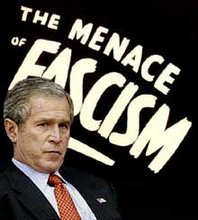


Never in, in the USA, since the Civil War (another of those cute military oxymorons, like friendly fire) has the enemy been more upon and within us.
By James Madison
Of all the enemies to public liberty war is, perhaps, the most to be dreaded, because it comprises and develops the germ of every other. War is the parent of armies; from these proceed debts and taxes; and armies, and debts, and taxes are the known instruments for bringing the many under the domination of the few. In war, too, the discretionary power of the Executive is extended; its influence in dealing out offices, honors, and emoluments is multiplied; and all the means of seducing the minds, are added to those of subduing the force, of the people. . . . [There is also an] inequality of fortunes, and the opportunities of fraud, growing out of a state of war, and . . . degeneracy of manners and of morals. . . . No nation could preserve its freedom in the midst of continual warfare. . . .
[It should be well understood] that the powers proposed to be surrendered [by the Third Congress] to the Executive were those which the Constitution has most jealously appropriated to the Legislature. . . .
The Constitution expressly and exclusively vests in the Legislature the power of declaring a state of war . . . the power of raising armies . . . the power of creating offices. . . .
A delegation of such powers [to the President] would have struck, not only at the fabric of our Constitution, but at the foundation of all well organized and well checked governments.
The separation of the power of declaring war from that of conducting it, is wisely contrived to exclude the danger of its being declared for the sake of its being conducted.
The separation of the power of raising armies from the power of commanding them, is intended to prevent the raising of armies for the sake of commanding them.
The separation of the power of creating offices from that of filling them, is an essential guard against the temptation to create offices for the sake of gratifying favourites or multiplying dependents.
James Madison was the fourth president of the United States. This is from Letters and Other Writings of James Madison.
(In accordance with Title 17 U.S.C. Section 107, this material is distributed without profit to those who have expressed a prior interest in receiving the included information for research and educational purposes. I.U. has no affiliation whatsoever with the originator of this article nor is I.U endorsed or sponsored by the originator.)
The Nazis, Fascists and Communists were political parties before they became enemies of liberty and mass murderers.
Showing posts with label James Madison. Show all posts
Showing posts with label James Madison. Show all posts
Wednesday, October 17, 2007


Wednesday, July 18, 2007
King George: Madison's, and Our, Worst Nightmare
Published on Wednesday, July 18, 2007 by TruthDig.com
King George W.: James Madison’s Nightmare
by Robert Scheer
George W. Bush is the imperial president that James Madison and other founders of this great republic warned us about. He lied the nation into precisely the “foreign entanglements” that George Washington feared would destroy the experiment in representative government, and he has championed a spurious notion of security over individual liberty, thus eschewing the alarms of Thomas Jefferson as to the deprivation of the inalienable rights of free citizens. But most important, he has used the sledgehammer of war to obliterate the separation of powers that James Madison enshrined in the U.S. Constitution.
With the “war on terror,” Bush has asserted the right of the president to wage war anywhere and for any length of time, at his whim, because the “terrorists” will always provide a convenient shadowy target. Just the “continual warfare” that Madison warned of in justifying the primary role of Congress in initiating and continuing to finance a war-the very issue now at stake in Bush’s battle with Congress.
In his “Political Observations,” written years before he served as fourth president of the United States, Madison went on to underscore the dangers of an imperial presidency bloated by war fever. “In war,” Madison wrote in 1795, at a time when the young republic still faced its share of dangerous enemies, “the discretionary power of the Executive is extended … and all the means of seducing the minds are added to those of subduing the force, of the people.”
How remarkably prescient of Madison to anticipate the specter of our current King George imperiously undermining Congress’ attempts to end the Iraq war. When the prime author of the U.S. Constitution explained why that document grants Congress-not the president-the exclusive power to declare and fund wars, Madison wrote, “A delegation of such powers [to the president] would have struck, not only at the fabric of our Constitution, but at the foundation of all well organized and well checked governments.”
Because “[n]o nation could preserve its freedom in the midst of continual warfare,” Madison urged that the constitutional separation of powers he had codified be respected. “The Constitution expressly and exclusively vests in the Legislature the power of declaring a state of war … the power of raising armies,” he wrote. “The separation of the power of raising armies from the power of commanding them is intended to prevent the raising of armies for the sake of commanding them.”
That last sentence perfectly describes the threat of what President Dwight Eisenhower, 165 years later, would describe as the “military-industrial complex,” a permanent war economy feeding off a permanent state of insecurity. The collapse of the Soviet Union deprived the military profiteers and their handsomely rewarded cheerleaders in the government of a raison d’être for the massive war economy supposedly created in response to it. Fortunately for them, Bush found in the 9/11 attack an excuse to make war even more profitable and longer lasting. The Iraq war, which the president’s 9/11 Commission concluded never had anything to do with the terrorist assault, nonetheless has transferred many hundreds of billions in taxpayer dollars into the military economy. And when Congress seeks to exercise its power to control the budget, this president asserts that this will not govern his conduct of the war.
There never was a congressional declaration of war to cover the invasion of Iraq. Instead, President Bush acted under his claimed power as commander in chief, which the Supreme Court has held does allow him to respond to a “state of war” against the United States. That proviso was clearly a reference to surprise attacks or sudden emergencies.
The problem is that the “state of war” in question here was an al-Qaida attack on the U.S. that had nothing whatsoever to do with Saddam Hussein’s Iraq. Perhaps to spare Congress the embarrassment of formally declaring war against a nation that had not attacked America, Bush settled for a loosely worded resolution supporting his use of military power if Iraq failed to comply with U.N. mandates. This was justified by the White House as a means of strengthening the United Nations in holding Iraq accountable for its WMD arsenal, but as most of the world looked on in dismay, Bush invaded Iraq after U.N. inspectors on the ground discovered that Iraq had no WMD.
Bush betrayed Congress, which in turn betrayed the American people-just as Madison feared when he wrote: “Of all the enemies to public liberty war is, perhaps, the most to be dreaded, because it compromises and develops the germ of every other.”
Robert Scheer is editor of Truthdig.com and a regular columnist for The
© 2007 TruthDig.com
(In accordance with Title 17 U.S.C. Section 107, this material is distributed without profit to those who have expressed a prior interest in receiving the included information for research and educational purposes. I.U. has no affiliation whatsoever with the originator of this article nor is I.U endorsed or sponsored by the originator.)
The Nazis, Fascists and Communists were political parties before they became enemies of liberty and mass murderers.
Subscribe to:
Posts (Atom)