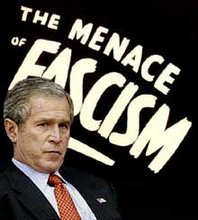


U.S. Intel. is just wrong, finds the IEAE.
VIENNA — Although international concern is growing about Iran's nuclear program and its regional ambitions, diplomats here say most U.S. intelligence shared with the U.N. nuclear watchdog agency has proved inaccurate and none has led to significant discoveries inside Iran.
The officials said the CIA and other Western spy services had provided sensitive information to the Vienna-based International Atomic Energy Agency at least since 2002, when Iran's long-secret nuclear program was exposed. But none of the tips about supposed secret weapons sites provided clear evidence that the Islamic Republic was developing illicit weapons."Since 2002, pretty much all the intelligence that's come to us has proved to be wrong," a senior diplomat at the IAEA said.
Another official here described the agency's intelligence stream as "very cold now" because "so little panned out."
The reliability of U.S. information and assessments on Iran is increasingly at issue as the Bush administration confronts the emerging regional power on several fronts: its expanding nuclear effort, its alleged support for insurgents in Iraq and its backing of Middle East militant groups.
The CIA still faces harsh criticism for its prewar intelligence errors on Iraq. No one here argues that U.S. intelligence officials have fallen this time for crudely forged documents or pushed shoddy analysis.
IAEA officials, who openly challenged U.S. assessments that Saddam Hussein was developing a nuclear bomb, say the Americans are much more cautious in assessing Iran.American officials privately acknowledge that much of their evidence on Iran's nuclear plans and programs remains ambiguous, fragmented and difficult to prove.
The IAEA has its own concerns about Iran's nuclear program, although agency officials say they have found no proof that nuclear material has been diverted to a weapons program.
Iran's Islamist government began enriching uranium in small amounts in August in a program it says will provide fuel only for civilian power stations, not nuclear weapons.
Information withheld
On Thursday, the IAEA released a report declaring that Iran had expanded uranium enrichment and defied a Security Council deadline to suspend nuclear activities. In the meantime, the agency is locked in a dispute with Tehran over additional information and access to determine whether the program is peaceful.
In November 2005, U.N. inspectors leafing through papers in Tehran discovered a 15-page document that showed how to form highly enriched uranium into the configuration needed for the core of a nuclear bomb. Iran said the paper came from Pakistan, but has rebuffed IAEA requests to let inspectors take or copy it for further analysis.
Diplomats here were less convinced by documents recovered by U.S. intelligence from a laptop computer apparently stolen from Iran. American analysts first briefed senior IAEA officials on the contents of the hard drive at the U.S. mission here in mid-2005.
The documents included detailed designs to upgrade ballistic missiles to carry nuclear warheads, drawings for subterranean testing of high explosives, and two pages describing research on uranium tetrafluoride, known as "green salt," which is used during uranium enrichment. IAEA officials remain suspicious of the information in part because most of the papers are in English rather than Persian, the Iranian language."We don't know. Are they genuine, are they real?" asked a senior U.N. official here. Another official who was briefed on the documents said he was "very unconvinced."
Iran's representative to the IAEA, Ali Asghar Soltanieh, dismissed the laptop documents as "fabricated information." Iran, he said, has produced 170 tons of "green salt" at a uranium conversion facility in Esfahan that is monitored by the IAEA."We are not hiding it," he said in an interview. "We make tons of it. These documents are all nonsense."
Testy relations
The U.S. government is not required to share intelligence with the IAEA, and relations between Washington and the U.N. agency are at times testy. In March 2003, IAEA chief Mohamed ElBaradei embarrassed the White House when he told the U.N. Security Council that documents indicating Hussein's government in Iraq had sought to purchase uranium in Niger were forged. The Bush administration subsequently opposed ElBaradei's reappointment to his post.While it confronts Iran's nuclear ambitions, the Bush administration also has tried to implicate Iran as a supplier of munitions and training for insurgent groups in neighboring Iraq.But the quality of its information has limited this effort too.
Single page
1 2 >>
(In accordance with Title 17 U.S.C. Section 107, this material is distributed without profit to those who have expressed a prior interest in receiving the included information for research and educational purposes. I.U. has no affiliation whatsoever with the originator of this article nor is I.U endorsed or sponsored by the originator.)
The Nazis, Fascists and Communists were political parties before they became enemies of liberty and mass murderers.
Showing posts with label IAEA. Show all posts
Showing posts with label IAEA. Show all posts
Monday, February 26, 2007


Thursday, February 1, 2007
U.S./Iran Nuclear Row has Europe Anxious
OMG!
Published on Wednesday, January 31, 2007 by the Guardian / UK
Europeans Fear US Attack on Iran as Nuclear Row Intensifies· Transatlantic rift emerges over how to handle crisis·
America builds up its naval forces in the Gulf
by Ian Traynor in Brussels and Jonathan Steele
Senior European policy-makers are increasingly worried that the US administration will resort to air strikes against Iran to try to destroy its suspect nuclear programme.
As transatlantic friction over how to deal with the Iranian impasse intensifies, there are fears in European capitals that the nuclear crisis could come to a head this year because of US frustration with Russian stalling tactics at the UN security council. "The clock is ticking," said one European official. "Military action has come back on to the table more seriously than before.
The language in the US has changed."
As the Americans continue their biggest naval build-up in the Gulf since the start of the Iraq war four years ago, a transatlantic rift is opening up on several important aspects of the Iran dispute.
The Bush administration will shortly publish a dossier of charges of alleged Iranian subversion in Iraq. "Iran has steadily ramped up its activity in Iraq in the last three to four months. This applies to the scope and pace of their operations. You could call these brazen activities," a senior US official said in London yesterday.
Although the Iranians were primarily in Shia areas, they were not confined to them, the US source said, implying that they had formed links with Sunni insurgents and were helping them with booby-trap bombs aimed at Iraqi and US forces, new versions of the "improvised explosive devices".
Senior members of the US Congress have raised concerns that the US will attack Iran in retaliation for its alleged activities in Iraq. The official said there were no plans for "cross-border operations" from Iraq to Iran. But he said: "We don't want a progressively more confident and bolder Iran ... The perception that Iran is ascendant in the region and that there are no limits to what Iran can do - that's what is destabilising."
The Americans and Europeans have sought to maintain a common front on the nuclear issue for the past 30 months, with the European troika of Britain, France and Germany running failed negotiations with the Iranians and the Americans tacitly supporting them.
But diplomats in Brussels and those dealing with the dispute in Vienna say a fissure has opened up between the US and western Europe on three crucial aspects - the military option; how and how quickly to hit Iran with economic sanctions already decreed by the UN security council; and how to deal with Russian opposition to action against Iran through the security council.
"There's anxiety everywhere you turn," said a diplomat familiar with the work of the International Atomic Energy Agency in Vienna. "The Europeans are very concerned the shit could hit the fan."
A US navy battle group of seven vessels was steaming towards the Gulf yesterday from the Red Sea, part of a deployment of 50 US ships, including two aircraft carriers, expected in the area in weeks.
"No path is envisaged by the EU other than the UN path," the EU's foreign policy chief, Javier Solana, told the Guardian yesterday. "The priority for all of us is that Iran complies with UN security council resolutions."
The IAEA chief, Mohamed ElBaradei, called at the weekend for a "timeout" in the worsening confrontation in an attempt to enable both sides to save face and climb down. But the Americans rejected the proposal and European officials involved in the dispute also believe the Iranians cannot be trusted to stick to a deal.
Despite recurring tensions on the Middle East between the US and France, the French are the most hawkish of the Europeans on Iran and are said to back a US drive to tighten the noose on Iran's president, Mahmoud Ahmadinejad.
The populist and recalcitrant leader is perceived to have been weakened recently, in part because of a mishandling of the nuclear row. "One group of western countries thinks it's a good time to step up the pressure on Ahmadinejad. All options are on the table. Others are worried we might be stumbling into a war," said another diplomat familiar with the dispute.
The Nazis, Fascists and Communists were political parties before they became enemies of liberty and mass murderers.
Published on Wednesday, January 31, 2007 by the Guardian / UK
Europeans Fear US Attack on Iran as Nuclear Row Intensifies· Transatlantic rift emerges over how to handle crisis·
America builds up its naval forces in the Gulf
by Ian Traynor in Brussels and Jonathan Steele
Senior European policy-makers are increasingly worried that the US administration will resort to air strikes against Iran to try to destroy its suspect nuclear programme.
As transatlantic friction over how to deal with the Iranian impasse intensifies, there are fears in European capitals that the nuclear crisis could come to a head this year because of US frustration with Russian stalling tactics at the UN security council. "The clock is ticking," said one European official. "Military action has come back on to the table more seriously than before.
The language in the US has changed."
As the Americans continue their biggest naval build-up in the Gulf since the start of the Iraq war four years ago, a transatlantic rift is opening up on several important aspects of the Iran dispute.
The Bush administration will shortly publish a dossier of charges of alleged Iranian subversion in Iraq. "Iran has steadily ramped up its activity in Iraq in the last three to four months. This applies to the scope and pace of their operations. You could call these brazen activities," a senior US official said in London yesterday.
Although the Iranians were primarily in Shia areas, they were not confined to them, the US source said, implying that they had formed links with Sunni insurgents and were helping them with booby-trap bombs aimed at Iraqi and US forces, new versions of the "improvised explosive devices".
Senior members of the US Congress have raised concerns that the US will attack Iran in retaliation for its alleged activities in Iraq. The official said there were no plans for "cross-border operations" from Iraq to Iran. But he said: "We don't want a progressively more confident and bolder Iran ... The perception that Iran is ascendant in the region and that there are no limits to what Iran can do - that's what is destabilising."
The Americans and Europeans have sought to maintain a common front on the nuclear issue for the past 30 months, with the European troika of Britain, France and Germany running failed negotiations with the Iranians and the Americans tacitly supporting them.
But diplomats in Brussels and those dealing with the dispute in Vienna say a fissure has opened up between the US and western Europe on three crucial aspects - the military option; how and how quickly to hit Iran with economic sanctions already decreed by the UN security council; and how to deal with Russian opposition to action against Iran through the security council.
"There's anxiety everywhere you turn," said a diplomat familiar with the work of the International Atomic Energy Agency in Vienna. "The Europeans are very concerned the shit could hit the fan."
A US navy battle group of seven vessels was steaming towards the Gulf yesterday from the Red Sea, part of a deployment of 50 US ships, including two aircraft carriers, expected in the area in weeks.
"No path is envisaged by the EU other than the UN path," the EU's foreign policy chief, Javier Solana, told the Guardian yesterday. "The priority for all of us is that Iran complies with UN security council resolutions."
The IAEA chief, Mohamed ElBaradei, called at the weekend for a "timeout" in the worsening confrontation in an attempt to enable both sides to save face and climb down. But the Americans rejected the proposal and European officials involved in the dispute also believe the Iranians cannot be trusted to stick to a deal.
Despite recurring tensions on the Middle East between the US and France, the French are the most hawkish of the Europeans on Iran and are said to back a US drive to tighten the noose on Iran's president, Mahmoud Ahmadinejad.
The populist and recalcitrant leader is perceived to have been weakened recently, in part because of a mishandling of the nuclear row. "One group of western countries thinks it's a good time to step up the pressure on Ahmadinejad. All options are on the table. Others are worried we might be stumbling into a war," said another diplomat familiar with the dispute.
The Nazis, Fascists and Communists were political parties before they became enemies of liberty and mass murderers.
Subscribe to:
Posts (Atom)