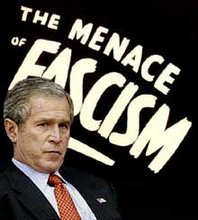


So! Is there a Democrat, let alone an independent,that still bellieves this White House , as well as the GOP leadership in Congress, has any interest at all in Bipartisanship?
If so, please raise you hands, because you really do need to be studied and you do not need to hold high office. I draw the line and rank stupidity or fatal states of denial.
by Randy Shaw‚ Feb. 07‚ 2007
Blunted thus far in his efforts to expand America’s war to Iran, President Bush has found a target closer to home: America’s homeless and low-income tenants.
The Bush budget plan for fiscal year 2008 announced on February 6 slashes key low-income housing programs, while increasing America’s mammoth defense budget by 11%---an increase that does not include funding for the Iraq war.
It will again be up to Congress to not only stop the cuts, but to achieve the long overdue budget increases necessary to stop the worsening of the nation’s homeless and housing crisis.While the Bush Administration sends public relations staff like Phil Mangano around the country touting plans to end chronic homelessness, the President continues efforts to cut housing programs for the poor. The new Bush budget plan would reduce the vital Project Based Rental Assistance Program, which currently funds about 1.2 million project based subsidies, by $163 million.
Public Housing funding would be cut by nearly $400 million.While the budget for the Section 8 Housing Choice Voucher program would rise by approximately one half of one percent or about $80 million. This is far less than would be needed to keep the program operating at its existing level, since increases in annual rent payments to landlords will clearly exceed that amount.This means that despite all evidence that Section 8 housing is critical for getting families out of homelessness, the Bush Administration seeks to reduce the number of families served by the program.
In announcing his budget, Bush said it reflected his chief priority of “protecting Americans.” That term appears to only apply to American military personnel, not low-income families whose health, education, and futures are threatened by homelessness.While the budget increases funding for homeless assistance programs by $120 million, homeless advocates recognize that this increase is greatly outweighed by cuts to affordable housing programs. According to Nan Roman, president of the National Alliance to End Homelessness, "increasing access to affordable housing is the key component to ending homelessness nationwide. Without increases in affordable housing, community efforts to end homelessness are doomed to failure."Of particular concern to many San Francisco nonprofits is Bush’s proposed $736 million cut to the Community Development Block Grant Program (CDBG). San Francisco’s CDBG program funds a wide spectrum of critical housing, education and community development services.To show you how far America’s budget has moved rightward in the past three decades, Richard Nixon’s 1972 re-election campaign highlighted the fact that “for the first time in 20 years we are spending more on human resources than defense.” Nixon was a big booster of the CDBG program, which was enacted during his presidency and began in 1974.The CDBG program’s decimation began with Ronald Reagan, but the program proved so popular with Republican mayors---the money is allocated by local governments-- that it survived. But the same president who has allocated over $20 billion for community development in Iraq has consistently opposed providing adequate funding to improve America’s low-income neighborhoods.Bush’s budget even cuts housing for the elderly (Section 202) by $160 million, and housing for people with Disabilities (Section 811) by $112 million.
Housing Opportunities for People With AIDS (HOPWA) would rise by $14 million, an amount barely sufficient to fund this unmet need in California. And the man who ran in 2000 as a “compassionate conservative” proposes to cut funding for the Emergency Food and Shelter Program, Health Care for the Homeless, and Grants for the Benefit of Homeless Individuals/Treatment for Homeless. After making great progress on winning political support for increased federal housing funding in the last years of the Clinton Administration, the Bush Administration has again pushed housing and homelessness off the national radar screen. While the Democratic Congress will likely defeat the worst of the budget cuts, keeping the status quo while millions are ill-housed or homeless in America is an unfortunate if unavoidable goal.For a complete list of Bush budget proposals for homelessness-related programs, go to http://www.endhomelessness.org/content/article/detail/1467.
(In accordance with Title 17 U.S.C. Section 107, this material is distributed without profit to those who have expressed a prior interest in receiving the included information for research and educational purposes. I.U. has no affiliation whatsoever with the originator of this article nor is I.U endorsed or sponsored by the originator.)
The Nazis, Fascists and Communists were political parties before they became enemies of liberty and mass murderers.
Showing posts with label Duty of Congress. Show all posts
Showing posts with label Duty of Congress. Show all posts
Friday, February 9, 2007


Sunday, January 21, 2007
Will Congress STOP Bush from attacking Iran, or stand guilty of crimes against humanity?
I know what the answer had damned well better be. Just accpeting this presidents word isn'y good enough. He has made it very clear that he cannot be trusted; not by the people and not by our other elected offficials.
He and Cheney have made this abundantly clear from day one.
Congress has the power to stop him and they had better damn well act now.
If Bush uses nukes, it will not only be a crime against humanity and a war crime of the highest magnitude;, it will also destroy this nation. I am not talking years from now, but very quickly.
Published on Saturday, January 20, 2007 by CommonDreams.org
How Congress Can Stop the Iran Attack - Or be Complicit in Nuclear War Crimes
by Jorge Hirsch
President Bush is invoking his "commander in chief" authority to escalate the war in Iraq, and he will likely also invoke it to launch an aerial attack against Iran. Congress has long ago abdicated and delegated to the President its constitutional responsibility to initiate wars. Yet Congress still has one surefire way to influence events: it has the constitutional authority to make the "nuclear option" against Iran illegal. In so doing, it would stop the relentless drive to war against Iran dead in its tracks.
Notwithstanding Joe Biden's threat of a "constitutional confrontation" if Bush attacks Iran without Congressional authorization, the fact is that such an attack would be perfectly legal: the War Powers Act gives the US President legal authority to wage war against any country for 60 days. It would also be legal for Bush to order nuclear strikes against Iran: under NSC-30 of 1948, "the decision as to the employment of atomic weapons in the event of war is to be made by the Chief Executive". Neither Congressional "resolutions" nor votes to withold funding will have any effect on preventing such events.
However, Congress could pass a law making a nuclear attack on a non-nuclear nation in the absence of Congressional authorization illegal. In so doing, Congress would effectively be preventing Bush from launching any attack against Iran without its authorization, thus reclaiming its broader constitutionally assigned duties. Because Bush will not dare putting 150,000 American lives in Iraq at risk of Iranian retaliation without having the nuclear option on the table. By removing the nuclear option from the Bush toolkit, Congress would be forcefully imposing its will and that of the American people on an administration gone mad.
If Congress chooses not to face the fact that US military action against Iran is likely to lead to the first US use of nuclear weapons since Nagasaki, each one of its members will share responsibility for the nefarious chain of events that is likely to follow, and should be preparing to face his/her very own nuclear Nuremberg trial.
Preparations for the Iran attack
The following recent events have led to widespread suspicions that a US/ Israeli attack on Iran is imminent:
How Congress can act?
Congress can pass a law that will have a real, immediate and historic effect: outlaw the US use of nuclear weapons against non-nuclear-weapon states . Article I, Sect. 8, Clause 14 of the US constitution empowers Congress to regulate the Armed Forces. Congress cannot micromanage the conduct of war, that is up to the President, the Commander in Chief. But Congress can outlaw broad war practices, such as torture, or the use of nuclear weapons in any or all circumstances, by regulating what US Armed Forces can and cannot do. An example of such a bill, vetted by prominent constitutional law experts, is given here.
Critics will say that nuclear weapons may be necessary against countries on the verge of acquiring them. The law can allow for it: it should specify that Congress has the authority to designate any country it chooses as a "nuclear weapon state", not subject to this restriction.
Congress could even outlaw the US "first use of nuclear weapons" against anybody without "the prior, explicit authorization of Congress". Such legislation was considered and voted down by the US Senate in 1972, and it was considered again in hearings in the House of Representatives in 1976: "First use of nuclear weapons: preserving responsible control". We are suggesting here a much milder restriction on presidential authority.
Would the passage of such a law implicitly condone a conventional attack on Iran?
In no way. On the contrary, it would instantly bring the drive to attack Iran to a screeching halt, because Bush will not dare attacking Iran without having his "nuclear option" on the table. Such a law will absolutely constrain the choices the President has. No matter how much "Commander in Chief" power President Bush thinks he has, he would not be able to ignore such a law without committing an impeachable offense. If Congress decides that attacking Iran is a good idea, Congress can vote to declare that Iran is a nuclear-weapon state, subject to US nuclear attack, putting the nuclear option back on the table (and by showing its determination, making the "nuclear option" a more credible "deterrent"). The President, however, would be forced to bring his case to Congress.
Would the passing of such a law "embolden" Iran?
Not likely. Iran has not been deterred from continuing enrichment by US threats, UN sanctions, nor statements that the "nuclear option" is on the table. A forceful statement by the US that it will use overwhelming conventional force against Iran if necessary, and reserving the right to declare Iran a nuclear country subject to US nuclear attack at any time, should be more than enough to keep Iran in check.
Such a bill would put the momentous decision to use nuclear weapons against non-nuclear states in the hands of Congress, closer to the American people, where it belongs, rather than at the sole discretion of an Executive gone mad. More sweeping measures such as "abolishing nuclear weapons" are unrealistic and have no chance of succeeding, hence they are counterproductive.
Majority vote of both chambers, then overturning the presidential veto: a mere 2/3 of Congress willing to avert a course of action that would bring humanity to the brink, is all that's needed. Which Congressperson will have the courage to step up to the plate and get the ball rolling? Dennis Kucinich? Ron Paul? Robert Byrd? Chuck Hagel? Russ Feingold? John Murtha? Jim Webb?
Or, Congressmembers can choose to continue the posturing, make lofty speeches, write letters to the President, pass "sense of Congress" resolutions, even cut funding, all the while balancing their individual aspirations for 2008. None of it will stop this administration.
US nuclear weapons use
This column and others have been exposing for many months the evidence that this administration has been carrying out a deliberate plan to set up the conditions that will lead to the US use of nuclear weapons against Iran, and its motivations for it [1], [2], [3].
Congress is on notice and cannot claim ignorance.
The President has publicly refused to take the "nuclear option" against Iran off the table. US nuclear weapons policies have undergone sweeping changes in the last 6 years, laying the doctrinal foundations that invite US nuclear strikes against non-nuclear adversaries under a variety of easily satisfied conditions. Military command structure and Pentagon guidelines have been "transformed" by Rumsfeld for that purpose. The B61-11 nuclear bunker busters are in the stockpile, ready to be used. The President has sole full authority to order their use, Congress has no say.
Congress knows full well what this President is capable of doing. By not acting, Congress is condoning this state of affairs, effectively putting its seal of approval on what is about to happen. America will hold each member of Congress fully responsible for it.
The German Reichstag in 1933 formally voted to transfer its powers to the Executive, thus avoiding being complicit in the impending war crimes. The US Congress has not had such good sense, even while abdicating its powers in practice, and it will face the consequences of its inaction. Time is running out.
Crimes against humanity
Using nuclear weapons against Iran, even just destroying one Iranian underground facility with nuclear bunker busters, with minimal "collateral damage", is a crime against humanity because:
It will break the 60-year old taboo against the use of nuclear weapons. Once a nuclear weapon is used again, it will invite use by others. There is no sharp line dividing small from large nuclear weapons, nor between nuclear weapons targeting facilities and those targeting humans, civilians or military.
Iran is years away from the capability of acquiring nuclear weapons by any estimate, hence it is a "non-nuclear-weapon state" (NNWS).
A US or Israeli use of a nuclear weapon against a NNWS will instantly destroy the Nuclear Non-Proliferation Treaty and lead to widespread nuclear proliferation.
" Weight for weight, the energy produced by a nuclear explosion is millions of times more powerful than a conventional explosion". So is the number of people it kills.
With no NPT and many more nuclear countries the potential for escalating nuclear war will be exponentially enhanced.
Nuclear war can lead to hundreds of millions of deaths, to the destruction of civilization and to the destruction of all life on earth.
The American Physical Society, representing the community of scientists that brought nuclear weapons into existence, has recently for the first time in its history issued a statement of deep concern about "the possible use of nuclear weapons against non-nuclear-weapon states" and its consequences for the Non-Proliferation Treaty, and some of America's most eminent scientists recently wrote to President Bush that such action would be "gravely irresponsible" and lead to "disastrous consequences".
Does Iran share responsibility?
Iran is pursuing a civilian nuclear program, allowed under the NPT. There is no evidence whatsoever that Iran is pursuing nuclear weapons, only "suspicions". It is always possible to interpret any action by Iran in a negative way. If Iran slows down its enrichment activity, the press reports that "diplomats in Vienna began to worry that there was so little activity at Iran's main nuclear site that perhaps work had started on a secret site elsewhere in the country". (Of course no mention on who those "diplomats in Vienna" are). If Iran accelerates its enrichment activity, "Iran heightened international concerns by announcing April 11 that it had enriched uranium with 164 centrifuges".
Damned if you do, damned if you don't.
Saddam Hussein "chose war" by not being able to allay "concerns" that he didn't have the weapons he didn't have.
Vice-President Cheney stated last Sunday on national TV "There's no reason in the world why Iran needs to continue to pursue nuclear weapons". This is the same Vice-President that stated in 2002 "Simply stated, there is no doubt that Saddam Hussein now has weapons of mass destruction. There is no doubt he is amassing them to use against our friends, against our allies, and against us." His statements then were as categorical and as unsubstantiated as his statements today, and the 2002 statements were proven categorically false.
Why doesn't Congress demand that Cheney substantiate his statements today or else shut up or else step down? Isn't lying on matters of national security an impeachable offense?
Iran bears no responsibility for the rising tensions. When Cheney states "Iran's a problem in a much larger sense. At the same time, of course, they're pursuing the acquisition of nuclear weapons. They are in a position where they sit astride the Straits of Hormuz, where over 20 percent of the world's supply of oil transits every single day, over 18 million barrels a day. So the threat that Iran represents is growing, it's multi- dimensional, and it is, in fact, of concern to everybody in the region" he is candidly stating the Bush administration agenda, just as he did in 2002.
And Fox news' Chris Wallace is happy to spell it out: "In fact, it was the basis of the Bush doctrine: You will not allow the world's most dangerous powers to get access to the world's most dangerous weapons. Can you pledge that, before you and the president leave office, you will take care of the threat of Iran?" Cheney's ominous answer: "I think we're working right now, today, as we speak, on key elements of that problem", as America is massing up its military power in the Persian Gulf, just like it did at this same time of the year in 2003.
On March 6, 2003, when asked whether or not the US would attack Iraq, President Bush answered "we're days away from resolving this issue at the Security Council", and "we're working with Security Council members to resolve this issue at the Security Council". 14 days later the US attacked Iraq, without Security Council's approval. Watch for a similar script in the weeks ahead.
Congress' guilt
Each member of Congress knows that the US President has full legal authority today to launch a nuclear attack against any country in the world. Each member of Congress knows that the Constitution assigns Congress the responsibility to regulate the Armed Forces, and that Congress has the authority to regulate the use of nuclear weapons. Each member of Congress knows the sweeping changes in US nuclear weapons policies and planning undertaken during this administration.
Any private assurances that Bush may have given to members of Congress that he will not order the use of nuclear weapons against Iran without congressional authorization are worthless. He can legally do it, and he will.
Any arguments the administration may put forth that legislating over nuclear weapons use will have a detrimental effect on the diplomatic effort vis-a-vis Iran will be as disingenuous as the arguments in September 2002 that Congress should authorize the use of force against Iraq so that diplomacy could succeed: "I've asked for Congress' support to enable the administration to keep the peace"; "If you want to keep the peace, you've got to have the authorization to use force. But it's -- this will be -- this is a chance for Congress to indicate support. It's a chance for Congress to say, we support the administration's ability to keep the peace. That's what this is all about."
Crimes of omission are punishable under international [1] and US domestic law. Principle VII of the Nuremberg tribunal stated "Complicity in the commission of a crime against peace, a war crime, or a crime against humanity as set forth in Principle VI is a crime under international law."
If Congress doesn't legislate on the US use of nuclear weapons, and President Bush orders the use of nuclear weapons against Iran, he will be doing it in the name of each and every member of the 110th Congress.
The United States will have instantly offered the world 535 new defendants for future war crimes tribunals. Nuclear weapons are million-times more powerful than conventional weapons. If 535 million people die in ensuing nuclear conflicts, each member of the 110th Congress will have 1 million human lives on his/her own personal account.
Saddam Hussein and Barzan Ibrahim al-Tikriti went to the gallows for a mere 148.
Jorge Hirsch is a Professor of Physics at the University of California at San Diego and a Fellow of the American Physical Society. He recently organized of a recent petition, circulated among leading physicists, opposing the new nuclear weapons policies adopted by the US in t
he past 5 years. He is a frequent commentator on Iran and nuclear weapons.
He and Cheney have made this abundantly clear from day one.
Congress has the power to stop him and they had better damn well act now.
If Bush uses nukes, it will not only be a crime against humanity and a war crime of the highest magnitude;, it will also destroy this nation. I am not talking years from now, but very quickly.
Published on Saturday, January 20, 2007 by CommonDreams.org
How Congress Can Stop the Iran Attack - Or be Complicit in Nuclear War Crimes
by Jorge Hirsch
President Bush is invoking his "commander in chief" authority to escalate the war in Iraq, and he will likely also invoke it to launch an aerial attack against Iran. Congress has long ago abdicated and delegated to the President its constitutional responsibility to initiate wars. Yet Congress still has one surefire way to influence events: it has the constitutional authority to make the "nuclear option" against Iran illegal. In so doing, it would stop the relentless drive to war against Iran dead in its tracks.
Notwithstanding Joe Biden's threat of a "constitutional confrontation" if Bush attacks Iran without Congressional authorization, the fact is that such an attack would be perfectly legal: the War Powers Act gives the US President legal authority to wage war against any country for 60 days. It would also be legal for Bush to order nuclear strikes against Iran: under NSC-30 of 1948, "the decision as to the employment of atomic weapons in the event of war is to be made by the Chief Executive". Neither Congressional "resolutions" nor votes to withold funding will have any effect on preventing such events.
However, Congress could pass a law making a nuclear attack on a non-nuclear nation in the absence of Congressional authorization illegal. In so doing, Congress would effectively be preventing Bush from launching any attack against Iran without its authorization, thus reclaiming its broader constitutionally assigned duties. Because Bush will not dare putting 150,000 American lives in Iraq at risk of Iranian retaliation without having the nuclear option on the table. By removing the nuclear option from the Bush toolkit, Congress would be forcefully imposing its will and that of the American people on an administration gone mad.
If Congress chooses not to face the fact that US military action against Iran is likely to lead to the first US use of nuclear weapons since Nagasaki, each one of its members will share responsibility for the nefarious chain of events that is likely to follow, and should be preparing to face his/her very own nuclear Nuremberg trial.
Preparations for the Iran attack
The following recent events have led to widespread suspicions that a US/ Israeli attack on Iran is imminent:
- Additional aircraft carriers deployed to the Persian Gulf.
- US Patriot missiles just deployed to the Persian Gulf.
- F16 fighter planes just deployed to the Incirlik base in Turkey.
- Increased number of US nuclear submarines in Persian Gulf.
- Admiral Fallon named Centcom commander.
- Israeli pilots training for Iran bombing mission.
- Increased rethoric and provocations against Iran. The F-16's can deliver B61-11 nuclear
- bunker busters, and there may be such bombs at Incirlik.
How Congress can act?
Congress can pass a law that will have a real, immediate and historic effect: outlaw the US use of nuclear weapons against non-nuclear-weapon states . Article I, Sect. 8, Clause 14 of the US constitution empowers Congress to regulate the Armed Forces. Congress cannot micromanage the conduct of war, that is up to the President, the Commander in Chief. But Congress can outlaw broad war practices, such as torture, or the use of nuclear weapons in any or all circumstances, by regulating what US Armed Forces can and cannot do. An example of such a bill, vetted by prominent constitutional law experts, is given here.
Critics will say that nuclear weapons may be necessary against countries on the verge of acquiring them. The law can allow for it: it should specify that Congress has the authority to designate any country it chooses as a "nuclear weapon state", not subject to this restriction.
Congress could even outlaw the US "first use of nuclear weapons" against anybody without "the prior, explicit authorization of Congress". Such legislation was considered and voted down by the US Senate in 1972, and it was considered again in hearings in the House of Representatives in 1976: "First use of nuclear weapons: preserving responsible control". We are suggesting here a much milder restriction on presidential authority.
Would the passage of such a law implicitly condone a conventional attack on Iran?
In no way. On the contrary, it would instantly bring the drive to attack Iran to a screeching halt, because Bush will not dare attacking Iran without having his "nuclear option" on the table. Such a law will absolutely constrain the choices the President has. No matter how much "Commander in Chief" power President Bush thinks he has, he would not be able to ignore such a law without committing an impeachable offense. If Congress decides that attacking Iran is a good idea, Congress can vote to declare that Iran is a nuclear-weapon state, subject to US nuclear attack, putting the nuclear option back on the table (and by showing its determination, making the "nuclear option" a more credible "deterrent"). The President, however, would be forced to bring his case to Congress.
Would the passing of such a law "embolden" Iran?
Not likely. Iran has not been deterred from continuing enrichment by US threats, UN sanctions, nor statements that the "nuclear option" is on the table. A forceful statement by the US that it will use overwhelming conventional force against Iran if necessary, and reserving the right to declare Iran a nuclear country subject to US nuclear attack at any time, should be more than enough to keep Iran in check.
Such a bill would put the momentous decision to use nuclear weapons against non-nuclear states in the hands of Congress, closer to the American people, where it belongs, rather than at the sole discretion of an Executive gone mad. More sweeping measures such as "abolishing nuclear weapons" are unrealistic and have no chance of succeeding, hence they are counterproductive.
Majority vote of both chambers, then overturning the presidential veto: a mere 2/3 of Congress willing to avert a course of action that would bring humanity to the brink, is all that's needed. Which Congressperson will have the courage to step up to the plate and get the ball rolling? Dennis Kucinich? Ron Paul? Robert Byrd? Chuck Hagel? Russ Feingold? John Murtha? Jim Webb?
Or, Congressmembers can choose to continue the posturing, make lofty speeches, write letters to the President, pass "sense of Congress" resolutions, even cut funding, all the while balancing their individual aspirations for 2008. None of it will stop this administration.
US nuclear weapons use
This column and others have been exposing for many months the evidence that this administration has been carrying out a deliberate plan to set up the conditions that will lead to the US use of nuclear weapons against Iran, and its motivations for it [1], [2], [3].
Congress is on notice and cannot claim ignorance.
The President has publicly refused to take the "nuclear option" against Iran off the table. US nuclear weapons policies have undergone sweeping changes in the last 6 years, laying the doctrinal foundations that invite US nuclear strikes against non-nuclear adversaries under a variety of easily satisfied conditions. Military command structure and Pentagon guidelines have been "transformed" by Rumsfeld for that purpose. The B61-11 nuclear bunker busters are in the stockpile, ready to be used. The President has sole full authority to order their use, Congress has no say.
Congress knows full well what this President is capable of doing. By not acting, Congress is condoning this state of affairs, effectively putting its seal of approval on what is about to happen. America will hold each member of Congress fully responsible for it.
The German Reichstag in 1933 formally voted to transfer its powers to the Executive, thus avoiding being complicit in the impending war crimes. The US Congress has not had such good sense, even while abdicating its powers in practice, and it will face the consequences of its inaction. Time is running out.
Crimes against humanity
Using nuclear weapons against Iran, even just destroying one Iranian underground facility with nuclear bunker busters, with minimal "collateral damage", is a crime against humanity because:
It will break the 60-year old taboo against the use of nuclear weapons. Once a nuclear weapon is used again, it will invite use by others. There is no sharp line dividing small from large nuclear weapons, nor between nuclear weapons targeting facilities and those targeting humans, civilians or military.
Iran is years away from the capability of acquiring nuclear weapons by any estimate, hence it is a "non-nuclear-weapon state" (NNWS).
A US or Israeli use of a nuclear weapon against a NNWS will instantly destroy the Nuclear Non-Proliferation Treaty and lead to widespread nuclear proliferation.
" Weight for weight, the energy produced by a nuclear explosion is millions of times more powerful than a conventional explosion". So is the number of people it kills.
With no NPT and many more nuclear countries the potential for escalating nuclear war will be exponentially enhanced.
Nuclear war can lead to hundreds of millions of deaths, to the destruction of civilization and to the destruction of all life on earth.
The American Physical Society, representing the community of scientists that brought nuclear weapons into existence, has recently for the first time in its history issued a statement of deep concern about "the possible use of nuclear weapons against non-nuclear-weapon states" and its consequences for the Non-Proliferation Treaty, and some of America's most eminent scientists recently wrote to President Bush that such action would be "gravely irresponsible" and lead to "disastrous consequences".
Does Iran share responsibility?
Iran is pursuing a civilian nuclear program, allowed under the NPT. There is no evidence whatsoever that Iran is pursuing nuclear weapons, only "suspicions". It is always possible to interpret any action by Iran in a negative way. If Iran slows down its enrichment activity, the press reports that "diplomats in Vienna began to worry that there was so little activity at Iran's main nuclear site that perhaps work had started on a secret site elsewhere in the country". (Of course no mention on who those "diplomats in Vienna" are). If Iran accelerates its enrichment activity, "Iran heightened international concerns by announcing April 11 that it had enriched uranium with 164 centrifuges".
Damned if you do, damned if you don't.
Saddam Hussein "chose war" by not being able to allay "concerns" that he didn't have the weapons he didn't have.
Vice-President Cheney stated last Sunday on national TV "There's no reason in the world why Iran needs to continue to pursue nuclear weapons". This is the same Vice-President that stated in 2002 "Simply stated, there is no doubt that Saddam Hussein now has weapons of mass destruction. There is no doubt he is amassing them to use against our friends, against our allies, and against us." His statements then were as categorical and as unsubstantiated as his statements today, and the 2002 statements were proven categorically false.
Why doesn't Congress demand that Cheney substantiate his statements today or else shut up or else step down? Isn't lying on matters of national security an impeachable offense?
Iran bears no responsibility for the rising tensions. When Cheney states "Iran's a problem in a much larger sense. At the same time, of course, they're pursuing the acquisition of nuclear weapons. They are in a position where they sit astride the Straits of Hormuz, where over 20 percent of the world's supply of oil transits every single day, over 18 million barrels a day. So the threat that Iran represents is growing, it's multi- dimensional, and it is, in fact, of concern to everybody in the region" he is candidly stating the Bush administration agenda, just as he did in 2002.
And Fox news' Chris Wallace is happy to spell it out: "In fact, it was the basis of the Bush doctrine: You will not allow the world's most dangerous powers to get access to the world's most dangerous weapons. Can you pledge that, before you and the president leave office, you will take care of the threat of Iran?" Cheney's ominous answer: "I think we're working right now, today, as we speak, on key elements of that problem", as America is massing up its military power in the Persian Gulf, just like it did at this same time of the year in 2003.
On March 6, 2003, when asked whether or not the US would attack Iraq, President Bush answered "we're days away from resolving this issue at the Security Council", and "we're working with Security Council members to resolve this issue at the Security Council". 14 days later the US attacked Iraq, without Security Council's approval. Watch for a similar script in the weeks ahead.
Congress' guilt
Each member of Congress knows that the US President has full legal authority today to launch a nuclear attack against any country in the world. Each member of Congress knows that the Constitution assigns Congress the responsibility to regulate the Armed Forces, and that Congress has the authority to regulate the use of nuclear weapons. Each member of Congress knows the sweeping changes in US nuclear weapons policies and planning undertaken during this administration.
Any private assurances that Bush may have given to members of Congress that he will not order the use of nuclear weapons against Iran without congressional authorization are worthless. He can legally do it, and he will.
Any arguments the administration may put forth that legislating over nuclear weapons use will have a detrimental effect on the diplomatic effort vis-a-vis Iran will be as disingenuous as the arguments in September 2002 that Congress should authorize the use of force against Iraq so that diplomacy could succeed: "I've asked for Congress' support to enable the administration to keep the peace"; "If you want to keep the peace, you've got to have the authorization to use force. But it's -- this will be -- this is a chance for Congress to indicate support. It's a chance for Congress to say, we support the administration's ability to keep the peace. That's what this is all about."
Crimes of omission are punishable under international [1] and US domestic law. Principle VII of the Nuremberg tribunal stated "Complicity in the commission of a crime against peace, a war crime, or a crime against humanity as set forth in Principle VI is a crime under international law."
If Congress doesn't legislate on the US use of nuclear weapons, and President Bush orders the use of nuclear weapons against Iran, he will be doing it in the name of each and every member of the 110th Congress.
The United States will have instantly offered the world 535 new defendants for future war crimes tribunals. Nuclear weapons are million-times more powerful than conventional weapons. If 535 million people die in ensuing nuclear conflicts, each member of the 110th Congress will have 1 million human lives on his/her own personal account.
Saddam Hussein and Barzan Ibrahim al-Tikriti went to the gallows for a mere 148.
Jorge Hirsch is a Professor of Physics at the University of California at San Diego and a Fellow of the American Physical Society. He recently organized of a recent petition, circulated among leading physicists, opposing the new nuclear weapons policies adopted by the US in t
he past 5 years. He is a frequent commentator on Iran and nuclear weapons.
Subscribe to:
Posts (Atom)