Showing posts with label Donald Rumsfeld. Show all posts

Sunday, December 28, 2008

The Noose Tightens

Newsweek: "The Noose Tightens: Rumsfeld, Ashcroft and other top Bush officials could soon face legal jeopardy." Uh, don't forget Cheney now!

They should face trial somewhere. If our system is too corrupt to hold them accountable, rendition them to the Hague. There must be justice this time. No more sweeping national scandals and crimes under the national carpet.

The first step on the long journey back to some moral authority in the global community is accountability for our own war criminals and those who committed crimes against the Constitution.

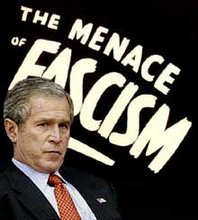
The Nazis, Fascists and Communists were political parties before they became enemies of liberty and mass murderers.
Friday, December 19, 2008

Suing Cheney and Rumsfeld over 9/11 Attacks

12/18/2008 @ 9:49 pm

Filed by Stephen C. Webster

April Gallop 'will be very disappointed,' lawyer tells RAW STORY.


April Gallop, whom the Army News Service called a "hero" after she was awarded the Purple Heart for injuries sustained at the Pentagon on Sept. 11, 2001, will not likely be triggering another such response from internal government media.

On behalf of Spc. April Gallop, who served in the Network Infrastructure Services Agency as an administrative specialist, California attorney William Veale on Monday filed a civil suit against former Secretary of Defense Donald Rumsfeld, Vice President Dick Cheney and former US Air Force General Richard Myers, who was acting chairman of the joint chiefs on 9/11.

The suit alleges they engaged in conspiracy to facilitate the terrorist attacks and purposefully failed to warn those inside the Pentagon, contributing to injuries she and her two-month-old son incurred. Additional, unnamed persons with foreknowledge of the attacks are also named.

First news of the suit was carried exclusively by RAW STORY. Full text of the claims may be read here.

"Everything happened so fast," Gallop said in an Oct. 2001 published report. "I remember thinking that we had been bombed."

After rescuing one of her coworkers, the two began searching the smoldering debris that used to be April's office for her two-month-old son Elisha. She pulled him out and escaped the smoke-filled building, out onto the Pentagon's lawn, and collapsed.

Though thankful she survived the event, "I'm still angry at the enemy," she said. "...They will pay."

Years later, she's pursuing that payment in the form of a civil suit.

"I remember being so disgusted at the frequency of random drill exercises taking place for us to evacuate the building," Gallop told George Washington blog in a 2006 interview. "It seemed as if they always happened when I had to take care of certain things.

"Yet on September 11th, the day when our lives were threatened, not one alarm."

April sustained a mild brain injury, but still struggles with Post Concussive Syndrome and hearing loss. Her son also suffered a mild brain injury which has since spiraled out into a learning disability.

On the attack, Gallop's recall is somewhat different from the official story. She continued ...

"I have been misquoted on numerous occasions. That happens when individuals have ulterior motives. But here is my statement for the record.

"I was located at the E ring. From my inside perspective, with no knowledge of what had actually happened on the outside, it did sound like a bomb. And we had to escape the building before the floors, debris etc. collapsed on us.

"And I don't recall at anytime seeing any plane debris. Again, I don't know what plane debris would look like after hitting a building. But I would have recalled unusual looking pieces similar to plane parts."

"What they don't want is for this to go into discovery," said Gallop's attorney, Mr. Veale, speaking to RAW STORY. "If we can make it past their initial motion to dismiss these claims, and we get the power of subpoena, then we've got a real shot at getting to the bottom of this. We've got the law on our side."

Does it have a chance?


RAW STORY solicited the opinions of a number of lawyers with prior experience suing the federal government in civil court.

"The 15 page Complaint appears to be the product of a lot of hard research, alleging in meticulous detail an ongoing conspiracy among the named defendants to either cause or allow the attacks to happen and to catch us totally unprepared," said Larry Sterns, Esq., of San Francisco law firm Sterns & Walker. "We have seen conspiracy allegations before and an undercurrent of doubt remains as to just what did happen that day and why? Without question it was the turning point in the up to that time, far from a notable term as president for George Bush, following his controversial ascent to the office less than a year before."

According to the Sterns & Walker Web site, the firm represents survivors of aircraft and other major accidents and catastrophes. The firm "has been involved in almost every major air carrier accident case, and hundreds of other cases involving claims against major defendants," including the United States of America.

"We have already had a precursor of this, which unfortunately for the plaintiff, spells out what will happen to her case. Ex-CIA agent, Valerie Plame, whose cover was deliberately blown by Cheney and probably others at the White House, in retaliation for the unkind remarks her husband made after his investigation concerning the Bush claim that Sadaam Hussein had attempted to purchase raw material for a weapon of mass destruction from a country in Africa, filed a damage suit against Cheney and others for destroying her career," said Sterns.

He added: "However we may feel about these individuals, and what impact they had on the United States, we fear [Ms. Gallop] will be very disappointed in trying to address issues or obtain answers through the judicial process."

Sterns' prediction of failure is tempered by attorney Phillip L. Marcus out of Colombia, Maryland, who specializes in intellectual property and copyright law. Marcus professed to RAW STORY an expertise in Bivens vs. Six Unknown Federal Narcotics Agents, a case in which the Supreme Court determined that the government could be sued for the violation of a Constitutional right, even if no federal statute exists to support such action.

"Jurisdiction is the big hurdle for the plaintiff, but there are two routes over the hurdle, the Bivens Doctrine (that where the facts support serious rights violations by federal agents there is a kind of federal common law jurisdiction, else violations of the Bill of Rights could not be remedied), and 28 USC sec. 1331, which is the Tort Claims Act," said Marcus.

"Mr. Veale has made extraordinary allegations. Normally if you simply allege enough facts for jurisdiction the court goes past that defense.

"But with such bizarre facts the judge is going to want to see a little bit of evidence to believe it has Bivens jurisdiction or FTCA jurisdiction, before letting Veale go ahead with what will be massive discovery -- tons of documents, and depositions under oath of Cheney, Rummy and many others, defendants and plain witnesses."

He concludes: "I'd bet [this story] lives at least four or five years, lots of news stories."

The complete text of both attorneys' opinions on the April Gallop suit is below.

####

When is the United States or any of its officers, agents or employees able to be held liable in a court of law? Can the civil judicial system, seeking damages, as opposed to a criminal charge, be used to correct what might be perceived as just not misconduct, but alleged criminal activity on the part of those in our government?

The answers to these questions can be complicated, but it seems clear that one case, discussed below, will not have much chance of success.

The frustrations of many many Americans may well be evident in the suit filed in the federal court for the Eastern District of New York by [April Gallop], who seeks damages against the sitting vice president, Dick Cheney, the ex secretary of defense, Donald Rumsfeld, and others, all arising out of the events of September 11, 2001.

The 15 page Complaint appears to be the product of a lot of hard research, alleging in meticulous detail an ongoing conspiracy among the named defendants to either cause or allow the attacks to happen and to catch us totally unprepared. We have seen conspiracy allegations before and an undercurrent of doubt remains as to just what did happen that day and why? Without question it was the turning point in the up to that time, far from a notable term as president for George Bush, following his controversial ascent to the office less than a year before.

However, although it may be easy to sympathize with some of the criticisms and allegations made against Cheney, Rumsfeld and the others (interesting enough, Bush is not named in the suit), as we look back over the last eight years, and however we may feel about these individuals, and what impact they had on the United States, we fear [Ms. Gallop] will be very disappointed in trying to address issues or obtain answers through the judicial process.

We have already had a precursor of this, which unfortunately for the plaintiff, spells out what will happen to her case. Ex-CIA agent, Valerie Plame. whose cover was deliberately blown by Cheney and probably others at the White House, in retaliation for the unkind remarks her husband made after his investigation concerning the Bush claim that Sadaam Hussein had attempted to purchase raw material for a weapon of mass destruction from a country in Africa, filed a damage suit against Cheney and others for destroying her career.

The court summarily ruled that the case did not lie; political questions such as this are routinely not heard by the courts. The court also ruled there was an across the board immunity for anything the sitting vice president did or did not do while in office. The same would be true, of course, as to any suit one might try to file against Bush, including after he leaves office.

It seems clear here the same rules apply and the same result will obtain. The court will dismiss this case on motion of the defendants, for the same reasons. However one may view Mr. Cheney, described by many as the Prince of Darkness, and worse; his actions while vice president of the United States are protected from judicial review. The sole remedy found in the Constitution to deal with unworthy office holders is impeachment.

This is not to say that suits may not be brought against the government itself. Indeed they can be, and are filed every day on a variety of issues. Our law firm has handled many of these, and with success. The courts have held that the United States starts with an overall immunity, but may waive that and permit suits against it, as Congress dictates.

One common example is the Federal Tort Claims Act, from 1946, which authorizes suit against the United States for damages caused by an act or omission of the government, acting through agents or agencies, if such conduct would have been actionable under the law of the state where the act or omission occurred.

There are some exceptions and some special defense available to the government, principally the Discretionary Function defense, which also shield government employees, right up to and including the president for decisions and actions, turning out in retrospect to be right or wrong, based upon an exercise of that discretion.

That defense has so far shielded the United States from any liability arising out of the Kenya and Tanzania embassy bombings some ten years ago, but the fight goes on.

Gerald A. Sterns, Esq.
Sterns & Walker
www.Trial-Law.com

**

This is not a simple negligence claim. Veale does scatter-shoot the jursidictional issue, in par. 8 of the complaint. You should read about the Bivens case.

Jurisdiction is the big hurdle for the plaintiff, but there are two routes over the hurdle, the Bivens Doctrine (that where the facts support serious rights violations by federal agents there is a kind of federal common law jurisdiction, else violations of the Bill of Rights could not be remedied), and 28 USC sec. 1331, which is the Tort Claims Act.

Mr. Veale has made extraordinary allegations. Normally if you simply allege enough facts for jurisdiction the court goes past that defense.

But with such bizarre facts the judge is going to want to see a little bit of evidence to believe it has Bivens jurisdiction or FTCA jurisdiction, before letting Veale go ahead with what will be massive discovery -- tons of documents, and depositions under oath of Cheney, Rummy and many others, defendants and plain witnesses.

This has a little bit of the feel of the Hatfill case, the guy who was "of interest" in anthrax envelopes, and then wasn't. But different district. Veale has filed in the SDNY while Hatfill was in the EDVa, Alexandria.

I'd bet [this story] lives at least four or five years, lots of news stories.

--Philip L. Marcus, Esq.
Business Negotiations & Agreements & Intellectual Property
www.negotiationpro.com

(In accordance with Title 17 U.S.C. Section 107, this material is distributed without profit to those who have expressed a prior interest in receiving the included information for research and educational purposes. I.U. has no affiliation whatsoever with the originator of this article nor is I.U endorsed or sponsored by the originator.)


The Nazis, Fascists and Communists were political parties before they became enemies of liberty and mass murderers.


Friday, June 20, 2008

Military Lawyers Vigirously Objected to Torture, But Rummy Didn't Care

We in the reality-based community always knew that the abu Ghraib abuses didn’t originate with those “few bad apples,” but a new Senate probe conclusively proves that Donald Rumsfeld and his senior lawyers began pushing for “harsh techniques” long before those infamous photos surfaced.

Guardian:

A Senate investigation unveiled today found that senior Pentagon officials began planning to use abusive tactics at Guantánamo Bay earlier than they previously acknowledged, borrowing from a programme that trained US troops to resist cruel interrogations.

New documents disclosed today show that lawyers in the army, navy and marines objected vigorously to the use of violent methods against detainees but were overruled by aides to the former US defence secretary, Donald Rumsfeld.

Thanks Alot, Donald Rumsfeld!


(In accordance with Title 17 U.S.C. Section 107, this material is distributed without profit to those who have expressed a prior interest in receiving the included information for research and educational purposes. I.U. has no affiliation whatsoever with the originator of this article nor is I.U endorsed or sponsored by the originator.)


The Nazis, Fascists and Communists were political parties before they became enemies of liberty and mass murderers.

Thursday, May 15, 2008

Will No One Be Tried For 9/11?

How about Bush Cheney and Rumsfeld?

Torture Policies Undermine 9/11 Case

By Jason Leopold
May 15, 2008

The Pentagon’s decision to drop war-crimes charges against Mohammed al-Qahtani, the alleged “20th hijacker” in the 9/11 attacks, again underscores the consequences of the Bush administration’s descent into torture and other abusive treatment of “war on terror” detainees.

If al-Qahtani’s case had gone forward, the U.S. government would have been forced to reveal its own violations of the Geneva Convention, anti-torture statutes and the laws of war, according to lawyers representing al-Qahtani.

“All of the [incriminating] statements Mohammad al-Qahtani made or is alleged to have made were the result of torture or made under the threat of torture and that is in my view why the government decided to dismiss his case at this point,” said Vince Warren, executive director of the Center for Constitutional Rights (CCR) in New York.

CCR has been representing Mohammed al-Qahtani since 2005 and has led the legal battle for the human rights of detainees incarcerated at Guantanamo Bay, Cuba, for the last six years.

The harsh treatment of al-Qahtani was catalogued in an 84-page log of his interrogation that was leaked in 2006. The so-called “torture log” shows that beginning in November 2002 and continuing well into January 2003, al-Qahtani was subjected to sleep deprivation, interrogated in 20-hour stretches, poked with IV’s, and left to urinate on himself.

On Dec. 11, 2002, interrogators began to apply what they called the “pride and ego down approach,” subjecting him to religious and sexual humiliation, making him bark like a dog, and calling him “a pig” as he was made to pick up piles of trash with his hands cuffed.

According to one entry for Dec. 13, 2002, the interrogators sought to “escalate the detainee’s emotions.”

“A mask was made from an MRE [meals ready to eat] box with a smiley face on it and placed on the detainee’s head for a few moments. A latex glove was inflated and labeled the ‘sissy slap’ glove. This glove was touched to the detainee’s face periodically after explaining the terminology to him.

“The mask was placed back on the detainee’s head. While wearing the mask, the team began dance instruction with the detainee. The detainee became agitated and began shouting. The mask was removed and detainee was allowed to sit. Detainee shouted and addressed lead [interrogator] as ‘the oldest Christian here’ and wanted to know why lead allowed the detainee to be treated this way.”

The log contains numerous entries describing al-Qahtani’s reaction to the interrogations, as he cried, shook, moaned, yelled, prayed, cried out for Allah, trembled uncontrollably and asserted his innocence.

Psychological Trauma

According to a report by CCR attorneys, “on one occasion described in the interrogation log, Mr. al-Qahtani was rushed to a military base hospital when his heart rate fell dangerously low during a period of extreme sleep deprivation, physical stress and psychological trauma.

“The military flew in a radiologist from the U.S. Naval Station in Puerto Rico to evaluate the computed tomography (‘CT’ or ‘CAT’) scan. After being permitted to sleep a full night, medical personnel cleared Mr. al-Qahtani for further interrogation the next day. During his transportation from the hospital, Mr. al-Qahtani was interrogated in the ambulance.”

Legal experts, who have followed the al-Qahtani case since his capture in December 2001, say a core problem for the Pentagon was that the evidence against al-Qahtani was derived substantially from admissions that he made while under harsh interrogation.

There was also circumstantial evidence related to al-Qahtani’s attempt to enter the United States before the 9/11 attacks. An immigration official turned him back and U.S. government officials claim that action forced the 9/11 hijackers to proceed with only 19 participants.

Last February, the Pentagon announced its intention to pursue the death penalty against al-Qahtani and five other men for their alleged involvement in the 9/11 attacks.

But on May 9, the Pentagon dismissed the case against al-Qahtani without explanation – and without prejudice, meaning that the charges could be reinstated at a later date. Though the charges were dropped, he will remain detained indefinitely at Guantanamo.

Al-Qahtani is believed to be one of the first detainees subjected to harsh questioning after the Justice Department issued a legal opinion in August 2002 permitting U.S. government interrogators to sidestep the Geneva Convention and use cruel and humiliating techniques, from forced nudity to stress positions to waterboarding, to extract information.

The Geneva Convention bars abusive or demeaning treatment of captives. However, John Yoo, then a senior lawyer in the Justice Department’s Office of Legal Counsel, concluded that the Geneva Convention did not apply to alleged members of al-Qaeda.

As reported previously, specific interrogation methods used against al-Qahtani were approved by former Secretary of Defense Donald Rumsfeld in a December 2002 action memorandum.

Months of Torture

Gitanjali S. Gutierrez, an attorney with CCR and the lead attorney defending al-Qahtani, said in a sworn declaration that his client, imprisoned at Guantanamo, was subjected to months of torture based on verbal and written authorizations from Rumsfeld.

“Mr. al-Qahtani was subjected to a regime of aggressive interrogation techniques, known as the ‘First Special Interrogation Plan,’" Gutierrez said. “Those techniques were implemented under the supervision and guidance of Secretary Rumsfeld and the commander of Guantánamo, Major General Geoffrey Miller.

"These methods included, but were not limited to, 48 days of severe sleep deprivation and 20-hour interrogations, forced nudity, sexual humiliation, religious humiliation, physical force, prolonged stress positions and prolonged sensory over-stimulation, and threats with military dogs.”

Gutierrez’s claims about the type of interrogation al-Qahtani endured have since been borne out by the release of hundreds of pages of internal Pentagon documents, which described interrogation methods at Guantanamo, as well as by the findings of two independent reports on prisoner abuse.

Rumsfeld’s action memo was criticized by Alberto Mora, the former general counsel of the Navy.

“The interrogation techniques approved by the Secretary [of Defense] should not have been authorized because some (but not all) of them, whether applied singly or in combination, could produce effects reaching the level of torture, a degree of mistreatment not otherwise proscribed by the memo because it did not articulate any bright-line standard for prohibited detainee treatment, a necessary element in any such document,” Mora wrote in a 14-page letter to the Navy’s inspector general.

Additionally, a Dec. 20, 2005, Army Inspector General Report relating to the capture and interrogation of al-Qahtani included a sworn statement by Lt. Gen. Randall M. Schmidt, who said Secretary Rumsfeld was “personally involved” in the interrogation of al-Qahtani and spoke “weekly” with Maj. Gen. Miller about the status of the interrogations between late 2002 and early 2003.

Last February, the Justice Department's Office of Professional Responsibility (OPR) confirmed that it had launched a formal investigation to determine, among other issues, whether department attorneys provided the White House with poor legal advice when it said interrogators could use harsh interrogation methods against detainees.

CCR’s Warren said a trial of al-Qahtani would have forced the government to disclose how it obtained information from the defendant about alleged terrorist plans and the inner workings of al-Qaeda.

“We were pursuing the case that the government got evidence through torture,” Warren said. “The government would have to talk about how the information was obtained. That would never be able to survive in court because the torture log is clear that Mr. al-Qahtani provided information because he was being tortured.”

Warren said he wants the Pentagon to release al-Qahtani and have him sent to Saudi Arabia “where they have a system in place to maintain custody of any former Guantanamo detainee who presents a danger, as well as a strong rehabilitation program supervising those that are released.”

“It’s unlikely he would face torture or abuse on the magnitude Mr. al-Qahtani faced at Gitmo,” Warren said.

Jason Leopold has launched a new Web site, The Public Record, at www.pubrecord.org

To comment at Consortiumblog, click here. (To make a blog comment about this or other stories, you can use your normal e-mail address and password. Ignore the prompt for a Google account.) To comment to us by e-mail, click here. To donate so we can continue reporting and publishing stories like the one you just read, click here.


(In accordance with Title 17 U.S.C. Section 107, this material is distributed without profit to those who have expressed a prior interest in receiving the included information for research and educational purposes. I.U. has no affiliation whatsoever with the originator of this article nor is I.U endorsed or sponsored by the originator.)


The Nazis, Fascists and Communists were political parties before they became enemies of liberty and mass murderers.

Sunday, May 4, 2008

What in Hell Was Rumsfeld Smoking, or....

....what is it with Republicans, scandalous betrayals of the American people and Alzheimer's?

And, why is there always a Bush around when Alzheimer's strikes....someone else?

Thursday, May. 01, 2008

How Much Did Rumsfeld Know?

Ricardo Sanchez, the commander of U.S. Forces in Iraq in 2003-2004, has written a new memoir, Wiser in Battle: A Soldier's Story, an account of his life and his service in Iraq. Sanchez was a three-star general — and the military's senior Hispanic officer — when he led U.S. forces in the first year of the war. He was relieved of his command by Secretary of Defense Donald Rumsfeld in 2004 following the revelations of the abuse of prisoners at Abu Ghraib prison. In 2005, Marine General Peter Pace, the new chairman of the Joint Chiefs of Staff, called him to say his career was over and he wouldn't get the promotion to a full general — four stars — that Sanchez says he was promised. Six months later, at Rumsfeld's request, he showed up at the Pentagon for a meeting with the defense secretary shortly before retiring. In this exclusive excerpt, Sanchez details what happened next:

I walked into Rumsfeld's office at 1:25 p.m. on April 19, 2006. He had just returned from a meeting at the White House, and the only other person present in the room was his new Chief of Staff, John Rangel.

"Ric, it's been a long time," Rumsfeld said, greeting me in a friendly manner. "I'm really sorry that your promotion didn't work out. We just couldn't make it work politically. Sending a nomination to the Senate would not be good for you, the Army, or the department."

"I understand, sir," I replied.

Then we walked over to his small conference table. "Have a seat," he said. "Now, Ric, what are your timelines?"

"Well, sir, my transition leave will start in September with retirement the first week of November."

"That's a long time. Why so long?"

"I want to have my son graduate from high school in June. After that, I'll have forty-five days to hit my three years' time in grade, so I can retire as a three-star without a waiver."

"Oh, yes, I remember now. That's why we kept you in Germany in your current job."

"Right."

"Ric, I wanted to tell you that I'm interested in giving you some options for follow-on employment as a civilian in the Department of Defense." Rumsfeld then talked about a possibility with either the Africa Center for Strategic Studies and the Center for Hemispheric Defense Studies. There was a director they were thinking of moving to make room for me, he explained.

"Well, I'll consider that, sir, but I'm not making any commitments. I have some other opportunities I need to explore."

Secretary Rumsfeld then pulled out a two-page memo and handed it to me. "I wrote this after a promotion interview about two weeks ago," he explained. "The officer told me that one of the biggest mistakes we made after the war was to allow CENTCOM and CFLCC to leave the Iraq theater immediately after the fighting stopped — and that left you and V Corps with the entire mission."

"Yes, that's right," I said.

"Well, how could we have done that?" he said in an agitated, but adamant, tone. "I knew nothing about it. Now, I'd like you to read this memo and give me any corrections."

In the memo, Rumsfeld stated that one of the biggest strategic mistakes of the war was ordering the major redeployment of forces and allowing the departure of the CENTCOM and CFLCC staffs in May�June 2003.

"This left General Sanchez in charge of operations in Iraq with a staff that had been focused at the operational and tactical level, but was not trained to operate at the strategic/operational level." He went on to write that neither he nor anyone higher in the Administration knew these orders had been issued, and that he was dumbfounded when he learned that Gen. McKiernan was out of the country and in Kuwait, and that the forces would be drawn down to a level of about 30,000 by September. "I did not know that Sanchez was in charge," he wrote.

I stopped reading after I read that last statement, because I knew it was total BS. After a deep breath, I said, "Well, Mr. Secretary, the problem as you've stated it is generally accurate, but your memo does not accurately capture the magnitude of the problem. Furthermore, I just can't believe you didn't know that Franks's and McKiernan's staffs had pulled out and that the orders had been issued to redeploy the forces."

At that point, Rumsfeld became very excited, jumped out of his seat, and sat down in the chair next to me so that he could look at the memo with me. "Now just what is it in this memorandum that you don't agree with?" he said, almost shouting.

"Mr. Secretary, when V Corps ramped up for the war, our entire focus was at the tactical level. The staff had neither the experience nor training to operate at the strategic level, much less as a joint/combined headquarters. All of CFLCC's generals, whom we called the Dream Team, left the country in a mass exodus. The transfer of authority was totally inadequate, because CENTCOM's focus was only on departing the theater and handing off the mission. There was no focus on post-conflict operations. None! In their minds, the war was over and they were leaving. Everybody was executing these orders, and the services knew all about it."

Starting to get a little worked up, I paused a moment, and then looked Rumsfeld straight in the eye. "Sir, I cannot believe that you didn't know I was being left in charge in Iraq."

"No! No!" he replied. "I was never told that the plan was for V Corps to assume the entire mission. I have to issue orders and approve force deployments into the theater, and they moved all these troops around without any orders or notification from me."

"Sir, I don't ... "

"Why didn't you tell anyone about this?" he asked, interrupting me in an angry tone.

"Mr. Secretary, all of the senior leadership in the Pentagon knew what was happening. Franks issued the orders and McKiernan was executing them."

"Well, what about Abizaid? He was the deputy then."

"Sir, General Abizaid knew and worked very hard with me to reverse direction once he assumed command of CENTCOM. General Bell also knew, and he offered to send me his operations officer. In early July, when General Keane visited us, I described to him the wholly inadequate manning level of the staff, and told him that we were set up for failure. He agreed and told me that he would immediately begin to identify general officers to help fill our gaps."

"Yes, yes," replied Rumsfeld. "General Keane is a good man. But this was a major failure and it has to be documented so that we never do it again." He then explained that he would be tasking Adm. Ed Giambastiani, Vice Chairman of the Joint Chiefs, to conduct an inquiry on this issue.

"Well, I think that's appropriate," I said. "That way you'll all be able to understand what was happening on the ground."

"By the way," said Rumsfeld, "why wasn't this in the lessons-learned packages that have been forwarded to my level."

"Sir, I cannot answer that question," I replied. "But this was well known by leadership at multiple levels."

After the meeting ended, I remember walking out of the Pentagon shaking my head and wondering how in the world Rumsfeld could have expected me to believe him. Everybody knew that CENTCOM had issued orders to drawdown the forces. The Department of Defense had printed public affairs guidance for how the military should answer press queries about the redeployment. There were victory parades being planned. And in mid-May 2003, Rumsfeld himself had sent out some of his famous "snowflake" memorandums to Gen. Franks asking how the general was going to redeploy all the forces in Kuwait. The Secretary knew. Everybody knew.

So what was Rumsfeld doing? Nineteen months earlier, in September 2004, when it was clearly established in the Fay-Jones report that CJTF-7 was never adequately manned, he called me in from Europe and claimed ignorance, "I didn't know about it," he said. "How could this happen? Why didn't you tell somebody about it?"

Now, he had done exactly the same thing, only this time he had prepared a written memorandum documenting his denials. So it was clearly a pattern on the Secretary's part, and now I recognized it. Bring in the top-level leaders. Profess total ignorance. Ask why he had not been informed. Try to establish that others were screwing things up. Have witnesses in the room to verify his denials. Put it in writing. In essence, Rumsfeld was covering his rear. He was setting up his chain of denials should his actions ever be questioned. And worse yet, in my mind, he was attempting to level all the blame on his generals.

But why now? Why was he doing it in September 2006? I wasn't completely sure. I knew it had been a hectic week. The media was hounding Rumsfeld, because a number of former generals had staged something of a revolt and were calling for his resignation. Perhaps he wanted to set up this link in his chain of denials before I left the service, or gauge how I was going to react to his position. Or Rumsfeld might have been anticipating a big political shift in Congress after the midterm November elections, which, in turn, might lead to Democratic-controlled hearings. I didn't know exactly why it happened at this particular time. I just know that it did happen.

Upon returning to Germany, I had some very long discussions with my wife, especially about Rumsfeld's offer of a possible high-paying job in the Department of Defense. "I'm not sure I want to pursue something like that," I said. "But given my reaction to Rumsfeld's memorandum, he now knows that I'm not going to play along. So I don't think he'll pursue it."

"Ricardo, they are just trying to buy you off and keep you silent," said Maria Elena. "I don't think we should mess with them anymore."

My wife had hit the nail right on the head. "I believe you're right," I replied. And sure enough, no one from the Department of Defense ever followed up. So at that point, I closed out all options of doing anything with DoD after retirement.

On my first day back in the office, I received a phone call from Adm. Giambastiani, who had obviously talked to Rumsfeld. "Ric, what happened in that meeting?" he asked. "The Secretary was really upset."

"Well, sir, I essentially told him that his memorandum was wrong," I said. "I guess he didn't like that."

"Well, no, I guess he didn't. Anyway, he's asked me to make this study happen, so we'll get right on it."

Giambastiani assigned the task to the Joint Warfighting Center and gave them a pretty tight timeline. So it wasn't long before I was giving the investigative team a complete rundown of everything that had happened in Iraq between May and June 2003. I later learned that Gen. Tommy Franks, however, had refused to speak with them.

A few months later, I was making a presentation at the Joint Warfighting Center and ran across several of the people involved with the study. "Say, did you guys ever complete that investigation?" I asked.

"Oh, yes sir. We sure did," came the reply. "And let me tell you, it was ugly."

"Ugly?" I asked.

"Yes, sir. Our report validated everything you told us — that Franks issued the orders to discard the original twelve-to-eighteen-month occupation deployment, that the forces were drawing down, that we were walking away from the mission, and that everybody knew about it. And let me tell you, the Secretary did not like that one bit. After we went in to brief him, he just shut us down. 'This is not going anywhere,' he said. 'Oh, and by the way, leave all the copies right here and don't talk to anybody about it.'"

"You mean he embargoed all the copies of the report?" I asked.

"Yes, sir, he did."

From that, my belief was that Rumsfeld's intent appeared to be to minimize and control further exposure within the Pentagon and to specifically keep this information from the American public.

Continuing the conversation, I inquired about the "original twelve-to-eighteen-month occupation deployment," because I wasn't sure what he was talking about. It turned out that the investigative team was so thorough, they had actually gone back and looked at the original operational concept that had been prepared by CENTCOM (led by Gen. Franks) before the invasion of Iraq was launched. It was standard procedure to present such a plan, which included such things as: timing for predeployment, deployment, staging for major combat operations, and postdeployment. The concept was briefed up to the highest levels of the U.S. government, including the Secretary of Defense, the National Security Council, and the President of the United States.

And the investigators were now telling me that the plan called for a Phase IV (after combat action) operation that would last twelve to eighteen months.

To say I was shocked would be an understatement. I had never seen any approved CENTCOM campaign plan, either conceptual or detailed, for the post (?) major combat operations phase. When I was on the ground in Iraq and saw what was going on, I assumed they had done zero Phase IV planning. Now, three years later, I was learning for the first time that my assumption was not completely accurate. In fact, CENTCOM had originally called for twelve to eighteen months of Phase IV activity with active troop deployments. But then CENTCOM had completely walked away by simply stating that the war was over and Phase IV was not their job.

That decision set up the United States for a failed first year in Iraq. There is no question about it. And I was supposed to believe that neither the Secretary of Defense nor anybody above him knew anything about it? Impossible! Rumsfeld knew about it. Everybody on the NSC knew about it, including Condoleezza Rice, George Tenet, and Colin Powell. Vice President Cheney knew about it. And President Bush knew about it.

I's the chaos, stupid. In times of great chaos, equally great crimes can, and often are, committed.

There's not a doubt in my mind that they all embraced this decision to some degree. And if it had not been for the moral courage of Gen. John Abizaid to stand up to them all and reverse Franks's troop draw-down order, there's no telling how much more damage would have been done.

In the meantime, hundreds of billions of taxpayer dollars were unnecessarily spent, and worse yet, too many of our most precious military resource, our American soldiers, were unnecessarily wounded, maimed, and killed as a result. In my mind, this action by the Bush administration amounts to gross incompetence and dereliction of duty.

O.K.

Absolutely agreed. But will anyone pay a price for this gross incompetence (providing that is really what it was, instead the biggest heist in history?) Will anything be done about it? I am not going to hold my breath. About the only thing we can do about gross incompetence is fire the incompetent one(s). We missed that opportunity in 2004. We can let them go in 2008, that is if they have any intention of actually leaving.

Dereliction of duty? I'm afraid that's familiar territory for Junior. There were no consequences when he blew off his guard duties and I doubt seriously that anything will be done now. With the single exception of Rumsfeld (who was in the Navy, on a ship... way off shore, during the "Korean police action," not one of the warmongers in this administration ever served in a war zone when their time came. NOT ONE!)

From the book Wiser in Battle. Copyright � 2008 by Ricardo S. Sanchez. Reprinted by permission of HarperCollins Publishers.


(In accordance with Title 17 U.S.C. Section 107, this material is distributed without profit to those who have expressed a prior interest in receiving the included information for research and educational purposes. I.U. has no affiliation whatsoever with the originator of this article nor is I.U endorsed or sponsored by the originator.)


The Nazis, Fascists and Communists were political parties before they became enemies of liberty and mass murderers.

Saturday, April 19, 2008

Once upon a time there was a great nation......

....but no more, unless her people come to her aid NOW!

Top Bush aides pushed for Guantánamo torture

Senior officials bypassed army chief to introduce interrogation methods

This article appeared in the Guardian on Saturday April 19 2008 on p1 of the Top stories section. It was last updated at 00:13 on April 19 2008.

US military chief General Richard Myers

US military chief General Richard Myers. Photographer: Khalil Mazraawi/AFP

America's most senior general was "hoodwinked" by top Bush administration officials determined to push through aggressive interrogation techniques of terror suspects held at Guantánamo Bay, leading to the US military abandoning its age-old ban on the cruel and inhumane treatment of prisoners, the Guardian reveals today.

General Richard Myers, chairman of the US joint chiefs of staff from 2001 to 2005, wrongly believed that inmates at Guantánamo and other prisons were protected by the Geneva conventions and from abuse tantamount to torture.

The way he was duped by senior officials in Washington, who believed the Geneva conventions and other traditional safeguards were out of date, is disclosed in a devastating account of their role, extracts of which appear in today's Guardian.

In his new book, Torture Team, Philippe Sands QC, professor of law at University College London, reveals that:

· Senior Bush administration figures pushed through previously outlawed measures with the aid of inexperienced military officials at Guantánamo.

· Myers believes he was a victim of "intrigue" by top lawyers at the department of justice, the office of vice-president Dick Cheney, and at Donald Rumsfeld's defence department.

· The Guantánamo lawyers charged with devising interrogation techniques were inspired by the exploits of Jack Bauer in the American TV series 24.

· Myers wrongly believed interrogation techniques had been taken from the army's field manual.

The lawyers, all political appointees, who pushed through the interrogation techniques were Alberto Gonzales, David Addington and William Haynes. Also involved were Doug Feith, Rumsfeld's under-secretary for policy, and Jay Bybee and John Yoo, two assistant attorney generals.

Mark these names carefully, compatriots! There time is coming.

The revelations have sparked a fierce response in the US from those familiar with the contents of the book, and who are determined to establish accountability for the way the Bush administration violated international and domestic law by sanctioning prisoner abuse and torture.

The Bush administration has tried to explain away the ill-treatment of detainees at Guantánamo Bay and Abu Ghraib prison in Iraq by blaming junior officials. Sands' book establishes that pressure for aggressive and cruel treatment of detainees came from the top and was sanctioned by the most senior lawyers.

Myers was one top official who did not understand the implications of what was being done. Sands, who spent three hours with the former general, says he was "confused" about the decisions that were taken.

Myers mistakenly believed that new techniques recommended by Haynes and authorised by Rumsfeld in December 2002 for use by the military at Guantánamo had been taken from the US army field manual. They included hooding, sensory deprivation, and physical and mental abuse.

Does anyone wonder what kind of physical and mental abuse we are talking about here? Given that we have all heard or read about some detainees who were completely out of their minds by the time they were interviewed by a defense lawyer, I would like to know what is being done to human minds in our names.

"As we worked through the list of techniques, Myers became increasingly hesitant and troubled," writes Sands. "Haynes and Rumsfeld had been able to run rings around him."

Myers and his closest advisers were cut out of the decision-making process. He did not know that Bush administration officials were changing the rules allowing interrogation techniques, including the use of dogs, amounting to torture.

"We never authorised torture, we just didn't, not what we would do," Myers said. Sands comments: "He really had taken his eye off the ball ... he didn't ask too many questions ... and kept his distance from the decision-making process."

Larry Wilkerson, a former army officer and chief of staff to Colin Powell, US secretary of state at the time, told the Guardian: "I do know that Rumsfeld had neutralised the chairman [Myers] in many significant ways.

"The secretary did this by cutting [Myers] out of important communications, meetings, deliberations and plans.

"At the end of the day, however, Dick Myers was not a very powerful chairman in the first place, one reason Rumsfeld recommended him for the job".

He added: "Haynes, Feith, Yoo, Bybee, Gonzalez and - at the apex - Addington, should never travel outside the US, except perhaps to Saudi Arabia and Israel. They broke the law; they violated their professional ethical code. In future, some government may build the case necessary to prosecute them in a foreign court, or in an international court."

Out of the country? What? Making our country a safe place for international criminals.? Giving torturers safe haven? Making every American complicit in giving shelter to terrorists, essentially? Are you serious?

(Someone should warn Saudi Arabia and Israel that there are those who would not take kindly to them giving safe haven to terrorists either.)

It is our country these men have harmed greatly, in ways it will take years to fully comprehend, with their unconscionable behavior. They have tortured and murdered other human beings in our name, while making use of our money to pull it off.

Did we not learn a damn thing from what happened in Germany, a very young Democracy compared to ours, when they followed a deranged madman and his cabal of evil-doers off a cliff?

If "We, the people" care about human decency, human rights, meaning ours as well as those of our planetary family, the golden rule, the Nuremberg accords, the Geneva conventions, the U.N. Charter, our own constitution and/or our own souls, we had better be prepared to do what our government will not. The Hague is still there. It is up to us to see that our war criminals get the same treatment as others who have gone before them.

For those who don't give a damn about any of the above, allow me to assure you that karma will take care of you in ways your fellow citizens, nor the prosecutors and judges at Hague, could ever imagine. Count on it.

This war crimes/torture issue is the single biggest one for our nation's well-being (which is already in peril) and for our own souls' sake. We are not only losing an ill-conceived, criminal war in Iraq, which is only right and proper, given the way in which it was conceived, we are losing our identity as a nation. (Perhaps that is not an altogether bad thing, since our self-identity was a bit overblown anyway. Nevertheless, we are losing it in such a way that it is dangerous for all of us and our progeny, in ways we cannot yet imagine.)


(In accordance with Title 17 U.S.C. Section 107, this material is distributed without profit to those who have expressed a prior interest in receiving the included information for research and educational purposes. I.U. has no affiliation whatsoever with the originator of this article nor is I.U endorsed or sponsored by the originator.)


The Nazis, Fascists and Communists were political parties before they became enemies of liberty and mass murderers.

Saturday, December 15, 2007

Who Will Hold Sociopathic Contractors Accountable...

For a myriad of crimes, from fraud to gang rape?

December 15, 2007

Bush Startlingly Inept in Answering Question About Military Contractor Accountability

By Gustav Wynn

Nine months after the July 2005 drugging and gang rape alleged by ex-Halliburton employee Jamie Leigh Jones, President Bush was asked in a public Q&A at John Hopkins University to explain how he proposes to bring private military contractors in Iraq under a system of law. The President was noticeably flummoxed by the question and clumsily stammered out a laughable non-reply before moving awkwardly off the topic.

But the importance of this question has taken on new life in the wake of a civil suit brought forward this week by the victim, as well as new allegations announced by Florida Senator Bill Nelson concerning KBR's former "Morale, Welfare and Recreation Coordinator" in Ramadi, a 41-year old woman who says a drunken KBR employee entered her living quarters and raped her in December 2005.

About the same time, then Secretary of Defense Donald Rumsfeld himself attended a public Q&A at Johns Hopkins and was questioned on the same topic. Rumsfeld said "There are laws that govern the behavior of Americans in that country. The Department of Justice oversees that...[b]ut if you think about it, Iraq’s a sovereign country. They have their laws and they're going to govern, the UN resolution and the Iraqi laws, as well as U.S. procedures and laws govern behavior in that country...".

The JHU student had been voicing the concerns of many Americans pondering the unchecked free hand afforded private military contractors in Iraq and the region. Rumsfeld's explanation to her question left the student more confused then ever. She and the public at large could see clearly that Iraq was unable to enforce it's laws as an embattled nation under foreign occupation and in the middle of a simultaneous civil war.

Mistrust of contactors grew as video showing them randomly shooting at innocent civilians for fun had circulated online, but supporters of US Armed Forces had long resented the trend of replacing our troops with unaccountable civilians at obscenely higher salaries. This was made even worse by numerous accusations of favoritism and fraud in awarding no-bid contracts to crony corporations. KBR/Halliburton was found guilty in several separate incidents of double-billing, exposed for overcharging and even endangering US troops.

This led many to believe Dick Cheney was providing cover for the firm - even after Halliburton's disgrace in the rip-off scandals, they stayed on as the largest contractor in Iraq, with profits skyrocketing because of their tidy "cost plus" arrangements.

During his long tenure as CEO of Halliburton, Cheney used his White House connections to help secure defense contracts (perhaps this is why his number appeared on the call records of area escort services). Later as Vice-President he would return the favor, but Halliburton still gave the American people the ultimate flip of the bird when they announced they were relocating their headquarters to Dubai, become a foreign firm who will take advantage of lower taxes and cheap foreign labor.

So the freshman student waited until Bush's visit in April of 2006 to revisit the problem, and have Rumsfeld's boss personally clarify the matter. Bush, as you can hear in the audio clip, (video here) was not up to the task, deferring back to Rumsfeld who the coed stated in her original question had already left the question unanswered.

As this issue is now unfolding to include House Judiciary Committee investigations and calls for inquiry by Hillary Clinton and others, freshly-appointed Attorney General Michael Mukasey may soon have to answer for the inaction to this point. Some suggest that investigations will lead right back to his department, however - articles have already been published reporting a DOJ cover-up on the KBR gang rape.

Mukasey is going to have to answer doe past inaction? Oh puleeze! Mukasey doesn't even know if water-boarding is torture. He probably doesn't know if rape is wrong and should require consequences for the rapist.

Besides, we might as well come down out of La-la land and realize that no one in the Bush administration, let alone some sociopath working for KBR , is going to be held accountable for a damn thing they've done, just like Osama.

KBR's employment "fine print" left the women in both cases with little legal recourse - their terms of employment dictated private arbitration in cases of employee lawsuits. The track record for the arbitration firm Halliburton chooses historically rules in favor of the corporation over 80% of the time.

This means that Bush's dismissal of public calls for contractor accountability could have contributed to officials feeling the need to squelch or hinder this investigation. For example, officials who improperly gave KBR over the rape kit collected from the incident could be seen as having official complicity in the failure to protect evidence or failure to pursue evidence-tampering charges once it went lost.

All correspondence related to this case should be subpoenaed and reviewed at once to see how far high up the chain of command went. This clearly ties in to the many-headed hydra representing the corruption of this White House. Impeachment investigations would either implicate or exonerate Cheney and the others, so it's only fair to the White House to proceed, because they now stand accused of turning a blind eye to gang rapes and need to clear their names.


Authors Website: http://www.opednews.com/author/author3098.html

Authors Bio: GW is a proud American from NY State, concerned about ethics issues, media manipulation and the influence of corporations on healthy lifestyles. He has recently changed careers to become an inner city schoolteacher. A firm proponent of curbing overpopulation and international adoption, he hopes to adopt a third child and enjoys history, outsider art, garage rock music and rare records.


(In accordance with Title 17 U.S.C. Section 107, this material is distributed without profit to those who have expressed a prior interest in receiving the included information for research and educational purposes. I.U. has no affiliation whatsoever with the originator of this article nor is I.U endorsed or sponsored by the originator.)


The Nazis, Fascists and Communists were political parties before they became enemies of liberty and mass murderers.

Thursday, December 13, 2007

What's The Matter With France?

Maybe they do not wish to be bombed by Bush, if they put Rummy on trial for war crimes.

In Wake of French Immunity to Rumsfeld, Rights Groups Ask -

Will France Become a Safe Haven for Torturers?

Contact:

Jen Nessel, press@ccrjustice.org

The letter is directed at Kouchner because the Paris prosecutor cited a Foreign Ministry opinion that Rumsfeld was immune from prosecution despite specific language to the contrary in international laws and treaties, particularly the 1984 Convention Against Torture, to which France is a signatory. It also points out contradictions in the Ministry’s support for the prosecutions of former heads of state for serious crimes and questions the motives and the independence of the decision.

The letter states, “Your Department's interpretation amounts to giving de facto impunity for all former high-level officials responsible for international crimes and turns the French territory into a haven for torturers. Its only objective is to give priority to the diplomatic and political relationships between states over justice and the rule of law.”

“The Foreign Minister’s interpretation is a giant step backward from the movement toward accountability for heinous crimes which has characterized the development of international law since Nuremberg,”
said CCR President Michael Ratner.

According to attorneys in the case, former Secretary of Defense Rumsfeld, on a private visit to France, cannot be granted criminal immunity under conventional or customary international law. On the contrary it has been well established that, after leaving office, immunity from criminal jurisdiction cannot be applied to acts of such gravity, defined as crimes under international law, as illustrated by the statute of the International Criminal Court which does not uphold any immunity. According to rights experts, acts of torture cannot seriously be considered part of anyone’s official functions.

The same principle has been applied to former heads of state, as demonstrated in the case of General Augusto Pinochet, against whom no immunity was found following an order issued by a Belgian investigating judge, as well as in a decision of the United Kingdom’s House of Lords.

This international jurisprudence should be very well known to the Paris Prosecutor in charge of the Rumsfeld case, who signed an order himself calling for General Pinochet to appear before the Paris Court of Appeals.

The Center for Constitutional Rights is dedicated to advancing and protecting the rights guaranteed by the United States Constitution and the Universal Declaration of Human Rights. Founded in 1966 by attorneys who represented civil rights movements in the South, CCR is a non-profit legal and educational organization committed to the creative use of law as a positive force for social change.


(In accordance with Title 17 U.S.C. Section 107, this material is distributed without profit to those who have expressed a prior interest in receiving the included information for research and educational purposes. I.U. has no affiliation whatsoever with the originator of this article nor is I.U endorsed or sponsored by the originator.)


The Nazis, Fascists and Communists were political parties before they became enemies of liberty and mass murderers.

Saturday, October 27, 2007

Rummy Charged In France. (From The Ironicle Files)

The French Police Should have arrested him the minute he stepped of the plane.

Rummy is so damned arrogant, he knows they will do nothing. Who dares mess with Bushland?

Rumsfeld hit with torture lawsuit while visiting Paris

10/26/2007 @ 11:58 am

Filed by Jason Rhyne

Former US Secretary of Defense Donald Rumsfeld's jaunt to France was interrupted today by an unscheduled itinerary item -- he was slapped with a criminal complaint charging him with torture.

Rumsfeld, in Paris for a discussion sponsored by the magazine Foreign Policy, was tracked down by representatives of a coalition of international human rights groups, who informed the architect of the US invasion of Iraq that they had submitted a torture suit against him in French court.

The filed documents allege that during his tenure, the former defense secretary "ordered and authorized" torture of detainees at both the American-run Abu Ghraib prison in Iraq and the US military's detainment facility at Guantanamo Bay, Cuba.

The head of one of the groups responsible for bringing the charges, the US-based Center for Constitutional Rights, told RAW STORY today by phone that the suit was a long time coming.

"We've been working on cornering Rumsfeld and getting him indicted somewhere going on three years now," said the Center's president, Michael Ratner. "Four days ago, we got confidential information he was going to be in France."

Joined by activists, attorneys for the human rights groups caught up with Rumsfeld on his way to a breakfast meeting. "He was walking down the street with just one person," said Ratner.

"Around 20 campaigners gave Rumsfeld a rowdy welcome...yelling 'murderer,' waving a banner and trying to push into the building," reports AFP.

Ratner, who wasn't personally at the scene, says his sources told him that the former defense secretary made some pre-scheduled remarks at the meeting before ducking through a door leading to the US Embassy.

According to Ratner, France has a legal responsibility under international law to prosecute Rumsfeld for torture abuses.

"If a torturer comes into your territory," he said, "there's an obligation to either prosecute the person or return him to a place where he will be prosecuted."

The rights groups notably cite three memorandums signed by the defense secretary between October 2002 and April 2003 "legimitizing the use of torture" including the "hooding" of detainees, sleep deprivation and the use of dogs.

Although his group has been a part of previous attempts to bring charges against Rumsfeld, including two former tries in Germany, Ratner believes French court has the highest chance of success.

"There are Guantananamo detainees who were tortured that are living in France," he said. "It gives French courts another reason to prosecute."

Ratner says Europe is "getting very hot for Rumsfeld," and suggests a French court could at least issue its version of a subpoena.

"We hope that this case will move forward," he said, "especially as the US says it can continue to torture people."

Other groups involved in the complaint include the International Federation of Human Rights, the French League for Human Rights and Germany's European Center for Constitutional and Human Rights.

More details about the lawsuit are available at the website of the Center for Constitutional Rights.


(In accordance with Title 17 U.S.C. Section 107, this material is distributed without profit to those who have expressed a prior interest in receiving the included information for research and educational purposes. I.U. has no affiliation whatsoever with the originator of this article nor is I.U endorsed or sponsored by the originator.)


The Nazis, Fascists and Communists were political parties before they became enemies of liberty and mass murderers.

Friday, October 12, 2007

New Documentary all about Darth

Cheney is bad enough, but must we be subjected to Lynne as well?

To promote Cheney documentary, Fox polled public on 9/11

10/11/2007 @ 3:26 pm

Filed by Jason Rhyne

Adver

Cheney tells Fox he disagreed with decision to let Rumsfeld go; still thought he was 'right guy'

Fox News conducted a poll on Sept. 11 to gauge American sentiment toward Dick Cheney, a survey it commissioned in support of a new documentary the channel is producing about the vice president.

The poll, which found 44 percent of registered voters would feel comfortable should the vice president have to take over for President Bush, among other data, was commissioned as part of "Dick Cheney: No Retreat," a profile which features an exclusive interview with Cheney and his wife, Lynne.

The new numbers are based on calls made over a two-day span from Sept. 11-12, although it is not clear to what degree timing the poll on the sixth anniversary of the tragedy might have influenced the results.

According to an advance report about the new documentary on the Fox News website, Cheney says that when President Bush gave Secretary of Defense Donald Rumsfeld his walking papers last year -- the day after surging Democrats retook Congress in mid-term elections -- he had disagreed with the decision.

"Cheney said despite Rumsfeld's controversial handling of the war in Iraq, the secretary of defense was managing the war successfully," according to Fox.

Say What?

"Speaking openly with Bret Baier in the new documentary," the story continues, "the vice president said he 'thought that in terms of the way forward, Don was the right guy to continue to lead the Department of Defense.'"

"I wouldn't be where I am today if it hadn't been for what Don Rumsfeld was willing to do," Cheney told interviewer Baier, adding that he was thankful for "the opportunity he was willing to give me nearly 40 years ago."

Which is as good a reason s any to put Ru,any ion those debt reducing stockades and hurl rotten veggies and fruit 10 hours /day

"Cheney met Rumsfeld in 1968, when Cheney, then a congressional fellow from Wyoming, and Rumsfeld, a junior congressman from Illinois, were in Washington," according to Fox. Rumsfeld subsequently offered Cheney a job in the Nixon administration.

With loyalty in mind, the vice president advised Bush not to let Rumsfeld go last November, but the president remained firm.

"Well, the way I put is, is that he wished Secretary Rumsfeld hadn't left, and wished to see him remain as the secretary of defense," Bush told Fox News about Cheney's opinion. "He's telling you the truth. And that's, that's the truth.”

The newly released Fox News/Opinion Dynamics poll connected to the documentary charted Cheney's current approval rating at 34 percent, one point lower than in March, although the latest number falls within the previous survey's margin of error.

The poll also found Americans evenly divided about the scope of Cheney's power. 36 percent of those polled said the vice president had "too much influence" on the Bush administration, compared to 35 percent who said his influence was "about right."


(In accordance with Title 17 U.S.C. Section 107, this material is distributed without profit to those who have expressed a prior interest in receiving the included information for research and educational purposes. I.U. has no affiliation whatsoever with the originator of this article nor is I.U endorsed or sponsored by the originator.)


The Nazis, Fascists and Communists were political parties before they became enemies of liberty and mass murderers.

Sunday, September 23, 2007

Students and Faculty Protest At Stanford

Seems to me the solution is rather simple. If the faculty and students of Stanford don't want Rumsfeld's name associated with their University, Stanford should disassociate itself from the Hoover Institute and ask them to leave the campus. I realize that sounds a bit harsh, until one realizes that Rumsfeld is a known war criminal.

More than 2,600 faculty and students at Stanford University have signed an online petition to protest the appointment of former Defense Secretary Donald Rumsfeld as a distinguished fellow to the university's Hoover Institution, the latest in a string of campus controversies that involve high-profile names and questions about ethics, free speech and political partisanship.

This week alone, there were three such incidents. Lawrence Summers, the former president of Harvard University who was criticized for questioning whether women have the same innate abilities as men in science and math, was replaced as a speaker at a UC Board of Regents dinner after 300 people from the university system signed a petition.

Erwin Chemerinsky, a prominent liberal commentator and expert on constitutional law, saw his job offer revoked after he wrote an opinion piece for the Los Angeles Times questioning the death penalty.

And pundits debated whether it is appropriate for Iranian President Mahmoud Ahmadinejad to address American college students at Columbia University during his visit to New York.

The Rumsfeld appointment is being protested by Stanford faculty, staff, students and alumni who do not want the university's name associated with an architect of the Iraq war.

"We view the appointment as fundamentally incompatible with the ethical values of truthfulness, tolerance, disinterested enquiry, respect for national and international laws and care for the opinions, property and lives of others to which Stanford is inalienably committed," the petition reads.

"This is an appointment that trades on the prestige of the name of Stanford University," said Pamela Lee, an art history professor who created the petition two weeks ago. "The petition is meant as a signal to the rest of the world that Donald Rumsfeld and Hoover do not represent the overall Stanford community."

The think tank, which is dedicated to research in domestic policy and international affairs, has a history of appointing outgoing members of Republican administrations, such as George Shultz, secretary of state under President Ronald Reagan. The institution has its own endowment and operates free from university oversight, a fact that rankles Lee and other faculty.

"If this were a transparent process that involved all of us, the whole university," Lee said, "then we could have an open dialogue about it. As it is, they do what they want, and get the name 'Stanford.' "

Fellows and administrators from the Hoover Institution did not return phone calls on Friday, but John Raisian, the institution's director, told the New York Times he had appointed Rumsfeld, "...because he has three decades of experience, of incredible public service, especially in recent years as it relates to this question of ideology and terror."

Rumsfeld will join a task force on ideology and terrorism that includes Shultz; he will visit the campus three to five times to advise the panel.

Tom Wasow, who signed the petition and is chairman of the linguistics department, said he is happy to invite people he disagrees with to campus for debates. Yet the former secretary of defense won't be engaging with faculty or students through lectures or public conversations, he said.

"They are bestowing honor on a person many of us think brought a great deal of dishonor to this country," Wasow said.

The Rumsfeld protest is similar to recent academic debates making headlines, said Greg Lukianoff, president of the Foundation for Individual Rights in Education, in that it reflects a shifting tone on campus "from tolerance to intolerance.""There's an idea on college campuses now that wasn't there in the '70s, that if you don't clamp down on speech that's not agreed upon, then the university isn't doing enough to protect you," he said. "And somehow, the university is part of the problem."

Roger Kimball, author of "Tenured Radicals: How Politics Has Corrupted Higher Education," said the Rumsfeld controversy is an example of the way liberals have overtaken college faculties since the '60s.

"What's happened on college campuses is that the faculty likes to proclaim 'diversity,' which really means strict intellectual conformity on any contentious social or moral issue," Kimball said.

Kimball said the Hoover Institution's full title - the Hoover Institution, War, Revolution and Peace, Stanford University - is the ideal place for the former secretary of defense.

"Here's a man who obviously has insight into what the institution is dedicated to," Kimball said. "What better person to appoint than a Donald Rumsfeld?"

Lee said the Rumsfeld appointment crystallized an issue for faculty members: distinguishing the goals and hiring methods of the university and those of Hoover.

"We need to determine what the relationship is between the university and institution," Lee said. "Either we need to integrate the institution into the university, or it needs to become more independent."

E-mail Justin Berton at jberton@sfchronicle.com.

This article appeared on page A - 2 of the San Francisco Chronicle


(In accordance with Title 17 U.S.C. Section 107, this material is distributed without profit to those who have expressed a prior interest in receiving the included information for research and educational purposes. I.U. has no affiliation whatsoever with the originator of this article nor is I.U endorsed or sponsored by the originator.)


The Nazis, Fascists and Communists were political parties before they became enemies of liberty and mass murderers.

Saturday, August 18, 2007

Rummy did not leap, but was pushed!

The disclosure that Defense Secretary Donald Rumsfeld resigned on Nov. 6, 2006 – the day before the election, not the day after as previously thought – means that he was pushed out of his job the same day he suggested a de-escalation of the Iraq War.

When Rumsfeld’s resignation was announced on Nov. 8, with both his resignation letter and his de-escalation memo still secret, it was widely assumed in Washington political circles that President George W. Bush was reacting to the stinging Republican electoral defeat on Nov. 7 and was appointing Robert Gates as an olive branch to the Democrats.

The reality now appears to be almost the exact opposite. Bush was preparing for an Iraq War escalation and was looking for a fresh face as Defense Secretary to buy him the necessary time to accomplish this extraordinary political maneuver. Bush also may have recognized the damage that might have come if Rumsfeld’s war doubts became known.

The Rumsfeld memo was kept under wraps for almost a month, finally appearing in the New York Times on Dec. 3, 2006, and his resignation letter was withheld from the public until revealed by Reuters and other news agencies on Aug. 15. Normally, resignation letters are released routinely when the official’s departure is announced.

Yet, because Rumsfeld had grown so unpopular with many Democrats, his post-election departure was greeted with relief and approval, not probing questions. Wishful thinking prevailed about Bush possibly making major concessions on the war. The euphoria continued even when Bush began to signal his “surge” plans at the end of November.

In Amman, Jordan, on Nov. 30, Bush said he had no interest in the gradual troop withdrawals that the bipartisan Iraq Study Group was expected to urge. Bush said American forces would “stay in Iraq to get the job done,” adding “this business about graceful exit just simply has no realism to it whatsoever.”

Though Rumfeld’s memo leaked only a few days later, Democratic senators still handled Gates with kid gloves at his confirmation hearing on Dec. 5. Sen. Hillary Clinton and other Democrats on the Senate Armed Services Committee praised Gates for his “candor.”

Since Gates – a former CIA director – had been a member of the Iraq Study Group, many Democrats assumed that he would help implement its troop drawdown plan, despite the President’s belligerent tone. Skeptical reporting about Gates and his likely role was confined mostly to Internet sites, like Consortiumnews.com. [See our “Who Is Bob Gates?” Archive.]

As it turned out, Gates has served Bush well, implementing the troop “surge” in early 2007 and deflecting public anger about the war escalation by presenting himself as, stylistically, less confrontational than Rumsfeld.

Rumsfeld’s Advice

For their part, the Democrats never called Rumsfeld to testify about the circumstances of his resignation, nor to explain his Nov. 6 memo, which called for a “major adjustment” in Iraq War policy and echoed troop withdrawal ideas of Democratic Rep. John Murtha of Pennsylvania.

“Clearly what U.S. forces are currently doing in Iraq is not working well enough or fast enough,” Rumsfeld wrote in his Nov. 6 memo, seeking consideration of “an accelerated drawdown of U.S. bases” from 55 to 10 to 15 by April 2007 and to five by July 2007.

Another idea was to commit U.S. forces only to provinces and cities that request the assistance. “Unless they [the local Iraqi governments] cooperate fully, U.S. forces would leave their province,” Rumsfeld wrote.

Rumsfeld also suggested that U.S. generals “withdraw U.S. forces from vulnerable positions – cities, patrolling, etc. – and move U.S. forces to a Quick Reaction Force status, operating from within Iraq and Kuwait, to be available when Iraqi security forces need assistance.”

And in an implicit criticism of Bush’s lofty rhetoric about transforming Iraq and the Middle East, Rumsfeld said the administration should “recast the U.S. military mission and the U.S. goals (how we talk about them) – go minimalist.” [NYT, Dec. 3, 2006]

If Rumsfeld’s ideas had been implemented, the number of U.S. troops in Iraq would have been sharply reduced by now and the responsibility for the war would have been shifted significantly to the Iraqi army. Instead, Bush has beefed up the U.S. military presence by more than 20,000 troops and put them into more dangerous forward positions.

Meanwhile, Gates consistently has gotten friendly treatment in the U.S. news media. After Bush tapped Gates to replace Rumsfeld, the Washington press corps quickly adopted a conventional wisdom that the Gates nomination represented a move by former President George H.W. Bush to impose some reason and discipline on his headstrong son.

The thinking went that Gates would guide the younger George Bush away from the neoconservative ideologues who were gung-ho for war in Iraq and back toward the so-called “realists” who held the upper hand under the elder George Bush.

There was even a Newsweek cover illustrating this thesis with a large Poppy Bush in the foreground and a smaller Sonny Bush in the rear.

Misguided Consensus

But the truth has turned out to be different, with George W. Bush virtually spitting out his contempt for the “realists” and deciding to escalate – rather than de-escalate – the war.

Though serving as a front man for Bush’s “surge,” Gates has continued to receive favorable press clippings, portrayed as a sensitive man who is troubled by the burdens of war and who chokes up when talking about dead soldiers.

In September, Gates is expected to take center stage when the Bush administration presents its case that the President’s “surge” is working and should be continued. Gates’s congressional testimony may represent a moment of truth for the Defense Secretary, when he either breaks with Bush or accepts ownership of the war.

If his government career is any clue, the betting should be that Gates finds lots of silver linings in the Iraq War cloud. Since the early 1980s, Gates usually has acted the part of the mild-mannered moderate – the aw-shucks Eagle Scout from Wichita, Kansas – but then did the bidding of his hard-line bosses in the Executive Branch.

According to rank-and-file CIA officers who knew him well, Gates cloaked his fierce ambition in his boyish charm as he ingratiated himself to powerful mentors, such as the late CIA Director William J. Casey.

For instance, in the early 1980s, while head of the CIA’s analytical division and responsible for maintaining a clear line between intelligence and policymaking, Gates pushed dubious intelligence assessments on Nicaragua, the Soviet Union and Iran. Invariably, these intelligence judgments served the interests of Gates’s superiors.

In December 1984, Gates even veered off into policy prescriptions, sending a secret memo to CIA Director Casey that took extreme positions on the conflict in Nicaragua, including calls for air strikes and other actions to oust the “Marxist-Leninist” regime – just the kind of tough talk that Casey liked to hear.

Not only did Gates’s behavior violate the principle of separating intelligence from policymaking, but it turned out that his alarmist assessment of Nicaragua was completely wrong. Rather than becoming a permanent “Marxist-Leninist” regime on the American mainland, the ruling Sandinistas surrendered power when they lost an election in 1990.

To some at CIA, it was never clear whether Gates was a closet true-believer in right-wing policies or a skillful apple-polisher eager to please his bosses. But Gates’s bureaucratic maneuvering did serve his career well, as Casey elevated Gates in 1986 to be deputy CIA director. [For more on the Nicaragua memo, see Consortiumnews.com’s “Why Trust Robert Gates on Iraq?”]

Dodging Scandals

However, after the Iran-Contra scandal broke in late 1986 – revealing widespread deception by the Reagan administration – Gates found himself in hot water. Members of Congress suspected that Gates had misled them and they didn’t buy his claims of ignorance. He was denied the top CIA job in 1987 after Casey’s death from brain cancer.

Gates salvaged his career with the help of the senior George Bush who took Gates on as deputy national security adviser in 1989. By 1991, after the Iran-Contra scandal had cooled, Bush nominated Gates again to be CIA director.

This time, Gates’s nomination faced an extraordinary uprising of CIA analysts who went public to accuse Gates of politicizing the analytical division and shaping the intelligence to fit the desires of the Reagan-Bush political team. There were also new allegations that Gates had skirted the law by joining Casey and other Republican politicians in questionable arms deals with Iran and Iraq. [See Consortiumnews.com’s “The Secret World of Robert Gates.”]

But Gates survived these allegations with the help of his friend, Democratic Senate Intelligence Committee Chairman David Boren, and Boren’s top aide George Tenet, who combined to shepherd the nomination through to approval.

Once ensconced at CIA, Gates was in position to protect George H.W. Bush’s flanks when the Iran-Contra scandal heated up again and special prosecutor Lawrence Walsh brought charges against CIA officers implicated in the arms-for-hostage deals.

Though Gates escaped indictment in the Iran-Contra scandal, he was widely viewed as a Bush loyalist prone to trim the truth. After Bush lost in 1992, President Bill Clinton replaced Gates at CIA, sending the ambitious intelligence bureaucrat into almost 14 years of political exile.

With the support of George H.W. Bush, Gates did land a job as president of Texas A&M, where Gates bided his time for a return to the power centers of Washington. That opportunity finally presented itself in 2006 when President George W. Bush named Gates as a member of the bipartisan Iraq Study Group created by Congress to review the Iraq War.

The study group was headed by George H.W. Bush’s old Secretary of State James Baker and Democratic Rep. Lee Hamilton.

Rummy’s Bum Rush

Though Rumsfeld had become a lightning rod for criticism across the political spectrum – from Democrats to retired generals to neoconservatives who felt he had botched their Middle East vision – Bush insisted during Campaign 2006 that Rumsfeld would finish out the administration’s final two years.

However, on the weekend before the Nov. 7 elections, facing voter repudiation of the Iraq War and the prospect of Democratic congressional control, Bush secretly reversed himself on his endorsement of Rumsfeld’s continued tenure. Bush privately turned to Gates and asked him to be Rumsfeld’s successor.

The day after the Republicans lost control of the Congress, Bush announced that Rumsfeld was out and Gates was in. Though Bush took some heat for lying about Rumsfeld’s continued service, the Gates move met with widespread acclaim from Official Washington, which assumed that Gates would rein in Bush’s zealotry.

One of the few contrarians to this conventional wisdom was right-wing pundit Fred Barnes, who reported in the neoconservative Weekly Standard that “rarely has the press gotten a story so wrong.”

According to Barnes, Gates “is not the point man for a boarding party of former national security officials from the elder President Bush’s administration taking over defense and foreign policy in his son’s administration.”

Barnes reported that the younger George Bush didn’t consult either his father or Baker about appointing Gates – and only picked the ex-CIA chief after a two-hour face-to-face meeting at which Bush sought assurances that Gates was onboard with the neoconservative notion about “democracy promotion” in the Middle East.

"Two days before the election, the President summoned Gates to his ranch near Waco, Texas,” Barnes wrote. “It was the first time they’d talked about the Pentagon position. … It was only the two of them. No aides participated in the meeting.

"The President wanted ‘clarity’ on Gates’s views, especially on Iraq and the pursuit of democracy. He asked if Gates shared the goal of victory in Iraq and would be determined to pursue it aggressively as defense chief.

"He asked if Gates agreed democracy should be the aim of American foreign policy and not merely the stability of pro-American regimes, notably in the Middle East. Bush also wanted to know Gates’s ‘philosophy’ of America’s role in the world, an aide says, and his take on the pitfalls America faces. ‘The President got good vibes,’ according to the Bush official." [The Weekly Standard, Nov. 27, 2006]

The Secret

Though Barnes has often been wrong in his journalistic judgments, his reporting in this case seems to have been on the mark. Bush eased out the suddenly war-wobbly Rumsfeld and slipped in the more pliable Gates.

Bush benefited, too, from the misplaced confidence that the U.S. news media and the Democrats bestowed on Gates. Despite the leak of the Rumsfeld memo to the New York Times in early December 2006 and the disclosure of Rumsfeld’s resignation letter more than nine months after it was written, Official Washington still hasn’t put the pieces together.

Angry Republicans continue to complain that Bush could have spared them electoral losses if he had announced Rumsfeld’s resignation before the election. And Bush took some heat for his deception about his intent to keep Rumsfeld at the Pentagon.

Explaining Bush’s decision to conceal Rumsfeld’s resignation, White House spokeswoman Dana Perino offered the spin that “one of the things that the President wanted to avoid was the appearance of trying to make this a political decision." Yes, certainly.

But none of that explains why the administration would fight so hard against releasing Rumsfeld’s resignation letter, both last November and in response to Freedom of Information requests. The Pentagon even claimed that it didn’t have a copy.

The touchy secret about Rumsfeld’s departure seems to have been that Bush didn’t want the American people to know that one of the chief Iraq War architects had turned against the idea of an open-ended military commitment – and that Bush had found himself with no choice but to oust Rumsfeld for his loss of faith in the neoconservative cause.

Robert Parry broke many of the Iran-Contra stories in the 1980s for the Associated Press and Newsweek. His latest book, Neck Deep: The Disastrous Presidency of George W. Bush, can be ordered at neckdeepbook.com. His two previous books, Secrecy & Privilege: The Rise of the Bush Dynasty from Watergate to Iraq and Lost History: Contras, Cocaine, the Press & 'Project Truth' are also available there.

(In accordance with Title 17 U.S.C. Section 107, this material is distributed without profit to those who have expressed a prior interest in receiving the included information for research and educational purposes. I.U. has no affiliation whatsoever with the originator of this article nor is I.U endorsed or sponsored by the originator.)

The Nazis, Fascists and Communists were political parties before they became enemies of liberty and mass murderers.