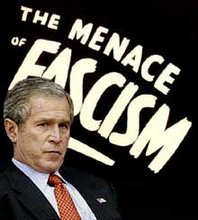


Can't say I can really disagree with any of this:
I would like to have 10 percent of the monetary value of the man hours expended by members of the House, the Senate, and their respective staffs that was piled atop the redolent heap of history's wasted gestures in the recent exercise in futility that was the fight over the Iraq supplemental appropriations bill.
Republicans joined with Democrats in making a spectacle of themselves as ineffectual windbags without a cause, proving publicly, once again, that most of them have no respect for this republic, it's people or the business they are paid so handsomely to conduct.
Knowing that the eminently hardheaded little man who occupies the big house on Pennsylvania Avenue would veto any bill which included deadlines for troop withdrawals, and knowing that the same cynical little man would use the pork content of the bill against them, they made him a gift of a bill that he could veto and look "presidential" while doing it. They gave Bush exactly what he wanted.
Have these people so little respect for the people's business that they believe they can fritter away all this expensive hot air drafting bills that they know full well will never pass? The votes on this were counted weeks ago, the Emperor's objections were well known, there was no doubt about the outcome from the beginning.
In my humble opinion the 110th congress is not greatly improved over the 109th version of Zen and the art of doing nothing. While I appreciate that the Democrats now have a measure of control, I would like to see them begin to use whatever power they have for something more substantive than assigning themselves better offices and furniture, climbing in bed with their corporate sponsors and lobbyists and playing silly and futile power games with the executive department.
This war needs to end. Ending the war and bringing the troops out will take courage, infinitely more courage than the unthinking, flag waving, lemming-like mad dash that got us embroiled in Iraq four long, painful years ago.
Courage has never been a strong suit in American politics, which I suppose, is why it shines so brightly when it occasionally emerges from the dark alleys of the cover your ass opportunism that passes for leadership in Washington these days.
We are sacrificing our children and grandchildren on an altar of corporate greed, imperial megalomania and rabid religiosity and the people who enabled this national crime with their cowardice in the face of power and public opinion, those who can make it end by refusing to fund it, by withdrawing the authorization for it, by simply telling the truth, these same people will allow the slaughter to continue month after month, year after year, because they lack the spine to take a solid stand against what can only be seen as a completely rogue executive department.
All measures must be taken now to stop funding for anything other than a fighting redeployment or withdrawal from this madness. The time for the Iraqi Army to stand up is now, the time for an Iraqi political solution is now, not twenty months and two or three thousand dead Americans from now.
It is said that the Iraqi Parliament will begin a two month recess at the end of June, a fact which tells me that they are not overly committed to solving their own crises. How many of our troops will die while Iraq's parliament vacations?
Yes, we, the administration broke Iraq, and now we must pay for the repair of much of what they have brought to ruin. Make no mistake though, Iraq was broken long before our arrival, it was broken when western colonial powers drew it's borders ninety some years ago and again when it's people allowed themselves to fall under the control of despots.
The people of Iraq must bear the ultimate responsibility for what they suffered under Saddam during the four decades since his ascendancy.
The sectarian hatreds and ancient animosities so central to the myriad impediments to stability and national cohesion in that "country" are not American or Western creations and will not be solved by Americans or Westerners.
Can anyone tell me whose side we should take in this madness? Shiites? Help them gain national control and possibly create a Shiite super state with Iran that continues to threaten the stability of the greater Middle East?
Should we bring the minority Sunnis back to power and let them continue to molest their Shia and Kurdish neighbors with the help of oil money donated by our Saudi "allies"? Do we ignore Turkey and back the Kurds?
No, Iraqis, all of them, Sunnis, Shiites, Kurds, every hare brained sect and faction, every clan and family are going to have their little "free for all" with or without our presence. They will engage in civil war, a great cleansing of thousand year old grievances and in the end will have to sort out their own problems. It will not be pretty, it will be yet another horrible tragedy of history, a continuation and likely an amplification of the current bloodbath, but with help of the United Nations and the more rational of the neighboring states, they may be able to achieve some sort of national equilibrium over the next couple of years.
Success or failure will be up to the people of Iraq, all of them.
Iraqi security, stability, equilibrium, peace, whatever, is no longer possible while we stand in the middle of the flames and fan them with our own hated presence.
We need to bring our troops home and we need to stop the bleeding, both literal and figurative. We need to come home and do some housecleaning of our own and we need to do it this calendar year.
The people of this country showed their rejection of the Cheney/Bush neo-conservative megalomania last November and the number of Americans that no longer support their empty headed neo-colonial aspirations are growing as the subpoenas are answered and the facts are revealed.
Impeachment and criminal sanctions of those who were central to creating this quagmire and deceiving the American people and the congress into this criminal nightmare must not only be "on the table" they must be a centerpiece of our public policy in the immediate future in order to prove to ourselves and to the world that America has regained her sanity and is once again capable and deserving of a leadership position among nations.
And, perhaps, in September, when the Iraqi leadership returns from Damascus, Paris, London or wherever they spend their holiday, they will find the time to run their country and we can begin to repair ours.
Bob Higgins
Worldwide Sawdust
(In accordance with Title 17 U.S.C. Section 107, this material is distributed without profit to those who have expressed a prior interest in receiving the included information for research and educational purposes. I.U. has no affiliation whatsoever with the originator of this article nor is I.U endorsed or sponsored by the originator.)
The Nazis, Fascists and Communists were political parties before they became enemies of liberty and mass murderers.
Showing posts with label Congressional Powers. Show all posts
Showing posts with label Congressional Powers. Show all posts
Sunday, May 6, 2007


Sunday, February 11, 2007
Can Congress Stop WWIII? Yes, They Can!
They have the power.
But do they have the will to use it?
Published on Friday, February 9, 2007 by FindLaw
Leading Experts Say Congress Must Stop An Attack on Iran: Is That Constitutionally Possible?
Absolutely - According to Experts on Both Sides of the Aisle
by John W. Dean
In a February 5 OpEd in the Los Angeles Times, Leon Weiss and Larry Diamond explained that they were uncertain whether President Bush's recent tough talk toward Iran was bully pulpit bluster, meant solely to control Iran's dangerous actions, or if the President was again on the road to war. (Weiss is a senior science fellow at the Center for International Security at Cooperation at Stanford University; Diamond is a senior fellow at Stanford's Hoover Institution.)
Accordingly, Weiss and Diamond called on Congress to find out which is the case, and, if the President's intention is indeed warlike, to take preventive action so that the President does not launch a war in Iran - given his performance in Iraq. They suggest sending the President what is, in effect, a veto-proof measure -- by placing the measure in an appropriations bill - advising the President that "Congress will not support a U.S. military strike on that country" unless authorized by Congress. If Bush were to violate such a law, they urged, Congress should file a lawsuit against him, and begin impeachment proceedings.
James Fallows expressed a similar concern about the Administration's actions in Iran in his recent Atlantic Monthly column. "If we could trust the Administration's ability to judge America's rational self-interest, there would be no need to constrain its threatening gestures toward Iran," Fallows suggested. Such trust, however, has not proven to be merited. Nevertheless, Fallows concluded, even if the Bush Administration has warlike intentions with respect to Iran, Congress can do nothing other than "draw the line. It can say that war with Iran is anathema to the interests of the United States and contrary to the will of its elected representative."
These commentators have raised the question of whether Congress can, in fact, prevent a president from taking the nation to war. This was the subject of a recent Senate Judiciary Committee hearing chaired by Senator Russ Feingold, where he sought to explore "not what Congress should do, but what can Congress do."
While the hearing was focused on Iraq, and Congressional power in general, Senator Edward Kennedy (D-MA) specifically asked the panel of constitutional experts, during the questioning, about what legal restrictions might be placed on the president's going to war in Iran.
Because the constitutional experts submitted formal statements to the Committee, which are available online, and several of them are terrific briefs on the law and relevant history, I have linked those statements to their names. Rather than rely solely upon their own summaries of their positions, given during the hearing, I have instead cited from, and commented on, their prepared statements seeking to set forth the essence of their positions.
What is especially significant, in my eyes, is that the conclusion that Congress does indeed have power to significantly restrict the Administration in its plans for war, transcends politics: Even experts who have worked for Republican administrations have come to this conclusion.
Statements of Constitutional Experts
Professor David Barron from the Harvard Law School opened the testimony. Barron is a graduate of Harvard Law School and clerked for Judge Reinhardt on the U.S. Court of Appeals for the Ninth Circuit, as well as for Associate Justice Stevens on the United States Supreme Court. He served as an attorney advisor in the Office of Legal Counsel at the Department of Justice, before joining the faculty at Harvard Law School in 1999. Column continues below ↓
"Congress possesses substantial constitutional authority to regulate ongoing military operations, and even to bring them to an end," Barron stated, explaining that while the power of the purse is the strongest authority to control executive military actions, it is not the only power. Barron's statement reviews relevant rulings of the Supreme Court, and finds in them, and in the Constitution, no real limits on Congress's powers to manage a war. In fact, his review of the sources related to this question shows that to find otherwise would be contrary to the clear intention of the nation's Founders to control the chief executive.
Professor Robert Turner graduated from the law school at the University of Virginia and is now a professor there. He co-founded the school's Center for National Security Law. He served as the National Security Advisor to Senator Robert Griffin (R-MI) in the mid 1970's and worked at the Pentagon, the White House, and the State Department during the Reagan Administration, and from 2001 to 2003 worked in the Bush White House Counsel's office.
Professor Turner's statement was based as much on "a practical appreciation of the imperatives of presidential military decision making in a time of crisis as from a deep study of the case law." While the committee was not seeking policy advice, Turner was offering it. He concluded that "Congress does indeed possess the power to limit the broad outlines of hostilities through legislation," but he explained, in effect, why in his view, Congress should not use that power, as a policy matter.
Dr. Louis Fisher is a Constitutional Law Specialist at the Library of Congress. Before joining the Library of Congress, he spent thirty-six years at the Congressional Research Service. Dr. Fisher has published a number of authoritative books relating to legislative versus executive branch conflicts. (And I have most of them on my book shelf.) Dr. Fisher's statement explained that not only does Congress have the power to influence the direction of the nation's military when at war, but its members have the responsibility to do so. Drawing on history, he sets forth what the Framers of the Constitution did, and why they did it. His statement is rich in historical quotations that are not the now-hackneyed comments commonly found in discussion of these issues.
For example, in 1793, Fisher reported, Madison called war "the true nurse of executive aggrandizement. . . . In war, the honours and emoluments of office are to be multiplied; and it is the executive patronage under which they are to be enjoyed. It is in war, finally, that laurels are to be gathered; and it is the executive brow they are to encircle. The strongest passions and most dangerous weaknesses of the human breast; ambition, avarice, vanity, the honourable or venial love of fame, are all in conspiracy against the desire and duty of peace."
And in 1861, Fisher advised the committee, Attorney General Edward Bates explained that the President is Commander in Chief not because he is "skilled in the art of war and qualified to marshal a host in the field of battle." Rather he is Commander in Chief so whoever leads U.S. armies to battle "is subject to the orders of the civil magistrate, and he and his army are always 'subordinate to the civil power.'"
Bradford Berenson, now a partner at Sidley & Austin, graduated from the Harvard Law School and clerked for Judge Silberman on the U.S. Court of Appeals for the D.C. Circuit and Associate Justice Kennedy on the United States Supreme Court. He also served as Associate Counsel to President George W. Bush from 2001 to 2003, a position in which he focused on the relationship between the Congress and the Executive.
Berenson took an approach similar to Professor Turner's. Accepting that the Constitution and rulings make it very clear that Congress has ample power and authority relating to this nation's military activities, he instead made a policy case as to why Congress should not exercise their power. He acknowledged the nature of his statement when summarizing it for the committee, and quickly conceded, "I think the constitutional scheme does give Congress broad authority to terminate a war."
Finally, Professor Walter Dellinger of the Duke University School of Law testified. Dellinger, the former head of the Office of Legal Counsel at the Justice Department under President Clinton, and also acting Solicitor General from 1996 to 1997 (during which time he argued nine cases before the High Court) is a graduate of Yale Law School and a former law clerk for Associate Justice Hugo Black
"In the absence of any congressional legislation on point," Dellinger said in his prepared statement, "I would be ready to conclude that a president can act on his own authority and pursuant to his own judgment in matters of national security. Once Congress has acted, however, the issue is fundamentally different. The question then becomes whether the Act of Congress is itself unconstitutional."
In short, all the experts on this politically diverse but balanced panel agreed - in the abstract - that the Congress has the power to control a warrior president. But, as Walter Dellinger noted, the action itself must be constitutional.
Senator Kennedy thus, during the questioning, properly moved the discussion from the abstract to the specific.
Can Congress Prevent the President from Going to War In Iran?
In condensed form, with a few annotations, here is the text of the exchanges that occurred. They require no commentary:
SEN. KENNEDY: "Question just quickly through the panel. Is the President required to seek authorization from Congress before using the military force against Iran?"
DR. FISHER: "I think if there's some action that's a threat to U.S. soldiers I think a president has the power to repel sudden attacks, protect U.S. troops. Otherwise, if it goes beyond isolated incidents like that I think you're running into the preface of the Iraq Resolution, which …Congress amended … to make sure it applied only to Iraq. So I think by statute, by legislative policy, you can confine the President to Iraq." (Emphasis added.)
SEN. KENNEDY: "I'm interested in … what actions can Congress take now to ensure the President doesn't take us into war in Iran without congressional authorization."
PROF. BARRON: "The question of whether the President could right now initiate any actions against the Iran -- I think the proper way to think about it is what authority does he have under the current Iraq Authorization Statute, which would require some close consideration. . . .
William Rehnquist [as an assistant attorney general] … thought that a statutory limitation on the exercise of such authority would be constitutionally valid. So I think the legal question then comes to . . . no doubt Congress could restrict him from going and widening the war, not just in terms of the amount of troops used, but in the geographic area covered, and the only issue is whether Congress has in effect already done so by virtue of the limitations and bounds of the Authorization to Use Military Force in Iraq that's already enacted." (Emphasis added.)
SEN. KENNEDY: "Yes, Professor Turner."
PROF. TURNER: "Senator, let me just make nuanced point on this. John Hart Ely in his War
and Responsibility made the point that after Congress declared war against Germany, FDR did not need a new declaration of war to go into North Africa after the German forces. Going into Cambodia I think was perfectly legal because the North Vietnamese had taken over the whole side of Cambodia. . . . I could see a situation in which Iran became involved in the Iraq War where the President would be able to use force. . . . I think in terms of launching a major war against Iran he should get and would need an official [Congressional approval] for Iran. But there's some area in there where I think he could act." (Emphasis added.)
SEN. KENNEDY: "If Congress passed legislation requiring the President to seek authorization from Congress before using military force against Iran would the President be obliged to seek such authorization before launching military action?"
MR. BERENSON: "Senator Kennedy, I think the questions that you're posing falls into the sphere . . . of shared powers, and it's important to recognize that for very important institutional reasons the President is the first mover and the prime mover in this area of shared powers. That has to do with the fact that unlike Congress which needs to go through an often time consuming and difficult legislative process, a process that can sometimes be stymied, the President has the ability to receive information in real time to act to protect the national security. So the President through the [clause vesting him with executive power], through his executive authority in the absence of legislation to the contrary by the Congress, I think unquestionably would have authority to engage Iran in hostilities, whether in defense of our forces inside the borders of Iraq or if he decided that we needed to do something to address Iran's nuclear facilities. I do not think he would be acting outside the scope of his constitutional authority. That said, for major military actions most presidents have recognized the importance of coming to Congress as a political and practical matter. It is certainly unwise, if not unconstitutional, to try to engage in large scale hostilities or engage a new enemy in warfare without public support. And the best way to ensure that at the outset is, of course, to come to Congress." (Emphasis added.)
SEN. KENNEDY: "My time, Mr. Chairman, is up. Mr. Dellinger -"
PROF. DELLINGER: "Briefly, I agree with Mr. Berenson's statement. I believe that the President does have the authority to introduce U.S. troops into situations of hostilities, including in Iran, in the absence of congressional limitation as long as the anticipated scope and duration does not amount to a war. I don't believe he has the authority to send 500,000 troops into Iran, but he does have the authority to deploy U.S. forces in hostilities…. That said, it is also clear that Congress can impose limits either before or after the fact on the size, scope, and duration of that. But I do believe there's a consensus in the Executive Branch position that the President has the authority to deploy U.S. forces into hostilities when Congress has not spoken to the question." (Emphasis added.)
* * *
In sum, as I read both the general statements of these experts, and their specific answers to Senator Kennedy's question about Iran, everyone agrees that Congress has the power to prevent a president from going to war.
The only question that is doubtful, then, is whether the members of Congress actually have the will to do so. This, I suspect, is what James Fallows concluded, when he said that, at best, they might draw a line.
Of course, George W. Bush and Richard B. Cheney know this too, so they will do whatever they wish to do - and Congress may or may not catch up. But there is no real question as to whether Congress could legally stop Bush and Cheney from going to war in Iran without coming to Congress to fully explain what they are doing and why. Congress has that power; the only question is whether it will dare to use it.
John W. Dean, a FindLaw columnist, is a former counsel to the president.
(In accordance with Title 17 U.S.C. Section 107, this material is distributed without profit to those who have expressed a prior interest in receiving the included information for research and educational purposes. I.U. has no affiliation whatsoever with the originator of this article nor is I.U endorsed or sponsored by the originator.)
The Nazis, Fascists and Communists were political parties before they became enemies of liberty and mass murderers.
But do they have the will to use it?
Published on Friday, February 9, 2007 by FindLaw
Leading Experts Say Congress Must Stop An Attack on Iran: Is That Constitutionally Possible?
Absolutely - According to Experts on Both Sides of the Aisle
by John W. Dean
In a February 5 OpEd in the Los Angeles Times, Leon Weiss and Larry Diamond explained that they were uncertain whether President Bush's recent tough talk toward Iran was bully pulpit bluster, meant solely to control Iran's dangerous actions, or if the President was again on the road to war. (Weiss is a senior science fellow at the Center for International Security at Cooperation at Stanford University; Diamond is a senior fellow at Stanford's Hoover Institution.)
Accordingly, Weiss and Diamond called on Congress to find out which is the case, and, if the President's intention is indeed warlike, to take preventive action so that the President does not launch a war in Iran - given his performance in Iraq. They suggest sending the President what is, in effect, a veto-proof measure -- by placing the measure in an appropriations bill - advising the President that "Congress will not support a U.S. military strike on that country" unless authorized by Congress. If Bush were to violate such a law, they urged, Congress should file a lawsuit against him, and begin impeachment proceedings.
James Fallows expressed a similar concern about the Administration's actions in Iran in his recent Atlantic Monthly column. "If we could trust the Administration's ability to judge America's rational self-interest, there would be no need to constrain its threatening gestures toward Iran," Fallows suggested. Such trust, however, has not proven to be merited. Nevertheless, Fallows concluded, even if the Bush Administration has warlike intentions with respect to Iran, Congress can do nothing other than "draw the line. It can say that war with Iran is anathema to the interests of the United States and contrary to the will of its elected representative."
These commentators have raised the question of whether Congress can, in fact, prevent a president from taking the nation to war. This was the subject of a recent Senate Judiciary Committee hearing chaired by Senator Russ Feingold, where he sought to explore "not what Congress should do, but what can Congress do."
While the hearing was focused on Iraq, and Congressional power in general, Senator Edward Kennedy (D-MA) specifically asked the panel of constitutional experts, during the questioning, about what legal restrictions might be placed on the president's going to war in Iran.
Because the constitutional experts submitted formal statements to the Committee, which are available online, and several of them are terrific briefs on the law and relevant history, I have linked those statements to their names. Rather than rely solely upon their own summaries of their positions, given during the hearing, I have instead cited from, and commented on, their prepared statements seeking to set forth the essence of their positions.
What is especially significant, in my eyes, is that the conclusion that Congress does indeed have power to significantly restrict the Administration in its plans for war, transcends politics: Even experts who have worked for Republican administrations have come to this conclusion.
Statements of Constitutional Experts
Professor David Barron from the Harvard Law School opened the testimony. Barron is a graduate of Harvard Law School and clerked for Judge Reinhardt on the U.S. Court of Appeals for the Ninth Circuit, as well as for Associate Justice Stevens on the United States Supreme Court. He served as an attorney advisor in the Office of Legal Counsel at the Department of Justice, before joining the faculty at Harvard Law School in 1999. Column continues below ↓
"Congress possesses substantial constitutional authority to regulate ongoing military operations, and even to bring them to an end," Barron stated, explaining that while the power of the purse is the strongest authority to control executive military actions, it is not the only power. Barron's statement reviews relevant rulings of the Supreme Court, and finds in them, and in the Constitution, no real limits on Congress's powers to manage a war. In fact, his review of the sources related to this question shows that to find otherwise would be contrary to the clear intention of the nation's Founders to control the chief executive.
Professor Robert Turner graduated from the law school at the University of Virginia and is now a professor there. He co-founded the school's Center for National Security Law. He served as the National Security Advisor to Senator Robert Griffin (R-MI) in the mid 1970's and worked at the Pentagon, the White House, and the State Department during the Reagan Administration, and from 2001 to 2003 worked in the Bush White House Counsel's office.
Professor Turner's statement was based as much on "a practical appreciation of the imperatives of presidential military decision making in a time of crisis as from a deep study of the case law." While the committee was not seeking policy advice, Turner was offering it. He concluded that "Congress does indeed possess the power to limit the broad outlines of hostilities through legislation," but he explained, in effect, why in his view, Congress should not use that power, as a policy matter.
Dr. Louis Fisher is a Constitutional Law Specialist at the Library of Congress. Before joining the Library of Congress, he spent thirty-six years at the Congressional Research Service. Dr. Fisher has published a number of authoritative books relating to legislative versus executive branch conflicts. (And I have most of them on my book shelf.) Dr. Fisher's statement explained that not only does Congress have the power to influence the direction of the nation's military when at war, but its members have the responsibility to do so. Drawing on history, he sets forth what the Framers of the Constitution did, and why they did it. His statement is rich in historical quotations that are not the now-hackneyed comments commonly found in discussion of these issues.
For example, in 1793, Fisher reported, Madison called war "the true nurse of executive aggrandizement. . . . In war, the honours and emoluments of office are to be multiplied; and it is the executive patronage under which they are to be enjoyed. It is in war, finally, that laurels are to be gathered; and it is the executive brow they are to encircle. The strongest passions and most dangerous weaknesses of the human breast; ambition, avarice, vanity, the honourable or venial love of fame, are all in conspiracy against the desire and duty of peace."
And in 1861, Fisher advised the committee, Attorney General Edward Bates explained that the President is Commander in Chief not because he is "skilled in the art of war and qualified to marshal a host in the field of battle." Rather he is Commander in Chief so whoever leads U.S. armies to battle "is subject to the orders of the civil magistrate, and he and his army are always 'subordinate to the civil power.'"
Bradford Berenson, now a partner at Sidley & Austin, graduated from the Harvard Law School and clerked for Judge Silberman on the U.S. Court of Appeals for the D.C. Circuit and Associate Justice Kennedy on the United States Supreme Court. He also served as Associate Counsel to President George W. Bush from 2001 to 2003, a position in which he focused on the relationship between the Congress and the Executive.
Berenson took an approach similar to Professor Turner's. Accepting that the Constitution and rulings make it very clear that Congress has ample power and authority relating to this nation's military activities, he instead made a policy case as to why Congress should not exercise their power. He acknowledged the nature of his statement when summarizing it for the committee, and quickly conceded, "I think the constitutional scheme does give Congress broad authority to terminate a war."
Finally, Professor Walter Dellinger of the Duke University School of Law testified. Dellinger, the former head of the Office of Legal Counsel at the Justice Department under President Clinton, and also acting Solicitor General from 1996 to 1997 (during which time he argued nine cases before the High Court) is a graduate of Yale Law School and a former law clerk for Associate Justice Hugo Black
"In the absence of any congressional legislation on point," Dellinger said in his prepared statement, "I would be ready to conclude that a president can act on his own authority and pursuant to his own judgment in matters of national security. Once Congress has acted, however, the issue is fundamentally different. The question then becomes whether the Act of Congress is itself unconstitutional."
In short, all the experts on this politically diverse but balanced panel agreed - in the abstract - that the Congress has the power to control a warrior president. But, as Walter Dellinger noted, the action itself must be constitutional.
Senator Kennedy thus, during the questioning, properly moved the discussion from the abstract to the specific.
Can Congress Prevent the President from Going to War In Iran?
In condensed form, with a few annotations, here is the text of the exchanges that occurred. They require no commentary:
SEN. KENNEDY: "Question just quickly through the panel. Is the President required to seek authorization from Congress before using the military force against Iran?"
DR. FISHER: "I think if there's some action that's a threat to U.S. soldiers I think a president has the power to repel sudden attacks, protect U.S. troops. Otherwise, if it goes beyond isolated incidents like that I think you're running into the preface of the Iraq Resolution, which …Congress amended … to make sure it applied only to Iraq. So I think by statute, by legislative policy, you can confine the President to Iraq." (Emphasis added.)
SEN. KENNEDY: "I'm interested in … what actions can Congress take now to ensure the President doesn't take us into war in Iran without congressional authorization."
PROF. BARRON: "The question of whether the President could right now initiate any actions against the Iran -- I think the proper way to think about it is what authority does he have under the current Iraq Authorization Statute, which would require some close consideration. . . .
William Rehnquist [as an assistant attorney general] … thought that a statutory limitation on the exercise of such authority would be constitutionally valid. So I think the legal question then comes to . . . no doubt Congress could restrict him from going and widening the war, not just in terms of the amount of troops used, but in the geographic area covered, and the only issue is whether Congress has in effect already done so by virtue of the limitations and bounds of the Authorization to Use Military Force in Iraq that's already enacted." (Emphasis added.)
SEN. KENNEDY: "Yes, Professor Turner."
PROF. TURNER: "Senator, let me just make nuanced point on this. John Hart Ely in his War
and Responsibility made the point that after Congress declared war against Germany, FDR did not need a new declaration of war to go into North Africa after the German forces. Going into Cambodia I think was perfectly legal because the North Vietnamese had taken over the whole side of Cambodia. . . . I could see a situation in which Iran became involved in the Iraq War where the President would be able to use force. . . . I think in terms of launching a major war against Iran he should get and would need an official [Congressional approval] for Iran. But there's some area in there where I think he could act." (Emphasis added.)
SEN. KENNEDY: "If Congress passed legislation requiring the President to seek authorization from Congress before using military force against Iran would the President be obliged to seek such authorization before launching military action?"
MR. BERENSON: "Senator Kennedy, I think the questions that you're posing falls into the sphere . . . of shared powers, and it's important to recognize that for very important institutional reasons the President is the first mover and the prime mover in this area of shared powers. That has to do with the fact that unlike Congress which needs to go through an often time consuming and difficult legislative process, a process that can sometimes be stymied, the President has the ability to receive information in real time to act to protect the national security. So the President through the [clause vesting him with executive power], through his executive authority in the absence of legislation to the contrary by the Congress, I think unquestionably would have authority to engage Iran in hostilities, whether in defense of our forces inside the borders of Iraq or if he decided that we needed to do something to address Iran's nuclear facilities. I do not think he would be acting outside the scope of his constitutional authority. That said, for major military actions most presidents have recognized the importance of coming to Congress as a political and practical matter. It is certainly unwise, if not unconstitutional, to try to engage in large scale hostilities or engage a new enemy in warfare without public support. And the best way to ensure that at the outset is, of course, to come to Congress." (Emphasis added.)
SEN. KENNEDY: "My time, Mr. Chairman, is up. Mr. Dellinger -"
PROF. DELLINGER: "Briefly, I agree with Mr. Berenson's statement. I believe that the President does have the authority to introduce U.S. troops into situations of hostilities, including in Iran, in the absence of congressional limitation as long as the anticipated scope and duration does not amount to a war. I don't believe he has the authority to send 500,000 troops into Iran, but he does have the authority to deploy U.S. forces in hostilities…. That said, it is also clear that Congress can impose limits either before or after the fact on the size, scope, and duration of that. But I do believe there's a consensus in the Executive Branch position that the President has the authority to deploy U.S. forces into hostilities when Congress has not spoken to the question." (Emphasis added.)
* * *
In sum, as I read both the general statements of these experts, and their specific answers to Senator Kennedy's question about Iran, everyone agrees that Congress has the power to prevent a president from going to war.
The only question that is doubtful, then, is whether the members of Congress actually have the will to do so. This, I suspect, is what James Fallows concluded, when he said that, at best, they might draw a line.
Of course, George W. Bush and Richard B. Cheney know this too, so they will do whatever they wish to do - and Congress may or may not catch up. But there is no real question as to whether Congress could legally stop Bush and Cheney from going to war in Iran without coming to Congress to fully explain what they are doing and why. Congress has that power; the only question is whether it will dare to use it.
John W. Dean, a FindLaw columnist, is a former counsel to the president.
(In accordance with Title 17 U.S.C. Section 107, this material is distributed without profit to those who have expressed a prior interest in receiving the included information for research and educational purposes. I.U. has no affiliation whatsoever with the originator of this article nor is I.U endorsed or sponsored by the originator.)
The Nazis, Fascists and Communists were political parties before they became enemies of liberty and mass murderers.
Wednesday, January 17, 2007
What the Hell Are We Waiting For?
Congress must act, before it's too late, if it isn't already!
The Taliban is reclaiming the still failed state of Afghanistan. Iraq is becoming a failed state and has spun out of control. Bush is showing every sign of dragging the US into another fruitless and unjustifiable war with Iran and/or Syria. American troops are now fighting in Somalia to help make East Africa safe for Exxon and Chevron. Civil rights and human rights are evaporating like dew on a summer morning. This isn’t a war on terrorism. It is naked terrorism itself.
In an eerie imitation of the run-up to the invasion of Iraq, Bush has deployed US warships to the Persian Gulf and has arranged to arm “friendly” (client?) nations in the region with Patriot Missiles. (Per usual, Bush’s friends stand to make a packet even if the missiles don’t work as well as advertised.) Rumor has it that black ops, aimed at creating political unrest and destabilizing the Iranian government, have been ongoing for some time. This past week Bush ordered US troops to trash the Iranian Embassy in Iraq and take prisoners; a clear provocation. War skeptics should remember that they have lost every bet when it comes to this president behaving sensibly.
George Bush’s latest attempt to achieve an as yet unknown goal in Iraq, ‘Le Surge,’ promises to be a blood bath that will dwarf anything we have seen to date.
Lieutenant General David Petraeus, who is taking over the coalition command in the wake of the latest Bush purge, claims to be a student of asymmetrical warfare. He has a plan.
US troops are now to leave their lairs and regularly engage with Iraqis in the streets. No more crouching in their heavily fortified bases between forays to hot spots. No more radicalizing the Iraqis by kicking in the the occasional wrong door. (I’m not criticizing the troops as much as the command that can’t seem to get the intelligence thing straight and who seem to think that speaking the local language and understanding the culture are optional.)
Petraeus goes on to say that by staying in their compounds, US soldiers lose touch with the Iraqi people and give the appearance of being fearful. He also doesn’t think US soldiers should engage in the indiscriminate use of force.
It sounds an awful lot like the Roman entertainment of throwing Christians to the lions. Toss some US soldiers into a hornet’s nest of angry Iraqis, tell them to hold their fire and look brave. Then kick back and see what happens. Rinse and repeat.
It’s easy to see why Bush selected Petraeus. They share the same character flaws; a tenuous grasp on reality and no ability to engage in critical thought.
Bush’s ex-commanders kept our soldiers in heavily fortified bases for good reason; to prevent unnecessary loss of life and to minimize the risks of deadly, urban warfare. Unlike Petraeus, they got the message that Iraqis strongly object to being killed in large numbers and having their country ripped out from under them. The last people the Iraqis want to stay in touch with are US soldiers.
All this isn’t going to end with fat and happy US and British multinationals milking the world of its wealth with its foot on the throat of billions of miserable but willing slaves. It’s going to end like a Shakespearian tragedy with everyone on stage dead.
With all due respect, Congress has no more important job than to rapidly and effectively remove Bush and Cheney’s collective hands from the levers of power. They need to tie Bush/Cheney up in knots before a probable attack on Iran becomes an accomplished fact. They need to put them back in their cages before they put any more US lives needlessly at risk and begin any more illegal wars anywhere else.
Congress has a number of powerful tools at its disposal; the power of the purse, impeachment, confirmation authority, subpoena power and special House Rules. Congress cannot stop at inquiry. It must block Bush’s ability to continue as he has begun.
The world has enough sorrow, injustice and misery without the US government manufacturing and exporting it in record quantities.
Carol Davidek-Waller Kirkland, WA
The Taliban is reclaiming the still failed state of Afghanistan. Iraq is becoming a failed state and has spun out of control. Bush is showing every sign of dragging the US into another fruitless and unjustifiable war with Iran and/or Syria. American troops are now fighting in Somalia to help make East Africa safe for Exxon and Chevron. Civil rights and human rights are evaporating like dew on a summer morning. This isn’t a war on terrorism. It is naked terrorism itself.
In an eerie imitation of the run-up to the invasion of Iraq, Bush has deployed US warships to the Persian Gulf and has arranged to arm “friendly” (client?) nations in the region with Patriot Missiles. (Per usual, Bush’s friends stand to make a packet even if the missiles don’t work as well as advertised.) Rumor has it that black ops, aimed at creating political unrest and destabilizing the Iranian government, have been ongoing for some time. This past week Bush ordered US troops to trash the Iranian Embassy in Iraq and take prisoners; a clear provocation. War skeptics should remember that they have lost every bet when it comes to this president behaving sensibly.
George Bush’s latest attempt to achieve an as yet unknown goal in Iraq, ‘Le Surge,’ promises to be a blood bath that will dwarf anything we have seen to date.
Lieutenant General David Petraeus, who is taking over the coalition command in the wake of the latest Bush purge, claims to be a student of asymmetrical warfare. He has a plan.
US troops are now to leave their lairs and regularly engage with Iraqis in the streets. No more crouching in their heavily fortified bases between forays to hot spots. No more radicalizing the Iraqis by kicking in the the occasional wrong door. (I’m not criticizing the troops as much as the command that can’t seem to get the intelligence thing straight and who seem to think that speaking the local language and understanding the culture are optional.)
Petraeus goes on to say that by staying in their compounds, US soldiers lose touch with the Iraqi people and give the appearance of being fearful. He also doesn’t think US soldiers should engage in the indiscriminate use of force.
It sounds an awful lot like the Roman entertainment of throwing Christians to the lions. Toss some US soldiers into a hornet’s nest of angry Iraqis, tell them to hold their fire and look brave. Then kick back and see what happens. Rinse and repeat.
It’s easy to see why Bush selected Petraeus. They share the same character flaws; a tenuous grasp on reality and no ability to engage in critical thought.
Bush’s ex-commanders kept our soldiers in heavily fortified bases for good reason; to prevent unnecessary loss of life and to minimize the risks of deadly, urban warfare. Unlike Petraeus, they got the message that Iraqis strongly object to being killed in large numbers and having their country ripped out from under them. The last people the Iraqis want to stay in touch with are US soldiers.
All this isn’t going to end with fat and happy US and British multinationals milking the world of its wealth with its foot on the throat of billions of miserable but willing slaves. It’s going to end like a Shakespearian tragedy with everyone on stage dead.
With all due respect, Congress has no more important job than to rapidly and effectively remove Bush and Cheney’s collective hands from the levers of power. They need to tie Bush/Cheney up in knots before a probable attack on Iran becomes an accomplished fact. They need to put them back in their cages before they put any more US lives needlessly at risk and begin any more illegal wars anywhere else.
Congress has a number of powerful tools at its disposal; the power of the purse, impeachment, confirmation authority, subpoena power and special House Rules. Congress cannot stop at inquiry. It must block Bush’s ability to continue as he has begun.
The world has enough sorrow, injustice and misery without the US government manufacturing and exporting it in record quantities.
Carol Davidek-Waller Kirkland, WA
Subscribe to:
Posts (Atom)