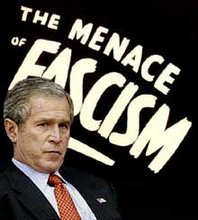
The Five Pillars of George W. Bush’s Republican Party
The best characterization of George W. Bush that I can recall ever reading comes from Al Gore’s new book, “The Assault on Reason”. Gore points out in
his book, and I agree with him, that the two stereotypes of George W. Bush as a dimwitted stooge or as a religious fanatic are flat out wrong. Rejecting the idea that Bush is either stupid or truly religious, Gore characterizes Bush in a nutshell like this:
I’m convinced, however, that most of the president’s frequent departures from fact-based analysis have much more to do with his right-wing political and economic ideology than with the Bible…. Now, with the radical Right, we have a political faction disguised as a religious sect, and the president of the United States is heading it. The obvious irony is that Bush uses a religious blind faith to hide what is actually an extremist political philosophy with a disdain for social justice that is anything but pious by the standards of any respected faith tradition I know. The truth about this particular brand of faith-based politics is that President Bush has stolen the symbolism and body language of religion and used it to disguise the most radical effort in American history to take what belongs to the American people and give as much of it as possible to the already wealthy and privileged…Make no mistake: It is the president’s reactionary ideology, not his religious faith, that is the source of his troubling inflexibility. Whatever his religious views, President Bush has such an absolute certainty in the validity of his rigid right-wing ideology that he does not feel the same desire that many of us would in gathering facts relevant to the questions at hand.
Few would argue with the conclusion that the vast majority of Republican Congresspersons for most of George W. Bush’s two terms in office have been virtually indistinguishable from Bush himself. While they were in power they gave him everything that he asked for, and they repeatedly refused to investigate the grossest abuses of presidential power, even when his approval ratings fell into the 30s. Only recently, with his approval numbers falling into the 20s, have they begun to distance themselves from him. A tremendous amount of damage has been done to our country since George Bush took office, and consequently we now find ourselves in a perilous crisis, with our
Constitution in tatters, our
treasury being depleted by rampant militarism, our
international reputation at an all time low, and with a
broken election system.
Therefore, Americans would do well to carefully consider prior to the next election the five pillars of George Bush’s Republican Party. This is a description of five groups of people, the first four which overlap to a great extent, who lead, support, and vote for today’s Republican Party.
The economic royalistsI believe it was Franklin Delano Roosevelt who first coined the term “economic royalist”. That term refers not merely to people who are wealthy, but to those who believe that it is their God-given right to have more wealth than other people, and that it is the main purpose of government to protect and enhance that God-given right. Here is how FDR put it, as he explained in his classic
1934 Democratic Convention speech to the American people the rationale behind his
New Deal, which lifted tens of millions of Americans out of their poverty following the Great Depression:
Out of this modern civilization economic royalists carved new dynasties. New kingdoms were built upon concentration of control over material things. Through new uses of corporations, banks and securities, new machinery of industry and agriculture, of labor and capital … the whole structure of modern life was impressed into this royal service.There was no place among this royalty for our many thousands of small business men and merchants who sought to make a worthy use of the American system of initiative and profit. They were no more free than the worker or the farmer… The privileged princes of these new economic dynasties, thirsting for power, reached out for control over Government itself. They created a new despotism and wrapped it in the robes of legal sanction. In its service new mercenaries sought to regiment the people, their labor, and their property. And as a result the average man once more confronts the problem that faced the Minute Man.
The hours men and women worked, the wages they received, the conditions of their labor – these had passed beyond the control of the people, and were imposed by this new industrial dictatorship. The savings of the average family, the capital of the small business man, the investments set aside for old age – other people's money – these were tools which the new economic royalty used to dig itself in.Al Gore uses the same term, “economic royalists”, to provide an excellent synopsis of this group of people using modern-day terminology. He describes the economic royalists as those who are primarily interested in eliminating as much of their own taxation as possible and removing all inconvenient regulatory obstacles. Their ideology – which they and Bush believe with almost religious fervor – is based on several key elements:
First, there is no such thing as “the public interest”; that phrase represents a dangerous fiction created as an excuse to impose unfair burdens on the wealthy and powerful. Second, laws and regulations are also bad – except when they can be used on behalf of this group, which turns out to be often. It follows, therefore, that whenever laws must be enforced and regulations administered, it is important to assign those responsibilities to individuals who… reliably serve the narrow and specific interests of this small group…What members of this coalition seem to spend much of their time and energy worrying about is the impact of government policy on the behavior of poor people. They are deeply concerned, for example, that government programs to provide health care, housing, social insurance, and other financial support will adversely affect work incentives….Important results of the efforts of these people has been a
wealth gap in our country that has expanded to levels unprecedented since the 19th Century, with CEOs now making
431 times that of the average working American, and the
poverty rate in our country increasing substantially during the Bush administration.
The militaristsThough the dangers that our nation faces today are clearly minor compared to those we faced during nearly half a century of the Cold War, George W. Bush has declared a state of permanent war in our country and virtually suspended the freedoms and rights guaranteed to us in our Constitution; he invaded and occupied a nation which posed no threat to us, spawning a war that shows no signs of abating after more than four years; he violated our
Fourth Amendment protections against unreasonable searches with his
warrantless spying on hundreds of thousands or millions of American citizens; and in his abusive treatment and
torture of thousands of prisoners of war, he has repeatedly violated international law specified in the
Geneva Convention of 1949, as well as the due process clause of our
Fifth Amendment, our
Sixth Amendment right to a public trial, to face one’s accusers, to be represented by counsel and to be informed of the charges against one’s self, and our
Eighth Amendment protection against cruel and unusual punishment. And our Republican Congress sat silently by while George Bush and Dick Cheney did all this. There are several causes and components of this rampant militarism. One primary cause overlaps with the economic royalists: Wealthy corporate friends of the Bush administration have made billions from their no-bid contracts associated with the Iraq war, as billions of dollars have
gone missing; we have built several
permanent military bases in Iraq; and now we are insisting upon and intimidating the Iraqi government to
gain control of their oil.George Bush himself seems to take a perverse macho pleasure in his imperialistic and cruel policies, repeatedly emphasizing that he is a “
War President”.
According to Richard Clarke, Bush’s counterterrorism chief,
Bush stated at a meeting on the evening of September 11th, 2001:
I want you all to understand that we are at war and we will stay at war until this is done. Nothing else matters. Everything is available for the pursuit of this war. Any barriers in your way, they’re gone. Any money you need, you have it. This is our only agenda.
When Donald Rumsfeld pointed out that international law allowed for self defense but not for retribution, Bush exploded, “NO. I don’t care what the international lawyers say, we are going to kick some ass”. Another component of today’s rampant militarism is ultra-nationalism, best illustrated by the many Bush administration signatories to the “
Project for a New American Century” (PNAC). That organization’s chilling (for anyone who abhors imperialism) document, “
Rebuilding America’s Defenses”, written long before the 9-11 attacks on our country, sheds much light on George Bush’s “War on Terror”.
The primary theme of that document is that our military must be much stronger than the militaries of any nation or combination of nations that might oppose our ambitions, in order that we may “shape a new century favorable to American principles and interests”, “boldly and purposefully promote American principles abroad” and maintain an “order that is uniquely friendly to American principles and prosperity”. More specifically, we now have new “missions” which require “defending American interests in the Persian Gulf and Middle East” by “deterring or, when needed, by compelling regional foes to act in ways that protect American interests and principles”.
For millions of Americans who support the rampant militarism of George Bush’s Republican Party,
fear and
racism undoubtedly play a major role. Constant fear mongering by the Bush administration causes many ordinary Republicans to be so fearful for their own safety that they are willing to have their Constitution and the rule of law in their country destroyed in return for George Bush’s promises to protect them. The fact that most of the victims of George Bush’s cruel and inhuman policies are Muslims of Middle Eastern descent and dark skin undoubtedly makes that bargain more palatable to many of his followers.
The propagandists and destroyers of our First Amendment rightsDespite the tremendous wealth that the economic royalists contribute to the Republican cause, and despite the fear mongering propagated in support of their militarism, most Americans simply do not share the values of the Republican Party: Most Americans would like their government to provide a
national health care plan; most believe that women should not be branded as criminals for choosing to have an
abortion; most believe we should have laws to require a higher
minimum wage than we have had for several years; the list goes on and on. So Republicans need something other than their policies to get the votes they need to win elections.
Our Founding Fathers, recognizing that a free flow of information is essential for the maintenance of democracy, enacted the First Amendment to our Constitution in order to address that need. Such a free flow of information would be instrumental in exposing the Bush administration and its Republican Party for what it is, and that would have allowed American voters in 2000 and 2004 to make more informed choices in the voting booth. But the
virtual monopoly by supporters of the Republican Party on the ownership of major news sources in our country does much to stem the free flow of information. In the lead-up to the Iraq War, our corporate news media failed to explain to the American people that the Bush administration’s case for invading Iraq was
based on little or no evidence; even now they refuse to inform us in any detail of the hundreds of thousands of
Iraqi civilian deaths resulting from our invasion and occupation of their country; during both the 2000 and 2004 elections they failed to follow-up on clear evidence that George Bush had
failed to fulfill his National Guard commitments; and they failed to explain to the American people that the proposed
Bush tax cuts would benefit only our wealthiest citizens.
And to compound the problem, George Bush has denied our
First Amendment rights through the use of so-called
First Amendment zones to prevent protesters from being heard, by
denying access to journalists who criticize him, by
threatening to jail reporters who criticize his administration, and by
paying shills (with taxpayer dollars) to write government propaganda disguised as news.
The crooksBut even that isn’t enough for Republicans to win elections. To provide Republicans with a chance against a Democratic Party whose values are much more in tune with the values of the American people, Republicans must also resort to bribery and election theft. Since Republican policies favor only a small proportion of the population compared with the Democratic Party, Republicans are completely dependent upon donations from wealthy donors in order to stay in office. Consequently, they repeatedly vote in favor of the rich and powerful, and in return they are rewarded with money. In theory this is illegal, but it is very difficult to prove, since the deal is rarely sealed in writing. Legislators who receive money from wealthy corporations for doing favors for them will routinely tell us that their vote was not influenced by the bribe … I mean the campaign donation. Therefore, only the extreme and more or less obvious cases of bribery (or accepting bribes), such as that perpetrated in 2006 by
Jack Abramoff,
Tom DeLay,
Duke Cunningham, and
Bob Ney, are typically prosecuted. But the solicitation or receipt of so-called “legalized bribes”, in the ethical sense, has become the routine way in which most Republicans (much more so than Democrats) obtain money for their campaigns. As I said, their continuation in office is dependent upon these bribes … I mean campaign contributions. So they are always skating close to the edge. And every now and then, when they get a little careless or overly arrogant, they skate off the edge.
Control over our elections provides another means for Republican victories. For various indefensible reasons, most Republicans
believe that it is ok to have our votes counted by computers using
secret vote counting code, with no means of determining whether or not the vote count is accurate. After all, these are private companies that supply the machines that count our votes. What right do we have to regulate or investigate their activities? – or so goes Republican logic. In 2000, after George Bush’s brother, the governor of Florida,
illegally disenfranchised tens of thousands of African Americans from voting in the presidential election on the grounds that they were close computer matches to felons, after a Republican orchestrated
riot in Miami-Dade County stopped the vote counting there, and after various other types of
election fraud as well, five Republican Supreme Court “Justices” stopped the manual recount of the votes in Florida on grounds that
had no Constitutional justification whatsoever, thereby declaring George W. Bush our 43rd President. I could go on and on about this.
Here is evidence of vote switching fraud in national elections from 2002 to 2006;
here is evidence of widespread election fraud in 2004;
here is evidence of widespread election fraud in 2006; and we have recently learned that the Bush administration
fired their federal attorneys for either refusing to investigate non-existent election fraud by Democrats or for pursuing too aggressively cases of election fraud perpetrated by Republicans. In fact, the main purpose behind the whole U.S. attorney firing scandal appears to be the stealing of elections.
The gullibleDespite all their money, the support of most of the corporate news media, and widespread election fraud, Republicans nevertheless must still rely on many millions of gullible Americans to push them over the top. They must convince many millions of Americans to buy into the absurdity that their economic policies are not weighted heavily in favor of the rich and powerful; that George Bush and his associates didn’t know that Iraq posed no threat to us whatsoever when he went to war against them; that the tough talk and excessive eagerness of Republicans to pull their country into war is a manifestation of courage; and finally, many millions of Christians buy into the absurd idea that George Bush and the Republican Party is the party of Christian values.
Al Gore describes the situation in his book:
While the economic royalists provide the financial support for {the Republican} coalition, a group of ultraconservative religious leaders (who actually are primarily politicians) provide manpower and voter turnout. They serve a special purpose with their constant efforts to cloak the right wing faction’s political agenda in religious camouflage. Many of them also have their own media outlets and are part of the propagandist wing of the coalition…Some readers of this post may by now be wondering why I haven’t specifically mentioned the Christian Right as one of the pillars of the Republican Party. The explanation can be found in the above excerpt from Al Gore’s book. The Christian Right is made up of those leaders who “cloak the right wing faction’s political agenda in religious camouflage” plus those rank and file Christians who are gullible enough to believe that the Republican Party promotes Christian values. These are the people who believe that Republican economic policies, which drive people into poverty by the millions and make no effort to help families acquire the basic needs of life, are Christian; that the Party that is so enthusiastic about going to war for no good reason is “pro-life”; and that the Party of crooks and liars is Christian. Many of these people may be sincere Christians. But the ones who are are exceptionally naïve to believe that the Republican Party is the Christian Party.
Here is what a
Christian minister had to say to Christian voters Congress and Presidency was controlled by the Republican Party:
It has gotten to the point that moderate and liberal Christians are afraid to be open about their political leanings. Sadly, it even affects their conscience and choices as they enter the voting booth…Christian voters need to see that God’s heart breaks over more than just a few political and moral issues. It is time to take off our blinders and mourn for the sorry state of affairs that is American politics…Christians should look for candidates that will work for issues that are of importance to Christ and that can be tackled legislatively. Sadly, most of those causes have historically been opposed, ignored, and minimized by conservative Republican policy makers.
They seem to dangle the moral issues carrot around election time. Then, even with a Republican controlled White House and Congress, prove themselves powerless to do anything about those issues when they convene to legislate. Issues such as eliminating poverty and homelessness in America, true equal rights for all citizens, environmental protection, a fair minimum wage, affordable health care, and lowering our infant mortality rate all go unattended. That’s just to name a few…I have some questions for the Christian Right. Why have you not held our current elected majority officials accountable for their failure to address the full spectrum of Christian issues? Why would you vote for them again? … It is time for Christians of conscience to stand up to religious and political hypocrisy.
Today’s crisesThe huge wealth gap in America today threatens to rend the fabric of our civil society. Our rampant militarism and imperialism has made us pariahs in today’s world and threatens to bankrupt us and plunge our world into global chaos. The secrecy of our government and constant attacks on our First Amendment rights, the corrupting effect of money in politics, and the widespread perpetration of election fraud by those in power poses perils to our democracy that we haven’t seen since our Civil War.But worst of all has been the contempt for the rule of law shown by our president, vice president, and their minions. Whenever confronted with a law he doesn’t like, George Bush simply issues a “
signing statement” to nullify it. He has consistently shown nothing but
contempt for our Constitution and essentially acted as if
international law does not apply to him or his country, since he believes that we have the power to ignore it. Al
Gore puts it like this:
The unifying theme now being pushed by this coalition is actually an American heresy, a highly developed political philosophy that is fundamentally at odds with the founding principles of the United States of America… In America, we believe that God endowed individuals with unalienable rights; we do not believe that God has endowed George Bush – or any political leader – with a divine right to exercise power.That is the essence of the
Constitutional crisis we have today. Many of our Democratic representatives feel that if we wait it out for another year and a half and elect a Democratic Congress and President in 2008 we will get back on the right track. My great fear is that it will be too late by then. A solid precedent will have been set that says that it is ok for our President to be above the law, like a King, rather than a servant of the people. I don’t see how we’re going to reverse that precedent if we don’t take aggressive steps to remove George Bush and Dick Cheney from the offices they have so greatly abused, while we still have the chance.
(In accordance with Title 17 U.S.C. Section 107, this material is distributed without profit to those who have expressed a prior interest in receiving the included information for research and educational purposes. I.U. has no affiliation whatsoever with the originator of this article nor is I.U endorsed or sponsored by the originator.)
The Nazis, Fascists and Communists were political parties before they became enemies of liberty and mass murderers.