Tuesday, September 2, 2008

Study: Bankruptcies Soar For Senior Citizens


This, I fear, is only the beginning, the tip of the iceberg, as it were.............

By MATT SEDENSKY


ST. AUGUSTINE, Fla. (AP) — First came the health problems. Then, unable to work, Ada Noda watched the bills pile up. And then, suffocating in debt, the 80-year-old did something she never thought she'd be forced to do.


She declared bankruptcy.


While the bankruptcy filing rate for those under 55 has fallen, it has soared for older Americans, according to a new analysis from the Consumer Bankruptcy Project, which examined a sampling of noncommercial bankruptcies filed between 1991 and 2007.


The older the age group, the worse it got — people 65 and up became more than twice as likely to file during that period, and the filing rate for those 75 and older more than quadrupled.


"Older Americans are hit by a one-two punch of jobs and medical problems and the two are often intertwined," said Elizabeth Warren, a Harvard Law School professor who was one of the authors of the study. "They discover that they must work to keep some form of economic balance and when they can't, they're lost."


That's precisely what happened to Noda. She worked all her life, on a hospital's housekeeping staff, and later selling boat tickets to tourists. She cut corners when she needed to but always paid the bills she neatly logged in a ledger.


"I was born during the Depression," she said. "I paid the bills whether I ate or didn't, whether I went to the doctor or not."


It all worked fine for Noda, a widow for 23 years, until she was forced to undergo double-bypass surgery and deal with respiratory problems. She started using two credit cards more frequently for food and bills. Before long, she was $8,000 in debt and behind on car payments.


"I'd go to bed and all I had on my mind was bankruptcy," she said. "I had nothing left."


Noda's car was repossessed, but her trailer home wasn't in jeopardy because her daughter owns it. While she's covered by Medicare and receives $968 in Social Security each month, she relied on her job for other expenses. She had no choice but to get help from Jacksonville Legal Aid and declare bankruptcy.


Most bankruptcies are still filed by people far younger than Noda, but the percentage the younger filers make up has fallen over the 16-year period, according to the Consumer Bankruptcy Project analysis, which will be published in the Harvard Law and Policy Review in January.


In 1991, the 55-plus age group accounted for about 8 percent of bankruptcy filers, according to the study, which looked at more than 6,000 cases filed in 1991, 2001 or 2007. By last year, filers 55 and over accounted for 22 percent.


Each age group under 55 saw double-digit percentage drops in their bankruptcy filing rates over the survey period, older Americans saw remarkable increases. The filing rate per thousand people ages 55-64 was up 40 percent; among 65- to 74-year-olds it increased 125 percent; and among the 75-to-84-year-old set, it was up 433 percent.


A number of factors are contributing to the increase. Higher prices for ordinary consumer goods have hit seniors on fixed budgets. For older Americans living below the poverty level, or not far above, a safety net likely doesn't exist for economic setbacks such as medical problems. And some fall prey to scams that cripple their finances.


Warren noted increasing numbers of Americans are entering their retirement years with significant debt and are still paying off mortgages. She said it was wrong to assume that lives of luxury are bankrupting seniors; rather, they're incurring debts to meet needs such as medical treatment.


"There's no evidence that the problem is consumerism," the professor said.


Nor is there a significant aging trend to blame. While the country is set to experience a notable age shift in the coming years, no major one took place between 1991, when the average age was 33, and 2007, when it was 36.


Frank and Hazel Peters lived frugally their entire 53-year marriage. They always rented a home but decided after the husband's retirement from a factory job that they would cash in his 401(k) and buy a manufactured home down a gravel road in tiny Hastings, a town of cornfields and potato farms.


But they fell victim to fraud when they tried to fix a plumbing problem that had black, sulphur-smelling water coming through the pipes of their new home without enough funds to fall back on. They declared bankruptcy.


"We knew we had no other option," 73-year-old Hazel Peters said. "We'd probably be out on the street."


Bankruptcy, tough no matter a person's age, is especially hard when you don't have many years left to recover. Warren said some seniors fear telling their families because they're afraid they'll be put in a nursing home if they're seen as unable to take care of their affairs.


Many who file also express a sense of relief.


Wilona Harris, 71, filed bankruptcy two years ago because of medical bills she and her husband accrued.


"This phone rang all the time. It made you not even want to pick up. Sometimes you think, 'Let me go jump off a bridge somewhere,'" Harris said at her Jacksonville home. "You have to cry and try and figure out what in the world could I do."


At least now, Harris says, she can fall asleep without crying.


(In accordance with Title 17 U.S.C. Section 107, this material is distributed without profit to those who have expressed a prior interest in receiving the included information for research and educational purposes. I.U. has no affiliation whatsoever with the originator of this article nor is I.U endorsed or sponsored by the originator.)


The Nazis, Fascists and Communists were political parties before they became enemies of liberty and mass murderers.
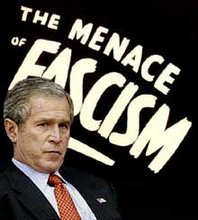

Thousands Expected Today For RNC Protest

About 50,000 are expected today, despite no-shows by President Bush and Vice President Dick Cheney. The protest begins at 11 a.m. at the Capitol building and will march to the Xcel Energy Center and back.

by Curt Brown

MINNEAPOLIS - Despite the big-name cancellations and the pre-convention police raids, organizers expect thousands of anti-war demonstrators to march this afternoon from the State Capitol to the site of the Republican National Convention.


They say their passion will not be dampened now that President George Bush and Vice President Dick Cheney are skipping their convention speeches because of Hurricane Gustav. If anything, they say, the storm enhances their message that investing in human needs must outweigh waging an expensive war.


But the protesters are also concerned that aggressive police tactics could cull their numbers, which they estimate could reach 50,000 today.


"Even if the two main actors in the U.S. war in Iraq won't be there, that will not deter people from sending a loud message to the Republican Party and the country that we need to use our resources on human needs and saving people at home, not killing them abroad," said Meredith Aby, a Minneapolis organizer working with a coalition of 130 anti-war groups, labor unions and community organizations to plan today's march.


Protestors planned to rally at the Minnesota Capitol building starting at 11 a.m. today, then march to the Xcel Energy Center, where the convention is being held, and back. The route is about a mile and a half.


They insist the legal march will be peaceful and they urge families to take part. It's expected to be the largest of the protests scheduled this week.


"This protest is aimed at the war, the police state and the bread-and-butter issues," said Polly Kellogg, a professor at St. Cloud State University. "The protesters hold a much bigger and long-term perspective."


At Macalester College in St. Paul, an estimated 300 visitors, most sleeping on floors and sofas, have arrived at the school of 1,800 students to take part in protests.


"It's not just about Bush and Cheney," said Steve Sedlak, a junior from Pittsburgh. "We just don't like the way things are going."


On Sunday, more than 400 Veterans for Peace protesters solemnly followed a flag-draped casket through St. Paul's narrow streets. David Harris, 73, of Red Wing, a retired surgeon, was among seven booked into jail.


His group was met by dozens of Ramsey County sheriff's deputies in full riot garb, who detained nine people. Two, including a nun, were ticketed and released.


Sunday's showdown was peaceful, with media members easily outnumbering everyone else. But activists remain outraged; Katrina Plotz of Bloomington called it "a blatant pattern of intimidation and repression."


Authorities have conducted a series of raids in Minneapolis and St. Paul since Friday, targeting a group called the RNC Welcoming Committee. Five people are in custody pending possible conspiracy charges.


Independent journalists have also been stopped, searched and had gear confiscated. A woman driving a bus with an "Earth Activists" sign was surrounded by squad cars on Interstate 94 near the Cretin Avenue exit Saturday night.


"I'm just appalled that they're trying to put a damper on the whole thing," said Medea Benjamin, from San Francisco and a co-founder of the peace group Code Pink. She attended the DNC in Denver. She said her group's van was searched Saturday. Police found banners.


"The Denver police walked a fine line, but these police are doing a terrible job," Benjamin said. "We never thought this was how police would greet us in such a historically liberal state as 'Minnesota Nice.' "


St. Paul Mayor Chris Coleman said items seized in the raids, including Molotov cocktails and tools to disable buses, convinced him the RNC Welcoming Committee was planning to "engage in criminal behaviors, not just voice their disdain for the Bush administration."


Coleman said Sunday his mother-in-law is among those who plan to march today. Protecting lawful protesters is a key factor behind the raids.


"We are making sure that people here to legitimately protest have the right to do that, but people engaging in criminal activity are not going to be able to do that," he said.


"When people come down to protest in the peace march, we don't need their public and personal safety threatened. It's just absolutely imperative that all the peaceful protesters have a chance to do that."


Jay Kvale, 66, of Hopkins said he'll be among those in the streets today.


"This is about opposition to the war and the casualties among Iraqi civilians and American troops," he said. "Of course, Bush and Cheney started the whole thing, but I don't think it's personal. It's just about changing injustices from happening."


(In accordance with Title 17 U.S.C. Section 107, this material is distributed without profit to those who have expressed a prior interest in receiving the included information for research and educational purposes. I.U. has no affiliation whatsoever with the originator of this article nor is I.U endorsed or sponsored by the originator.)


The Nazis, Fascists and Communists were political parties before they became enemies of liberty and mass murderers.


Monday, September 1, 2008

WaPo Has Something Nice To Say About Obama/Biden


Now, that's news!


Biden
, Obama a Comfortable Fit on the Campaign Trail

By Shailagh Murray
Washington Post Staff Writer
Monday, September 1, 2008; A22

TOLEDO, Aug. 31 -- Sen. Joseph R. Biden Jr. was warming up a crowd at a town hall meeting Sunday morning when a woman shouted, "You are gorgeous!"


"I haven't heard that in a long, long, long time," responded Barack Obama's new running mate. "And hanging around this lean, young-looking guy is making me feel pretty old, you know what I mean?"


The audience cracked up, and so did Obama. When it was his turn to speak, a woman called out for Biden and Obama quipped, "See, she thinks you're gorgeous, too, Joe."


Obama picked Biden as his running mate in part because his colleague from Delaware brings foreign policy heft and a working-class Catholic pedigree to the Democratic ticket. But as the two barnstormed through the Rust Belt on their first campaign swing together over the holiday weekend, it was clear that they also possessed a more elusive political quality: chemistry.


"Marriages of political necessity are often really awkward," said senior Obama aide Linda Douglass. But she said even Obama has been surprised at how quickly he and Biden have clicked on the campaign trail. "There's lots of laughing and collaboration and consultation," she said. "He's just this cheerful presence in the group."


Their rapport stands in contrast to the Democratic ticket in 2004, when Sens. John F. Kerry and John Edwards barely knew each other and grew to dislike one another. Edwards wasn't as tough on President Bush as Kerry wanted him to be, and Kerry campaign aides complained about prima-donna-type demands from Edwards, who, in turn, criticized campaign strategy.


On the Republican side this year, Sen. John McCain (Ariz.) met Alaska Gov. Sarah Palin once before last week, when she was offered the job. The two have campaigned together since Friday, and McCain called her "a partner and a soul mate" in an interview on "Fox News Sunday."


Biden and Obama have served together on the Foreign Relations Committee since Obama was elected to the Senate in 2004, and they have always had a friendly relationship, with Biden -- the chairman -- playing mentor.


Although they were rivals for their party's nomination this year, Biden has both privately and publicly praised Obama, and he provided help behind the scenes to smooth relations with the Clintons and to guide Obama on foreign policy, sources close to both senators said.


Senior Biden aide Antony Blinken joined Obama at the start of his trip to Iraq and Afghanistan in July. He later told Biden how impressed he was with Obama's grasp of the region and with his rapport with U.S. troops, aides to both said.


Senior Obama advisers said Biden was always a top choice for the No. 2 slot, but they weren't sure how the veteran committee chairman would adapt to a subordinate role. Campaign manager David Plouffe said Biden reassured Obama staffers in their first meeting, saying: "I work for you guys. I'm just part of the team


So far, Biden's role has been part father figure and part foil. He picks loose threads off Obama's jacket and warms up crowds with wisecracks and aphorisms. On Saturday morning, he and his wife, Jill, had French toast for breakfast with the Obamas. His grandkids hit it off with Obama's daughters and have already had one sleepover. At every event, he and Obama embrace and backslap each other, like a pair of long-lost brothers.


"I'm really pleased with Joe Biden," Obama said as the tour was getting started on Friday. "You know, our families have just really hit it off."


Biden also plays the role of validater, translating Obama's life story and values to the white, blue-collar Democrats he has struggled to attract. Describing his hard upbringing to the Toledo crowd, Biden said of Obama, "One of the things Barack and I share in common: I said I was raised by a dad who had to leave to go find work -- Barack was raised by a single mom who worked and went to school. We come from the same kind of stock you all come from."


Biden's new role gives him a chance at redemption after two failed presidential bids. Although widely respected within his party and once considered an Obama-like rising star, he has never clicked as a national candidate. And despite 36 years in the Senate, he remains prone to verbal gaffes and to talking too long.


But those attributes can come off as more endearing than exasperating alongside Obama, who is so polished that he borders on boring. At the start of the Toledo event, the Democratic nominee worked the rope line with his usual surgical precision and reached the podium far ahead of Biden, who was still posing for pictures with police officers and embracing elderly women.


He still has some rough edges. During a "60 Minutes" interview that aired last night, host Steve Kroft asked Biden about the plagiarism controversy that drove him out of the presidential race in 1988. The senator gave a halting response, mangling his explanation that he had forgotten to attribute quotes to British Labor Party leader Neil Kinnock during a debate, although he had repeatedly credited Kinnock in previous references.


"I was arrogant. I didn't think I had to prepare," Biden responded. "But I think that I have a record that people can go back and examine and decide whether or not I mean what I say -- no matter how I say it."


As Biden meandered, Obama jumped in: "I like who he is. And I think the American people will."


One change in Biden since his ascent is his willingness to talk about the deaths of his first wife, Neilia, and their baby daughter, Naomi, in a traffic accident weeks after he won his first Senate race in 1972. Earlier this year, when Iowa voters would ask him about the accident, Biden would say that to talk about it was to relive it.


Now he accepts it as part of his appeal. On Friday night, when Obama and Biden met Steelers Coach Mike Tomlin in Pittsburgh, Biden recounted how "Old Mr. Rooney" -- Steelers owner Dan Rooney -- dispatched some players from his championship team to the hospital room in Wilmington where Biden's two toddler sons, Beau and Hunter, were recovering from the accident. They brought the boys an autographed football as a Christmas present.


"And I have been a Steelers fan since that day," Biden told Tomlin.


"Not much has changed," Tomlin responded.


After attending the funeral Saturday of Rep. Stephanie Tubbs Jones (D-Ohio), Biden recalled another harrowing moment in his life, when he suffered two brain aneurysms within months of dropping out of the 1988 race. Tubbs Jones had died suddenly of the same condition.


"When mine burst, fortunately as described to me by the neurosurgeons, it ricocheted off my skull instead of into my brain," Biden explained. "Had it been the other way around, I would be where she is."


(In accordance with Title 17 U.S.C. Section 107, this material is distributed without profit to those who have expressed a prior interest in receiving the included information for research and educational purposes. I.U. has no affiliation whatsoever with the originator of this article nor is I.U endorsed or sponsored by the originator.)


The Nazis, Fascists and Communists were political parties before they became enemies of liberty and mass murderers.


Kerry On Palin and Clinton Supprters


Keep swinging, John!


Via Digby:

STEPHANOPOULOS: … Howard Wolfson, Senator Clinton’s former communications director, said that this pick might just work to draw women to the Republican ticket. Are you worried about that?

KERRY: Well, with all due respect to Howard, you know, I have much more respect for the Clinton supporters than that sort of quick- blush take with — I mean, how stupid do they think the Clinton supporters are, for Heaven sakes?

Do they think Clinton supporters supported Hillary only because she was a woman. For Heaven sakes, they supported Hillary because of all the things she’s fought for, because she fights for health care, which John McCain doesn’t support; she fights for children and children’s health care, which John McCain voted against; she fights for a windfall profits tax on the oil company, which John McCain opposes.

I mean, for Heaven sakes, the people who supported Hillary Clinton are not going to be seduced just because John McCain has picked a woman. They’re going to look at what she supports.

The fact that she doesn’t even support the notion that climate change is manmade — she’s back there with the Flat Earth Caucus. And I don’t see how those women are going to be fooled into believing — I think it’s almost insulting to the Hillary supporters that they believe they would support somebody who is against almost everything that they believe in.

STEPHANOPOULOS: OK.

KERRY: What John McCain has proven with this choice — this is very important, George. John McCain wanted to choose Tom Ridge. He wanted to choose Joe Lieberman. He wanted to choose another candidate, but you know what? Rush Limbaugh and the right wing vetoed it.

And John McCain was forced to come back and pick a sort of Cheney-esque social conservative who’s going to satisfy the base. What John McCain has proven with this choice is that John McCain is the prisoner of the right wing, not a maverick.

I like it. …

I do too. Kerry keeps swinging for the fences like that and someone’s going to want to test him for steroids.

Digby also shares some good advice, as always, on what our response to Palin might ought to be. While I tend to agree, that might be a tall order, as this well just keeps getting deeper. Your thoughts?


(In accordance with Title 17 U.S.C. Section 107, this material is distributed without profit to those who have expressed a prior interest in receiving the included information for research and educational purposes. I.U. has no affiliation whatsoever with the originator of this article nor is I.U endorsed or sponsored by the originator.)


The Nazis, Fascists and Communists were political parties before they became enemies of liberty and mass murderers.


Look Out, Cindy

Seems we were right. Old Johnny has found himself another, younger beauty queen, in his dotage. Even old leopards don't change their spots, it seems.


Damn, he isn't even president yet. He is already falling back into old patterns. No telling what he might do with the power of the White House at his disposal.


FNS: McCain Calls Palin His “Soulmate”
By: Nicole Belle on Sunday, August 31st, 2008


Oh dear. Does Cindy know?

After only one meeting before naming her his running mate and little to no vetting, McCain has decided that Sarah Palin is his “partner and soulmate”. Ew, that’s a little creepy. Can you imagine him saying that about his true partner, Joe Lieberman, if the GOP hadn’t demanded he not pick Holy Joe as his running mate?

McCain continues the lies — he must really count on the low info voter taking everything at face value — by claiming he’s been following Palin’s career for years and years. Oh really? What’s McCain doing following a ex-beauty queen turned small town Alaskan mayor’s career, because she has hardly had enough time at the Governor’s mansion to be tracked for a year, much less years and years? And she stood up against oil interests? That’s not what environmentalists are saying. Being FOR drilling in ANWR is hardly standing up against the oil companies.

My favorite line? I don’t particularly enjoy the label “maverick”

Yeah, rrrriiiiiiiggggghhhhhtttttt.

Transcripts below the fold:

WALLACE: Let’s start with your choice of running mate. Of all the people you could have chosen, all the Republican leaders you’ve known for years. Straight talk, can you honestly say that Sarah Palin is the best person to put a heartbeat away from the presidency?

McCAIN: Oh yeah. She’s a…she’s a partner and a soulmate. [laughs] She’s…she’s a reformer. I don’t particularly enjoy the label “maverick,” but when somebody takes on the old bulls in her own party, runs against an incumbent governor of her own party, stands up against the oil and gas interests…I mean, they really are so vital to the economy of her…of the state of Alaska. I mean, it’s remarkable. It’s a remarkable person and I’ve watched her record and I’ve watched her for many, many years as she implemented ethics and lobbying reforms. I mean, she led on it; she didn’t just vote for it. She led it, I’ve seen her…take on her own party. Look, one thing I know is when you take on your own party in Washington, you pay a price for it. You do. You pay a price for it.


(In accordance with Title 17 U.S.C. Section 107, this material is distributed without profit to those who have expressed a prior interest in receiving the included information for research and educational purposes. I.U. has no affiliation whatsoever with the originator of this article nor is I.U endorsed or sponsored by the originator.)


The Nazis, Fascists and Communists were political parties before they became enemies of liberty and mass murderers.

Oh, boy...This is Embarrassing.............


You can't make this stuff up, really!


When a Fox News morning host, Steve Doocy, testified to Sarah Palin's national security experience on Friday by saying that her state, Alaska, was so close to Russia, it drew hoots across the media and blogosphere (and even, no doubt, from a few Fox viewers).


This morning, on ABC in an interview with George Stephanopoulos, Cindy McCain endorsed this very view.


Asked about Palin's national security experience, Cindy McCain could not come up with anything beyond the fact that, after all, her state is right next to Russia. "You know, the experience that she comes from is, what she has done in government -- and remember that Alaska is the closest part of our continent to Russia."


She added that Palin has "way more experience than...." but Stephanopoulos cut her off before she could say, for example, "Barack Obama" or maybe "others give her credit for."


Earlier in the interview, she said that Palin was "heavily experienced" in general, citing her going from the PTA to mayor to governor -- and having a son headed for Iraq. She actually said that she started her political career at the PTA "like everybody else."


Meanwhile, Palin's mother-in-law, Faye Palin, told a New York Daily News reporter that she didn't agree with Sarah on everything and hadn't yet decided how she would vote. She added: "I'm not sure what she brings to the ticket other than she's a woman and a conservative. Well, she's a better speaker than McCain," Faye Palin said with a laugh.


But this actually isn't as appalling as a phone interview Palin herself gave yesterday to reporter back home, at the Anchorage Daily News.


The reporter, Kyle Hopkins, asked, according to the transcript posted today, "Are you ready to be President Palin if necessary?"


"I am ... I am up to the task, of course, of focusing on the challenges that face America," she answered, and that was all she could say on her behalf on this question. Then she abruptly shifted to how her candidacy would help Alaska. "And I am very pleased with the situation that I am in, when, when you consider the situation now that Alaska will be in.


"And that is Alaska, and Alaskans will be allowed to contribute more to our great country and they'll be allowed to do that because I -- if we're elected -- will be in a position of opening the eyes of the country to what it is that Alaska is all about and what Alaska has to offer. So, I am happy to and very honored to be asked to do this. I know it's going to be great for Alaska."


Who said the woman was against earmarks? Actually, it seems like she sees herself as an Alaska earmark.


The early returns are not good, with most in the media still stepping lightly around the issue of John McCain's hypocrisy in asserting, for months, that Barack Obama is "dangerously" inexperienced in facing international threats -- and then appointing Palin as his running mate.


Greg Mitchell's new book is So Wrong for So Long: How the Press, the Pundits -- and the President -- Failed on Iraq. It has been hailed by Bill Moyers, Arianna Huffington and others and features a preface by Bruce Springsteen. His email is: gmitchell@editorandpublisher.com


(In accordance with Title 17 U.S.C. Section 107, this material is distributed without profit to those who have expressed a prior interest in receiving the included information for research and educational purposes. I.U. has no affiliation whatsoever with the originator of this article nor is I.U endorsed or sponsored by the originator.)


The Nazis, Fascists and Communists were political parties before they became enemies of liberty and mass murderers.


The CIA, Contras, Gangs, and Crack


In case you missed it:

Volume 1, Number 11
November 1996

Written by William Blum, a Washington, DC based writer on foreign policy and intelligence matters. Author of Killing Hope: U.S. Military and CIA Interventions Since World War II.
Editors: Tom Barry (IRC) and Martha Honey (IPS)

November 1996 -- - "FPIF" -- - In August 1996, the San Jose Mercury News initiated an extended series of articles linking the CIA's "contra" army to the crack cocaine epidemic in Los Angeles.1 Based on a year-long investigation, reporter Gary Webb wrote that during the 1980s the CIA helped finance its covert war against Nicaragua's leftist government through sales of cut-rate cocaine to South Central L.A. drug dealer, Ricky Ross. The series unleashed a storm of protest, spearheaded by black radio stations and the congressional Black Caucus, with demands for official inquiries. The Mercury News' Web page, with supporting documents and updates, received hundreds of thousands of "hits" a day.

While much of the CIA-contra-drug story had been revealed years ago in the press and in congressional hearings, the Mercury News series added a crucial missing link: It followed the cocaine trail to Ross and black L.A. gangs who became street-level distributors of crack, a cheap and powerful form of cocaine. The CIA's drug network, wrote Webb, "opened the first pipeline between Colombia's cocaine cartels and the black neighborhoods of Los Angeles, a city now known as the 'crack' capital of the world." Black gangs used their profits to buy automatic weapons, sometimes from one of the CIA-linked drug dealers.

CIA Director John Deutch declared that he found "no connection whatsoever" between the CIA and cocaine traffickers. And major media--the New York Times, Los Angeles Times, and Washington Post--have run long pieces refuting the Mercury News series. They deny that Bay Area-based Nicaraguan drug dealers, Juan Norwin Meneses and Oscar Danilo Blandon, worked for the CIA or contributed "millions in drug profits" to the contras, as Webb contended. They also note that neither Ross nor the gangs were the first or sole distributors of crack in L.A. Webb, however, did not claim this. He wrote that the huge influx of cocaine happened to come at just the time that street-level drug dealers were figuring out how to make cocaine affordable by changing it into crack.

Many in the media have also postulated that any drug-trafficking contras involved were "rogue" elements, not supported by the CIA. But these denials overlook much of the Mercury News' evidence of CIA complicity. For example:

  • CIA-supplied contra planes and pilots carried cocaine from Central America to U.S. airports and military bases. In 1985, Drug Enforcement Administration (DEA) agent Celerino Castillo reported to his superiors that cocaine was being stored at the CIA's contra-supply warehouse at Ilopango Air Force Base in El Salvador for shipment to the U.S.2 The DEA did nothing, and Castillo was gradually forced out of the agency.

  • When Danilo Blandón was finally arrested in 1986, he admitted to drug crimes that would have sent others away for life. The Justice Department, however, freed Blandón after only 28 months behind bars and then hired him as a full-time DEA informant, paying him more than $166,000. When Blandón testified in a 1996 trial against Ricky Ross, the Justice Department blocked any inquiry about Blandón's connection to the CIA.

  • Although Norwin Meneses is listed in DEA computers as a major international drug smuggler implicated in 45 separate federal investigations since 1974, he lived conspicuously in California until 1989 and was never arrested in the U.S.

  • Senate investigators and agents from four organizations all complained that their contra-drug investigations "were hampered," Webb wrote, "by the CIA or unnamed 'national security' interests." In the 1984 "Frogman Case," for instance, the U.S. Attorney in San Francisco returned $36,800 seized from a Nicaraguan drug dealer after two contra leaders sent letters to the court arguing that the cash was intended for the contras. Federal prosecutors ordered the letter and other case evidence sealed for "national security" reasons. When Senate investigators later asked the Justice Department to explain this unusual turn of events, they ran into a wall of secrecy.

History of CIA Involvement in Drug Trafficking

"In my 30­year history in the Drug Enforcement Administration and related agencies, the major targets of my investigations almost invariably turned out to be working for the CIA." -- Dennis Dayle, former chief of an elite DEA enforcement unit.3

The foregoing discussion should not be regarded as any kind of historical aberration inasmuch as the CIA has had a long and virtually continuous involvement with drug trafficking since the end of World War II.

1947 to 1951, France

CIA arms, money, and disinformation enabled Corsican criminal syndicates in Marseille to wrest control of labor unions from the Communist Party. The Corsicans gained political influence and control over the docks--ideal conditions for cementing a long-term partnership with mafia drug distributors, which turned Marseille into the postwar heroin capital of the Western world. Marseille's first heroin laboratories were opened in 1951, only months after the Corsicans took over the waterfront.4

Early 1950s, Southeast Asia

The Nationalist Chinese army, organized by the CIA to wage war against Communist China, became the opium baron of The Golden Triangle (parts of Burma, Thailand, and Laos), the world's largest source of opium and heroin. Air America, the CIA's principal proprietary airline, flew the drugs all over Southeast Asia.5

1950s to early 1970s, Indochina

During U.S. military involvement in Laos and other parts of Indochina, Air America flew opium and heroin throughout the area. Many GI's in Vietnam became addicts. A laboratory built at CIA headquarters in northern Laos was used to refine heroin. After a decade of American military intervention, Southeast Asia had become the source of 70 percent of the world's illicit opium and the major supplier of raw materials for America's booming heroin market.6

1973 to 1980, Australia

The Nugan Hand Bank of Sydney was a CIA bank in all but name. Among its officers were a network of U.S. generals, admirals, and CIA men--including former CIA Director William Colby, who was also one of its lawyers. With branches in Saudi Arabia, Europe, Southeast Asia, South America, and the U.S., Nugan Hand Bank financed drug trafficking, money laundering, and international arms dealing. In 1980, amidst several mysterious deaths, the bank collapsed, $50 million in debt.7


1970s and 1980s, Panama

For more than a decade, Panamanian strongman Manuel Noriega was a highly paid CIA asset and collaborator, despite knowledge by U.S. drug authorities as early as 1971 that the general was heavily involved in drug trafficking and money laundering. Noriega facilitated "guns-for-drugs" flights for the contras, providing protection and pilots, safe havens for drug cartel officials, and discreet banking facilities. U.S. officials, including then-CIA Director William Webster and several DEA officers, sent Noriega letters of praise for efforts to thwart drug trafficking (albeit only against competitors of his Medellín cartel patrons). The U.S. government only turned against Noriega, invading Panama in December 1989 and kidnapping the general, once they discovered he was providing intelligence and services to the Cubans and Sandinistas. Ironically, drug trafficking through Panama increased after the U.S. invasion.8

1980s, Central America

The San Jose Mercury News series documents just one thread of the interwoven operations linking the CIA, the contras, and the cocaine cartels. Obsessed with overthrowing the leftist Sandinista government in Nicaragua, Reagan administration officials tolerated drug trafficking as long as the traffickers gave support to the contras. In 1989, the Senate Subcommittee on Terrorism, Narcotics, and International Operations (the Kerry committee) concluded a three-year investigation by stating: "There was substantial evidence of drug smuggling through the war zones on the part of individual contras, contra suppliers, contra pilots, mercenaries who worked with the contras, and contra supporters throughout the region. . . . U.S. officials involved in Central America failed to address the drug issue for fear of jeopardizing the war efforts against Nicaragua. . . . In each case, one or another agency of the U.S. government had information regarding the involvement either while it was occurring, or immediately thereafter. . . . Senior U.S. policy makers were not immune to the idea that drug money was a perfect solution to the contras' funding problems."9

In Costa Rica, which served as the "Southern Front" for the contras (Honduras being the Northern Front), there were several CIA-contra networks involved in drug trafficking. In addition to those servicing the Meneses-Blandon operation (detailed by the Mercury News) and Noriega's operation, there was CIA operative John Hull, whose farms along Costa Rica's border with Nicaragua were the main staging area for the contras. Hull and other CIA-connected contra supporters and pilots teamed up with George Morales, a major Miami-based Colombian drug trafficker who later admitted to giving $3 million in cash and several planes to contra leaders.10 In 1989, after the Costa Rica government indicted Hull for drug trafficking, a DEA-hired plane clandestinely and illegally flew the CIA operative to Miami, via Haiti. The U.S. repeatedly thwarted Costa Rican efforts to extradite Hull to Costa Rica to stand trial.11

Another Costa Rican-based drug ring involved a group of Cuban Americans whom the CIA had hired as military trainers for the contras. Many had long been involved with the CIA and drug trafficking. They used contra planes and a Costa Rican-based shrimp company, which laundered money for the CIA, to channel cocaine to the U.S.12

Costa Rica was not the only route. Guatemala, whose military intelligence service--closely associated with the CIA--harbored many drug traffickers, according to the DEA, was another way station along the cocaine highway.13 Additionally, the Medellín cartel's Miami accountant, Ramon Milian Rodriguez, testified that he funneled nearly $10 million to Nicaraguan contras through long-time CIA operative Felix Rodriguez, who was based at Ilopango Air Force Base in El Salvador.14

The contras provided both protection and infrastructure (planes, pilots, airstrips, warehouses, front companies, and banks) to these CIA-linked drug networks. At least four transport companies under investigation for drug trafficking received U.S. government contracts to carry nonlethal supplies to the contras.15 Southern Air Transport, "formerly" CIA-owned and later under Pentagon contract, was involved in the drug running as well.16 Cocaine-laden planes flew to Florida, Texas, Louisiana, and other locations, including several military bases. Designated as "Contra Craft," these shipments were not to be inspected. When some authority wasn't apprised and made an arrest, powerful strings were pulled to result in dropping the case, acquittal, reduced sentence, or deportation.17

Mid-1980s to early 1990s, Haiti

While working to keep key Haitian military and political leaders in power, the CIA turned a blind eye to their clients' drug trafficking. In 1986, the Agency added some more names to its payroll by creating a new Haitian organization, the National Intelligence Service (SIN). SIN's mandate included countering the cocaine trade, though SIN officers themselves engaged in trafficking, a trade aided and abetted by some Haitian military and political leaders.18

1980s to early 1990s, Afghanistan

CIA-supported Moujahedeen rebels engaged heavily in drug trafficking while fighting the Soviet-supported government, which had plans to reform Afghan society. The Agency's principal client was Gulbuddin Hekmatyar, one of the leading drug lords and the biggest heroin refiner, who was also the largest recipient of CIA military support. CIA-supplied trucks and mules that had carried arms into Afghanistan were used to transport opium to laboratories along the Afghan-Pakistan border. The output provided up to one-half of the heroin used annually in the United States and three-quarters of that used in Western Europe. U.S. officials admitted in 1990 that they had failed to investigate or take action against the drug operation because of a desire not to offend their Pakistani and Afghan allies.19 In 1993, an official of the DEA dubbed Afghanistan the new Colombia of the drug world.20

Endnotes

1 Gary Webb, "Dark Alliance" series, San Jose Mercury News. Beginning August 18, 1996.

2 Celerino Castillo, Powder Burns: Cocaine, Contras and the Drug War (Mosaic Press, 1994). Los Angeles Times lengthy series of articles, October 20, 21, 22, 1996. Roberto Suro and Walter Pincus, "The CIA and Crack: Evidence is Lacking of Alleged Plot" (Washington Post, October 4, 1996). Howard Kurtz, "Running with the CIA Story" (Washington Post, October 2, 1996). Douglas Farah and Walter Pincus "CIA, Contras and Drugs: Questions on Links Linger" (Washington Post, October 31, 1996). Tim Golden,"Though Evidence is Thin, Tale of CIA and Drugs Has a Life of Its Own" (New York Times, October 21, 1996).

3 Peter Dale Scott & Jonathan Marshall, Cocaine Politics: Drugs, Armies, and the CIA in Central America (Berkeley: University of California Press, 1991) pp. x-xi.

4 Alfred W. McCoy, The Politics of Heroin in Southeast Asia (New York City, New York: Harper & Row, 1972, chapter 2).

5 Christopher Robbins, Air America (New York City, New York: Avon Books, 1985) chapter 9. McCoy, Politics of Heroin.

6 McCoy, Politics of Heroin, chapter 9.

7 Robbins, Air America, p. 128 and chapter 9. Jonathan Kwitny, The Crimes of Patriots: A True Tale of Dope, Dirty Money and the CIA (New York City, New York: W.W. Norton & Co., 1987). William Blum, Killing Hope: U.S. Military and CIA Interventions Since World War II (Monroe, Maine: Common Courage Press, 1995) p. 420, note 33.

8 Scott & Marshall, Cocaine Politics; John Dinges, Our Man in Panama (NY, New York: Random House, 1991); Murray Waas, "Cocaine and the White House Connection", Los Angeles Weekly, Sept. 30-Oct. 6 and Oct. 7-13, 1988; National Security Archive Documentation Packet: The Contras, Cocaine, and Covert Operations (Washington, DC).

9 "Kerry Report": Drugs, Law Enforcement and Foreign Policy, a Report of the Senate Committee on Foreign Relations, Subcommittee on Terrorism, Narcotics and International Operations, 1989, pp. 2, 36, 41.

10 Martha Honey, Hostile Acts: U.S. Policy in Costa Rica in the 1980s (Gainesville, Florida: University Press of Florida, 1994).

11 Martha Honey and David Myers, "U.S. Probing Drug Agent's Activities in Costa Rica," San Francisco Chronicle, August 14, 1991.

12 Honey, Hostile Acts.

13 Frank Smyth, "In Guatemala, The DEA Fights the CIA", New Republic, June 5, 1995; Blum, Killing Hope, p. 239.

14 Martha Honey, "Drug Figure Says Cartel Gave Drugs to Contras" Washington Post, June 30, 1987.

15 Kerry report, Drugs.

16 Scott & Marshall, Cocaine Politics, pp. 17-18.

17 Scott & Marshall, Cocaine Politics; Waas, "Cocaine and the White House"; NSA, The Contras.

18 New York Times, Nov. 14, 1993; The Nation, Oct. 3, 1994, p. 346.

19 Blum, Killing Hope, p. 351; Tim Weiner, Blank Check: The Pentagon's Black Budget (New York City, New York: Warner Books, 1990) pp. 151-2.

20 Los Angeles Times, Aug. 22, 1993

Sources for more information

World Wide Web

Washington Post
http://www.washingtonpost.com/

Covert Action Quarterly
http://www.worldmedia.com/caq/

The National Security Archive
http://www.seas.gwu.edu/nsarchive/

Organizations

The National Security Archive
Gelman Library, Ste. 7012130 H Street NW
Washington, DC 20037
Voice: (202) 994-7000
Email: nsarchiv@gwis2.circ.gwu.edu
Contact: Peter Kornbluh

Congresswoman Maxine Waters
330 Cannon House Building
Washington, DC 20515
Voice: (202) 225-2201
Contact: Joseph Lee

Covert Action Quarterly
1500 Mass Ave. NW
Washington, DC 20005
Voice: (202) 331-9763
Fax: (202) 331-9751
Email: caq@igc.apc.org
Contact: Terry Allen

Latin American Working Group
110 Maryland Ave. NE Box 15
Washington, DC 20002
Voice: (202) 546-7010
Fax: (202) 543-7647
Contact: Lisa Hargaard

Publications

Lorraine Adams, "North Didn't Relay Drug Tips", The Washington Post, Oct. 22, 1994, p. 1.

William Blum, Killing Hope: U.S. Military and CIA Interventions Since World War II (Monroe, Maine: Common Courage Press, 1995).

Celerino Castillo with David Harmon, Powder Burns: Cocaine, Contras and the Drug War (Mosaic Press, 1994).

John Dinges, Our Man in Panama (New York City, NY: Random House, 1991).

Martha Honey, Hostile Acts: U.S. Policy in Costa Rica in the 1980s (Gainesville, Florida: University Press of Florida, 1994).

Subcommittee on Terrorism, Narcotics and International Operations, Senate Foreign Relations Committee, Drugs, Law Enforcement and Foreign Policy, December 1988.

Jonathan Kwitny, The Crimes of Patriots: A True Tale of Dope, Dirty Money and the CIA (New York City, NY: W.W. Norton & Co., 1987).

Alfred W. McCoy, The Politics of Heroin in Southeast Asia (New York, NY: Harper & Row, 1972).

Clarence Lusane, Pipe Dream Blues: Racism and the War on Drugs (Boston: South End Press, 1991).

National Security Archive, Documentation Packet: The Contras, Cocaine, and Covert Operations (Washington, D.C. October 1996).

Christopher Robbins, Air America (New York City, New York: Avon Books, 1985).

Peter Dale Scott & Jonathan Marshall, Cocaine Politics: Drugs, Armies, and the CIA in Central America (Berkeley, California: University of CA Press, 1991).

Murray Waas, "Cocaine and the White House Connection", Los Angeles Weekly, Sept. 30-Oct. 6 and Oct. 7-13, 1988.

Tim Weiner, Blank Check: The Pentagon's Black Budget (New York City, New York: Warner Books, 1990).


(In accordance with Title 17 U.S.C. Section 107, this material is distributed without profit to those who have expressed a prior interest in receiving the included information for research and educational purposes. I.U. has no affiliation whatsoever with the originator of this article nor is I.U endorsed or sponsored by the originator.)


The Nazis, Fascists and Communists were political parties before they became enemies of liberty and mass murderers.